Top 15 Best Birding Scopes That Will Blow Your Mind
Picking the right scope for birdwatching can be a trial of trial and error. Using cheap models often leads to blurry images, frustrating focusing issues, or scopes that just don’t hold up outdoors. The best birding scopes solve these problems by offering clear, sharp views at varying distances and standing up to weather conditions without frequent repairs or adjustments.
Good birding scopes usually have an objective lens diameter between 60mm and 80mm, providing enough light for clear images, especially in low light. Magnification typically ranges from 20x to 60x, balancing detail with ease of use on moving subjects. Durable, waterproof construction is essential for use in different weather, while ease of cleaning the lenses without damaging coatings proves helpful after exposure to dust or moisture.
Need a Quick Check?
| Image | Product | Price |
|---|---|---|
Our Top Picks 1  | Flagship 20-60×80 Scope | Check Price |
Our Top Picks 2  | DiamondEdge 25-75×80 Scope | Check Price |
Our Top Picks 3  | Celestron Ultima 22-66×100 | Check Price |
Our Selected Top 15 Birding Scopes You Can Trust
This list features carefully chosen birding scopes designed for various skill levels and needs. Each review explains how well the scope performs, identifies who it’s best suited for, and highlights key strengths and drawbacks to help you make an informed choice.
1. Flagship 20-60×80 Spotting Scope
Offering a 20x to 60x zoom with an 80mm objective lens, this spotting scope suits birdwatchers who want sharp, detailed views of distant subjects. Its ability to focus smoothly lets you catch fine details that matter most in wildlife observation.
Setup is straightforward with the altazimuth mount and manual focus, making it easy to adjust on the fly during hikes or camping trips. The fully multi-coated lens and BAK4 Porro prism keep images bright even under changing light. Attaching your smartphone for photos is a neat addition, though focusing still requires some patience.
In action, the scope delivers clear, crisp images, making it enjoyable for spotting birds and other wildlife at long distances. Its build is solid and water resistant, helping it stand up to outdoor use. Reviewers praise the image quality while sometimes noting that the manual focus needs careful tuning for the sharpest picture.
Bright and sharp images are the most appreciated feature, providing satisfying long-range views. The manual focus mechanism, while precise, requires careful handling and can slow down quick spotting moments.
Birdwatchers who prioritize image quality and are comfortable with manual adjustments will find this scope fitting. Those needing a lighter, more portable option for casual use might want to explore smaller models.
Pros
- Wide 20x to 60x zoom range for detailed viewing
- Bright, clear images from fully multi-coated lenses
- Water resistant and fog-proof for outdoor use
- Compatible with smartphone adapter for photos
Cons
- Manual focus can be tricky for quick adjustments
- Larger lens size makes it less portable
| Specification | Details |
|---|---|
| Magnification | 20-60x |
| Objective Lens Diameter | 80mm |
| Field Of View | 82.9–48ft/1000 yards |
| Focus Type | manual |
| Mount | Altazimuth |
| Coating | Fully Multi-Coated |
2. DiamondEdge 25-75×80 Spotting Scope
Birdwatchers and outdoor enthusiasts looking for a versatile spotting scope will appreciate what this model offers. It suits those who want a high magnification range and bright, clear images in various natural settings without breaking the bank. The standout feature is the wide zoom, going from 25x up to 75x magnification with a large 80mm objective lens.
Setting it up for a day in the field involves mounting on a tripod since it’s compatible with one and manually focusing to get just the right sharpness. The integrated phone holder is handy for capturing quick shots through the scope. The 23mm eyepiece makes scanning landscapes and spotting birds easier thanks to a brighter image and wider view than smaller lenses offer.
Performance delivers crisp clarity thanks to the BAK4 prism with FMC coatings, resulting in excellent color accuracy. The model is sturdy enough for regular outdoor use, designed to last with solid optics.
One highlight is the bright images even at higher powers, while its most common downside is the manual focusing, which might require some patience for beginners.
Users praise the brightness and color clarity, especially at higher magnifications. The manual focusing system is often mentioned as a challenge, particularly for those new to spotting scopes.
The scope suits birders and wildlife watchers who value optical performance and don’t mind manual adjustments. Those needing quick focus or lighter gear might want to explore other options.
Pros
- Wide magnification range from 25x to 75x
- Large 80mm objective lens for brighter images
- Multi-coated BAK4 prism improves color accuracy
- Includes integrated phone holder for easy sharing
Cons
- Manual focus requires steady hands and practice
- Larger eyepiece may add weight on long hikes
| Specification | Details |
|---|---|
| Eye Piece Lens Description | Bak4 Prism System |
| Focal Length Description | 25-75x Magnification With 80mm Objective Lens |
| Focus Type | Manual Focus |
| Field Of View | 98 feet |
| Mount | Tripod Mount Compatible |
| Coating | Multi-coated Bak4 Prism System |
3. Celestron Ultima 22-66×100 Spotting Scope
Great for outdoor fans who want a versatile spotting scope with solid zoom power. Equipped with a 100mm objective lens and a 22-66x zoom range, it balances magnification with bright, clear views.
Its 45° angled eyepiece stands out for comfortable long sessions of nature watching.
Setup is straightforward thanks to the included extended tripod mounting plate and soft carrying case. Manual focus lets you dial in sharpness precisely, while the multi-coated optics reduce glare and boost contrast on bright or hazy days.
The zoom eyepiece has a built-in T-adapter, making it easy to connect a camera for digiscoping and capturing distant subjects.
Image quality holds up well with rich colors and clear details, especially with the generous 100mm lens gathering lots of light. It’s waterproof and fogproof, so outdoor use in varying weather poses fewer worries. Most praise highlights the sharp optics and comfortable angled design, while some mention the weight as a factor to consider for long hikes.
The sharp, bright optics receive strong praise for delivering clear images with vibrant colors. Many users find the angled eyepiece comfortable for long observation sessions. Common drawbacks include the weight making it less convenient for carrying over long distances, and the manual focus needing steady hands for perfect clarity.
People who need sturdy, weather-resistant optics for extended outdoor viewing will appreciate it. Those who want a lightweight, quick-focus spotting scope for travel might want to explore other options with simpler use and less bulk.
Pros
- Comfortable 45° angled eyepiece for extended viewing
- Multi-coated optics improve brightness and contrast
- Includes essential accessories like carrying case and tripod plate
- Waterproof and fogproof for reliable outdoor performance
Cons
- Manual focus requires careful adjustment for sharp images
- Heavier than some other scopes, less ideal for long hikes
| Specification | Details |
|---|---|
| Eye Piece Lens Description | 22-66x zoom |
| Mount | Equatorial Mount |
| Focus Type | manual focus |
| Field Of View | 45 degrees |
| Objective Lens | 100mm |
| Coating | Multi-Coated |
4. Bushnell Trophy Xtreme 20-60×65 Spotting Scope

Bushnell Trophy Xtreme 20-60×65 Spotting Scope suits birders seeking strong zoom and durability without the need for a tabletop tripod. Its single biggest strength lies in the combination of powerful magnification and waterproof, tough rubber armor, making outdoor use practical in rough conditions.
Setting up involves no extra tripod if steady hands are sufficient; the compact design with black rubber armor offers a solid grip. Day-to-day use benefits from its fully multi-coated optics that keep images bright and sharp, while 20-60x zoom covers both closer views and distant targets. The rugged exterior handles rain or rough handling without worry.
Performance delivers crisp images at long ranges due to the Porro-prism design, helping spot fine details on birds even when far away. Built with 100% waterproof materials, it’s ready for various weather situations. Most praise highlights its waterproof durability and zoom range, while the common drawback is the need for steady hold or tripod at higher magnifications.
The spotting scope is praised for being highly durable and able to deliver bright, clear images at long distances due to its optics and zoom. A frequent downside is needing a steady hold or additional support to use the highest magnification levels comfortably.
Bird watchers venturing into tough outdoor conditions will find this scope reliable and suited to varied lighting and weather. Those who prefer a tripod or plan extended extreme zoom viewing may look for models with included mounting options or even higher steadiness features.
Pros
- Wide zoom range from 20x to 60x
- Rugged black rubber armor housing
- Fully multi-coated optics for brightness
- 100% waterproof for all-weather use
Cons
- Handheld use shaky at top magnifications
- Not equipped with tabletop tripod
| Specification | Details |
|---|---|
| Objective Lens Diameter | 6.5 centimeters |
| Magnification Maximum | 60x |
| Lowest Useful Magnification | 20x |
| Exit Pupil Diameter | 3.4 millimeters |
| Coating | Fully Multi-Coated |
5. High Power 8×42 Monocular Telescope
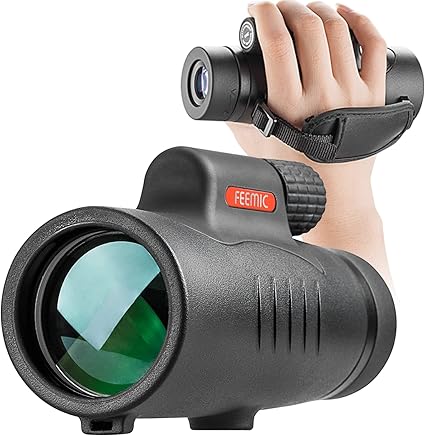
Bringing the outdoors closer feels natural with this High Power 8×42 Monocular Telescope. Great for birdwatchers who want a sharp, wide view without lugging around heavy gear.
Its biggest strength lies in the clear, detailed sight it delivers even in challenging conditions.
Setting it up takes barely any time thanks to its manual focus and simple altazimuth mount. In daily use, the 8X magnification and 42mm lens work together to provide a broad 360ft view at 1000 yards, making scanning trees or open fields easy.
The rubber finish and built-in dust cover keep it protected during hikes or unexpected weather changes.
The optics use high-quality FMC Superior BAK-4 prisms, so images are bright and sharp. Built with durability in mind, it’s waterproof, fogproof, dustproof, and shock resistant.
Most praise revolves around its clear and wide HD viewing, but some find the manual focusing a bit fiddly when tracking quick movements.
This monocular delivers sharp, vivid views with a wide perspective thanks to the high-quality optics and coating. Durability is strong due to its waterproof and shockproof design. A common drawback is that manual focusing can slow down quick target acquisition when birds move fast.
Bird watchers who value crisp, wide-angle images and need a rugged device for varied weather will find it suitable. People looking for quick autofocus or additional power sources might want to consider alternatives better suited for rapid adjustments.
Pros
- Bright, clear images through FMC BAK-4 prism
- Wide 360ft field of view at 1000 yards
- Protected against water, fog, dust, and shocks
- Compact rubber finish for good grip and durability
Cons
- Manual focus takes patience tracking fast birds
- No built-in power source for enhancements
| Specification | Details |
|---|---|
| Power Source | Manual Power |
| Magnification | 8X |
| Objective Lens Diameter | 42mm |
| Field Of View | 360 degrees |
| Focus Type | Manual Focus |
| Coating | Fully Multi-Coated |
6. HD 20-60×80 Spotting Scope

Great for bird watchers wanting strong zoom and clear focus, this spotting scope offers a powerful 20-60x magnification range that brings distant wildlife into sharp view. It suits people who enjoy detailed observation in various outdoor settings, from wetlands to mountain tops.
Its standout feature is the smooth dual focusing system that makes quick adjustments easy and precise.
Setting up the scope is straightforward, with the included tripod providing steady support for long viewing sessions. The aluminum body feels solid but remains manageable at 2.6 pounds, so carrying it on hikes is not too burdensome. Two focus knobs allow quick switching between magnifications and focusing, making it easy to catch birds in motion or capture sharp nature details without delay.
Performance is solid across the entire zoom range, offering clear images even at 60x magnification. The build uses durable aluminum and has a compact shape that fits well into the provided case. The strongest compliment relates to the dual focusing system’s precision, making small adjustments easy in the field.
A common drawback noted is the scope’s weight, which can feel a bit heavy during extended hikes.
The scope earns praise for its precise dual focusing system, allowing quick and accurate refinement of the view. The most frequent complaint relates to its weight, which some find cumbersome when carried over long distances. Its sturdy aluminum construction balances durability with manageability.
Those focusing on clear, detailed sightings with versatile zoom will appreciate this model’s capabilities and included accessories. Hikers prioritizing lightweight equipment might prefer a more compact option for easier transport during extended trips.
Pros
- Wide zoom range from 20x to 60x
- Smooth, dual focusing knobs for quick adjustments
- Includes tripod and phone adapter for convenience
- Durable aluminum build feels solid
Cons
- Relatively heavy at 2.6 pounds for long hikes
- Size may feel bulky in tight carrying situations
| Specification | Details |
|---|---|
| Magnification | 20-60x |
| Objective Lens Diameter | 80 mm |
| Item Weight | 2.6 pounds |
| Material | Aluminum |
| Package Dimensions | 16.57 x 7.05 x 4.69 inches |
7. Angled 20-60×60 Spotting Scope

Lightweight design stands out for anyone needing portability and ease of travel. Perfect for outdoor observation and target shooting enthusiasts who want crisp, high-definition viewing with a flexible magnification range.
Setup is straightforward with a small 14-inch tripod that adjusts easily on uneven surfaces thanks to its broader legs and feet. Carrying it around is simple, too, since it weighs just 1.31lbs and includes a soft shoulder-strap case that fits nicely in a backpack or hangs comfortably on your shoulder.
Adjusting magnification from 20x to 60x allows for clear views of distant subjects without much hassle.
Optical performance delivers sharp, HD quality images across the entire zoom range, making spotting details reliable. The build feels solid yet lightweight, ideal for carrying long distances. Most praise focuses on the stability of the tripod on rough terrain, while complaints tend to mention that the maximum magnification can sometimes be a bit challenging to keep steady without a firm hand.
High-definition optics paired with a stable, wide-legged tripod make it easy to see details clearly, even in uneven outdoor settings. The most frequent issue is keeping the view steady at the highest magnification without solid support or a very steady hand.
Ideal for birders and shooters wanting a lightweight, portable scope that offers flexibility in magnification and good stability on rough terrain. Users needing a larger tripod or more steady maximum zoom might want to explore other options.
Pros
- Ultra-lightweight at 1.31lbs for easy travel
- Wide tripod legs offer excellent stability
- High-definition optics for crisp images
- Adjustable 20-60x magnification range
Cons
- Maximum magnification can be shaky without steady hands
- Compact tripod might be too small for some users
| Specification | Details |
|---|---|
| Magnification Maximum | 60x |
| Objective Lens Diameter | 6 centimeters |
| Magnification Minimum | 20x |
| Eye Relief | 17 millimeters |
| Field Of View | 3280.84 feet |
| Mounting Type | tripod mount |
8. Smart 20-60×60 Spotting Scope

Smart 20-60×60 Spotting Scope features a built-in 4.3 HD electronic screen, ideal for birders seeking sharp, real-time views and easy photo or video capture. Ideal for those who like to share their outdoor experiences instantly, it merges traditional spotting with digital convenience.
Setting up the auto-focus is straightforward, and pairing the scope to your smartphone feels natural, making viewing and saving special moments simple. The reflex finderscope helps with quick target spotting, while support for up to 128GB external storage means you won’t run out of space during long sessions.
Day-to-day use balances classic optics with digital features smoothly.
It performs well at magnifications ranging from 20 to 60 times, providing detailed bird views through a clear optical path. The build feels solid with nonstandard batteries powering the electronics, and the main praise centers around the clarity provided by the HD screen. The frequent complaint involves battery type, which may need careful replacement or spares.
Users praise the clear and direct view on the HD screen that improves the spotting experience. The most common downside is the use of nonstandard batteries, which may complicate field replacement and require more preparation before trips.
Birdwatchers who enjoy sharing images right away or want assistance focusing will appreciate this scope. Those looking for a lightweight, battery-free optic might prefer simpler traditional spotting scopes without electronic features.
Pros
- Built-in 4.3″ HD screen for direct viewing
- Supports up to 128GB external storage
- Auto focus adjusts easily for clear images
- Smartphone compatibility for live viewing and saving
Cons
- Uses nonstandard batteries, which can be inconvenient
- Electronic components add weight compared to traditional scopes
| Specification | Details |
|---|---|
| Focus Type | Auto Focus |
| Finderscope | Reflex |
| Compatible Devices | Smartphone |
| Number of Batteries | Nonstandard Battery batteries required |
| Additional Features | Built-in 4.3″ HD Electronic Screen |
9. Swarovski Optik AT Endura 21-65×75 Spotting Scope

Swarovski Optik AT Endura 21-65×75 Spotting Scope suits bird watchers looking for exceptional clarity and versatile magnification in a lightweight design. Its greatest strength lies in maintaining razor-sharp detail and natural colors even at high zoom levels, making distant birds easy to observe clearly.
Setting up is straightforward thanks to compatibility with standard tripods and phone adapters, allowing stable views and easy photo captures. Day-to-day use feels comfortable due to its balanced weight of just 53.3 oz, so carrying it around for hours won’t cause fatigue.
The broad zoom range from 21x to 65x covers both closer and faraway subjects, fitting well with various birding situations.
The optical quality stands out, delivering high contrast and crisp images with excellent light gathering from its 75 mm lens. This translates into clear views even in lower light conditions like early morning or late afternoon.
Built ruggedly yet lightweight, it holds up to field conditions without feeling bulky. Praise often highlights its sharp image quality, while some mention the high magnification may require a steady tripod to avoid shaky visuals.
Sharp detail recognition and natural color rendering receive the highest praise in reviews, making it ideal for serious bird watching. The most common drawback is that the fine details at maximum magnification can appear shaky without solid tripod support.
Any bird watcher wanting ultra-clear views and flexible zoom will find this scope well suited. Those who prefer lighter zoom or budget options might look elsewhere due to its higher price and tripod reliance at peak magnification.
Pros
- Excellent clarity and color fidelity at all magnifications
- Wide zoom range for different viewing distances
- Lightweight and balanced for comfortable all-day carry
- Strong light gathering with 75 mm objective lens
Cons
- High magnification often needs tripod for steady images
- More expensive than simpler spotting scopes
| Specification | Details |
|---|---|
| Magnification Minimum | 21 x |
| Magnification Maximum | 65 x |
| Objective Lens Diameter | 6.5 centimeters |
| Weight | 53.3 oz |
| Compatible Devices | Spotting Scope Tripod Adapter, Swarovski Optik Tripod, Tripod, VPA (Variable Phone Adapter) |
10. Celestron Hummingbird ED 56mm Angled Spotting Scope

Birdwatching in varied weather and tight spaces calls for a compact, sharp spotting scope that fits easily in a pocket or pack. Suited for casual to serious birders, the Celestron Hummingbird ED 56mm shines with its close focus ability and vibrant image quality, proving especially handy on quick hikes or crowded bird blinds.
Setting up takes little time thanks to manual focus and compatibility with tripods, monopods, or window mounts. Its internal rechargeable battery and a reflex finderscope make aiming and viewing straightforward.
The lightweight, micro-sized body fits nicely in a vest or coat pocket without adding bulk during long outings.
Clear image quality comes from ED lens optics and full multi-coatings, bringing out vivid colors and sharp details at distances ranging from just 10 feet up to far-off views. Reviews highlight excellent waterproofing and reliable performance in humid or wet conditions. Some users mention manual focus could require steady hands for very precise adjustments.
Sharpness and vivid color stand out as key strengths thanks to the ED lens system and coatings, while some find the manual focus challenging when zooming in tightly. Waterproof design provides reassurance in wet environments, keeping optics clear and reliable.
Anyone needing a highly portable spotting scope with close focus for birds nearby will appreciate this model. Those looking for wider fields of view or faster focusing might consider alternative scopes instead.
Pros
- Compact enough for vest or coat pockets
- Sharp, vivid images with ED optics
- Close focus distance suited for birding
- Waterproof and nitrogen filled for weather durability
Cons
- Manual focus can be tricky at high magnification
- Limited field of view of 1.7 degrees
| Specification | Details |
|---|---|
| Magnification Range | 9-27x |
| Close Focus Distance | 10 ft. / 3 m |
| Lens Type | ED lens optical system |
| Coating | Fully Multi-Coated |
| Focus Type | Manual Focus |
| Power Source | Internal rechargeable battery |
11. Swarovski ATS 80 20-60x Spotting Scope Kit

Unmatched clarity comes from the 80mm objective lens, making it ideal for bird watchers who need bright, detailed views even at dawn or dusk. Its zoom range from 20x to 60x lets you switch between wide scenes and tight close-ups with ease, perfect for spotting and identifying birds at varying distances.
Setting up is straightforward thanks to the manual focus and Arca dovetail mount, which fits securely on most tripods. The zoom eyepiece adjusts smoothly, allowing quick changes in magnification during active watching sessions.
The included reflex finderscope helps line up on your target faster, so you spend less time searching and more time watching.
Performance lives up to the high expectations with sharp, bright images and minimal color fringing thanks to the fluoride coating. The rugged build stands up well outdoors, with nitrogen filling and waterproofing rated to 13 feet shielding it from rain or fog. Most praise centers on the crisp optics, while some note that manual focus requires a bit of patience for perfect sharpness.
Clear, bright images with excellent color rendering are the standout features users appreciate most. The manual focus system requires steady hands and patience to fine-tune sharpness at higher magnifications. Some users find the battery information lacking, which can be inconvenient for those wanting powered accessories.
Bird watchers valuing optical quality and ruggedness will be pleased with this scope. Those needing faster autofocus or detailed battery specs should consider other options. It fits well in various weather conditions and works great for both wide-area surveys and close-up observation.
Pros
- Bright images even in low light conditions
- Wide field of view for tracking movement
- Waterproof up to 13 feet depth
- Excellent color accuracy with fluoride coating
Cons
- Manual focus can be slow to adjust precisely
- Batteries required but unspecified type
| Specification | Details |
|---|---|
| Eye Piece Lens Description | Variable magnification range of 20-60x |
| Mount | Arca dovetail mount |
| Focus Type | manual focus |
| Field Of View | 108 feet |
| Additional Features | Digiscoping capability |
12. Nikon Prostaff 5 82mm Angled Spotting Scope

Bird watchers and outdoor enthusiasts looking for a reliable, bright spotting scope will appreciate this angled scope. Its standout feature is the 82mm objective lens that offers a great balance of size and brightness, making distant birds clear and detailed without being overly bulky to carry.
Setting it up is straightforward with the center focus mechanism, allowing smooth adjustments on the spot. The zoom from 20 to 60 times helps get close views without sacrificing image clarity.
The built-in sliding sunshade is handy on sunny days, blocking glare and protecting the lens from dust and rain, while the lightweight Porro prism design keeps it comfortable for long periods.
Clear and true colors come through thanks to the fully multi-coated optics, and the nitrogen purge keeps the lens fogproof and waterproof during changing conditions. The scope feels well built, with internal surface texturing reducing stray light so images don’t lose contrast. Most praise the bright, sharp image quality, but some might find the manual focus a little slow when trying to capture fast-moving birds.
Reviews highlight the bright, detailed image as the main strength while noting manual focus can feel tedious when tracking quick bird movements. The waterproof and fogproof features add confidence outdoors, but adjusting focus quickly requires patience.
Bird watchers who prioritize image clarity and durability will be satisfied. Those needing fast autofocus or wanting a more compact scope might prefer other models better suited for rapid action or lighter travel kits.
Pros
- Bright image with high contrast
- Lightweight and comfortable to hold
- Built-in sliding sunshade reduces glare
- Waterproof and fogproof for tough conditions
Cons
- Manual focus can be slow for fast subjects
- Relatively large size compared to smaller scopes
| Specification | Details |
|---|---|
| Objective Lens | 82mm |
| Zoom Range | 20-60x |
| Focus Type | Center Focus |
| Field Of View | 104.8 degrees |
| Design | Porro Prism, Angled |
| Waterproof/Fogproof | Nitrogen-purged and O-ring sealed |
13. Nikon Fieldscope ED50 13-30×50 Spotting Scope

Known for its true color precision and sharp detail, Nikon Fieldscope ED50 13-30×50 suits bird watchers who want clear and vivid views. Its extra-low dispersion ED glass sets it apart by reducing color fringing and offering natural color reproduction that holds up even in tricky lighting.
Setting up this spotting scope is straightforward, especially with the tripod mount for steady viewing. The lightweight and waterproof design means carrying and using it outdoors won’t feel like a chore, even on chilly or damp mornings.
Multi-coated optics make early dawn or late dusk observation surprisingly bright and clear. Focus is precise thanks to the individual focus control, and zooming from 13x to 30x lets you fine-tune your view easily.
Performance is impressive with crisp, high-contrast images, especially in low light due to the advanced anti-reflective coatings. The build is solid, and the fog-proof, waterproof nature means durability out in the field.
Most note how sharp the image quality is, and the main complaint tends to be the narrow 2.7-degree field of view, which can limit tracking fast-moving birds.
The sharp and vivid image quality receives strong praise, especially for true color and clarity across various lighting conditions. Complaints commonly point to the limited field of view, which can make it challenging to follow active or quick birds. Users appreciate the rugged waterproof and fog-proof design, confirming it handles outdoor use well.
Bird watchers who value detailed, color-accurate views will enjoy this scope, especially when portable and weather-resistant gear is needed. Those wanting a broader field of view or larger exit pupil for extended high-magnification viewing might consider alternatives with wider scanning ability.
Pros
- Sharp, high-contrast images with natural colors
- Lightweight and easy to carry in the field
- Fog proof and waterproof for reliable use outdoor
- Easy focus and zoom adjustments for precise viewing
Cons
- Narrow 2.7-degree field of view limits wide scanning
- Exit pupil diameter of 1.67 mm may feel dim at maximum zoom
| Specification | Details |
|---|---|
| Magnification Maximum | 30 x |
| Objective Lens Diameter | 50 millimeters |
| Field of View | 2.7 degrees |
| Water Resistance Level | Waterproof |
| Focus Type | Individual Focus |
| Coating | Multi-Coated |
14. Hawke Vantage 20-60×60 Spotting Scope

Hawke Vantage 20-60×60 Spotting Scope is built for close-up birdwatching and nature observation, with a strong set of optics designed to deliver sharp and colorful images. Ideal for travelers who want lightweight gear with good zoom and clarity, it highlights versatility in viewing distant subjects with impressive detail.
Setup involves fixing the scope onto the included adjustable mini tripod, which also has an integrated window mount for steady positioning. The scope uses manual individual focus, making it simple to adjust on the fly. Accessories like the hard storage case and soft scope cover add protection, so it’s ready for regular outdoor use without worrying about damage.
The 20-60x magnification power combined with a 60mm objective lens provides clear views up to 1,000 yards with vivid colors and contrast, thanks to the BK-7 Porro prisms and fully multi-coated optics. The build is waterproof for outdoor durability. Reviewers praise image sharpness and color but often note the focus requires patience and can be tricky to dial in quickly.
Hawke Vantage 20-60×60 delivers sharp images and good color contrast thanks to fully multi-coated lenses combined with BK-7 Porro prisms. Magnification range from 20x to 60x allows clear viewing of distant subjects, suitable for birdwatching. An adjustable mini tripod and integrated window mount come with a hard case and soft scope cover.
People needing a practical scope for casual birding or general nature observation will find this option solid. Those wanting lightweight gear or ultra-fast focusing might want to look at other brands or models with smoother knobs and easier portability. The accessory bundle adds value but adds to bulk, which might not suit everyone.
Pros
- Sharp images with rich color and contrast
- Adjustable mini tripod with window mount included
- Waterproof construction for outdoor use
- Comes with hard case and soft scope cover
Cons
- Manual focus can be slow to adjust
- Maximum magnification listed conflicts with magnification range
| Specification | Details |
|---|---|
| Objective Lens Diameter | 6 centimeters |
| Magnification Maximum | 10 x |
| Prism Type | Porro Prism |
| Coating | Fully Multi-Coated |
| Water Resistance Level | Waterproof |
| Focus Type | Individual Focus |
15. Celestron Ultima 20-60×80 Angled Spotting Scope

Using the Celestron Ultima 20-60×80 spotting scope feels like bringing distant nature scenes right up close with clarity. Suited for outdoor enthusiasts who want a sturdy, angled zoom for birding or long-distance viewing, its biggest strength lies in the combination of wide zoom range and bright 80mm lenses that keep details sharp across varied distances.
Setup is straightforward thanks to the included extended tripod mounting plate and soft carrying case, which makes carrying and adjusting simple. Manual focus takes a bit of getting used to but gives precise control over the view.
The angled 45° eyepiece makes it comfortable for long periods, and the reflex finderscope helps quickly locate subjects. Multi-coated optics keep brightness and color vivid, while the integrated T-adapter allows easy digiscoping with compatible cameras and smartphones.
Performance shines when scanning landscapes or watching birds from afar, delivering crisp images without much distortion. Construction feels solid and waterproof, which resists fog and weather well.
The strongest praise is about the sharp, bright view thanks to the multi-coated lenses; the most common complaint is that the manual focus can be a bit slow or fiddly for fast action. It balances optical quality and ruggedness for serious outdoor use.
The multi-coated 80mm objective lens delivers clear, bright views as seen in many positive mentions. Most users note the manual focus requires patience, making it tricky to quickly lock onto fast-moving birds.
Outdoor fans wanting detailed, long-range observation will appreciate this scope’s features and reliability. Those needing fast autofocus or a more portable setup might prefer other models better suited for quick, on-the-go birding.
Pros
- Wide 20-60x zoom range suitable for varied viewing
- Multi-coated lenses improve image brightness and contrast
- Comfortable 45° angled eyepiece for extended use
- Includes T-adapter for digiscoping with cameras or phones
Cons
- Manual focus can feel slow when tracking moving subjects
- Larger 80mm lens makes it less compact for travel
| Specification | Details |
|---|---|
| Eye Piece Lens Description | 20-60x zoom |
| Focus Type | manual |
| Coating | Multi-Coated |
| Field Of View | 64 degrees |
| Focal Length Description | 480 millimeters |
| Additional Features | fogproof, uv-protection, waterproof, zoom |
Best Birding Scopes Comparison Table
| Product | Magnification Range | Objective Lens Diameter | Focus Type | Mount Type |
|---|---|---|---|---|
| Flagship 20-60×80 Scope | 20-60x | 80mm | Manual Focus | Altazimuth Mount |
| DiamondEdge 25-75×80 Scope | 25-75x | 80mm | Manual Focus | Tripod Compatible |
| Celestron Ultima 22-66×100 | 22-66x | 100mm | Manual Focus | Equatorial Mount |
| Bushnell Trophy Xtreme 20-60×65 | 20-60x | 65mm | – | – |
| High Power 8×42 Monocular | 8x | – | Manual Focus | Altazimuth Mount |
| HD 20-60×80 Scope | 20-60x | 80mm | – | – |
| Angled 20-60×60 Scope | 20-60x | 60mm | – | Tripod Mount |
| Smart 20-60×60 Scope | 20-60x | 60mm | Auto Focus | – |
| Swarovski Optik AT Endura 21-65×75 | 21-65x | 65mm | – | Tripod Compatible |
| Celestron Hummingbird ED 56mm | – | 56mm | Manual Focus | Tripod Adaptable |
| Swarovski ATS 80 20-60x Kit | 20-60x | – | Manual Focus | Arca Dovetail Mount |
| Nikon Prostaff 5 82mm Angled | 20-60x | 82mm | Center Focus | – |
| Nikon Fieldscope ED50 13-30×50 | 13-30x | 50mm | – | Tripod Mount |
| Hawke Vantage 20-60×60 Scope | Up to 10x | 60mm | – | Tripod Mount |
| Celestron Ultima 20-60×80 Angled | 20-60x | 80mm | Manual Focus | – |
- Magnification Range20-60x
- Objective Lens Diameter80mm
- Focus TypeManual Focus
- Mount TypeAltazimuth Mount
- Magnification Range25-75x
- Objective Lens Diameter80mm
- Focus TypeManual Focus
- Mount TypeTripod Compatible
- Magnification Range22-66x
- Objective Lens Diameter100mm
- Focus TypeManual Focus
- Mount TypeEquatorial Mount
- Magnification Range20-60x
- Objective Lens Diameter65mm
- Focus Type–
- Mount Type–
- Magnification Range8x
- Objective Lens Diameter–
- Focus TypeManual Focus
- Mount TypeAltazimuth Mount
- Magnification Range20-60x
- Objective Lens Diameter80mm
- Focus Type–
- Mount Type–
- Magnification Range20-60x
- Objective Lens Diameter60mm
- Focus Type–
- Mount TypeTripod Mount
- Magnification Range20-60x
- Objective Lens Diameter60mm
- Focus TypeAuto Focus
- Mount Type–
- Magnification Range21-65x
- Objective Lens Diameter65mm
- Focus Type–
- Mount TypeTripod Compatible
- Magnification Range–
- Objective Lens Diameter56mm
- Focus TypeManual Focus
- Mount TypeTripod Adaptable
- Magnification Range20-60x
- Objective Lens Diameter–
- Focus TypeManual Focus
- Mount TypeArca Dovetail Mount
- Magnification Range20-60x
- Objective Lens Diameter82mm
- Focus TypeCenter Focus
- Mount Type–
- Magnification Range13-30x
- Objective Lens Diameter50mm
- Focus Type–
- Mount TypeTripod Mount
- Magnification RangeUp to 10x
- Objective Lens Diameter60mm
- Focus Type–
- Mount TypeTripod Mount
- Magnification Range20-60x
- Objective Lens Diameter80mm
- Focus TypeManual Focus
- Mount Type–
How to Choose the Right Birding Scope
Choosing the right birding scope means focusing on factors like magnification, lens quality, and durability to ensure clear views and long-lasting use. Prioritizing these features helps avoid frustration and additional costs from frequent replacements or unsatisfactory performance in the field.
Optical Quality and Coatings
Using a scope without quality lens coatings often leads to glare and washed-out images during bright conditions, which quickly tires the eyes. Scopes equipped with multi-coated lenses cut down glare and boost contrast, making it easier to spot subtle details, especially in backlit or low-light environments.
High-quality glass like ED (extra-low dispersion) glass is common in better scopes and delivers sharp, true-to-color visuals without the usual color fringing around edges.
The type of prism inside also matters. Roof prisms are compact and lightweight but require precise coatings like phase correction to maintain image brightness and clarity.
Porro prisms generally offer better light transmission and durability but are bulkier. Choosing a scope with fully multi-coated lenses and durable prisms ensures brighter, clearer images and a longer-lasting product.
Build and Weather Resistance
Durability paired with portability is key outdoors. Scopes used in rough conditions often have bodies made of magnesium alloy or high-grade aluminum which keep them light yet sturdy.
Cheaper scopes with plastic components can feel flimsy and may not survive bumps or drops in the field.
Waterproofing and fogproofing are vital for reliable use in wet or humid environments. Nitrogen or argon gas purging stops internal fog buildup during temperature changes. Ergonomics also come into play for long sessions; scopes with rubber armoring and well-placed grips feel secure and comfortable to handle, reducing fatigue during extended birdwatching outings.
Focus Mechanism and Ease of Use
The focus knob’s smoothness can make or break the experience. Cheap scopes often have stiff or jerky focus wheels, making it difficult to get a sharp image quickly, which is frustrating when birds move fast.
Well-made scopes feature precise, fluid focus controls with just enough resistance to avoid accidental shifts.
Focus knobs placed conveniently near the barrel allow quick adjustments without shifting your viewing position. Many scopes are designed to mount easily on standard tripods or adjustable mounts, which is crucial for steady, shake-free viewing when scanning distant birds over long periods.
Size and Portability
Heavy scopes can become a burden during hikes or long walks, so weight plays an important role. Models weighing around 20-30 ounces strike a balance between solid optics and manageable carry weight. Oversized or heavier scopes tire out users fast.
Compact designs that don’t compromise on optical performance make transporting easier without sacrificing image quality. It’s practical when manufacturers include padded protective cases or rigid covers, as these prevent damage during travel and storage, keeping the scope ready for use whenever needed.
Proper Maintenance and Care Tips for Birding Scopes
Regular cleaning is essential to keep a birding scope functioning well over time. Dirt, dust, and smudges on the lenses reduce image clarity, making it harder to spot details on distant birds. Use a soft brush or air blower to remove loose particles before gently wiping with a microfiber cloth or lens tissue dipped in lens cleaner.
Protecting your scope during transport and storage helps avoid scratches and internal damage. Most scopes come with a padded case, using it every time extends the life of the optics and mechanics. Avoid extreme temperatures or moisture, which can fog lenses or cause mold growth inside.
- Store scopes in a dry, stable environment.
- Detach scopes from tripods properly to prevent wear on mounting parts.
- Check O-rings and seals regularly for signs of wear if the scope is waterproof.
Simple routine care goes a long way towards keeping the scope sharp and ready for birdwatching sessions.
Common Mistakes to Avoid When Using Birding Scopes
One common mistake is applying too much pressure while cleaning the lenses. This can scratch delicate coatings. Using the wrong cleaning materials, like paper towels or clothes with dirt trapped in the fibers, also causes damage.
Another frequent issue is improper handling during setup. For example, mounting the scope loosely on a tripod leads to a shaky image, which frustrates viewing.
Tighten screws securely but avoid overtightening that might strip threads or stress the mounting plate.
- Avoid using scopes without a tripod when viewing at higher magnifications to maintain a stable picture.
- Do not point the scope directly at the sun; intense light can damage internal components.
- Never force focus or zoom rings, as this may damage the internal gears.
Keeping these points in mind helps prevent avoidable damage and improves the overall experience.
People Also Asked
How Do I Properly Clean and Maintain My Birding Scope?
Use a soft brush or air blower to remove dust before wiping the lens gently with a microfiber cloth. Avoid household cleaners and store the scope in a dry place when not in use to prevent mold or damage.
What Size Birding Scope Is Best for Birdwatching Trips?
A 60mm to 80mm objective lens is a good balance between brightness and portability. This size keeps the scope light enough to carry easily while providing a clear image for typical birdwatching distances.
Are There Safety Tips for Using a Birding Scope Outdoors?
Avoid pointing the scope toward the sun to protect your eyes and the optics. Also, be cautious of uneven ground or slippery surfaces to prevent falls while focusing on birds through the scope.
How Long Do Typical Birding Scopes Last with Regular Use?
Most birding scopes last several years if handled carefully and cleaned regularly. Protecting the scope from moisture and impact extends its useful life beyond occasional repairs or lens replacement.
Can I Use My Birding Scope with Standard Camera Mounts?
Many birding scopes fit standard tripod mounts, but camera adapters are sometimes needed. Check your scope’s tripod connection type before buying accessories to ensure compatibility with your camera setup.
Conclusion
Choosing a birding scope comes down to clarity of the image, ease of use, and durability. A sharp, clear view helps identify birds at a distance, while a scope that is comfortable to handle during long outings makes a difference.
The weather conditions where you plan to use it matter too; a scope that can hold up in rain or humidity will last longer.
Consider how often you’ll take the scope out and where you’ll use it. A bulky scope might work well at a favorite spot, but a lighter model is more practical for travel. Set your budget around what you need most, then use the comparison table and reviews above to find a good match for your birding trips.