Top 15 Best Bird Watching Scope That Will Blow Your Mind
Watching birds can quickly become frustrating when the scope’s image is blurry or the lens fogs up after a few minutes outside. A cheap or poorly made bird watching scope often struggles with clarity and durability, making it hard to enjoy the fine details of feathers and colors.
The best bird watching scope cuts through tough light conditions and delivers crisp views, letting you focus on the birds rather than grappling with your gear.
The main factors that distinguish a good bird watching scope are lens quality, magnification range, and build. Lenses with multicoating reduce glare and improve light transmission, usually offering 60mm to 80mm objective lenses that balance brightness with portability.
Magnification between 20x and 60x is common, with zoom scopes allowing adjustment based on distance. A well-built scope uses weather-resistant materials for use in damp or dusty environments, and an easy-to-clean lens makes maintenance practical during extended outings.
Need a Quick Check?
| Image | Product | Price |
|---|---|---|
Our Top Picks 1  | SVBONY SV28 Spotting Scope | Check Price |
Our Top Picks 2  | HD 20-60×80 Scope with Tripod | Check Price |
Our Top Picks 3  | Celestron Ultima 22-66×100 | Check Price |
Our Selected Top 15 Bird Watching Scope Worth Buying
This list features a variety of bird watching scopes evaluated for their performance, suitability, and key features. Each review highlights the strengths and weaknesses of the scopes, helping readers choose the best option based on their specific needs and preferences.
1. SVBONY SV28 Angled Spotting Scope 25-75×70
Watching birds far away with just your naked eye or basic binoculars that don’t deliver clear views can be really frustrating. The SVBONY SV28 Angled Spotting Scope fits right into the beginner to novice birdwatcher’s hands, offering a powerful zoom and clear views that bring distant scenes into focus.
Its biggest strength is a wide zoom range combined with bright, sharp images.
Setting up is straightforward thanks to the manual focus and zoom eyepiece that lets you smoothly adjust magnification between 25x and 75x. The 70mm lens gathers plenty of light, giving you a decent view even in variable lighting.
The extendable sunshade helps reduce glare on sunny days. The scope’s waterproof design and non-slip finish make it comfortable to hold outdoors, even in damp conditions.
The scope does well in bringing far-off birds and scenery closer with clear details through its FMC-coated lenses. The build feels solid and protective against environmental changes, though manual focusing requires some patience.
Among praise is its dependable light gathering and zoom range; the most common complaint regards the manual focus needing careful adjustment for sharp images.
It offers a strong zoom and good image brightness which suits casual birdwatching well. The manual focus can slow down capturing sharp details at high magnifications, requiring steady hands and some trial.
Those new or casual birdwatchers who want a versatile scope with solid optics will find it meets their needs. Users needing quick autofocus or more stable mounts for fast tracking might prefer other options.
Pros
- Large 70mm lens for better light gathering
- Wide 25-75x zoom range
- Waterproof build with non-slip finish
- Extendable sunshade reduces glare
Cons
- Manual focus requires careful adjustment
- Equatorial mount may need experience to use well
| Specification | Details |
|---|---|
| Zoom Range | 25-75x |
| Objective Lens Diameter | 70mm |
| Focus Type | manual |
| Mount | Equatorial Mount |
| Field Of View | 64 feet |
2. HD 20-60×80 Spotting Scope with Tripod
20-60x magnification with an 80mm objective lens offers a powerful zoom range for bird watching and outdoor observation. Ideal for adults who want a clear, detailed view of distant wildlife or landscapes.
Its standout feature is the smooth dual focusing system that quickly sharpens the image.
Setting it up takes just a few minutes thanks to the included tripod and phone adapter. The aluminum body keeps the spotting scope light at 2.6 pounds, making it portable but still sturdy. Dual focus knobs allow precise adjustments, meaning you can quickly lock focus on birds in motion or distant mountains without struggling.
Image clarity is impressive across the whole zoom range, capturing details from 48.2 to 86.4 feet per 1000 yards. The build feels solid with materials that hold up well outdoors.
Most praise highlights the sharp, powerful zoom and stable tripod, while a common note mentions the green color might not suit all tastes.
The zoom precision and clear focus stand out as the scope’s strongest qualities, making it easy to observe detailed bird features and distant sceneries. A frequent drawback mentioned is the green color choice, which some may find less attractive or conspicuous in certain environments.
Bird watchers who prioritize optical clarity and smooth focusing will appreciate this scope. Those looking for a more discreet or differently styled scope might want to explore other color options or models with different designs.
Pros
- Powerful zoom range from 20 to 60x
- Smooth and quick dual focusing system
- Lightweight aluminum body at 2.6 pounds
- Includes tripod and phone adapter
Cons
- Green color might not appeal to everyone
- Package weight higher than item weight
| Specification | Details |
|---|---|
| Magnification | 20-60x |
| Objective Lens Diameter | 80 mm |
| Weight | 2.6 pounds |
| Dimensions | 14.96 × 3.54 × 6.50 inch |
| Package Weight | 2.1 kg |
3. Celestron Ultima 22-66×100 Spotting Scope
Bird watchers who enjoy long-distance observation will find this spotting scope a handy choice. It suits outdoor enthusiasts looking for powerful zoom alongside a decent sized lens to capture clear details.
Its biggest strength comes from the 22-66x zoom coupled with a 100mm objective lens, making distant birds easier to see.
Setting it up involves mounting the scope on an equatorial tripod, which is straightforward. The manual focus requires small adjustments but works well for fine-tuning views.
A 45° angled viewing position makes spotting comfortable over extended periods. The included accessories, such as a soft case and lens cloth, add convenience and protection when taking it outdoors.
Expect crisp images thanks to multi-coated optics that reduce glare and boost brightness. The build feels solid with waterproof and fogproof features, suitable for rough conditions.
Reviews often praise the zoom clarity, though some mention manual focus can be slow to adjust for moving subjects.
The scope delivers sharp, bright images thanks to well-coated optics and a large objective lens. Most find the manual focusing to require patience, especially when tracking birds in motion. The physical setup includes useful accessories but the equatorial mount is a bit slow for dynamic use.
Casual birders and nature observers who value zoom range and image quality will appreciate this scope. Those wanting quick target acquisition or hands-free focusing might prefer a model with autofocus or a simpler mount system.
Pros
- Multi-coated lenses improve color and contrast
- Includes soft case and carrying accessories
- Zoom eyepiece supports digiscoping with camera
- Waterproof and fogproof for outdoor use
Cons
- Manual focus can be tricky on fast-moving subjects
- Equatorial mount less intuitive for quick repositioning
| Specification | Details |
|---|---|
| Eye Piece Lens Description | 22-66x zoom |
| Mount | Equatorial Mount |
| Focus Type | manual focus |
| Field Of View | 45 degrees |
| Objective Lens | 100mm |
| Additional Features | fogproof, waterproof, zoom, UV-protection |
4. SVBONY SA401 APO Angled Spotting Scope 25-75×100

Featuring a large 100mm aperture and dual ED objective lenses, this angled spotting scope suits serious bird watchers looking for bright, clear views at long distances. Its standout feature is the ultra-low dispersion glass that cuts down on color fringing, offering natural colors in crowded outdoor settings.
Setup is straightforward thanks to the detachable eyepiece, which allows you to switch observation methods easily. Daily use benefits from the wide field of view and improved light collection, presenting brighter images during early mornings or dusk.
Attaching the optional WiFi camera lets you capture and share photos on the go.
It performs well in revealing fine feather details even at max magnification, thanks to good color correction and contrast. The solid rubber body gives a sturdy, comfortable grip but adds to the weight, making handheld use for hours tiring. The main praise highlights crisp, vivid images, while the heavier build is the most common complaint.
The best attribute is the sharp, vivid image quality thanks to the ultra-low dispersion lenses. The scope’s weight and bulk have drawn consistent remarks as challenges for extended handheld sessions or quick movements in the field. Its rubber armor adds protection but contributes to heft.
Ideal for users prioritizing image clarity and detail over portability, such as bird watchers using a tripod for long viewing periods. Those who need a lighter, more compact scope for mobile use might want to explore other options better suited for extended handheld carrying.
Pros
- Clear images with reduced chromatic aberration
- Detachable eyepiece for flexible use
- Compatible with WiFi camera for photo sharing
- Large 100mm aperture brightens viewing field
Cons
- Heavier than many similar models
- Not ideal for prolonged handheld use
| Specification | Details |
|---|---|
| Magnification | 25-75x |
| Objective Lens Diameter | 100mm |
| Optical Glass Type | Dual ED (4 pieces/4 group) |
| Weight | 5940 g |
| Package Dimensions | 22.64 x 9.25 x 8.82 inches |
5. High Power 8×42 Monocular Telescope
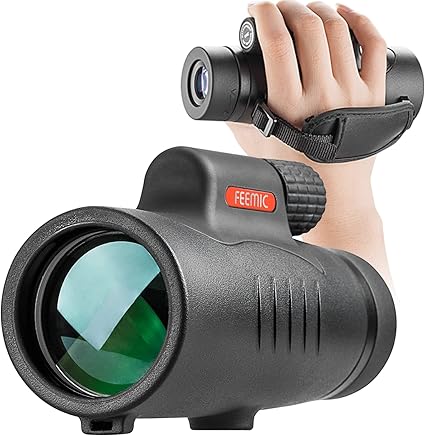
High Power 8×42 Monocular Telescope is great for bird watchers who want clear, wide-angle views at 8X magnification. Its standout feature is the combination of a large 42mm objective lens with a wide 360ft/1000yards field of view, perfect for spotting birds in outdoor settings without strain.
Setting up involves simply adjusting the manual focus to sharpen details. The monocular’s lightweight and easy-to-hold rubber finish makes it comfortable to carry for long periods. Its built-in lens dust cover protects the optics, while the waterproof, fogproof, and shockproof design means it handles all kinds of weather, so daily use doesn’t need special care or caution.
The clarity through the fully multi-coated BAK-4 prism optics delivers crisp images with good brightness. It holds up well against rough outdoor conditions thanks to its durable rubber coating and nitrogen-filled waterproofing. Most users appreciate its tough build and high-quality glass.
The most frequent criticism involves manual focus requiring some practice for quick adjustments in the field.
Clarity and durability are the strongest points, with the optics delivering sharp, bright views in various weather thanks to waterproof and shockproof features. However, focusing manually can slow down spotting fast-moving birds, as quick refocusing takes some getting used to.
People who want solid, weather-resistant optics for steady viewing will enjoy this monocular. Those needing rapid focusing or advanced mount flexibility might find other models better suited to their style. This one fits well for casual to moderately serious bird watchers wanting rugged reliability.
Pros
- Wide-angle, clear 8X magnification
- Waterproof, fogproof, and shockproof
- Rubber finish provides good grip and durability
- Compatible with camera and smartphone
Cons
- Manual focus can be tricky for quick changes
- Altazimuth mount may limit certain adjustments
| Specification | Details |
|---|---|
| Magnification | 8X |
| Objective Diameter | 42mm |
| Field Of View | 360ft/1000yards |
| Coating | Fully Multi-Coated |
| Focus Type | Manual Focus |
| Waterproof | Yes (Nitrogen-filled) |
6. Flagship 20-60×80 Spotting Scope

Zooming feels smooth and natural, making distant birds come alive with surprising clarity. Ideal for bird watchers who want detailed views without fuss, it stands out for its versatile 20x to 60x magnification, allowing you to catch everything from a quick glimpse to the smallest feather detail up close.
Setup is straightforward, with a manual focus that quickly adapts to different distances thanks to its dynamic lens system. The altazimuth mount handles easy panning and vertical adjustments, and the included smartphone adapter lets you snap photos through the scope.
Its water-resistant coating means you won’t worry if a bit of moisture hits during an early morning outing.
Performance shines thanks to the 80mm fully multi-coated lens and BAK4 Porro prism that deliver bright, crisp images. The field of view covers a generous 82.9 to 48 feet at 1000 yards, letting you scan wide areas or zoom in sharply.
It feels solidly built but can be a bit bulky to carry for long hikes. A common note is that manually focusing can take a moment when zoomed all the way.
The brightest praise highlights the lens quality, delivering sharp, vivid images across the zoom range. A frequent complaint involves the manual focus slowing down when zoomed all the way, demanding patience for crystal-clear detail. The water-resistant coating helps keep views unobstructed in damp conditions.
Enthusiasts who want a powerful zoom and good image clarity will appreciate this scope. Those seeking ultra-portable gear for long treks might consider lighter options, as the weight and size could become tiring over time.
Pros
- Variable zoom from 20x to 60x magnification
- Bright and sharp images with BAK4 prism
- Water resistant and fog free coating
- Compatible with smartphones for photography
Cons
- Manual focus can be slow at high zoom
- Bulky design for carrying on long hikes
| Specification | Details |
|---|---|
| Zoom Ratio | 60 multiplier x |
| Field Of View | 82.9 feet |
| Mount | Altazimuth Mount |
| Focus Type | Manual Focus |
| Coating | Fully Multi-Coated |
| Finderscope | Reflex |
7. 40×60 High Power Monocular Telescope

Excellent for bird watching and outdoor adventures, this 40×60 monocular offers impressive zoom and sharp images. Suitable for both adults and children, its biggest strength lies in delivering bright, clear views even at long distances, making it a dependable choice for nature enthusiasts.
Setting it up is straightforward thanks to the included tripod and hand strap. The manual focus lets you adjust quickly to different scenes. Being compatible with smartphones, it becomes easy to capture what you see.
Its compact size makes it a comfortable companion on hikes or trips without weighing you down.
Performance-wise, it provides high contrast and resolution with its BAK4 prism and fully multi-coated lens. The waterproof and fog-proof design means it holds up well in various weather conditions.
Users appreciate the clarity of the images, though some mention needing patience to get the focus right initially.
Praised most for its clear and sharp images thanks to quality lenses and good light transmission. Common complaint is that focusing manually takes some getting used to and may slow down quick spotting attempts.
Perfect for people who enjoy steady, detailed views during outdoor activities and don’t mind adjusting focus themselves. Less ideal for users seeking instant autofocus or highly adjustable mounts.
Pros
- Bright, clear images with high contrast
- Waterproof and antifogging for tough conditions
- Includes tripod and smartphone adapter
- Compact and lightweight for easy carrying
Cons
- Manual focus requires patience and practice
- Fixed mount limits flexibility in positioning
| Specification | Details |
|---|---|
| Field Of View | 2400 yard |
| Zoom Ratio | 40x-60x |
| Focus Type | manual |
| Compatible Devices | Smartphone |
| Additional Features | Includes Smartphone Adapter, Tripod, and Hand Strap |
8. 80×100 High Powered Monocular Telescope

Lightweight design and high-quality optical lenses make this monocular ideal for bird watchers who need clarity on the go. Its biggest strength lies in delivering clear, bright images without the bulk of larger scopes, making it perfect for outdoor enthusiasts who want a compact, powerful tool.
Setting up involves just manual focusing through the eyepiece lens named Brandon. The straight-through finderscope helps you quickly locate birds without fumbling through complicated adjustments. Its comfortable grip and travel-friendly size mean it fits nicely in your pack and is easy to carry during hikes or camping trips.
Performance-wise, the optical clarity stands out with multi-layer coatings that reduce reflections and boost light transmission. Image detail remains sharp even in varying light conditions.
Built solidly yet lightweight, it balances portability with durability. Strong praise centers on its clear optics, while some note manual focus requires careful adjustment to avoid missing fast-moving subjects.
Optical clarity with minimal reflection is the highlight, making detailed viewing enjoyable. Manual focusing takes patience, especially tracking fast birds, which some find challenging.
Ideal for bird watchers wanting portability and image quality in one package. Might not suit users needing quick autofocus or those preferring more advanced finderscopes for rapid movements.
Pros
- Clear, bright images in various lighting
- Compact and lightweight for travel
- Easy to grip and hold steady
- Multi-layer lens coatings reduce glare
Cons
- Manual focus can be tricky on moving objects
- Finderscope alignment may require adjustments
| Specification | Details |
|---|---|
| Eye Piece Lens Description | Brandon |
| Focus Type | Manual Focus |
| Finderscope | Straight-Through |
| Magnification | 80×100 |
9. 12×56 High Powered Monocular Telescope

Bright and clear views stand out immediately with 12x magnification and a wide field of vision. Suited for bird watchers who want detail and a broad view, this monocular helps spot wildlife far away without losing clarity. Its large lenses bring in extra light, making outdoor watching more enjoyable during any time of day.
Setup involves attaching the included 6 x adjustable tripod for steady viewing, which is simple to handle. Manual focus lets you dial in crisp images easily, and a phone adapter adds the option to capture what you’re observing.
The monocular’s hand strap and travel bag make it easy and convenient to carry on hikes or camping trips.
When focusing on distant birds, details appear sharp thanks to the fully multi-coated lenses and large 56mm objective lens. The build feels solid but compact enough to carry comfortably.
The strongest point mentioned in reviews is the bright, expansive field of view at 12x power. The most common downside noted is manual focus, which can require a little patience to get perfect clarity.
The bright and large field of view at 12x magnification receives high praise, allowing users to see distant birds clearly. Manual focus requires careful adjustment, which some find less convenient for quick spotting or fast-moving subjects.
People who enjoy steady, detailed viewing during outdoor activities will appreciate this monocular. Those needing rapid focus adjustments or night use might want to look for a product with auto-focus or enhanced low-light performance instead.
Pros
- Wide 6.5° angle for large viewing area
- Large 25mm eyepiece for brighter image
- Includes phone adapter for easy photos
- Comes with a handy travel bag
Cons
- Manual focus can be slow to adjust
- Not suitable for very low-light conditions
| Specification | Details |
|---|---|
| Magnification | 12X |
| Objective Lens Diameter | 56mm |
| Field Of View | 391.7 yard |
| Focus Type | manual |
| Included Tripod | 6 x adjustable |
| Phone Adapter | compatible |
10. Nikon Prostaff 5 82mm Angled Spotting Scope 20-60x

Bright images and a wide zoom range make this spotting scope ideal for bird watchers wanting detailed views without lugging heavy gear. Its 82mm objective lens strikes a smart balance between brightness and size, appealing to those who need powerful optics in the field.
Setting up is straightforward thanks to its center focus type and lightweight Porro prism design, which feels comfortable for longwatching sessions. The built-in sliding sunshade helps reduce glare on bright days while protecting the lens in dusty or wet conditions.
Its waterproof and fogproof build means you can trust it during various weather without worry.
The adjustable 20-60x zoom delivers crisp, high-contrast images with good color accuracy. The fully multi-coated optics improve clarity, helping you spot small bird details from a distance. Constructed with nitrogen purging and O-ring sealing, it stands up well to moisture.
Strongest praise centers on its bright, clear view; the most frequent complaint calls out the manual focus needing steady handling.
People appreciate the bright, clear images and glare reduction thanks to the sunshade. Common feedback points to the manual focusing as needing care, especially when tracking active birds.
Bird watchers valuing sharp, color-accurate views in various weather will find this suitable. Those needing quicker autofocus or lighter handheld scopes might look elsewhere.
Pros
- Bright, high contrast images with true colors
- Lightweight and ergonomic Porro prism design
- Effective built-in sliding sunshade
- Waterproof and fogproof for all conditions
Cons
- Manual focus requires steady hands
- Focus adjustment can be slow for fast-moving subjects
| Specification | Details |
|---|---|
| Objective Lens | 82mm |
| Focus Type | Center Focus |
| Zoom Ratio | 20:60 |
| Field Of View | 104.8 degrees |
| Waterproof/Fogproof | Nitrogen-purged and O-ring sealed |
11. ZEISS Conquest Apia 20-50×65 Angled Spotting Scope

Birdwatching in varying light and weather can quickly become frustrating without a reliable scope that balances clarity and portability. Ideal for hikers and outdoor enthusiasts, this lightweight spotting scope focuses on sharpness and compactness, making it easy to carry without sacrificing zoom capability.
Packing it along a trail or setting it up at a favorite watch spot is straightforward thanks to its compact 11.7-inch length and light weight. The manual focus works smoothly, while the detachable throw lever on the zoom allows one-handed adjustments from 20x to 50x power. Long eye relief on the Apia eyepiece reduces eye strain during extended viewing sessions, and the Arca-Swiss mount ensures secure attachment to compatible tripods.
The scope delivers bright and sharp images through extra-low dispersion glass and ZEISS FieldFlattener Technology, holding up well in low light situations. Its hydrophobic LotuTec coating really comes in handy in wet conditions, repelling water from the lens surface.
A common point raised is that the manual focus takes some practice to get just right, but the build feels sturdy and designed for serious outdoor use.
The scope gives consistently bright, sharp images thanks to premium optics and field flattening technology, with users praising its performance even in low light and wet conditions. On the downside, manual focus demands getting used to and is a frequent challenge for those expecting quicker adjustments.
People seeking a lightweight, portable scope for serious birdwatching and outdoor hikes will appreciate its design and optical quality. Those wanting rapid automatic focusing or a larger field of view might need to consider alternative models better suited to those preferences.
Pros
- Compact and lightweight at 11.7 inches for easy transport
- Hydrophobic coating repels water effectively in all weather
- Long eye relief eases viewing over long periods
- Detachable throw lever enables one-handed zoom control
Cons
- Manual focus requires patience to achieve precise sharpness
- May be less suitable for users preferring automatic focusing
| Specification | Details |
|---|---|
| Eye Piece Lens Description | Coated Eyepiece Lens |
| Mount | Arca-Swiss Mount |
| Focus Type | Manual Focus |
| Focal Length Description | 20-50 mm |
| Zoom Ratio | 20x to 50x |
| Field Of View | 144 feet |
12. Celestron Hummingbird ED 56mm Angled Spotting Scope

With a compact 56mm lens and a zoom range from 9x to 27x, this spotting scope suits bird watchers who want sharp images without lugging heavy gear. Its standout feature is the close focus distance of just 10 feet, perfect for detailed observations in the field.
The scope’s small size fits easily in pockets or bags, making it simple to carry during walks or hikes. The manual focus lets you adjust quickly, and its tripod adaptability offers stability on longer viewing sessions. The built-in rechargeable battery removes the hassle of changing power sources for the reflex finderscope.
Image clarity through the ED lens keeps colors vivid and well managed, while the waterproof, nitrogen-filled body ensures reliable performance in damp or humid conditions. The build feels solid yet lightweight. Strong points mentioned in feedback praise the image sharpness and portability, while some note the manual focus requires patience for perfect clarity.
Sharp, vivid image quality and the ability to carry it comfortably all day are the strongest points and most common praise. The manual focusing sometimes requires patience to get the perfect image, which can affect fast-moving bird watching moments.
Bird watchers wanting a lightweight, easy-to-carry scope with excellent close-up detail will find this well suited. Those needing faster autofocus or deeper zoom ranges might want to consider other options.
Pros
- Compact size fits easily in vest or coat pockets
- Sharp images with vivid, well-managed color
- Waterproof and nitrogen filled for weather resistance
- Light and portable for extended outdoor use
Cons
- Manual focus can be slow for quick target changes
- Close focus distance may limit some longer-range observations
| Specification | Details |
|---|---|
| Magnification Range | 9-27x |
| Close Focus Distance | 10 ft. / 3m |
| Focus Type | Manual Focus |
| Power Source | Internal rechargeable battery |
| Coating | Fully Multi-Coated |
| Mount | Tripod adaptable |
13. HAWKE Vantage 20-60×60 Spotting Scope

Birdwatchers who want a scope with strong magnification and clear optics will find the Hawke Vantage 20-60×60 well suited for distant viewing. Its biggest strength lies in the fully multi-coated lenses paired with BK-7 Porro prisms, producing sharp, colorful images that help pick out fine details in nature scenes.
Setting up involves attaching the scope to the included adjustable mini tripod or using a separate tripod via the tripod mount. The manual focus and diopter adjustment let you quickly sharpen views on birds at varying distances.
The scope is waterproof, so outdoor conditions like dew or light rain don’t interfere with day-to-day use. The soft scope cover and hard carrying case help protect it when transported.
Optics deliver intense color and contrast due to the BK-7 prism system, making bird details stand out well across its 20-60x magnification range. The build feels sturdy with a 60mm objective lens providing good brightness, though some find the manual focus a bit slow to adjust precisely. Users appreciate the quality image but note the exit-pupil diameter of 1 millimeter means viewing comfort can decrease at maximum zoom.
The most common praise highlights the sharp, colorful images produced by its fully multi-coated lenses and BK-7 Porro prisms. A frequent complaint centers on the manual focus being somewhat slow to adjust, which can affect quickly locking onto a moving bird. The 1-millimeter exit-pupil diameter at high magnification may also strain the eyes during longer viewing sessions.
Those wanting detailed nature observation with a sturdy, weather-resistant scope will value this model. Birdwatchers requiring quick focusing or more comfortable viewing at the highest zoom levels may want to consider other options that offer faster focus mechanisms or larger exit pupils.
Pros
- Sharp images with rich color and contrast
- Adjustable mini tripod included
- Waterproof design for outdoor use
- Hard storage case and soft scope cover
Cons
- Manual focus can be slow to fine-tune
- Exit-pupil diameter small at 1 millimeter
| Specification | Details |
|---|---|
| Magnification Maximum | 10 x |
| Objective Lens Diameter | 6 centimeters |
| Coating | Fully Multi-Coated |
| Prism Type | Porro Prism |
| Water Resistance Level | Waterproof |
14. SVBONY SV28 Spotting Scope 25-75x

Bright images with a 100mm aperture and an angled eyepiece make this spotting scope excellent for bird watchers who want clarity and comfort. Its adjustable magnification from 25x to 75x offers detailed views without strain. Ideal for those who spend long hours observing birds in varying light conditions.
Setting up involves the SV146 tabletop tripod, which allows smooth 360-degree horizontal and 120-degree vertical rotation. Adjusting the angle is simple with a locking ring, making it easy to switch viewing positions. The manual focus keeps things straightforward, and the phone adapter lets you capture or share what you see without fuss.
Bright and sharp images come through thanks to the 100mm lens and fully multi-coated optics. It handles low light well, showing good detail at high magnifications.
The build is solid but leans on manual focus, which some may find less convenient for quick adjustments. The stand is versatile, though not as high as a full-size tripod.
Sharp and bright images stand out, especially in low light thanks to the large 100mm lens and full multi-coatings. Manual focus and limited tripod height come up as points where some find it less flexible during fast-moving wildlife spotting.
Those spending time at a fixed spot or indoors will appreciate the comfort and clarity, especially with smartphone compatibility. Bird watchers needing fast focus changes or higher tripod placement might prefer other options.
Pros
- Bright images with 100mm aperture lens
- Angled eyepiece for comfortable viewing
- Adjustable tabletop tripod with wide rotation
- Includes phone adapter for easy photography
Cons
- Manual focus may slow quick adjustments
- Tabletop tripod limits height compared to full tripods
| Specification | Details |
|---|---|
| Eye Piece Lens Description | 25-75X100MM |
| Mount | Altazimuth Mount |
| Focus Type | manual focus |
| Coating | Fully Multi-Coated |
| Compatible Devices | Full Size Tripod, Smartphone, Spotting Scope Camera |
15. Barska Blackhawk 25-75×100 Angled Spotting Scope

Barska Blackhawk 25-75×100 Angled Spotting Scope is ideal for bird watchers who want powerful zoom and bright images in a rugged design. It stands out for its ability to shift smoothly from wide to extreme close-up views without losing clarity.
Setting up involves attaching the scope to either the tabletop or alt-azimuth mount using the rotating tripod collar. The included foldable mini tripod provides a stable base.
Manual focus lets you adjust precisely, while the reflex finderscope helps lock onto birds quickly. The rubber armor gives a good grip and protection when outdoors.
Bright, crystal clear views come from the large 100mm objective lenses combined with BAK-4 prism and multi-coated optics. The scope holds up well in changing weather since it is waterproof, fogproof, and shockproof.
One big plus is the sharp detail at high magnification. Some users note the manual focus requires care at maximum zoom.
Most praises highlight the bright views and strong zoom that bring distant birds into sharp focus. The main complaint concerns the manual focus, which takes some practice to fine-tune at maximum magnification.
People who want rugged gear with versatile zoom and don’t mind manual adjustments will appreciate this scope. Those preferring lighter setups or autofocus might prefer other models.
Pros
- Multi-coated optics for bright images
- Shock-absorbing rubber armor
- Includes foldable mini tripod
- Waterproof and fogproof design
Cons
- Manual focus can be tricky at high zoom
- Relatively heavy due to large 100mm lens
| Specification | Details |
|---|---|
| Power Source | hand_powered |
| Focus Type | manual focus |
| Mount | Tabletop or Alt-Azimuth Mount |
| Zoom Ratio | 3.75 |
| Field Of View | 88 feet |
Best Bird Watching Scopes Compared Side by Side
| Product | Magnification | Mount Type | Coating | Weight |
|---|---|---|---|---|
| SVBONY SV28 Spotting Scope | 3:1 zoom | Equatorial | FMC | – |
| HD 20-60×80 Scope with Tripod | 20-60x | – | – | 2.6 pounds |
| Celestron Ultima 22-66×100 | 22-66x | Equatorial | Multi-Coated | – |
| SVBONY SA401 APO 25-75×100 | 25-75x | – | – | 5940 g |
| High Power 8×42 Monocular | 8x | Altazimuth | Fully Multi-Coated | – |
| Flagship 20-60×80 Scope | 60x | Altazimuth | Fully Multi-Coated | – |
| 40×60 High Power Monocular | 40-60x | Fixed | – | – |
| 80×100 High Power Monocular | 80x | – | – | – |
| 12×56 High Power Monocular | 12x | Fixed | Fully Multi-Coated | – |
| Nikon Prostaff 5 82mm | 20-60x | – | Fully Multi-Coated | – |
| ZEISS Conquest Apia 20-50×65 | 20-50x | Arca-Swiss | – | – |
| Celestron Hummingbird ED 56mm | – | Tripod adaptable | Fully Multi-Coated | – |
| HAWKE Vantage 20-60×60 | 10x max | Tripod | Fully Multi-Coated | – |
| SVBONY SV28 Spotting Scope | 25-75x | Altazimuth | Fully Multi-Coated | – |
| Barska Blackhawk 25-75×100 | 3.75x | Tabletop/Alt-Azimuth | Multi-Coated | – |
- Magnification3:1 zoom
- Mount TypeEquatorial
- CoatingFMC
- Weight–
- Magnification20-60x
- Mount Type–
- Coating–
- Weight2.6 pounds
- Magnification22-66x
- Mount TypeEquatorial
- CoatingMulti-Coated
- Weight–
- Magnification25-75x
- Mount Type–
- Coating–
- Weight5940 g
- Magnification8x
- Mount TypeAltazimuth
- CoatingFully Multi-Coated
- Weight–
- Magnification60x
- Mount TypeAltazimuth
- CoatingFully Multi-Coated
- Weight–
- Magnification40-60x
- Mount TypeFixed
- Coating–
- Weight–
- Magnification80x
- Mount Type–
- Coating–
- Weight–
- Magnification12x
- Mount TypeFixed
- CoatingFully Multi-Coated
- Weight–
- Magnification20-60x
- Mount Type–
- CoatingFully Multi-Coated
- Weight–
- Magnification20-50x
- Mount TypeArca-Swiss
- Coating–
- Weight–
- Magnification–
- Mount TypeTripod adaptable
- CoatingFully Multi-Coated
- Weight–
- Magnification10x max
- Mount TypeTripod
- CoatingFully Multi-Coated
- Weight–
- Magnification25-75x
- Mount TypeAltazimuth
- CoatingFully Multi-Coated
- Weight–
- Magnification3.75x
- Mount TypeTabletop/Alt-Azimuth
- CoatingMulti-Coated
- Weight–
How to Choose the Right Bird Watching Scope
The most important factors to consider are magnification, lens quality, and durability since these affect how clearly and comfortably you can observe birds. Choosing a scope that fits your needs prevents frustration and costly replacements, ensuring better viewing experiences over time.
Build and Durability
One rainy morning in the field made it clear how different scopes handle tough weather. A quality item with proper weatherproofing and fog resistance allows you to keep watching without the lens clouding up. This typically means nitrogen or argon purging and sealed O-rings, which keep moisture and dust out.
Models without these features fog up quickly, ruining the view. Materials play a big role too.
Aluminum alloy bodies offer a good balance of lightness and durability, while cheaper plastics often feel fragile and add unnecessary bulk.
Shockproofing also matters if you’re hiking or accidentally drop the scope. Scopes with rubber armoring absorb impacts better.
This prevents internal elements from misaligning and keeps the scope working after rough handling. Without it, a single fall might throw off the focus or damage the lens assembly, forcing repairs or replacement.
Ease of Use and Portability
Using a heavy or bulky scope for several hours quickly leads to arm fatigue and less enjoyable birdwatching. The right size and weight depend on whether you hold it or mount it. Handheld scopes around 1.5 to 2 pounds feel manageable, while heavier models often require a tripod.
Smooth focusing is critical. A coarse or sticky focus knob wastes time and causes frustration when tracking fast-moving birds.
Ergonomics matter more than expected during long sessions. Features like rubber grips, angled eyepieces, and balanced weight make a noticeable difference.
Scopes designed with these in mind allow longer observation without discomfort, avoiding hand cramps or awkward postures that come with poorly designed devices.
Mounting and Compatibility
Stable viewing relies on good tripod compatibility. Most scopes fit standard 1/4-20 mounts, but poorly positioned or stubborn threads make setup a hassle. A quick-detach plate helps with fast mounting or switchouts without fiddling with screws.
This is especially useful in changing field conditions.
Many birders want to capture images, so compatibility with smartphone or camera adapters is key. A dependable scope will offer adapters or be straightforward to attach them, without needing extra tools.
This flexibility expands the scope’s usefulness beyond just viewing.
Price and Warranty
Choosing a product that balances cost and features can be tricky. Higher-priced scopes usually include better glass, coatings, and construction but check if those extras justify the price. Sometimes mid-range options offer solid performance close to premium ones for less money.
Warranty length and coverage are important as well. A standard two to three-year warranty covering defects and some repairs reduces risk. It’s worth confirming support availability too, as quick customer service and accessible repair options matter when something stops working during the season.
Tips for Maximizing Image Clarity During Bird Watching Sessions
Clean your scope’s lenses before each use to remove dirt or smudges that can blur the image. Use a soft microfiber cloth or lens cleaning tissues designed specifically for optics.
Adjust the focus slowly; rushing can make the view shaky and less sharp.
Mount your scope on a steady tripod rather than holding it by hand. This reduces shaking, which is the biggest cause of blurry images during long viewing sessions. Position yourself so the sun is behind you, which provides better lighting and clearer views of the bird.
Other useful tips include:
- Use the zoom function moderately, as high zoom settings can reduce clarity due to atmospheric distortion.
- Patience helps. Let your eyes adjust to the view and refocus if the bird moves.
- Wear a comfortable neck strap for easy handling and quick repositioning without sacrificing stability.
Common Mistakes to Avoid When Using a Bird Watching Scope
A common error is not securing the scope properly on the tripod, which can lead to wobbling and loss of focus. Make sure the mounting is tight before starting your session. Avoid using the highest magnification immediately; increasing zoom gradually helps maintain image stability and clarity.
Ignoring weather conditions is another mistake. Even the best scopes struggle in fog, rain, or strong wind.
Plan your outing during clear weather to improve visibility and protect your gear.
Other pitfalls to avoid:
- Failing to calibrate the focus for each new target distance, as fixed focus reduces sharpness.
- Handling the scope with dirty or greasy hands, which can leave marks on the lenses.
- Shifting the scope too quickly while tracking birds, causing the image to blur.
People Also Asked
How Do I Properly Clean and Care for a Bird Watching Scope?
Use a soft brush or air blower to remove dust before wiping lenses with a microfiber cloth. Avoid household cleaners; use lens-specific solutions sparingly to prevent damage. Store the scope in a padded case to keep it protected from moisture and scratches.
What Size Scope Is Ideal for Beginner Bird Watchers?
A 20-60x zoom scope with a 60–80mm objective lens is a practical choice for beginners. It balances magnification and ease of use, avoiding excessive weight that could make handheld viewing difficult. Tripods help steady the view, especially for beginners.
Are Bird Watching Scopes Safe to Use Around Wildlife?
Bird watching scopes do not harm wildlife if used responsibly by keeping a respectful distance. Staying still and avoiding sudden movements reduces disturbance. Using scopes allows seeing details without approaching or stressing birds.
How Long Do Bird Watching Scopes Typically Last with Regular Use?
With careful handling and proper maintenance, bird scopes can last many years, often over a decade. Regularly cleaning lenses and protecting the exterior from impact extend their lifespan. Avoid exposing them to extreme temperatures or moisture.
What Are Common Problems Experienced with Bird Watching Scopes?
Common issues include fogging inside the lenses, difficulty focusing, and loose mounting connections. Fogging can be reduced by storing in dry conditions or using anti-fog treatments. Check and tighten tripod mounts before use to keep the image stable.
Conclusion
Choosing the best bird watching scope comes down to a few key factors: clear magnification for detailed viewing, solid build quality to last outdoors, and ease of use since you don’t want to miss a bird because the scope is complicated. Weight matters too if you plan on carrying it a lot during hikes or trips.
Think about where and how often you’ll use the scope before making a decision. A heavier or more expensive model might work well if you have a fixed viewing spot, but something lighter and cheaper might suit casual use better.
Look back over the comparison table and the options above to find the one that fits your needs and budget best.