Top 15 Best DMR Scope That Will Boost Your Accuracy Fast
Having a cheap or poorly matched scope can ruin a long-range shooting session. The best dmr scope makes a clear difference in precision and reliability, especially when conditions aren’t perfect. A foggy lens, unclear reticle, or a scope that doesn’t hold zero can cost you shots and cause frustration on the range or in the field.
What sets a good dmr scope apart is mainly glass clarity, reticle design, and durability. For clarity, look for fully multi-coated lenses to reduce glare and improve light transmission around 90 percent or higher.
The reticle should be precise but not overly complicated; mildot or BDC styles help with range estimation without cluttering the sight picture. On durability, the scope needs to withstand recoil and be waterproof or fog-proof, often rated to IP67 or better, so it holds up in various weather conditions.
Need a Quick Check?
| Image | Product | Price |
|---|---|---|
Our Top Picks 1  | Primary Arms SLX Gen II | Check Price |
Our Top Picks 2  | Primary Arms SLX Compact 4-16×44 | Check Price |
Our Top Picks 3  | SIG SAUER Tango-DMR 5-30×56 | Check Price |
Our Selected Top 15 Dmr Scope Worth Buying
This list features a range of precision rifle scopes designed for designated marksman roles, highlighting their performance, suitability for different users, and key strengths and weaknesses. Each review provides clear insights to help identify the best scope based on accuracy, durability, and features.
1. Primary Arms SLX Gen II 3-18×50 FFP Rifle Scope
Magnification flexibility stands out on this scope, ranging from 3x to 18x, making it ideal for marksmen needing precision from mid to long range. Suited for rifles chambered in .308 Winchester and select .223 Remington rounds, its ACSS HUD DMR reticle allows quick target engagement without second-guessing holdovers or wind adjustments.
Setting it up is straightforward, with locking finger-adjustable turrets that make zeroing easy thanks to the Easy Stop return-to-zero feature. The first focal plane reticle stays accurate at every zoom level.
Day-to-day use involves consistent 0.1 MIL clicks giving precise elevation and windage adjustments, plus a solid 9.4 cm of eye relief that keeps shooting comfortable.
The scope performs well at extending range capabilities thanks to the calibrated BDC holdovers and moving target leads up to 1,000 yards. Its tough 30mm aluminum body feels substantial yet manageable at 32.4 oz, built to handle rough conditions with waterproof and fog-resistant features.
Users appreciate its ruggedness, though some note the overall length of 13.6 inches can feel slightly bulky in tight setups.
The greatest praise comes from the reticle’s precision and consistency across all zoom levels, helping with accurate shots out to 1,000 yards. People often mention the scope’s solid construction and reliable turrets. The most common complaint revolves around its size and weight making it less ideal for more compact or lightweight firearms.
People focused on mid- to long-range shooting with rifles chambered in .308 or select .223 loads will benefit most. Those who need the lightest or smallest optical setup might want to consider other scopes due to its weight and length. Ruggedness and advanced reticle features make it better suited for shooters willing to carry some extra bulk in exchange for.
Pros
- Reticle accurate at every magnification level
- Easy Stop turrets with locking feature
- Waterproof, shockproof, and fog resistant
- Wide magnification range from 3x to 18x
Cons
- Larger 13.6-inch length may limit compact setups
- Weight at 32.4 oz feels heavy on some rifles
| Specification | Details |
|---|---|
| Magnification Minimum | 3 x |
| Magnification Maximum | 18 x |
| Objective Lens Diameter | 50 millimeters |
| Eye Relief | 9.4 centimeters |
| Reticle Type | ACSS-HUD-DMR-308 |
| Weight | 32.4 oz |
2. Primary Arms SLX Compact 4-16×44 FFP Rifle Scope
For shooters wanting a scope that’s compact yet packed with long-range features, the Primary Arms SLX Compact 4-16×44 FFP stands out. Great for designated marksman roles, its ACSS HUD DMR reticle offers detailed holdovers and wind holds right in the first focal plane, ensuring accurate shots at varying distances.
Setting it up is straightforward with its 30mm tube and easy mounting. Daily adjustments are smooth thanks to 0.1 MIL click increments and a wide range of elevation and windage travel.
The parallax adjustment going from 10 yards to infinity keeps shots sharp, while a battery-powered reticle means it stays visible across different lighting conditions.
It performs well under different conditions, balancing magnification power and clarity through 44mm lenses. Its 20.5 oz weight and 10.1-inch length make it manageable without sacrificing durability. Waterproof, shockproof, and fog resistant features are reliable, though some note the battery life can be a limiting factor in longer outings.
The reticle’s clear aiming points and range estimations make it excellent for precise shooting at various distances. Battery dependency for the illuminated reticle occasionally causes problems during extended use when a backup isn’t ready. Many appreciate how durable and dependable it is, but the battery life remains a concern.
Ideal for shooters needing a compact, functional scope with detailed ballistic support for mid to long ranges. Hunters or marksmen requiring super high magnification or extended battery life might need to look elsewhere. It blends well with rifles needing an ambidextrous, everyday shooter setup without bulk.
Pros
- True first focal plane reticle at all magnifications
- Compact and lightweight build fits most rifles easily
- Reliable waterproof and fog resistant design
- Precise 0.1 MIL adjustment clicks for fine tuning
Cons
- Reticle relies on CR2032 battery, which may drain unexpectedly
- Magnification maxes out at 16x, limiting extreme long-range shots
| Specification | Details |
|---|---|
| Magnification Range | 4x to 16x |
| Objective Lens Diameter | 44 millimeters |
| Eye Relief | 10.2 centimeters |
| Mounting Type | 30mm Scope Mount |
| Windage Travel | 80 MOA |
| Elevation Travel | 60 MIL |
3. SIG SAUER Tango-DMR 5-30×56 Riflescope
Long-range shooting demands clear vision and precise adjustments, especially under changing conditions. Perfect for hunters and tactical shooters aiming at distant targets, this scope’s standout feature is its wide magnification range combined with rugged reliability.
Setting up the scope is straightforward thanks to the multi-lock zero stop elevation dial, which simplifies dialing in shots at varying distances. The 34mm main tube offers plenty of elevation travel to cover extreme ranges.
Its fogproof and shockproof design holds zero without fuss during regular outings, and the IPX7 waterproof rating means unexpected rain won’t affect performance.
The clarity through the optics stands out with High Definition glass, delivering crisp images even at maximum 30x magnification. The build is tough and dependable, designed to handle harsh outdoor conditions without adding extra weight. Strong points include accurate zero stops and crystal-clear views; some find the field of view narrower at higher magnifications, which can slow target acquisition slightly.
High-quality optics provide sharp, detailed imaging up to 30x, highly appreciated for clarity and precision. The most common drawback is the somewhat limited field of view when zooming in, which can make tracking moving targets more challenging.
Hunters and shooters needing reliable performance across long distances will find this scope meets expectations well. Those prioritizing a wider field of view or lower profile optics may want to consider alternatives better optimized for those needs.
Pros
- Wide magnification range from 5x to 30x
- Multi-lock zero stop elevation dial for precision
- Shockproof and fogproof for harsh environments
- High Definition glass delivers clear images
Cons
- Narrower field of view at high magnification
- Large objective lens may affect mounting options
| Specification | Details |
|---|---|
| Magnification Maximum | 30 x |
| Objective Lens Diameter | 5.6 centimeters |
| Magnification Minimum | 5 x |
| Eye Relief | 94 |
| Field Of View | 21 |
4. Bushnell Elite Tactical 3.5-21×50 DMR3 Riflescope

Offering a 6x magnification ratio in a compact design, the Bushnell Elite Tactical 3.5-21×50 DMR3 Riflescope suits shooters seeking flexibility from close quarters to beyond 1,000 yards. Its standout feature is the combination of high magnification with a lightweight body, making it a solid choice for precision shooting in varied conditions.
Setup is straightforward thanks to the integral mount, and the multi-position Throwhammer magnification lever lets you adjust zoom quickly on the move. The G4P reticle offers clear aiming points, and the 25-yard parallax adjustment keeps targets sharp whether up close or far off. Daily adjustments feel intuitive due to the bold turret markings that are easy to read in different light conditions.
Performance shines in long-range accuracy, with the scope maintaining clarity across its zoom range. The build quality feels sturdy yet light, which helps during extended outings. Review highlights praise its crisp optics and ergonomics, while a common drawback mentions that the objective lens diameter (34 millimeters) might limit some light-gathering compared to larger scopes.
The scope performs well with sharp optics and easy handling praised by those familiar with it. The most common complaint revolves around its moderate objective lens diameter, which limits light intake in dim conditions compared to larger scopes.
Shooters wanting a balanced setup for ranges up to 1,000 yards will find this well suited. Those needing greater low-light clarity or above 6x magnification may want to explore other options.
Pros
- Wide 6x magnification ratio in compact package
- Multi-position magnification lever for quick changes
- Bold turret markings for easy adjustments
- Lightweight design suitable for extended use
Cons
- Objective lens diameter may limit low-light performance
- Maximum magnification capped at 6x for extreme long range
| Specification | Details |
|---|---|
| Magnification Minimum | 3.5 x |
| Magnification Maximum | 6 x |
| Objective Lens Diameter | 34 millimeters |
| Reticle Type | G4P Reticle |
| Mounting Type | Integral Mount |
5. SIG SAUER Tango-DMR 2-12×42 F1 FFP Riflescope

Ideal for hunters and precision shooters who want reliable accuracy over variable distances, the SIG SAUER Tango-DMR delivers a solid balance between ruggedness and clear optics. Its standout strength lies in the Multi-Lock Zero Stop elevation dial, which gives you confidence when dialing and returning to zero with consistent precision.
Setting it up is straightforward thanks to the 34mm maintube, providing a sturdy base for mounting. The first focal plane reticle means the MRAD Milling 2.0 scale stays accurate across all magnifications, from 2x up to 12x.
The high-definition ED glass and high transmittance coatings keep targets clear even in changing light throughout your day in the field.
Accuracy is impressive across the full zoom range, making it dependable for medium to long-range shots. The build quality feels tough and ready for regular use without worry.
Some note that the 34mm objective lens is slightly smaller than some scopes in its class, which may affect light gathering in very low-light conditions, but the glass clarity helps balance that out well.
The most praised feature is the Multi-Lock Zero Stop dial that consistently lets users dial back to zero with confidence, making follow-up shots more reliable. Some find the max magnification at 6x a bit low compared to others aimed at ultra-long-range shooting. The smaller objective lens sometimes impacts performance in low light.
Hunters and shooters focusing on medium to long distances who value precision and ruggedness will appreciate the scope’s design and optics. Those needing extreme magnification for very long-range targets might want to consider a scope with higher zoom levels or a larger objective lens.
Pros
- Clear optics with excellent contrast across magnifications
- Multi-Lock Zero Stop ensures reliable return to zero
- Rugged maintube offers strong mounting stability
- First focal plane reticle for accurate ranging at all zooms
Cons
- Max magnification limited to 6x for some long-range needs
- 34mm objective lens smaller than many scopes in this category
| Specification | Details |
|---|---|
| Magnification Minimum | 2 x |
| Magnification Maximum | 6 x |
| Objective Lens Diameter | 34 millimeters |
| Reticle Type | MRAD Milling 2.0 |
| Compatible Devices | Rifle |
6. SIG SAUER Tango-DMR 3-18×44 Riflescope

Known for its wide magnification range and tough waterproofing, the SIG SAUER Tango-DMR 3-18×44 riflescope fits hunters and long-range shooters who need accuracy without compromise. Its standout feature is the multi-lock zero stop elevation dial combined with a 34mm maintube, allowing large elevation adjustments with confidence.
Setting up is straightforward, with a 9.4 cm eye relief that feels comfortable on the cheek weld during extended use. The scope’s fogproof and IPX7 waterproof rating means it handles early morning hunts or rainy conditions well.
Switching magnifications between 3x and 18x is smooth, and the field of view at lower power makes target acquisition quicker when scanning terrain.
Optically, the combination of high definition and high transmittance glass delivers clear images with crisp reticle visibility. The MRAD Dev-L 2.0 reticle supports precise range estimation and holdovers.
The metal housing feels solid and built for the recoil of large calibers. Mostly praised for its optical clarity and reliability, some mention that the weight can be noticeable on lighter rifles.
Clear optic quality and precise elevation adjustment stand out as key benefits for long-range shots. A common drawback is the scope’s weight, which can be an extra consideration on lighter rifles or during long carries.
A perfect match for shooters who value optical clarity and a wide zoom range with rugged construction. Those prioritizing a lightweight setup or needing smaller tube diameters might prefer other scopes better suited to those needs.
Pros
- Wide magnification range for versatile shooting
- Multi-lock zero stop elevation dial
- IPX7 waterproof and fogproof design
- Clear optics with high definition glass
Cons
- Heavier than some competition scopes
- Large maintube requires compatible mounting
| Specification | Details |
|---|---|
| Magnification Range | 3-18x |
| Objective Lens Diameter | 44 millimeters |
| Eye Relief | 9.4 centimeters |
| Field of View | 34.9 feet |
| Reticle Type | MRAD Dev-L 2.0 |
7. SWAROVSKI OPTIK dS 4-24×50 Riflescope
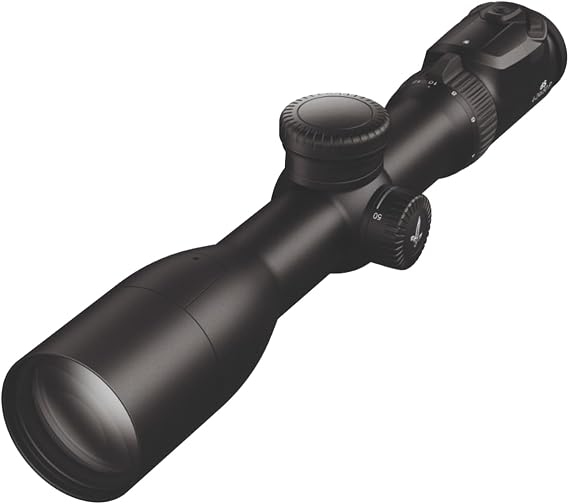
SWAROVSKI OPTIK dS 4-24×50 Riflescope offers a powerful combination of sharp optics and smart digital features for serious hunters who demand precision in all lighting conditions. Its built-in ballistic system stands out as its biggest strength, helping you make accurate shots at varying distances and angles.
Setting up involves mounting the durable 40mm main tube securely on your rifle. Using the illuminated 4A-I reticle is straightforward even in low-light situations, thanks to its clear design. Everyday use benefits from automatic adjustments that factor in range, angle, and environmental changes, reducing guesswork in the field.
The scope stays reliable whether you’re moving through fog or facing wet weather.
The optic glass delivers bright and detailed images across the full 4-24x magnification range, letting you pick out targets at long distances with ease. Its waterproof and fog-proof housing looks tough enough to handle rough outdoor conditions. The digital measurement system reliably adjusts aiming points, though users sometimes mention the complexity of the interface as a mild learning curve.
Everyday use benefits from the built-in ballistic system that automatically adjusts the aiming point, making shots more accurate. The main complaint involves the digital interface, which some users find complicated to operate while in the field.
Hunters who want precision shooting with smart technology will appreciate this scope’s features. Those looking for a simpler or lighter optic might want to explore other options with less digital complexity or smaller objective lenses.
Pros
- Bright, detailed images with 50mm objective lens
- Built-in ballistic system automates aiming adjustments
- Illuminated 4A-I reticle easy to see in low light
- Waterproof and fog-proof for harsh conditions
Cons
- Complex interface can be tricky for some users
- 50mm lens adds some weight compared to smaller scopes
| Specification | Details |
|---|---|
| Magnification Minimum | 4 x |
| Magnification Maximum | 24 x |
| Objective Lens Diameter | 40 millimeters |
| Reticle Type | 4A-I |
| Compatible Devices | Rifle |
8. Vortex Viper HD Second Focal Plane Scope

Setup feels solid with a 30mm tube that’s rugged enough for daily use on rifles and even shotguns. Perfect for those hunting or shooting at varying distances, the illuminated Dead-Hold BDC reticle takes away guesswork on holdover and windage, making it easier to get accurate shots without constantly adjusting aim.
Adjusting the eyepiece to focus the reticle is quick thanks to the fast-focus design. Capped turrets help keep windage and elevation settings locked in, protecting against accidental shifts during a day out.
The scope fits easily on dovetail, Weaver, or Picatinny mounts, which is handy if you change rifles or platforms often.
Optical clarity stands out thanks to specially selected glass elements that reduce color fringing and keep colors true across the view. The sharpness extends edge to edge, making target identification clearer. The biggest praise points to the remarkable resolution and BDC reticle design, while a cautious note is the scope’s weight, which might feel a bit heavy to some over long periods.
The clear standout is the optical clarity and color accuracy, allowing for precise shots with minimal guesswork. Users appreciate how the reticle simplifies aiming at varying distances, but the weight and size of the scope can be cumbersome for extended wear or lighter setups.
Hunters and shooters looking for reliable mid-to-long range adjustments and crisp glass will appreciate this scope. Those who favor lightweight gear or want a more compact size may want to consider alternative options better suited to those needs.
Pros
- Sharp, edge-to-edge clarity with HD optics
- Illuminated reticle with easy holdover marks
- Capped turrets prevent accidental adjustments
- Multiple mounting options fit various firearms
Cons
- Weight felt heavier than lighter scopes
- Some may find the tube size bulky
| Specification | Details |
|---|---|
| Magnification | 3-15x |
| Objective Lens Diameter | 44 millimeters |
| Reticle Type | Dead-Hold BDC (MOA) |
| Mounting Type | Dovetail, Weaver, Picatinny |
| Field of View | 39.9 feet |
9. Triton StarStrike-S Pro 5-25x Digital Scope

Excellent for shooters needing clear long-range detail, it adapts easily from mid to far distances. The single biggest strength lies in its sharp Full HD Vision Sensor, which makes it straightforward to identify targets clearly across varying zoom levels.
Setup is simple thanks to straightforward controls made for quick adjustments on the fly. Day-to-day, the zoom smoothly shifts from 5× to 25×, letting you scan wide areas or zero in on specific points with no hassle.
Its weather-resistant build keeps it reliable outdoors, so it holds zero even in tough conditions.
Image clarity and maintaining zero make it a dependable companion for demanding environments. It’s solidly built to handle rough weather without faltering and delivers crisp 1080p visuals with great contrast. The one limitation is the lack of image stabilization, which can affect steady viewing at maximum zoom under shaky conditions.
The full HD sensor earns strong praise for crisp images across zoom levels, giving confident target identification. Common feedback highlights the missing image stabilization as a drawback, especially when holding at maximum zoom.
Precision shooters prioritizing clear vision and durability will appreciate its reliable weather-proof design and responsive zoom. Those looking for adjustable focus or built-in stabilization should consider other scopes better suited to those features.
Pros
- Clear 1080p Full HD vision sensor
- Wide zoom range from 5× to 25×
- Weather-resistant and rugged design
- Simple, intuitive controls
Cons
- No image stabilization at high zoom
- Fixed focus limits manual adjustments
| Specification | Details |
|---|---|
| Focal Length Description | 5-25x |
| Lens Design | Zoom |
| Focus Type | Fixed Focus |
| Maximum Focal Length | 12.5 centimeters |
| Image stabilization | No |
| Lens Mount | Canon EF |
10. Nightforce ATACR 1-8×24 F1 Tactical Riflescope

Crafted with high-quality ED glass and designed for tactical applications, the Nightforce ATACR 1-8×24 F1 offers clarity and versatility. Ideal for shooters needing quick target acquisition along with variable zoom, it stands out by combining a daylight visible center red dot with an 8x magnification range.
Setting up the riflescope is straightforward thanks to its low-profile adjustments and Weaver mount compatibility. The 1x field of view provides a red-dot experience at minimum magnification, making rapid targeting simple. Daily use benefits from the 9.5 cm eye relief and the daylight illumination, making it a reliable choice in varied lighting conditions during hunting or tactical shooting.
The scope excels at long-range precision with its FC-DMx first focal plane reticle, allowing exact hold and hold-off points. The glass delivers sharp, bright images that stand up well in bright daylight.
Praise often highlights its clear optics and effective reticle; common criticism centers on the relatively small objective lens diameter compared to some competitors.
The most praised feature is the crystal-clear ED glass paired with an intelligent reticle that stays accurate at any magnification. User feedback often points out the small objective lens size, which can reduce brightness in low light situations.
Ideal for those needing a versatile scope combining quick aiming and variable zoom for mid to long distances. Those prioritizing maximum light intake or preferring larger lenses should consider alternatives better suited for low-light or extreme long-range conditions.
Pros
- Bright daylight illumination with center red dot
- First focal plane reticle for precise hold points
- Low-profile adjustments for easy tuning
- Wide 1x field of view for fast target acquisition
Cons
- Smaller 34 mm objective lens limits light gathering
- Weaver mount may require adapter on some setups
| Specification | Details |
|---|---|
| Magnification Minimum | 1 x |
| Magnification Maximum | 8 x |
| Objective Lens Diameter | 34 millimeters |
| Eye Relief | 9.5 centimeters |
| Reticle Type | FFP |
11. Bushnell Match Pro Riflescope

Sharpness and clarity stand out as soon as you look through the Bushnell Match Pro Riflescope, making it suited for precision shooters who need accurate holdovers at any magnification. Its biggest strength is the precise first focal plane DM2 MRAD reticle that stays accurate throughout the zoom range.
Setting up is straightforward thanks to the exposed locking elevation turret with an easy-to-use zero stop, making it quick to return to zero. The wide magnification range from 3 to 18 and a bright 50mm objective lens help keep your sight picture clear in various lighting.
The ambidextrous handling and 3.8 eye relief make daily use comfortable on different firearms.
It delivers reliable precision optics with fully multi-coated ED glass and Ultrawideband Coating that improves light transmission and contrast. The build quality is solid, featuring a multi-stage pop-up revolution indicator for tracking adjustments confidently. Most people find the glass clarity excellent, though some mention the eye relief could be better for certain shooting positions.
The glass clarity and light transmission earn frequent praise, making targets easy to spot even in tricky light. Some users note the eye relief could be longer to avoid strain during prolonged use or unconventional shooting stances.
Those looking for a versatile DMR scope with reliable reticle accuracy at any zoom will appreciate this model. Shooters needing more generous eye relief or different mounting options could consider alternatives better suited to those needs.
Pros
- Clear and bright glass with ED Prime coating
- Precise first focal plane MRAD reticle
- Easy-Set Zero Stop on elevation turret
- Wide magnification range from 3 to 18
Cons
- Eye relief may feel short for some positions
- Mounting only supports wall mount type
| Specification | Details |
|---|---|
| Magnification Minimum | 3 |
| Magnification Maximum | 18 |
| Objective Lens Diameter | 50 millimeters |
| Eye Relief | 3.8 |
| Reticle Type | Cross |
| Hand Orientation | Ambidextrous |
12. DNT Optics ThermNight Thermal & Night Vision Scope

Thermal imaging combined with digital night vision makes this scope stand out for anyone serious about nighttime target identification. It suits precision shooting in low light, offering clear views that go beyond standard night scopes. Its biggest strength is blending thermal detection with high-sensitivity sensors for reliable target spotting in the dark.
Setting it up on a rifle with the Picatinny mount is straightforward, and the 3x to 12x zoom covers close to medium range needs without swapping optics. Eye relief stays comfortable at 6.5 centimeters, so holding position is natural during extended use. The digital reticle keeps aiming precise as you change magnification or lighting, making it practical for daily or extended outings.
Performance-wise, the thermal sensor with less than 25mK NETD lets you catch details farther away than typical night vision alone. The 25 mm objective lens balances size and light gathering well.
Build quality feels solid, but some mention it’s a bit bulky for lighter rifles. Clear, stable visuals come up as the main positive, while the weight and bulk stand out as common drawbacks.
The combination of thermal imaging and low-light sensor gives clear and reliable target images at night, praised for detail and detection range. The main complaint revolves around the scope’s bulk, which can feel heavy and cumbersome depending on the rifle and user preferences.
Anyone needing a versatile night vision scope with strong target detection will appreciate this model’s features and clarity. Users seeking something compact or very lightweight might prefer scopes with a smaller profile or less technology integrated.
Pros
- Excellent nighttime detection with thermal and night vision
- Comfortable eye relief for steady aiming
- 3x to 12x zoom covers most shooting situations
- Easy Picatinny mounting
Cons
- Some find it bulky for lightweight rifles
- Limited objective lens size for extreme low-light
| Specification | Details |
|---|---|
| Magnification Maximum | 12x |
| Magnification Minimum | 3x |
| Objective Lens Diameter | 25 millimeters |
| Mounting Type | PMS – Picatinny 0 MOA Short |
| Eye Relief | 6.5 centimeters |
| Reticle Type | Digital |
13. SIG SAUER TANGO6 5-30×56 34mm FFP Riflescope

Hunting or precision shooting at various distances often demands a scope that adapts well to different rifles and conditions. The SIG SAUER TANGO6 5-30×56 is built for bolt action rifles and tactical platforms, shining most in its wide magnification range.
It fits shooters aiming for pinpoint accuracy in long-range engagements.
Setting up this scope is straightforward with its Picatinny mount, making it compatible with popular rifles right out of the box. Daily use benefits from its clear HDX technology which keeps the image sharp and bright, even at maximum 30x zoom.
The illuminated DEV-L MOA reticle works on the first focal plane, so yardage adjustments stay accurate at any zoom level, crucial for quick target acquisition.
Performance-wise, it delivers excellent optical clarity and reliable adjustments that hold zero well. The 35mm main tube adds to the rugged feel, built to handle rough environments without fog or water interference thanks to its IPX-7 rating.
Reviewers admire its durability and clarity, though some mention the scope’s weight as a noticeable factor during extended hunts.
The scope is praised for its optical clarity and reliable waterproof construction, making it trustworthy in harsh conditions. Most find the weight to be the main drawback, especially during long tracking or hikes where every ounce counts.
Anyone looking for high magnification and reliability on tactical or hunting rifles will find it suitable. Those prioritizing a lightweight setup should consider smaller scopes aiming for less bulk in the field.
Pros
- Clear HDX lens for optimal light transmission
- Wide magnification range from 5x to 30x
- Durable IPX-7 waterproof and fogproof build
- First focal plane reticle for accuracy at all zoom levels
Cons
- Relatively heavy for extended carry
- Large objective lens can affect mounting options
| Specification | Details |
|---|---|
| Magnification Minimum | 5 x |
| Magnification Maximum | 30 x |
| Objective Lens Diameter | 5.6 centimeters |
| Reticle Type | DEV-L MOA |
| Field Of View | 18.9 feet |
| Mounting Type | Picatinny Mount |
14. Bushnell Banner Riflescope
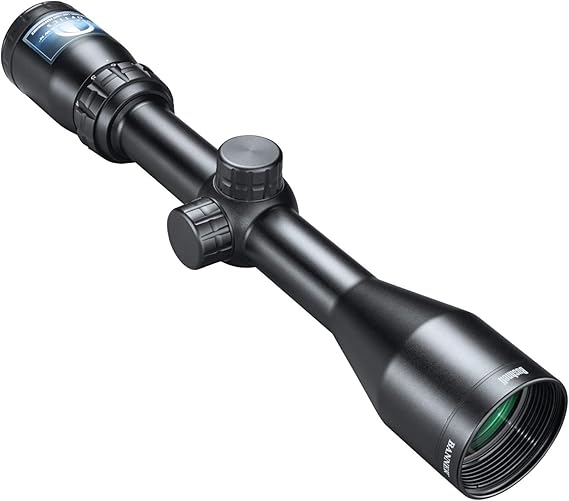
Extended 6 inches of eye relief stands out, making it well suited for shooters who prioritize comfort and safety. Bright and clear images through multi-coated lenses make the Bushnell Banner Riflescope a solid choice for hunters wanting reliable performance in varying light conditions.
Setting up the scope is straightforward with the cantilever mount, fitting smoothly onto most rifles. The 3-9x magnification range covers a versatile zoom for short to medium distances, while the 40mm objective lens offers a good balance of light gathering.
Adjusting the scope is simple, and its multi-X reticle gives a clear aiming point to frame targets well. The extra eye relief helps avoid the scope hitting your eye during recoil.
Image clarity remains sharp even in low light thanks to the fully multi-coated lenses. The build feels dependable but leans more on lightweight construction, which might not satisfy those wanting extra ruggedness.
Praise centers on the brightness and dependable accuracy, while some note the scope body’s material could feel sturdier for harsher conditions.
The scope is appreciated for its bright, sharp images and the comfort from the extended eye relief. However, comments often mention that the construction feels a bit lightweight and might not withstand heavy, rough use.
This scope suits hunters who want a reliable, clear sight for typical hunting distances and moderate recoil rifles. Those needing a more rugged or wide-field scope might seek other options better built for tough conditions or expansive views.
Pros
- 6 inches of extended eye relief for shooter comfort
- Fully multi-coated lenses provide bright, high-contrast images
- Classic 3-9x magnification ideal for various hunting scenarios
- Multi-X reticle aids precise target alignment
Cons
- Scope body material could be more durable
- Field of view limited to 40 yards at maximum
| Specification | Details |
|---|---|
| Magnification Minimum | 3 |
| Magnification Maximum | 9 |
| Objective Lens Diameter | 40 millimeters |
| Field Of View | 40 yard |
| Reticle Type | Multi-X Reticle |
| Mounting Type | Cantilever Mount |
15. Stryker HD 1-6×24 30mm Tube DSMR Riflescope

Ideal for precision shooters who need quick target acquisition, this scope offers a clear 1-6x magnification range. Its standout feature is the DSMR reticle, tailored for distance shooting with rifles.
Compact and designed with a 30mm tube, it fits well on most setups without adding bulk.
Setting up involves mounting on a dovetail system, which feels secure and straightforward. The 1/4-20 thread type provides solid attachment points. Day-to-day usage highlights the ease of switching from 1x to 6x without losing sight alignment, making it practical in varied lighting and shooting scenarios.
The 30mm objective lens balances light gathering and size perfectly.
Performance excels in ranging and holding accurate shots at different distances thanks to the DSMR reticle. Construction feels durable with its 30mm tube providing a good grip for adjustments. Most people praise its clarity and reticle design, while a frequent downside reported is limited low-light performance due to the lens size.
It handles recoil well and stays consistently zeroed.
Users appreciate the sharpness and effective reticle pattern that aid long-range precision. Commonly mentioned drawback concerns its performance when light starts to fade, where the smaller lens struggles to deliver brightness.
This scope suits shooters who want solid daylight accuracy and a flexible magnification range. Those relying heavily on dawn or dusk shooting might find other models with larger lenses better suited to their needs.
Pros
- Clear reticle designed for distance shooting
- Compact 30mm tube fits many rifles
- Simple dovetail mounting system
- Easy zoom from 1x to 6x
Cons
- Limited low-light performance
- Objective lens size restricts brightness
| Specification | Details |
|---|---|
| Magnification Minimum | 1 x |
| Magnification Maximum | 6 x |
| Objective Lens Diameter | 30 millimeters |
| Reticle Type | DSMR |
| Mounting Type | Dovetail Mount |
| Thread Type | 1/4″-20 |
Comparison of Best DMR Scopes Side by Side
| Product | Magnification Range | Objective Lens Diameter | Reticle Type | Field Of View |
|---|---|---|---|---|
| Primary Arms SLX Gen II | 3-18x | 50 mm | ACSS-HUD-DMR-308 | 35 ft |
| Primary Arms SLX Compact 4-16×44 | 4-16x | 44 mm | – | 31.5 ft |
| SIG SAUER Tango-DMR 5-30×56 | 5-30x | 56 mm | – | 21 ft |
| Bushnell Elite Tactical DMR3 | 3.5-6x | 34 mm | G4P Reticle | – |
| SIG SAUER Tango-DMR 2-12×42 F1 | 2-6x | 34 mm | MRAD Milling 2.0 | – |
| SIG SAUER Tango-DMR 3-18×44 | 3-18x | 44 mm | MRAD Dev-L 2.0 | 34.9 ft |
| Swarovski dS 4-24×50 | 4-24x | 40 mm | 4A-I | – |
| Vortex Viper HD SFP | 3-15x | 44 mm | Dead-Hold BDC (MOA) | 39.9 ft |
| Triton StarStrike-S Pro 5-25x | 5-25x | – | – | – |
| Nightforce ATACR 1-8×24 F1 | 1-8x | 34 mm | FFP | 96.1 ft |
| Bushnell Match Pro | 3-18x | 50 mm | Cross | 41 ft |
| DNT Optics ThermNight | 3-12x | 25 mm | Digital | – |
| SIG SAUER TANGO6 5-30×56 | 5-30x | 56 mm | DEV-L MOA | 18.9 ft |
| Bushnell Banner | 3-9x | 40 mm | Multi-X Reticle | 40 yd |
| Stryker HD 1-6×24 DSMR | 1x | 30 mm | DSMR | – |
- Magnification Range3-18x
- Objective Lens Diameter50 mm
- Reticle TypeACSS-HUD-DMR-308
- Field Of View35 ft
- Magnification Range4-16x
- Objective Lens Diameter44 mm
- Reticle Type–
- Field Of View31.5 ft
- Magnification Range5-30x
- Objective Lens Diameter56 mm
- Reticle Type–
- Field Of View21 ft
- Magnification Range3.5-6x
- Objective Lens Diameter34 mm
- Reticle TypeG4P Reticle
- Field Of View–
- Magnification Range2-6x
- Objective Lens Diameter34 mm
- Reticle TypeMRAD Milling 2.0
- Field Of View–
- Magnification Range3-18x
- Objective Lens Diameter44 mm
- Reticle TypeMRAD Dev-L 2.0
- Field Of View34.9 ft
- Magnification Range4-24x
- Objective Lens Diameter40 mm
- Reticle Type4A-I
- Field Of View–
- Magnification Range3-15x
- Objective Lens Diameter44 mm
- Reticle TypeDead-Hold BDC (MOA)
- Field Of View39.9 ft
- Magnification Range5-25x
- Objective Lens Diameter–
- Reticle Type–
- Field Of View–
- Magnification Range1-8x
- Objective Lens Diameter34 mm
- Reticle TypeFFP
- Field Of View96.1 ft
- Magnification Range3-18x
- Objective Lens Diameter50 mm
- Reticle TypeCross
- Field Of View41 ft
- Magnification Range3-12x
- Objective Lens Diameter25 mm
- Reticle TypeDigital
- Field Of View–
- Magnification Range5-30x
- Objective Lens Diameter56 mm
- Reticle TypeDEV-L MOA
- Field Of View18.9 ft
- Magnification Range3-9x
- Objective Lens Diameter40 mm
- Reticle TypeMulti-X Reticle
- Field Of View40 yd
- Magnification Range1x
- Objective Lens Diameter30 mm
- Reticle TypeDSMR
- Field Of View–
How to Choose the Best DMR Scope
Choosing the right DMR scope involves considering clarity, durability, and magnification to suit your shooting needs. Prioritizing quality optics and reliable construction ensures accuracy and long-term performance, helping you avoid costly replacements and frustration during use.
Optical Clarity and Magnification
Clear vision during shooting sessions depends heavily on lens quality and coatings. Poor glass or coatings can lead to blurred images, color distortion, and difficulty acquiring targets quickly. Using scopes with fully multi-coated lenses and high-density optical glass results in sharper, brighter views even in variable lighting.
Magnification is another critical factor. Too low, and distant targets appear small; too high, and the field of view narrows, making it harder to track moving targets or recognize threats around the target area.
Typical magnification options for these optics range between 3x to 18x, offering flexibility for mid to long-range shots. A balanced field of view (FOV) of around 30 to 40 feet at 100 yards helps maintain situational awareness without sacrificing detail.
Strong optics provide a crisp image edge to edge, reducing eye fatigue and enabling more precise shots in real use.
Reticle Type and Illumination
Reticle design significantly influences how effectively adjustments for distance, wind, and bullet drop are made. A good reticle includes clear markings for ranging and holdovers, allowing quick target engagement without complex calculations. Illumination plays a vital role in low-light conditions; a reticle that can be lit without washing out the image keeps the sight picture clean and functional.
Battery-operated illumination should offer variable brightness settings that can be adjusted easily but securely, so settings don’t change during movement. Efficient power use extends battery life, which is essential during long periods away from resupply.
The best reticles feel intuitive, enabling fast adjustment without losing focus on the target.
Durability and Build Quality
Rugged build quality makes a noticeable difference after heavy use. Scopes built with aircraft-grade aluminum tubes resist dents and bends from recoil and physical impacts. Environments with moisture, dust, or extreme temperatures expose low-quality scopes to failures like fogging, water ingress, or loosened components.
Look for scopes rated IP67 or higher for waterproofing, along with fog proof and shock resistant labeling. A commonly preferred tube diameter is 30mm, as it balances durability and lightweight design. Weight matters, too; an overly heavy scope disrupts rifle balance and adds recoil stress to both shooter and gear over time.
Adjustment Turrets and Zeroing
Precise and repeatable adjustments on windage and elevation turrets can mean the difference between a hit and a miss at mid to long ranges. Clarity in tactile feedback, such as distinct clicks, helps confirm each adjustment without needing to strain for visual confirmation.
Locking mechanisms prevent turret dials from shifting unintentionally during field movement or recoil.
Zeroing must be straightforward and reliable to align the optics with rifle ballistics quickly. The ability to re-zero without losing settings or damaging the mechanism is critical for sustained accuracy, especially when conditions or ammunition load changes require refinement.
Mount Compatibility and Eye Relief
Mount compatibility avoids headaches during setup and ensures the optic stays firmly attached under recoil. Common mounting systems like Picatinny or Weaver are standard, so choosing a scope that fits those rails simplifies installation.
Adjustable eye relief matters for comfort and safety, allowing shooters to maintain proper distance to avoid scope bite and maintain a clear sight picture.
Consider the overall scope length and the mount height combination to prevent interference with other rifle accessories or optics. A scope that is too long or mounted too high can complicate transport and handling, making quick target acquisition slower and less reliable in practical scenarios.
Optimizing Your DMR Scope Setup for Enhanced Accuracy
A reliable scope can make a significant difference in hitting targets at various distances. The first step in optimizing your DMR scope setup is ensuring proper zeroing at a standard distance, usually 100 yards.
This sets a baseline that helps with accurate adjustments later.
Adjust magnification based on your environment; lower settings suit close to mid-range targets, while higher zoom is necessary for long-range shots. Proper eye relief is crucial too, position your eye the right distance from the ocular lens to prevent scope shadowing and avoid recoil impact.
Additional tips for fine-tuning accuracy:
- Use the turret adjustments for windage and elevation precisely, marking settings for typical distances you engage to quickly switch.
- Ensure your scope is mounted securely. Even slight movement can throw off accuracy.
- Consider using reticles designed for range estimation and bullet drop compensation since these assist in making quicker, informed shot adjustments.
Taking time to set up and familiarize yourself with the scope’s features pays off in shot precision and reliability.
Common Mistakes to Avoid When Using a DMR Scope
One frequent error when using a DMR scope is failing to consistently maintain proper eye relief. Sitting too close or too far from the scope changes your sight picture and can lead to inaccurate shots or even eye strain.
Skipping the zeroing process or rushing it results in missed targets. Many users don’t re-check zero after making adjustments, leading to cumulative errors downrange.
Other common mistakes include:
- Over-relying on high magnification in all situations, which narrows the field of view and can make target acquisition slower.
- Inadequate scope mounting, such as loose screws or improper alignment, causing shifts in point of impact during firing.
- Neglecting environmental factors like wind direction and elevation changes when adjusting turret settings.
Proper training and disciplined setup routines help avoid these pitfalls and improve shot consistency with a DMR scope.
People Also Asked
How Do I Properly Mount a DMR Scope on My Rifle?
Secure the scope rings evenly and tighten them incrementally to mount a DMR scope properly. Checking alignment at eye level ensures the reticle sits correctly in your line of sight. A torque wrench can help avoid over-tightening and potential damage.
What Size Reticle Is Best for Long-Range DMR Shooting?
A reticle with fine, clear markings around 0.1 to 0.2 MOA works well for long-range DMR shooting. These allow precise holdovers and windage estimation without cluttering the view. It’s helpful to practice with your chosen reticle to become proficient in reading it under different conditions.
How Long Do Typical DMR Scopes Last Under Regular Use?
A typical DMR scope lasts several years without issues when cared for properly. Regular cleaning of the lenses and storing the scope in a dry case reduces wear. Avoiding impacts and moisture helps maintain internal components and clarity over time.
Are DMR Scopes Compatible with Different Rifle Models?
Most DMR scopes can fit various rifle models with compatible mounting systems. Ensuring ring size and rail compatibility is key before purchase. Some rifles might require specific mounts or adapters for a proper and secure fit.
What Common Problems Should I Watch for with DMR Scopes?
Common issues with DMR scopes include fogging, loss of zero, and lens scratches. Using anti-fog coatings or covers prevents condensation during use. Periodically checking zero and handling the scope carefully reduces the risk of these problems.
Conclusion
Choosing a DMR scope comes down to clarity, durability, and range capability. You want a scope that provides a clear image and reliable adjustments for longer distances. It should also be sturdy enough to handle regular use without losing zero or breaking easily.
Consider where you’ll be shooting and how much you can spend before making a choice. A scope that fits your setup and usage will be more satisfying in the long run.
Review the comparison table and the detailed picks above to find the scope that lines up best with your needs.