Top 15 Best Monocular for Birding You Can’t Miss!
Trying to spot birds clearly with a cheap monocular often ends in frustration. A blurry image, a narrow field of view, or awkward handling can ruin the experience.
The best monocular for birding delivers sharp details and enough magnification to see feathers and markings without constant shaking or refocusing.
Key qualities for a good birding monocular include optical clarity, size, and comfort. A magnification of around 8x to 10x hits the sweet spot, enough zoom to see distant birds but not so much that it becomes hard to hold steady.
The lens quality usually matters most, with fully coated optics reducing glare and improving brightness. Lightweight design and a rubber grip also make long outings easier on the hands, while waterproofing helps with early morning dew or light rain.
Need a Quick Check?
| Image | Product | Price |
|---|---|---|
Our Top Picks 1 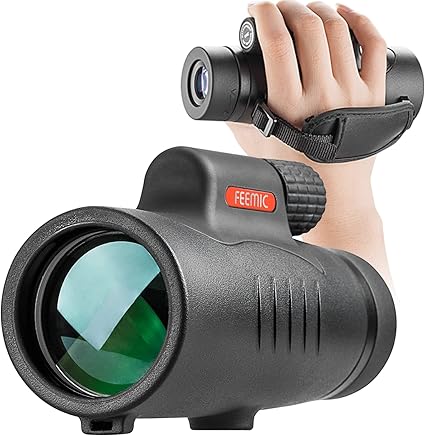 | Generic 8×42 Monocular | Check Price |
Our Top Picks 2  | Nocs Zoom Tube 8×32 | Check Price |
Our Top Picks 3  | Generic 12×56 Smartphone Monocular | Check Price |
Our Selected Top 15 Monocular for Birding for Every Budget
This list features versatile monoculars designed for birdwatching across various budgets. Each review highlights performance details, suitability for different users, and key advantages and drawbacks to help you find the right option for your specific birding needs.
1. Monocular Telescope 8×42
Birdwatching gets a clear boost when using an 8×42 monocular like this one. It suits anyone looking for a strong yet manageable scope that offers a bright and wide view. Its biggest strength lies in balancing good magnification with a wide lens for spotting birds at different distances without losing clarity.
Setup is straightforward with manual focus and a durable altazimuth mount, making adjustments easy on the fly. The rubber coating provides a comfortable grip and feels solid in hand during outdoor trips. Lens covers protect against dust and moisture, so maintenance is simple.
Carrying it along on hikes or walks doesn’t add much weight or bulk, and it’s ready to go anytime.
The high-quality all-glass optics and FMC Superior BAK-4 prism provide sharp, detailed images with an 8X zoom for outstanding performance. The 42mm objective lens allows plenty of light in, making it suitable for various lighting conditions.
The build resists shocks and weather thanks to nitrogen filling and waterproofing. Strong points include clear image quality, while a common drawback is the manual focus requiring steady hands for sharpness.
High-quality optics deliver detailed images, well-suited for outdoor adventures, while manual focus requires patience and steady handling. Waterproof and shockproof features stand up well to rough conditions but do not eliminate all handling challenges.
Ideal for birders wanting a bright, wide view and solid build under varied weather. Those needing fast autofocus or very compact gear might look elsewhere.
Pros
- Wide, clear field of view for spotting birds easily
- Durable rubber finish with shock resistance
- Waterproof and fogproof for tough weather
- Easy manual focus adjustments
Cons
- Manual focus can be tricky on moving subjects
- Relies on steady hands for best clarity
| Specification | Details |
|---|---|
| Magnification Power | 8X |
| Objective Lens Diameter | 42mm |
| Field Of View | 360 degrees |
| Focus Type | Manual Focus |
| Prism Type | FMC Superior BAK-4 Green Film Prism |
| Waterproof | Yes, nitrogen-filled |
2. Nocs Provisions Zoom Tube 8×32 Monocular
Perfect for birding enthusiasts who need a reliable, lightweight monocular that travels well. It shines in portability without sacrificing clarity, making it great for anyone who spends long hours outdoors and values ease of use and sharp images.
Setting it up is straightforward thanks to the central focusing system, which lets you quickly get sharp views during hikes or birdwatching sessions. At just 9.5 oz., it fits comfortably in your hand or pocket.
The water-resistant and scratch-proof design means you don’t have to worry about weather or rough handling, while the option to mount it on a tripod adds stability when needed.
Optically, it provides bright and clear images due to the Fully Multi Coated optics and Swiss-designed Bak4p prism. The 8x magnification and wide 384 feet field of view at 1000 yards help you track birds without constantly moving the monocular. Users appreciate its compactness and rugged build but mention occasional difficulty maintaining precise focus quickly in fast-moving scenes.
The brightest and clearest views come from quality Fully Multi Coated optics paired with the Swiss-designed Bak4p prism, making bird details sharp and vivid. The most frequent drawback noted is focusing speed, which can be slow when tracking quick or erratic bird movements. Its compact design makes it easy to carry but may feel less ergonomic for some hand sizes.
Bird watchers who prioritize light gear and crisp image quality will find this a solid companion. Those needing ultra-fast focus or a larger grip might prefer other models. Its durability and water resistance suit outdoor adventures well beyond birding, such as hiking or camping trips.
Pros
- Super lightweight at 9.5 ounces
- Bright and crisp field of view
- Scratch-proof and water-resistant body
- Works with smartphone and cameras
Cons
- Focus can be tricky on fast-moving birds
- Smaller size may challenge those with larger hands
| Specification | Details |
|---|---|
| Weight | 9.5 oz. |
| Magnification | 8x |
| Field Of View | 384 feet @ 1000 yards |
| Focus Type | Center Focus |
| Prism Type | Swiss-designed Bak4p |
| Coating | Fully Multi-Coated |
3. Monocular Telescope 12×56 with Smartphone Adapter
Built with a large 56mm objective lens and 25mm eyepiece, this monocular suits those who want clear, bright views in nature. Its standout feature is the wide 6.5° field of view at 12X magnification, letting you spot birds and wildlife comfortably without constantly adjusting position.
Setting it up involves attaching the smartphone adapter, which is handy for snapping pictures of your finds. Day-to-day use benefits from the manual focus, allowing precise control on details.
The included travel bag and hand strap make carrying simple, and the 6x adjustable tripod adds stability during longer observation sessions. No batteries needed, so just point and focus.
It performs well at spotting distant birds with bright, sharp images thanks to fully multi-coated lenses improving light transmission. The build feels solid for outdoor use, but some find the fixed mount limits quick re-framing, and manual focus takes a bit of practice.
The smartphone adapter is a nice touch, appreciated by those who want to share their sightings.
The brightness and wide field of view stand out as the best features, making distant birds easy to spot with clear, detailed images. The most common drawback is the manual focus and fixed mount, which can slow down quick adjustments during fast-moving bird activity.
Anyone who values image quality and carrying versatility will appreciate this monocular for casual birding and travel. Those needing rapid focus changes or more flexible mounting might want to explore different options better suited to active or professional birdwatching.
Pros
- Large 56mm objective lens for bright images
- Wide 6.5° field of view at 12X zoom
- Includes smartphone adapter and tripod
- No battery required for use
Cons
- Fixed mount limits quick repositioning
- Manual focus requires practice for clarity
| Specification | Details |
|---|---|
| Eye Piece Lens Description | Prism |
| Mount | Fixed Mount |
| Focus Type | manual |
| Power Source | No |
| Field Of View | 391.7 yard |
| Zoom Ratio | 12 |
4. Gosky 12×55 HD Monocular Telescope

Bright and roomy viewing stands out the most with the 12×55 HD Monocular. Ideal for bird watchers looking for clear details far away and a wide field of view, it’s great for spotting birds without missing the surroundings. The 12x magnification balances well with a wide 352 ft view that keeps subjects easy to find.
Setup is simple and quick thanks to manual focus and a one-hand focus feature that makes adjusting on the fly easy. The large 55mm lens pulls in plenty of light, so views stay bright even in less-than-perfect lighting. Compatible with smartphones and includes a tripod adapter, so attaching your phone or steadying it isn’t a hassle.
The waterproof, fogproof body means it can handle outdoor conditions comfortably.
The 12x zoom delivers clear, close-up views of birds without needing heavy gear or bulky tripods, matching well with its lightweight handheld design. Build quality feels solid with multi-coated optics enhancing brightness and contrast. Reviews praise its sharp images and comfort during long use.
A common gripe relates to the manual focus requiring care to keep the image steady when zoomed.
Most users appreciate the bright, clear images that the large 55mm objective lens provides, improving visibility during long birding sessions. The main issue experienced stems from manual focus being sensitive at full magnification, which sometimes makes steady viewing challenging.
Perfect for bird watchers wanting detailed close-ups without bulky equipment, especially those comfortable with manual focus. Those who need faster or automatic focusing or prefer less hand stabilization may want to explore other options.
Pros
- Wide 352 ft field of view for easier tracking
- Bright images from large 55mm lens
- Manual focus works smoothly for quick adjustments
- Waterproof and fogproof for outdoor use
Cons
- Manual focus can be tricky when fully zoomed
- Some users find it hard to stabilize handheld
| Specification | Details |
|---|---|
| Magnification | 12X |
| Objective Lens Diameter | 55MM |
| Field Of View | 2.1 degrees / 352 ft at 1000 yds |
| Focus Type | Manual Focus |
| Coating | Multi-Coated |
| Additional Features | Waterproof, Fogproof, One-Hand Focus, Tripod and Phone Adapter |
5. Monocular Telescope 80×100 with Smartphone Holder

Great clarity and a solid grip make this monocular a strong pick for bird watchers who want serious magnification without heavy gear. Its advanced lenses bring distant birds into sharp view, ideal for those who want detailed observation in various outdoor light conditions.
Setup is straightforward with a manual focus that feels precise during quick adjustments in the field. The straight-through finderscope helps line up shots easily, and the compact size fits nicely into a backpack. Carrying it around on hikes or camping trips is comfortable thanks to its lightweight frame and ergonomic grip, which keeps it stable in hand for prolonged viewing.
The optics deliver bright, clear images with reduced reflections, performing well across different lighting situations crucial for spotting birds. The build quality is solid enough for outdoor use but not overly rugged.
Users appreciate the image clarity most, while some note manual focusing requires patience to get perfect sharpness.
The clarity and brightness of the optics stand out, making it easier to spot detailed views of birds even at long distances. Many appreciate the compact design, though fine-tuning the manual focus takes some practice and patience.
Bird watchers who prioritize image quality and travel-friendly gear will find this monocular a good match. Those needing fast focus or extreme durability for rugged conditions might want to consider alternatives better suited for rougher use.
Pros
- Clear and bright images in varied lighting
- Lightweight and compact for easy travel
- Comfortable grip for steady viewing
Cons
- Manual focus can be tricky to adjust quickly
- Not as rugged as some outdoor models
| Specification | Details |
|---|---|
| Eye Piece Lens Description | Brandon |
| Focus Type | Manual Focus |
| Finderscope | Straight-Through |
6. 8×32 Pocket Monocular IP67 Waterproof
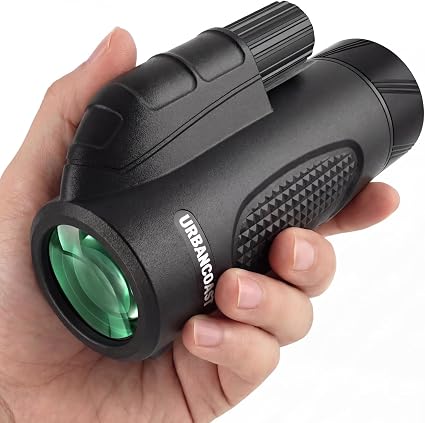
Spotting birds on hikes or travels demands a monocular that’s both reliable and quick to use. Ideal for outdoor enthusiasts wanting a compact tool, it delivers a steady 8x zoom with a wide field of view, making it simpler to locate and follow moving subjects without extra gear.
Weighing just 9.9 oz, the monocular slips easily into pockets or small bags, so it’s always ready. Focusing requires only one hand, which comes in handy when you need to react fast or keep your other hand free. Its IP67 rating ensures you won’t worry about sudden rain or coastal spray while on the move.
It produces a clear, stable image across 315 feet at 1,000 yards, which suits bird watching and spotting other wildlife. The fully multi-coated prism brings sharpness even at the edges.
Users appreciate the waterproof and fogproof design, but some mention the manual focus could be less sensitive to avoid over-adjusting.
The waterproof and fogproof design keeps views clear during outdoor adventures, and the wide field of view makes tracking birds easier. The most frequent drawback mentioned is the manual focus, which some find too sensitive for smooth adjustments.
People who prioritize portability and weather resistance will appreciate this monocular for birding. Those needing very precise focus control or longer battery life might consider other options better suited to those features.
Pros
- Compact size fits in coat pocket or purse
- One-hand focus for quick adjustments
- Waterproof and fogproof for outdoor use
- Wide 315 ft field of view helps track movement
Cons
- Manual focus can be overly sensitive
- Battery powered with no details on battery life
| Specification | Details |
|---|---|
| Power | 8X |
| Field Of View | 315 feet |
| Focus Type | manual focus |
| Waterproof Rating | IP67 |
| Weight | 9.9 oz |
| Lens Coating | Fully Multi-Coated |
7. Monocular Telescope 80×100 HD with Smartphone Adapter

80X magnification and a 100mm objective lens make it ideal for birding enthusiasts who want detailed, bright views. It suits people looking for powerful optics with the added convenience of smartphone compatibility.
The standout feature is clearly its impressive zoom paired with a wide, crisp field of vision.
Setting it up requires manual focusing but is straightforward, thanks to the ergonomic design that fits comfortably in one hand. The included smartphone adapter lets you capture and share bird photos easily.
Carrying it on hikes or trips feels natural due to its balanced shape, and the straight-through finderscope helps maintain accurate alignment when tracking birds in trees.
The image clarity stands out, producing bright, true-to-life colors thanks to the FMC multi-coated lens and BAK4 prism. It handles various lighting conditions well and brings distant details sharply into view. Some users find the high magnification a bit challenging to stabilize without a tripod.
The build feels solid and designed with active outdoor use in mind.
The magnification and lens quality allow for vivid, detailed images, enhancing your bird-watching experience. However, some find the high zoom level tricky to steady without additional support, which may affect prolonged use. The smartphone adapter is praised for adding value by enabling easy documentation.
Anyone needing a powerful monocular with smartphone compatibility and bright views will appreciate this model. Those who prefer steady handheld use at extreme zoom might look for monoculars with image stabilization or lower magnification instead.
Pros
- Exceptional 80X magnification for close-up views
- Bright image with FMC multi-coated lens
- Comfortable, ergonomic one-handed use
- Smartphone adapter for easy photo capture
Cons
- Manual focus requires careful adjustment
- Can be hard to hold steady at max zoom
| Specification | Details |
|---|---|
| Focus Type | Manual Focus |
| Finderscope | Straight-Through |
| Compatible Devices | Smartphone |
| Zoom Ratio | 80 |
8. Vortex Solo Monocular 10×36

Bird watchers who need a compact yet powerful tool for spotting distant birds will appreciate the Vortex Solo Monocular 10×36. Its standout strength is the 10x magnification combined with fully multi-coated lenses that deliver clear, sharp images in a lightweight design.
Setting up is simple thanks to the manual focus and adjustable eyecup, which works well for people who wear glasses. The fully rubber armored body feels secure in hand and helps avoid slips during longer birding sessions. The multi-position utility clip adds convenience by allowing quick attachment to clothing or equipment, making it easy to keep close during walks through varied terrain.
Clarity and brightness are strong points, with the coatings enhancing light transmission for crisp views. The nitrogen purging and o-ring sealing mean the monocular stands up to wet or foggy weather without issue.
Many praise the durability of the rubber armor, though some note that the straight-through finderscope may take a moment to get used to when tracking quick moving birds.
Users appreciate the clarity and toughness of the monocular, especially how it handles moisture without fogging up. The straight-through finderscope, however, can be a bit awkward for quickly locating birds at first.
Someone who wants a dependable, light monocular to carry everywhere will find this a solid choice. Those seeking faster autofocus or angled eyepieces might want to explore other options.
Pros
- Compact and lightweight design
- Fully rubber armored for durability
- Adjustable eyecup for use with glasses
- Nitrogen purged for waterproofing
Cons
- Straight-through finderscope takes adjustment
- Manual focus requires fine tuning
| Specification | Details |
|---|---|
| Eye Piece Lens Description | Monocentric |
| Focus Type | Manual Focus |
| Field Of View | 6.2 |
| Zoom Ratio | 10:1 |
| Coating | Multiple anti-reflective coatings |
9. Celestron Nature 10×25 Monocular

Compact and lightweight, the Celestron Nature 10×25 Monocular is designed for birders who want easily portable gear without sacrificing clarity. It stands out by delivering bright, sharp views with a 10x magnification, making distant birds and wildlife appear close and detailed during outdoor activities.
Setup involves a simple manual focus and a twist-up eyecup that feels comfortable whether you wear glasses or not. Its small size fits easily in a pocket or backpack, making it ideal for hiking or casual bird watching.
The rugged rubber-armored body offers a secure grip, and it’s waterproof and fogproof, so it holds up well in changing weather conditions.
The optics use multi-coated lenses and BaK-4 prism glass to provide crisp, true-color images with good contrast and resolution. The 25mm objective lens gathers plenty of light, creating bright views.
Customers often praise its bright and clear imagery, though some mention the narrow 5.8-degree field of view can limit scanning wide areas. The housing resists drops and moisture effectively.
The monocular delivers very clear and bright images thanks to its multi-coated optics and BaK-4 prism glass, which many find valuable for spotting birds clearly at a distance. On the downside, the limited field of view means wider scenes can be harder to scan quickly.
Anyone looking for a compact, durable monocular for travel or hiking will appreciate its light weight and waterproof build. Those wanting a wider viewing experience might consider alternatives with a larger field of view.
Pros
- Lightweight and travel-ready design
- Sharp, bright views with 10x magnification
- Waterproof and nitrogen-purged to prevent fogging
- Comfortable twist-up eyecup for all users
Cons
- Field of view feels narrow at 5.8 degrees
- Manual focus may require adjustment for sharpness
| Specification | Details |
|---|---|
| Magnification | 10X |
| Objective Lens Size | 25MM |
| Field Of View | 5.8 degrees |
| Coating | Multi-Coated |
| Focus Type | manual |
| Waterproof and Fogproof | Yes |
10. Gosky Titan 12×50 Monocular

Gosky Titan 12×50 Monocular offers 12x magnification with a bright, clear view, making it great for birding and wildlife spotting. Its standout feature is the large 50mm objective lens that brings in plenty of light for vivid colors and sharp detail, ideal for outdoor enthusiasts wanting close-up views from a distance.
Setup involves attaching the included tripod for steady viewing, which helps with the high magnification. Manual focusing is smooth enough to dial in details quickly.
One-hand focus works well when you’re on the move, and compatibility with smartphones lets you capture what you see. Its waterproof and fogproof build adds durability for various weather conditions.
Performance delivers sharp images with accurate colors thanks to the BAK-4 prism and fully multi-coated optics. The 6.8-degree field of view lets you scan without feeling boxed in.
Users often praise the bright, clear picture and ease of use. Some find the manual focus slightly tricky in fast-changing scenes, requiring a bit of practice to master.
The monocular’s sharp views and vibrant colors stand out most, praised for clear detail and light gathering. Some users mention the manual focus requires patience to handle quickly in changing environments. The sturdy, weather-resistant design suits rugged outdoor use.
Bird watchers and wildlife spotters valuing image quality and durability will appreciate this model. Those needing quick autofocus or a lighter, battery-powered option might look elsewhere.
Pros
- Bright image with vivid true colors
- One-hand manual focus easy while moving
- Waterproof and fogproof for outdoor use
- Tripod included for steady viewing
Cons
- Manual focus takes practice in fast scenes
- Relies on adapter power source, no batteries
| Specification | Details |
|---|---|
| Magnification | 12x |
| Objective Lens | 50mm |
| Field of View | 6.8 degrees |
| Focus Type | Manual Focus |
| Coating | Fully Multi-Coated |
| Waterproof & Fogproof | Yes |
11. Gosky 15×52 Monocular with Tripod

Watching birds up close without lugging heavy gear feels pretty freeing with this monocular. Perfect for anyone who wants powerful magnification in a lightweight package, it’s built to spot wildlife at a distance with clear views.
Its biggest advantage is how sharply it brings faraway things right into focus with 15x zoom.
Getting started is simple since it’s light at just 0.87 lb and fits comfortably in one hand. You can quickly adjust focus with the smooth manual control, ideal for hopping from one bird to another. The included tripod is handy when you want steadier viewing without hand shake, making it great for longer observation sessions.
The optics deliver solid clarity with the 52mm lens and BAK4 prism design, letting plenty of light through for bright images even near dusk. The fully multi-coated lenses cut down glare and improve contrast, which is exactly what you want when details matter. It’s waterproof with IPX7 rating, so a bit of rain or moisture won’t stop your birding plans.
One downside is the manual focus can take some practice to keep up with fast-moving subjects.
Views stay sharp and bright thanks to the large 52mm lens and FMC coatings. Users frequently mention the ease of steady viewing with the tripod, though some find the manual focus slows tracking quick birds.
Anyone wanting solid long-range magnification combined with portability will appreciate this monocular. Choosing autofocus or wider viewing angles means you might want to consider other options.
Pros
- Lightweight at only 0.87 lb for easy handheld use
- Includes tripod for stable, extended viewing
- Fully multi-coated optics for brighter, clearer images
- Durable IPX7 waterproof design
Cons
- Manual focus can be tricky tracking moving birds
- Limited field of view at longer distances
| Specification | Details |
|---|---|
| Zoom Ratio | 15 |
| Field Of View | 252 feet |
| Eye Piece Lens Description | Bak-4 Prism |
| Focus Type | Manual Focus |
| Coating | Fully Multi-Coated |
| Mount | Altazimuth Mount |
12. 12×54 Monocular with Tripod and Phone Adapter

Ideal for birders who want a powerful view without extra bulk, the 12×54 Monocular delivers bright, clear images with its impressive 12x magnification and wide 300 feet field of view. Its standout feature is the use of premium optics that make distant birds come alive in vivid detail.
Setting it up involves mounting the monocular on the included tripod, which adds stability during long viewing sessions. The manual focus lets you quickly adjust clarity depending on the distance. A phone adapter allows for capturing photos right through the lens.
The large carrying bag keeps the monocular, tripod, and phone adapter all organized, making packing easy for birding trips.
The clarity is sharp and colors true, thanks to BAK4 prisms and fully multi-coated lenses that maximize light transmission. It’s well built for outdoor use with an IPX7 waterproof rating, standing up to rain or dew.
The main praise highlights the crisp images seen even in dimmer lighting, while the biggest gripe relates to manual focusing, which can be a bit tricky without practice.
Sharp and vibrant viewing quality stands out most, while some find the manual focusing takes getting used to during quick spotting moments. Waterproof ability adds confidence in varying weather conditions.
Birdwatchers who prioritize image clarity and stability will appreciate it, especially on longer trips needing a tripod. Those wanting a lightweight or fully automatic focus monocular might want to look elsewhere.
Pros
- Bright, detailed images with true color reproduction
- Includes tripod and phone adapter for stability and photos
- Waterproof design suits outdoor conditions
- Large carrying bag holds all accessories together
Cons
- Manual focus requires patience to get sharp
- Larger size due to 54mm lens weight
| Specification | Details |
|---|---|
| Power Source | No Battery Required |
| Field Of View | 300 feet |
| Zoom Ratio | 12x |
| Eyepiece Lens Description | BAK4 Prism & Multi-Waterproof-Coating |
| Mount | Tripod Mount |
| Focal Length Description | 54 millimeters |
13. Blackhawk 10×40 Waterproof Monocular

Rubber armor and a compact design make the Blackhawk 10×40 Waterproof Monocular ideal for bird watching on the go. It fits comfortably in one hand, perfect for people who want something lightweight yet sturdy.
Its biggest strength lies in delivering bright, clear views through multi-coated optics.
Setup is straightforward with a close focus feature that keeps things sharp quickly. The monocular’s diamond textured grip prevents slipping, even during longer outdoor sessions.
It carries easily thanks to its compact size and comes with a wrist strap and carrying case to keep it secure. Regular cleaning is simple with the included lens cloth, ensuring clear sightlines every time.
The view is generally crisp and bright, thanks to the BK7 prism scope and multi-coated lenses. Waterproof and fog-proof construction means it holds up well in different weather conditions. The rubber armor adds shock resistance, though some note the focus mechanism can feel slightly stiff.
The build feels rugged enough for regular use in nature.
Reviews highlight the bright, clear views as the strongest point thanks to the multi-coated optics. The most common downside is the slightly stiff focus, which can take some getting used to.
People looking for a sturdy, compact monocular that works well in wet or foggy conditions will appreciate this model. Those who want a smoother focus adjustment or a wider proven field of view might want to explore other options.
Pros
- Compact and lightweight for easy handheld use
- Multi-coated optics provide clear, bright images
- Waterproof and fog-proof for all-weather reliability
- Diamond textured grip offers secure handling
Cons
- Focus mechanism feels a bit stiff for some users
- Field of view measurement seems unusually high
| Specification | Details |
|---|---|
| Mount | Handheld |
| Focus Type | Close focus |
| Coating | Multi-Coated |
| Field Of View | 344105 yard |
| Zoom Ratio | 10x |
14. Bushnell A3 10×32 Monocular

Compact size stands out immediately, fitting easily into pockets or small bags. Great for birdwatchers who want powerful magnification without bulky gear. Its main strength lies in blending portability with a clear, bright view at 10x magnification, making distant birds come alive with detail on every outing.
Setting it up is simple with manual focus that feels responsive and quick. One-hand focus keeps it practical when spotting moving birds, while its lightweight design means no arm strain during long walks.
Carrying it feels natural thanks to a slip-resistant grip, and the EXO Barrier lens protection keeps the optics clear even on damp or dusty trails.
The view through fully multi-coated optics delivers crisp images and strong contrast that helps identify birds faster. Waterproof and fogproof qualities ensure reliability in wet weather or temperature shifts. Solid construction avoids feeling flimsy, though some might wish for a wider field of view.
Most praise centers on sharp clarity, while the manual focus requires a little patience with rapid movement.
The biggest compliment often goes to the sharp, bright view combined with the durable, weather-resistant build that keeps it dependable outdoors. A consistent downside noted is the manual focus requiring patience when tracking quick or erratic bird movements.
Perfect for birders valuing portability and optical clarity in variable conditions. Those needing rapid autofocus or a wider perspective might find better options elsewhere.
Pros
- Compact design fits easily in pockets
- Bright and clear fully multi-coated optics
- Waterproof and fogproof for weather resistance
- Slip-resistant grip for secure handling
Cons
- Manual focus can slow capture of fast scenes
- Field of view could be wider for tracking birds
| Specification | Details |
|---|---|
| Focus Type | Manual Focus |
| Field Of View | 6.5 degrees |
| Zoom Ratio | 10x |
| Focal Length Description | 320mm |
| Compatible Devices | Tripod |
15. BARSKA Blackhawk 10-30×50 Zoom Monocular

Perfect for birding enthusiasts wanting a compact but powerful optic, the BARSKA Blackhawk 10-30×50 Zoom Monocular offers a versatile zoom range and solid build quality. Its biggest strength lies in combining lightweight portability with clear, bright views suitable for close to mid-range observing.
Setting it up is simple since it includes a built-in tripod socket, making it easy to stabilize for long viewing sessions. The center focus knob is convenient to adjust with one hand, and the shock-absorbing rubber armoring provides a secure grip. Fully coated optics and BK-7 prisms ensure sharp images, while the 15mm eye relief adds comfort during use.
The optical performance delivers bright and crisp visuals across the zoom range from 10x to 30x, ideal for spotting birds at varying distances. Constructed with durable rubber armor, it feels sturdy yet remains lightweight for easy carrying. Praise highlights the clear optics and comfortable eye relief, while some note that the field of view is only 3.8 degrees, which may feel narrow at higher magnifications.
Bright and crystal-clear views stand out thanks to the fully coated BK-7 prism optics, making bird watching enjoyable even at high magnifications. However, the field of view narrows noticeably when zoomed in, which some find restrictive during quick scans.
Anyone wanting a lightweight monocular with solid zoom flexibility and comfortable eye relief will appreciate this model. Those needing a wider field of view or powered focusing may want to explore other options better suited to those needs.
Pros
- Wide zoom range from 10x to 30x magnification
- Comfortable 15mm eye relief for extended viewing
- Shock absorbing rubber armor for secure grip
- Built-in tripod socket for stability
Cons
- Narrow 3.8-degree field of view at higher zoom
- Limited to hand-powered focusing
| Specification | Details |
|---|---|
| Zoom Ratio | 10:30 |
| Eye Relief | 15 millimeters |
| Field Of View | 3.8 degrees |
| Focus Type | Center |
| Coating | Fully Coated |
| Mount | Tripod mountable |
Best Monoculars for Birding Comparison Table
| Product | Magnification | Objective Lens Diameter | Field Of View | Mount |
|---|---|---|---|---|
| Generic 8×42 Monocular | 8x | 42mm | 360 degrees | Altazimuth Mount |
| Nocs Zoom Tube 8×32 | 8x | 32mm | 384 feet | Tripod mount |
| Generic 12×56 Smartphone Monocular | 12x | 56mm | 391.7 yard | Fixed Mount |
| Gosky 12×55 HD Monocular | 12x | 55mm | 2.1 degrees | Equatorial Mount |
| Generic 80×100 Smartphone Holder | 80x | 100mm | – | – |
| Waterproof 8×32 Pocket Monocular | 8x | 32mm | 315 feet | Tripod mount |
| Generic 80×100 HD Phone Adapter | 80x | 100mm | – | – |
| Vortex Solo 10×36 | 10x | 36mm | – | Equatorial Mount |
| Celestron Nature 10×25 | 10x | 25mm | 5.8 degrees | Manual mounting |
| Gosky Titan 12×50 | 12x | 50mm | 6.8 degrees | Altazimuth Mount |
| Gosky 15×52 Tripod Monocular | 15x | 52mm | 252 feet | Altazimuth Mount |
| 12×54 Tripod Phone Adapter | 12x | 54mm | – | Tripod Mount |
| Blackhawk 10×40 Waterproof | 10x | 40mm | 344,105 yard | Handheld |
| Bushnell A3 10×32 | 10x | 32mm | 6.5 degrees | – |
| Barska Blackhawk 10-30×50 Zoom | 10-30x | 50mm | 3.8 degrees | Tripod mountable |
- Magnification8x
- Objective Lens Diameter42mm
- Field Of View360 degrees
- MountAltazimuth Mount
- Magnification8x
- Objective Lens Diameter32mm
- Field Of View384 feet
- MountTripod mount
- Magnification12x
- Objective Lens Diameter56mm
- Field Of View391.7 yard
- MountFixed Mount
- Magnification12x
- Objective Lens Diameter55mm
- Field Of View2.1 degrees
- MountEquatorial Mount
- Magnification80x
- Objective Lens Diameter100mm
- Field Of View–
- Mount–
- Magnification8x
- Objective Lens Diameter32mm
- Field Of View315 feet
- MountTripod mount
- Magnification80x
- Objective Lens Diameter100mm
- Field Of View–
- Mount–
- Magnification10x
- Objective Lens Diameter36mm
- Field Of View–
- MountEquatorial Mount
- Magnification10x
- Objective Lens Diameter25mm
- Field Of View5.8 degrees
- MountManual mounting
- Magnification12x
- Objective Lens Diameter50mm
- Field Of View6.8 degrees
- MountAltazimuth Mount
- Magnification15x
- Objective Lens Diameter52mm
- Field Of View252 feet
- MountAltazimuth Mount
- Magnification12x
- Objective Lens Diameter54mm
- Field Of View–
- MountTripod Mount
- Magnification10x
- Objective Lens Diameter40mm
- Field Of View344,105 yard
- MountHandheld
- Magnification10x
- Objective Lens Diameter32mm
- Field Of View6.5 degrees
- Mount–
- Magnification10-30x
- Objective Lens Diameter50mm
- Field Of View3.8 degrees
- MountTripod mountable
How to Choose the Right Birding Monocular
Choosing a good birding monocular depends on factors like magnification, lens quality, and weight, which affect clarity and comfort during use. Prioritizing these features ensures better viewing experiences and avoids spending on poor-quality products that may not meet your needs.
Optical Quality and Coatings
Using a monocular without proper lens coatings quickly reveals its limitations. Plain lenses often produce dull, washed-out images with glare problems, especially in bright or low-light conditions. Lens coatings significantly improve light transmission and color fidelity, so birds appear clearer and more vibrant.
A fully multi-coated lens group is ideal, as it can increase brightness and contrast noticeably compared to uncoated or single-coated optics. Crystal-clear glass also plays a major role; low-quality glass tends to soften details and reduce sharpness at the edges of the view.
The type of prism inside the monocular affects the image orientation and brightness. Roof prisms are common, offering a compact design but sometimes needing phase correction coatings for better sharpness.
Porro prisms generally deliver brighter, more three-dimensional images but can be bulkier. Quality prisms with anti-reflective coatings help provide a more natural and comfortable viewing experience, essential for spotting fine details on distant birds.
Size and Weight
Carrying a heavy monocular all day can tire the arm quickly, detracting from longer birdwatching or hiking sessions. Compact, lightweight options tend to be easier to hold steady for extended periods but might sacrifice some optical performance like field of view or brightness. A 6x or 8x magnification model with an objective lens around 20-25mm often hits a good balance between weight and viewing quality.
Handheld use is more practical in many environments, but some birders prefer monoculars that can be mounted on tripods for stability during long observation periods. Ergonomics matter here, the device should feel comfortable in hand, with a non-slip surface and well-placed focus controls.
A model too small might strain the eyes or hands, while a large one can be cumbersome and less likely to get regular use.
Weather Resistance and Durability
Spending time outdoors requires gear that can handle the elements. A monocular without waterproofing or fogproofing can quickly become unusable in wet or humid conditions. Nitrogen or argon gas filling inside the optical tubes is a reliable sign the unit can resist internal fogging effectively.
Rubber armor coating helps absorb shocks from accidental drops and provides a better grip when hands are sweaty or cold.
Durable housing materials like magnesium alloy or reinforced plastic add longevity against rough handling and environmental exposure. Dust and moisture can degrade internal components otherwise.
Choosing a model sealed to protect against dust ingress and featuring rugged construction extends the device’s life span, saving money and hassle over multiple seasons of birding.
Ease of Use and Focus Mechanism
Quickly finding and focusing on a small bird in a tree requires smooth and precise focus controls. A stiff or overly sensitive focus knob slows down the process and leads to missed sightings.
A good focus wheel offers just the right amount of resistance and minimal play. Some monoculars feature dual focusing systems for fine-tuning, which helps with viewing birds at varying distances without wasting time.
Ergonomics go beyond the focus mechanism, buttons or adjustment rings should be easy to grip and manipulate even while wearing gloves or in wet conditions. Eye relief length is crucial for comfort, especially for eyeglass wearers, with around 15mm or more deemed comfortable. Compatibility with tripods adds convenience for longer observation sessions, reducing hand fatigue and stabilizing the image.
How to Maximize Your Birding Experience with a Monocular
Choosing the right monocular can make a big difference in spotting and identifying birds at a distance. Start by selecting a model with adequate magnification, typically around 8x to 10x, which strikes a balance between detail and stability.
Higher magnification brings objects closer but often introduces shakiness unless you use a tripod.
Look for a monocular with a wide field of view to track moving birds easily. Opt for one with a comfortable eye relief if you wear glasses. Compact and lightweight designs help reduce fatigue during long walks or hikes.
Additional tips for getting the best from your monocular:
- Practice steady hand-holding techniques or consider using a wrist strap for support.
- Clean the lenses regularly using proper cloths to avoid scratches and maintain clarity.
- Adjust the focus smoothly and patiently to avoid missing fleeting bird movements.
Comparing Monoculars with Binoculars for Bird Watching Enthusiasts
A monocular offers a simpler, more compact option compared to binoculars, making it easier to carry for long periods. Its single lens setup is lighter and fits into smaller pockets or bags, which is practical on longer birding trips.
Binoculars provide depth perception and a wider field of view, which some birdwatchers prefer for scanning large areas. However, they tend to be bulkier and heavier. Monoculars require practice to keep steady, but they allow quick, one-handed use and can be easier to share between people.
Comparison points to consider:
- Portability favors monoculars due to weight and size.
- Binoculars generally give better tracking ability because both eyes are used.
- Monoculars can be less expensive while still offering good magnification.
- For solo birders prioritizing minimal gear, monoculars often suit best.
People Also Asked
How Do I Clean and Maintain a Birding Monocular Properly?
Use a soft microfiber cloth and lens cleaning solution to clean the lenses without scratching them. Keep the monocular dry and store it in a protective case to avoid dust and damage during transport. Avoid touching the glass directly with fingers to prevent smudges.
What Is the Ideal Size for a Monocular Used in Birding?
A monocular weighing between 200 and 300 grams with a lens diameter of 25 to 32mm usually balances portability and image clarity well for birding. This size fits easily in a pocket or small bag, making it convenient for hikes or long birdwatching sessions.
Are Birding Monoculars Safe to Use in Bright Sunlight?
Birding monoculars with proper lens coatings reduce glare and provide clear views even in bright conditions. Avoid looking directly at the sun, as this can damage your eyes and the optics. Using a lens cap when not in use helps protect against accidental exposure.
How Long Does a Typical Birding Monocular Last with Regular Use?
Regularly used birding monoculars often last several years if handled with care and cleaned properly. Keeping moisture out and avoiding drops can extend the device’s life. Over time, lens coatings might wear down, but the monocular generally remains functional.
What Common Problems Should I Watch for in Monoculars?
Look out for loose focusing mechanisms and mounting issues that can affect image stability. Clouding inside the lens due to trapped moisture is a common sign of seal failure. Also, watch for scratches on the lens; they can reduce image clarity and be costly to repair.
Conclusion
Picking a good monocular for birding comes down to a few key points. Look for clear image quality with good magnification that still feels comfortable to hold.
It should be lightweight enough to carry during long walks and durable enough to handle outdoor conditions without issue.
Think about where and how often you’ll use it, smaller models might suit casual trips, while bigger lenses are better for serious birdwatching. Consider your budget carefully since quality varies widely. Check the comparison table and reviews above to find the one that fits your needs best.