Top 15 Best Flowers for Hummingbirds That Wow Gardeners
Not all flowers attract hummingbirds equally, which can be disappointing when you spend time planting and caring for a garden meant to invite these tiny birds. The best flowers for hummingbirds tend to be ones that provide the right balance of nectar and shape, as cheap or poorly chosen blooms might be too shallow or lack sufficient nectar, leaving the birds uninterested. A careful choice guarantees plenty of blooms and a steady supply of nectar, turning your yard into a regular stop for hummingbirds during their daily visits.
Flowers that attract hummingbirds generally have tubular shapes and come in bright colors like red, orange, or pink, as hummingbirds are drawn to these visual cues. Native plants often work better because they are adapted to local hummingbird species and weather.
The size of the flower opening matters too; a narrow tube around 1 to 2 inches long fits the hummingbird’s beak. Also, flowers should produce enough nectar, roughly 25-50% sugar concentration, to satisfy the birds without being diluted by heavy rain or sun exposure.
Need a Quick Check?
| Image | Product | Price |
|---|---|---|
Our Top Picks 1  | Wildflower Seeds Mix | Check Price |
Our Top Picks 2  | Wildflower Butterfly Hummingbird Mix | Check Price |
Our Top Picks 3  | Burpee Wildflower Bulk Mix | Check Price |
Our Selected Top 15 Flowers for Hummingbirds Picks for Every Need
This list features a variety of flowers known to attract hummingbirds, each reviewed for their growth habits, attractiveness to birds, and suitability for different garden types. You will learn about their benefits, potential drawbacks, and which environments they thrive in best.
1. Wildflower Seeds Mix
Wildflower Seeds Mix features a blend of 24 annual, perennial, and biennial plants designed to flourish outdoors in full sun. Ideal for gardeners wanting to attract hummingbirds and other pollinators, its standout quality is a 99% pure live seed content ensuring strong growth potential for a vibrant garden.
Planting requires choosing a sunny spot during spring or summer to get the best results from the seed mix. Seeds sprout reliably due to a high germination rate, so regular watering and minimal maintenance will bring a lively display of blooms. The flowers typically start appearing between 35 to 75 days after planting, providing an early and lasting food source for wildlife.
These wildflowers grow up to 48 inches tall, creating a natural and colorful habitat in your garden. The mix performs well as an outdoor option, attracting butterflies, bees, and hummingbirds consistently throughout the season. One common complaint noted concerns the varying bloom times across the many flower types, which might affect the uniformity of flowering.
Most users appreciate the high germination rate and the lively pollinator presence it encourages, but some experience frustration with the uneven flowering periods, which can affect garden aesthetics. The seed purity reduces wasted efforts on non-viable seeds, making planting more predictable.
Ideal for gardeners aiming for a colorful and active pollinator garden with some patience for varied bloom timing. Not suited for shaded areas or those expecting synchronized flowering and uniform looks throughout the season.
Pros
- High germination rate ensures strong plant growth
- Attracts multiple pollinators to the garden
- Includes diverse annual, perennial, and biennial flowers
- Almost no filler seeds, very pure mix
Cons
- Blooming times vary among flower species
- Requires full sun exposure for best results
| Specification | Details |
|---|---|
| Sunlight Exposure | Full Sun |
| Expected Blooming Period | 35-75 days |
| Expected Plant Height | 48 inches |
| Expected Planting Period | Spring and summer |
| Indoor/Outdoor Usage | Outdoor |
2. Wildflower Seeds Butterfly and Hummingbird Mix
Bright bursts of color attract hummingbirds and butterflies with a large packet containing over 7,500 live wildflower seeds. Ideal for gardeners wanting to fill about 100 square feet with lively blooms, it thrives best in full sun and adapts well to most soil types.
Sowing these seeds is straightforward, following the included planting instructions inside premium packaging that keeps seeds fresh. The reusable zipper on the packet makes storage simple after opening. Moderate watering and exposure to full sun help keep the plants healthy from spring through fall, growing up to around 4 feet tall.
The mix grows reliably with a high germination rate, making success more predictable when planting in suitable conditions. The variety attracts plenty of hummingbirds and butterflies, adding life to outdoor spaces. One typical drawback involves occasional slower germination depending on local climate, but overall it meets expectations for a wildflower seed mix.
Seeds come fresh in an extra-large packet, ensuring most sprout well and cover a generous area, though some may take longer to germinate based on weather conditions. The packaging helps keep seeds viable and provides easy reference for planting.
Gardeners with sunny space looking for a hands-on flower garden to attract wildlife will enjoy this mix, while those in shadier spots or wanting instant blooms might prefer a different option.
Pros
- Large packet with over 7,500 pure live seeds
- High germination rate for reliable growth
- Reusable packaging with clear planting instructions
- Attracts hummingbirds and butterflies effectively
Cons
- Germination speed may vary by climate
- Requires full sun and regular watering to thrive
| Specification | Details |
|---|---|
| Expected Blooming Period | Spring to Fall |
| Sunlight Exposure | Full Sun |
| Expected Plant Height | 4 feet |
| Soil Type | Adaptable to most soils |
| Moisture Needs | Moderate Watering |
3. Burpee Wildflower Seeds Bulk Mix
Perfect for gardeners wanting to attract hummingbirds year-round, this seed mix offers a diverse blend of non-GMO wildflower seeds. Its biggest strength lies in supporting pollinators consistently from spring through fall, making it ideal for anyone aiming to brighten a large outdoor space with lively, colorful blooms.
Scatter the seeds in a sunny spot after the last heavy frost to cover up to 1,000 square feet. The mix includes both annual and perennial varieties that thrive with moderate watering, requiring little fuss once established. Growing in most soil types, planting between spring and summer lets flowers bloom consecutively, feeding hummingbirds and butterflies all season.
Bursting with 18 different flower types like Butterfly Milkweed and Calendula, the mix delivers steady, vibrant blooms up to 65 centimeters tall. Most praise how it keeps the garden lively with consistent flowers, while some mention slower initial growth in certain soil conditions.
The seeds are certified, organic, and heirloom, promising natural quality without genetic modification.
Many find the consistent blooms and variety of flowers excellent for feeding hummingbirds from spring to fall. A common drawback includes slower growth when soil conditions aren’t ideal, which may delay flowering in some spots.
Ideal for gardeners with enough sunny space who want a naturally sourced, diverse wildflower garden supporting pollinators. Those with shaded yards or poor soil might consider mixes tailored to low light or specific soil types for quicker results.
Pros
- Attracts hummingbirds all season until frost
- Contains 18 vibrant wildflower varieties
- Covers large outdoor areas with minimal effort
- Non-GMO and organic seeded mix
Cons
- Slower germination in less optimal soil
- Requires full sun to bloom well
| Specification | Details |
|---|---|
| Expected Blooming Period | Spring to Fall |
| Sunlight Exposure | Full Sun |
| Expected Plant Height | 65 centimeters |
| Moisture Needs | Moderate Watering |
| Seed Coverage | Up to 1,000 square feet |
| Seed Types | Non-GMO, Certified, Heirloom, Organic |
4. Perennial Hummingbird Mint Flower Seeds

Attracting hummingbirds to your garden can be tricky, but these perennial hummingbird mint flower seeds make it simple. Perfect for gardeners aiming to see colorful pollinators up close, the biggest strength is how well the flowers pull in hummingbirds, butterflies, and other beneficial insects.
Planting requires a bit of care with timing: after the last spring frost, just press the seeds lightly onto moist, well-draining soil since they need light to sprout. Keeping the soil evenly moist until the seeds germinate is key. Once grown, the plants thrive in full sun and need little watering, especially after establishing roots.
They work well in garden borders or as fresh cut flowers to bring color and fragrance into your space.
The flowers do a steady job attracting pollinators throughout the year, making them a lively addition to any sunny garden spot. These plants handle drought well once matured, which means less work keeping them healthy. Some find the germination process a bit slow or fiddly, requiring regular moisture early on, but after that, the plants are easy to maintain.
The upright flower spikes make for an attractive garden display.
The flowers are praised for reliably drawing hummingbirds and other pollinators, keeping a lively garden presence throughout the year. A common difficulty lies in the need to keep soil moist during germination, which can require more attention during early growth stages.
People who dedicate time to early care and have a sunny garden spot will enjoy these seeds for attracting hummingbirds with ease. Gardeners looking for something easier to start without daily watering might consider alternatives.
Pros
- Attracts hummingbirds and butterflies effectively
- Year round blooming period
- Drought tolerant after root establishment
- Bright flower spikes fit well in borders
Cons
- Requires consistent moisture for seed germination
- Needs full sun for best growth
| Specification | Details |
|---|---|
| Indoor Outdoor Usage | Outdoor |
| Expected Blooming Period | Year Round |
| Sunlight Exposure | Full Sun |
| Growth Conditions | Drought tolerant once established |
5. Cardinal Flower Seeds Red Lobelia

Cardinal Flower Seeds Red Lobelia is prized for its vivid red bloom, considered the reddest natural flower, ideal for attracting hummingbirds. It suits gardeners looking for a low maintenance perennial that thrives in a variety of climates and offers beautiful color from summer to fall.
Planting these seeds is straightforward, and they do best in moist soils with sun or partial shade. The flowers naturally reseed when conditions are right, reducing the need for constant replanting. They grow well in zones 2 through 9, making them suitable for many regions.
Their deer resistance also means fewer worries about wildlife damage in your garden.
The bright flowers consistently draw hummingbirds and butterflies, making the cardinal flower a lively addition to any garden space. Plant growth is quiet but steady, with few extra care demands. Most praise focuses on its vivid color and wildlife appeal, though some mention the need for consistently moist soil as a small drawback.
Bright color and wildlife attraction are praised most, while keeping soil moist enough is a frequent challenge. Flowering attracts hummingbirds reliably, but water needs must be managed well.
Those wanting a striking, easy-care garden addition with natural reseeding will appreciate these seeds. Gardeners in drier areas or without means to maintain moist soil may want to explore other plants better suited for those conditions.
Pros
- Vivid red blooms attracting hummingbirds
- Low maintenance perennial plant
- Deer resistant, good for gardens
- Self reseeds in optimal conditions
Cons
- Requires moist soil consistently
- Indoor use listed despite field growth
| Specification | Details |
|---|---|
| Hardiness Zones | 2-9 |
| Blooming Period | Summer to Fall |
| Sun Exposure | Sunny to partially shaded areas |
| Soil | Moist soils |
| Resistance | Deer Resistant |
| Indoor/Outdoor | Indoor |
6. Earth Science Butterfly & Hummingbird Wildflower Seeds

Gardeners aiming to attract hummingbirds and other pollinators will appreciate this wildflower seed blend. It covers a large area with diverse flowers that bloom from spring to fall, making it ideal for anyone wanting a continuous display of color and a lively pollinator habitat.
Planting requires full sun exposure and moderate watering, fitting well into outdoor spaces from small gardens to expansive meadows. The large seed packet covers about 1,500 square feet, so starting a vibrant flower patch is straightforward.
Regular watering helps maintain blooms throughout the warmer months, supporting an active outdoor environment for butterflies, bees, and hummingbirds.
Performance delivers consistent blooms with well-known wildflowers like Purple Cone Flowers and Black-Eyed Susans. The varied selection encourages a good mix of pollinators, boosting biodiversity. Most users praise the abundance and long flowering period, while the main downside noted concerns the need for thorough planning since the large area coverage can be too much for smaller spaces or casual gardeners.
Many highlight the impressive abundance of flowers and the extended blooming season that keeps the garden lively and colorful. The most common drawback is that the seed amount covers a very large area, which might not suit gardeners with limited space or those looking for a quick setup.
People with sizeable outdoor spaces and a desire to support pollinators will find this seed blend very rewarding. Those with smaller yards or who prefer low-maintenance planting might want to look for smaller seed packets or single-species options instead.
Pros
- Includes over 40,000 seeds for wide coverage
- Variety attracts hummingbirds and other pollinators
- Blooms last from spring through fall
- Suitable from small gardens to large meadows
Cons
- Large coverage may be overwhelming for small spaces
- Requires consistent moderate watering to thrive
| Specification | Details |
|---|---|
| Expected Blooming Period | Spring to Fall |
| Sunlight Exposure | Full Sun |
| Moisture Needs | Moderate Watering |
| USDA Hardiness Zone | 4, 5, 6, 7, 8, 9 |
| Coverage | Approx. 1,500 square feet |
7. Eaton’s Penstemon Red Hummingbird Flower Seeds

Bright red blooms and reliable seed freshness set Eaton’s Penstemon Red Hummingbird Flower Seeds apart for gardeners seeking to attract hummingbirds with ease. Perfect for outdoor spaces with full sun, these perennial plants offer vibrant color and consistent growth when planted as instructed.
Planting requires attention to timing and following directions closely, especially planting in spring or fall for best success. The seeds grow into 16-18 inch tall plants, spaced 12-15 inches apart, thriving in various soil types with moderate watering.
Daily care involves ensuring they get plenty of sun and are not overwatered, supporting healthy blooms through late spring into early summer.
Attracting hummingbirds, bees, and butterflies, the flowers perform well in zones 4 through 11, blooming reliably from spring to summer. The most praised feature is always-fresh seed quality, but the main drawback is the strict need to follow planting instructions; neglecting this often results in poor growth.
The ability to thrive outdoors with moderate care stands out as a key strength.
The quality of the seeds is consistently praised, ensuring good growth when planting guidelines are followed carefully. Many complaints stem from neglecting the instructions, leading to poor or no germination. Following the recommended planting season improves the chances of success significantly.
Gardeners willing to follow detailed planting steps and with access to full sun areas will appreciate this choice for attracting hummingbirds. Those looking for a lower-maintenance flower or who may struggle with timing and care might prefer plants with less demanding requirements.
Pros
- Seeds are always fresh for reliable germination
- Attracts hummingbirds, bees, and butterflies
- Grows well in full sun with moderate watering
- Suitable for a wide range of hardiness zones
Cons
- Requires strict adherence to planting instructions
- Growth inconsistent if instructions are ignored
| Specification | Details |
|---|---|
| Plant Height | 16-18 inches |
| Bloom Season | Late Spring to Early Summer |
| Light Requirements | Full Sun, Partial Shade |
| USDA Hardiness Zone | 4,5,6,7,8,9,10,11 |
| Moisture Needs | Moderate Watering |
| Plant Spacing | 12-15 inches |
8. Sereniseed Hummingbird Wildflower Mix Seeds

Sereniseed Hummingbird Wildflower Mix Seeds is perfect for anyone wanting a lively garden that attracts hummingbirds. It stands out for its mix of diverse flowers that bloom from spring to summer, offering a continuous source of nectar and color.
Great for gardeners across a wide range of USDA zones.
Getting started is straightforward by planting the seeds directly in loam soil during spring. These seeds prefer full sun and moderate watering, making daily care simple. The resealable 2 oz pouch keeps seeds fresh, ensuring strong germination for the current and following year.
Watching the flowers take hold and attract hummingbirds feels rewarding and natural.
The mix performs well in outdoor settings and supports a wide range of hummingbird activity due to its variety of blooms such as Coreopsis and Morning Glory. Seed quality benefits from storage in a climate-controlled environment, contributing to the high germination guarantee. Positive remarks highlight the vibrant flower display; occasional notes mention the need for consistent watering.
Flowers from this seed mix produce a vibrant and varied display that successfully brings hummingbirds close. The biggest issue is maintaining regular moderate watering to keep the plants healthy during the blooming period.
Gardeners who want a rich, wildlife-friendly garden that thrives in full sun and loose soil will appreciate this seed mix. Those unable to water regularly or wanting indoor plants might look for other options.
Pros
- Diverse flower mix attracts many hummingbirds
- Resealable pouch keeps seeds fresh
- Suitable for broad range of USDA zones
- High germination rate guaranteed
Cons
- Requires consistent moderate watering
- Only for outdoor planting
| Specification | Details |
|---|---|
| Indoor Outdoor Usage | Outdoor |
| Expected Blooming Period | Spring to Summer |
| Sunlight Exposure | Full Sun |
| Soil Type | Loam Soil |
| Moisture Needs | Moderate Watering |
| USDA Hardiness Zone | 1, 2, 3, 4, 5, 6, 7, 8, 9, 10, 11, 12, 13 |
9. Hummingbird Flower Seeds

Bright, colorful flowers filling your garden come with the bonus of attracting hummingbirds and other pollinators. Perfect for anyone who wants a lively outdoor space buzzing with nature, these seeds provide a mix that blooms consistently through the seasons.
The greatest strength lies in the variety, keeping your garden vibrant from spring well into fall.
Planting is straightforward in spring, needing full sun and moderate watering with well-draining loam soil. The mix includes annuals and perennials, blooming at staggered times, which means you don’t get a quick burst of color but continuous blooms. Once planted, these drought-tolerant flowers require little fuss, ideal for gardeners who prefer easy care rather than daily attention.
Expect plants to grow up to 36 inches tall, giving good height to the garden bed.
These seeds attract hummingbirds effectively thanks to flowers rich in nectar and their tubular shapes. The high germination rate ensures a strong showing of blooms, contributing to an outdoor space alive with butterflies and bees. While most praise the long bloom period, some find the diverse mix means different flower types vary widely in appearance, which might not fit uniform garden styles.
A durable and low-maintenance choice.
The mix consistently draws hummingbirds and pollinators thanks to nectar-rich tubular flowers, making the garden lively. A common issue is the varied look of flowers, which may not suit gardeners seeking a uniform aesthetic. The seeds grow best in full sun with moderate watering, thriving in loam soil.
Ideal for gardeners wanting minimal care combined with colorful, seasonal variety. Those looking for a uniform flower type or shade-tolerant plants might want to consider alternative seed mixes. The product suits outdoor use across a wide range of USDA zones, making it flexible for many climates.
Pros
- Long-lasting color through multiple seasons
- High germination rate ensures good growth
- Attracts hummingbirds and other pollinators easily
- Low maintenance and drought tolerant
Cons
- Flower types vary widely in appearance
- Requires full sun and specific soil type
| Specification | Details |
|---|---|
| Sunlight Exposure | Full Sun |
| Expected Plant Height | 36 inches |
| Expected Blooming Period | Spring to Fall |
| USDA Hardiness Zone | 3-10 |
| Soil Type | Loam Soil |
| Moisture Needs | Moderate Watering |
10. Earth Science Wildflower Butterfly & Hummingbird Mix
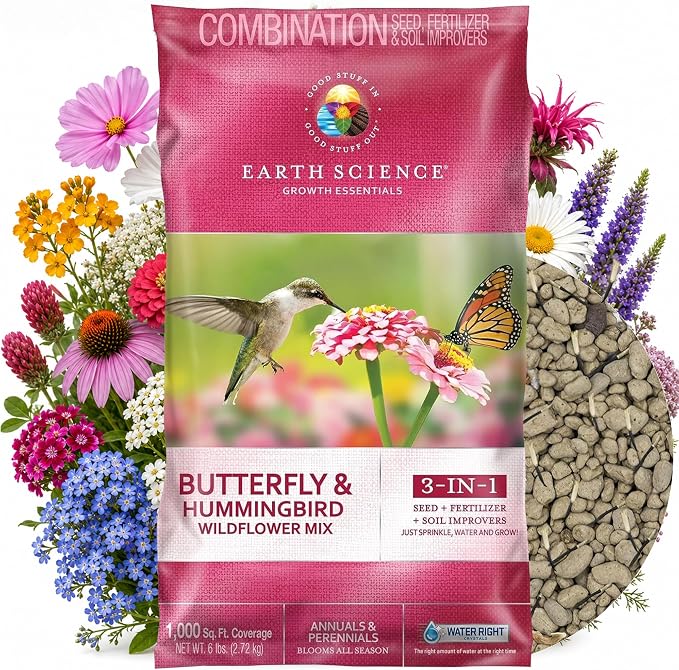
Great for garden lovers wanting to attract hummingbirds and butterflies, this wildflower mix offers a bright, low-maintenance seasonal display. It suits anyone looking for a natural, eco-friendly planting option that keeps pollinators coming back through the growing months.
Planting the granules is straightforward, requiring little effort beyond spreading the mix in the garden. The blend includes both annuals and perennials, meaning blooms continue from early season until frost with minimal watering or care. The variety helps keep your garden lively and colorful without constant attention.
Once growing, the mix does well at encouraging hummingbirds and butterflies to visit. The inclusion of well-known flowers like zinnia, cosmos, and black-eyed Susan ensures vibrant blooms. Most praise its ease of care, while some note a longer wait for perennials to establish before seeing full color.
The mix is praised for its low maintenance and steady attraction of pollinators across the season. A common drawback is the patience required for perennials to reach full bloom, which can delay the full visual impact.
Ideal for those who want a colorful, busy garden with minimal fuss and care. Those wanting immediate full bloom or who lack outdoor space may want to consider potted flowering plants instead.
Pros
- Easy to plant granule form
- Attracts both hummingbirds and butterflies
- Blooms throughout the season
- Eco-friendly, non-GMO ingredients
Cons
- Perennials take time to fully bloom
- Some flowers may need occasional watering
| Specification | Details |
|---|---|
| Brand Name | Earth Science |
| Flavor | Wildflower |
| Item Form | Granule |
| Special Ingredients | Zinnia, Cosmos, Shasta daisy, sweet William, black-eyed Susan |
| Specific Uses For Product | Active |
| Animal Food Ingredient Claim | Non-GMO |
11. Hummingbird Butterfly Wildflower Seed Mix

Featuring a large 1 ounce packet filled with over 7,500 pure live seeds, it’s designed to turn 100 square feet into a lively wildflower patch. Perfect for those who want to attract hummingbirds and butterflies while creating a colorful garden full of nectar-rich blooms.
Its biggest strength lies in supporting pollinators across the growing season.
Sowing the seeds is straightforward and ideal for garden borders or wildflower areas. Once planted, the mix keeps delivering color throughout the season without needing constant attention. The variety of flowers in the mix provides ongoing nectar sources, which means hummingbirds and butterflies tend to visit frequently, making the garden feel alive.
The seed count ensures enough coverage for a generous garden space.
The mix performs well by consistently attracting hummingbirds and butterflies, thanks to the nectar-rich flowers it produces. Seeds sprout reliably, creating a visually appealing and eco-friendly space.
While the seed quantity is generous, some notes mention that it might take some patience before the first blooms appear. The seed packet itself is ample enough for a sizable garden planting.
Attracting hummingbirds and butterflies is consistent thanks to the nectar-rich blooms, while some find the wait for flowers to bloom longer than expected. The packet’s size is great for medium to large gardens but can be too much for small spaces.
Gardeners looking to create a substantial wildflower area that invites pollinators will appreciate the variety and volume of seeds. Those with limited garden space or seeking quick blooms might want to explore other options.
Pros
- Generous seed count for large planting area
- Attracts hummingbirds and butterflies throughout season
- Easy to grow with variety of nectar-rich flowers
- Supports pollinators naturally
Cons
- May require patience before first blooms appear
- Not suitable for small or container gardens
| Specification | Details |
|---|---|
| Unit Count | 1 Ounce |
| Seed Quantity | Over 7,500 pure live seeds |
| Coverage Area | Approx. 100 square feet |
| Plant Type | Nectar-rich wildflower mix for pollinators |
| Ideal Use | Borders and wildflower gardens |
12. Hummingbird Trumpet Vine Seeds

Madame Galen trumpet vine seeds grow into stunning orange to salmon-red trumpet-shaped flowers that immediately catch the eye. Ideal for outdoor gardeners wanting to attract hummingbirds, it offers a long blooming season that keeps your garden lively and colorful well into the fall.
Planting these seeds in sandy soil under full sun during summer fits their needs perfectly. Moderate watering keeps them healthy without fuss. The fragrant flowers add a lovely scent to your space while ensuring hummingbirds keep coming back for nectar throughout the blooming period.
The trumpet vine reliably draws hummingbirds and blooms consistently from mid-summer through fall, supporting a lively garden atmosphere. It grows outdoors and favors sandy soil, which suits most sunny garden spots.
The strongest praise highlights its long flowering period and attractive blooms. A common complaint mentions the need for careful watering to avoid over or under-watering.
The most common praise centers on how well the trumpet vine attracts hummingbirds and its long-lasting bloom throughout the growing season. A frequent downside is the moderate watering requirement, requiring you to balance keeping soil moist without making it too wet. Comfortable growing conditions make a difference.
Gardeners ready to provide full sun and moderate watering will enjoy bright flowers that bring hummingbirds close. Those without sandy soil or consistent watering routines might find the plant less successful and may want to consider alternatives better suited to their environment.
Pros
- Attracts hummingbirds effectively
- Lasts from mid-summer to fall
- Fragrant and colorful flowers
- Suitable for full sun exposure
Cons
- Needs moderate watering attention
- Requires sandy soil for best growth
| Specification | Details |
|---|---|
| Expected Blooming Period | Summer |
| Sunlight Exposure | Full Sun |
| Expected Planting Period | Summer |
| Soil Type | Sandy Soil |
| Moisture Needs | Moderate Watering |
| Indoor Outdoor Usage | Outdoor |
13. BBB Seed Hummingbird Flower Seeds Mix

High-quality open-pollinated, non-GMO wildflower seeds provide flowers that hummingbirds love. Perfect for gardeners who want a diverse, vibrant outdoor space attracting pollinators.
Its main strength lies in combining both annual and perennial blooms to keep hummingbirds coming throughout the year.
Planting requires full sun and moderately moist sandy soil, best done in spring or late fall. Each 1 oz package covers over 100 sq.
ft., making it a good choice for larger outdoor spaces. Following the included expert guidance helps with germination and maintaining a healthy flower bed.
The flowers reliably attract hummingbirds with colorful blooms and nectar thanks to the variety of seeds included. Seed lots are tested for germination and weed control, ensuring strong growth.
Some buyers find wildlife is attracted slower than expected, which depends on local conditions and planting timing.
Seeds provide vibrant, varied wildflowers that hummingbirds are drawn to, with reliable germination and limited weed issues. Some find that it takes a while for hummingbirds to start visiting, depending on how well planting conditions are met.
Great for gardeners willing to prepare sunny, sandy soil and who want a wide area of wildflowers. Those with shaded yards or heavier soil types might want to look for seeds better suited to their environment.
Pros
- Wide coverage with just 1 oz of seeds
- Mix includes both annual and perennial flowers
- Non-GMO and tested for germination
- Attracts hummingbirds effectively with nectar-rich blooms
Cons
- Requires full sun and specific soil type
- Attraction speed to hummingbirds varies by location
| Specification | Details |
|---|---|
| Expected Blooming Period | Year Round |
| Sunlight Exposure | Full Sun |
| Expected Planting Period | Spring and late Fall |
| USDA Hardiness Zone | 2-9 |
| Soil Type | Sandy Soil |
| Moisture Needs | Moderate Watering |
14. Pineapple Sage Live Plant

Attracting hummingbirds to your garden requires the right kind of flowers, and the Pineapple Sage Live Plant fits perfectly for outdoor spaces that get plenty of sunlight. It’s an organic option that stands out for its extended bloom time during the fall, making it ideal for those who want hummingbirds visiting later in the season.
Setting it up involves planting in sandy soil and ensuring it receives full sun exposure. Moderate watering is necessary to keep it healthy, which makes day-to-day care straightforward without demanding constant attention. It grows to about 2 feet tall, so it won’t take over a garden but will add enough visual and ecological interest.
The plant reliably draws hummingbirds, thanks to its long bloom period compared to other late-season flowers. Built to thrive outdoors, it’s a solid choice for gardens with sandy soil and sun exposure.
A common drawback found in reviews is its limited height, which might not suit those wanting taller plants. Still, its organic nature and bloom longevity are frequently praised.
The longest bloom period is a big advantage, keeping hummingbirds around in the fall when other flowers might be fading. However, its size can feel small for those looking for more dramatic garden plants. The need for sandy soil can limit where it thrives without extra soil amendments.
Gardeners with sunny, sandy spots who want a low-maintenance plant with longer blooms will enjoy this one. Those needing taller flowers or plants suited to different soil types might want to explore other options better matched to their conditions.
Pros
- Organic and natural plant
- Extended bloom time during fall
- Suitable for full sun gardens
- Moderate watering requirements
Cons
- Only grows up to 2 feet tall
- Best suited for sandy soil only
| Specification | Details |
|---|---|
| Expected Blooming Period | Fall |
| Sunlight Exposure | Full Sun |
| Expected Plant Height | 2 feet |
| Soil Type | Sandy Soil |
| Moisture Needs | Moderate Watering |
| Indoor Outdoor Usage | Outdoor |
15. Hummingbird & Butterfly Wildflower Seed Mix

Covering 300 square feet with 60,000 seeds, this mix is perfect for anyone looking to quickly fill a garden with flowers that attract hummingbirds and butterflies. Growing a variety of annual and perennial blooms, it suits gardeners aiming for vibrant, pollinator-friendly spaces from spring through fall.
Planting involves sowing seeds after frost or in the fall, depending on your area’s climate, in a spot with full sun to partial shade. Clearing the area first and pressing seeds lightly into the soil helps them settle.
Keeping the soil lightly moist during the early stages encourages healthy growth of both fast-blooming annuals and longer-lasting perennials.
Flowers start showing color the first season thanks to included annuals, while perennials develop for future seasons. The seed mix holds up well outdoors across many USDA hardiness zones, making it versatile.
Some find the variety of seeds and coverage impressive, but a few mention the moderate watering needs can require regular attention during dry spells.
Many appreciate how quickly the annual flowers provide color while the perennials establish themselves for future seasons. Regular watering is often mentioned as a necessary commitment, especially in drier conditions.
Gardens with some time to monitor moisture and a sunny to partly shaded spot benefit most. Those wanting low-maintenance plants or growing in dense shade might consider other options.
Pros
- Covers large area with 60,000 seeds
- Includes both annuals and perennials
- Attracts hummingbirds and butterflies
- Suitable for wide range of climates
Cons
- Requires moderate, consistent watering
- Needs cleared area before sowing
| Specification | Details |
|---|---|
| Coverage | 300 sq. ft. |
| Seed Varieties | 18 annual and perennial |
| Sunlight Exposure | Full Sun to Partial Shade |
| Planting Period | Spring, Summer, Fall |
| Expected Blooming Period | Spring to Fall |
| USDA Hardiness Zone | 1-10 |
Comparison of Best Flowers for Hummingbirds
| Product | Indoor Outdoor Usage | Expected Blooming Period | Sunlight Exposure | Attracts Pollinators |
|---|---|---|---|---|
| Wildflower Seeds Mix | Outdoor | 35-75 days | Full Sun | – |
| Wildflower Butterfly Hummingbird Mix | Outdoor | Spring to Fall | Full Sun | – |
| Burpee Wildflower Bulk Mix | Outdoor | Spring to Fall | Full Sun | – |
| Perennial Hummingbird Mint Seeds | Outdoor | Year Round | Full Sun | Yes |
| Cardinal Flower Red Lobelia | Indoor | Summer to Fall | – | – |
| Earth Science Butterfly Hummingbird Mix | Outdoor | Spring to Fall | Full Sun | – |
| Eaton’s Penstemon Hummingbird Seeds | Outdoor | Spring to Summer | Full Sun, Partial Shade | Yes |
| Sereniseed Hummingbird Wildflower Mix | Outdoor | Spring to Summer | Full Sun | Yes |
| Classic Hummingbird Flower Seeds | Outdoor | Spring to Fall | Full Sun | Yes |
| Earth Science Wildflower Mix | – | – | – | – |
| Hummingbird Butterfly Seed Mix | – | – | – | – |
| Hummingbird Trumpet Vine Seeds | Outdoor | Summer | Full Sun | – |
| BBB Seed Hummingbird Mix | Outdoor | Year Round | Full Sun | Yes |
| Pineapple Sage Plant | Outdoor | Fall | Full Sun | – |
| Hummingbird Butterfly Wildflower Mix | Outdoor | Spring to Fall | Full Sun | Yes |
- Indoor Outdoor UsageOutdoor
- Expected Blooming Period35-75 days
- Sunlight ExposureFull Sun
- Attracts Pollinators–
- Indoor Outdoor UsageOutdoor
- Expected Blooming PeriodSpring to Fall
- Sunlight ExposureFull Sun
- Attracts Pollinators–
- Indoor Outdoor UsageOutdoor
- Expected Blooming PeriodSpring to Fall
- Sunlight ExposureFull Sun
- Attracts Pollinators–
- Indoor Outdoor UsageOutdoor
- Expected Blooming PeriodYear Round
- Sunlight ExposureFull Sun
- Attracts PollinatorsYes
- Indoor Outdoor UsageIndoor
- Expected Blooming PeriodSummer to Fall
- Sunlight Exposure–
- Attracts Pollinators–
- Indoor Outdoor UsageOutdoor
- Expected Blooming PeriodSpring to Fall
- Sunlight ExposureFull Sun
- Attracts Pollinators–
- Indoor Outdoor UsageOutdoor
- Expected Blooming PeriodSpring to Summer
- Sunlight ExposureFull Sun, Partial Shade
- Attracts PollinatorsYes
- Indoor Outdoor UsageOutdoor
- Expected Blooming PeriodSpring to Summer
- Sunlight ExposureFull Sun
- Attracts PollinatorsYes
- Indoor Outdoor UsageOutdoor
- Expected Blooming PeriodSpring to Fall
- Sunlight ExposureFull Sun
- Attracts PollinatorsYes
- Indoor Outdoor Usage–
- Expected Blooming Period–
- Sunlight Exposure–
- Attracts Pollinators–
- Indoor Outdoor Usage–
- Expected Blooming Period–
- Sunlight Exposure–
- Attracts Pollinators–
- Indoor Outdoor UsageOutdoor
- Expected Blooming PeriodSummer
- Sunlight ExposureFull Sun
- Attracts Pollinators–
- Indoor Outdoor UsageOutdoor
- Expected Blooming PeriodYear Round
- Sunlight ExposureFull Sun
- Attracts PollinatorsYes
- Indoor Outdoor UsageOutdoor
- Expected Blooming PeriodFall
- Sunlight ExposureFull Sun
- Attracts Pollinators–
- Indoor Outdoor UsageOutdoor
- Expected Blooming PeriodSpring to Fall
- Sunlight ExposureFull Sun
- Attracts PollinatorsYes
How to Choose the Best Flowers for Hummingbirds
Choosing flowers with bright colors, tubular shapes, and abundant nectar is key to attracting hummingbirds. Selecting native and low-maintenance varieties ensures healthy growth and reduces costs on care and replacements, making your garden more enjoyable and sustainable over time.
Flower Attractiveness
Bright reds, oranges, and tubular shapes attract more visits from hummingbirds than pale or flat flowers. These birds prefer flowers shaped like trumpets or funnels, which offer easier access to the nectar deep inside.
Flowers that produce abundant nectar are more likely to keep hummingbirds coming back; those with shallow nectar reserves rarely hold their interest for long. Scent plays a smaller role since hummingbirds rely more on sight, but some natural fragrance can still help guide them.
Choosing flowers with deep, narrow tubes that hold well-stocked nectar supplies makes a noticeable difference in daily use. Hummingbirds save energy when they don’t have to struggle to reach the nectar. Bright, vivid colors like red or orange stand out against greenery, making it easier to spot feeding spots.
Flowers with too shallow nectar or dull colors may attract fewer visits.
Plant Hardiness and Growth
Plants that thrive in your local environment cut down on frustration. Using species adapted to your climate and soil means fewer dead plants and less fuss.
Some flowers struggle in heavy clay or sandy soils unless amended. Pests like aphids or fungal diseases can quickly ruin plants not naturally resistant, meaning constant treatment or loss.
Growth habits matter, too. Some flowers are sprawlers or vines needing support, while others stay compact.
Low-maintenance plants that resist common pests and diseases offer a more reliable feeding station throughout the season without needing constant intervention or replacing. Choosing hardy varieties keeps the garden healthy and hummingbirds fed.
Bloom Duration and Frequency
Some flowers bloom for only a day or two, requiring constant replacement or succession planting. Others stay vibrant for weeks on a single bloom.
This directly affects how often you’ll need to tend the garden. The number of blooming cycles during the growing season also counts. A plant that blooms once and then fades won’t support hummingbirds as well as one with multiple flowering phases.
Timing the blooms to overlap with hummingbird presence is another practical point. Plants blooming too early or late miss the birds altogether.
Multiple, longer-lasting blooms distributed across spring and summer ensure reliable food sources through migration periods and breeding seasons, reducing the chances of gaps in nectar availability.
Safety and Toxicity
Many plants are safe, but some common garden favorites pose risks if ingested or if they collect chemical residues. Ensuring the species are nontoxic protects not just hummingbirds but also butterflies and bees.
Chemicals like pesticides, herbicides, or fungicides can linger and harm wildlife that lands or feeds on the flowers.
Placement of plants matters as well. Avoid spots where cats or other predators lurk or where birds could collide with windows or traffic.
A safe feeder area reduces stress and injury risk, encouraging regular visits rather than cautious or rare stops. Choosing non-toxic, chemical-free flowers near sheltered, quiet spots makes a noticeable difference in visitor numbers and wellbeing.
Ease of Cultivation
Plants needing constant watering or precise light conditions become difficult to maintain. Choosing species that tolerate a range of sunlight, from partial shade to full sun, fits more gardening spots. Water needs that align with your local rainfall or irrigation practices prevent overwatering or drought stress.
Propagation options also matter. Plants that grow readily from seeds or cuttings provide flexibility for expansion or replacements without expensive nursery trips. Selecting flowers that fit the space constraints of your garden, whether a small patio or a large yard, helps keep the planting manageable.
Practical growing habits save time and effort while maintaining a welcoming habitat.
Tips for Attracting More Hummingbirds with Flower Placement
Hummingbirds are drawn not just to certain flower types but also to where these flowers are placed in your garden. Positioning flowers in clusters rather than scattered widely helps create a visible nectar source that is easier for hummingbirds to find.
It’s best to place feeders or flowers near a window or a quiet spot where birds can feed without much disturbance. Flowers at varying heights can attract different species because hummingbirds often explore multiple levels while foraging.
Here are some practical tips:
- Plant flowers in groups of three or more to stand out.
- Choose sunny, sheltered areas to encourage longer visits.
- Include a mix of flower heights for diverse feeding options.
- Keep fresh water sources nearby to complement the nectar.
By planning flower placement thoughtfully, you’ll create a more inviting environment for hummingbirds to linger around your garden.
Common Mistakes to Avoid When Growing Flowers for Hummingbirds
One common mistake while growing flowers for hummingbirds is choosing plants that don’t produce enough nectar or have the wrong flower shape. Tubular flowers are ideal since hummingbirds can reach deep nectar with their beaks. Avoid overcrowding plants, which can limit airflow and encourage diseases.
Excessive use of pesticides can harm the birds directly or reduce the insects hummingbirds feed on. Also, neglecting to replace or deadhead flowers regularly reduces nectar availability.
Other issues to watch out for include:
- Planting non-native species that don’t suit local hummingbird populations.
- Relying solely on feeders and ignoring natural flower sources.
- Positioning flowers in heavy shade where they bloom poorly.
Avoid these mistakes to support a healthy, sustainable feeding spot that hummingbirds will keep coming back to.
People Also Asked
How Do I Care for Flowers That Attract Hummingbirds?
Keep flowers well-watered, especially during dry spells, to ensure nectar production stays high. Deadheading spent blooms helps plants focus energy on new flowers, increasing the supply for hummingbirds over time.
What Size Flowers Are Most Attractive to Hummingbirds?
Hummingbirds prefer tubular, medium-sized flowers that fit their beaks and tongues, such as trumpet creepers or columbines. Choosing flowers with bright colors like red or orange can also help catch their attention more effectively.
Are These Flowers Safe for Hummingbirds to Feed On?
Most native flowers that attract hummingbirds, like bee balm or salvia, are safe for them to feed on. Avoid plants treated with pesticides or herbicides, as these chemicals can be harmful to the birds.
How Long Do Hummingbird-Attracting Flowers Typically Last?
Flowers that attract hummingbirds typically last through a blooming season that ranges from several weeks to a couple of months. Regular deadheading and providing good soil nutrients can extend their bloom time.
What Common Problems Affect Flowers for Hummingbird Feeding?
Common issues include fungal diseases from too much moisture and aphid infestations. Ensuring good airflow around plants and inspecting regularly can keep flowers healthy and attractive to hummingbirds.
Conclusion
Choosing flowers that attract hummingbirds mostly depends on picking varieties with tubular shapes and bright colors like red or orange. The plants should provide a good nectar source and be suited to local climate conditions to keep them blooming longer. Also, consider flowering times to offer food across the seasons hummingbirds visit your area.
Think about how much space you have and how often you want to maintain the plants when making your choice. Smaller gardens may need compact options, while larger spaces can handle more variety.
Take another look at the comparison table and individual picks above to find the best fit for your yard and hummingbird needs.