Top 15 Best Ducks for Homestead That Boost Your Farm Fast
Cheap or poorly chosen ducks for homestead often lead to more trouble than enjoyment. It’s common to find a breed that either doesn’t lay enough eggs, lacks hardiness in cold weather, or requires more maintenance than expected.
The best ducks for homestead strike a balance between durability and productivity, keeping your workload manageable while providing eggs, pest control, or even meat. Those familiar with raising ducks understand how much a wrong choice can affect the entire operation, from feeding routines to shelter needs.
The most important factors in selecting the best ducks for homestead are their hardy constitution, egg-laying capacity, and adaptability to your local climate. Good homestead ducks lay around 150 to 250 eggs per year, handle fluctuating temperatures without much fuss, and forage well on available land.
Their size matters too; medium-sized breeds tend to be easier to handle and require less feed than larger ones, but still provide a satisfying yield. Cleanliness and housing needs are key as well, so look for ducks that stay relatively clean and fit well into a manageable coop design.
Need a Quick Check?
| Image | Product | Price |
|---|---|---|
Our Top Picks 1  | Backyard Homestead Animals | Check Price |
Our Top Picks 2  | Ducks Geese Guineas Guide | Check Price |
Our Top Picks 3  | Muscovy Duck Foraging | Check Price |
Our Selected Top 15 Ducks for Homestead Worth Your Money
This list features a variety of duck breeds ideal for homestead living, highlighting their unique qualities and suitability. Each review covers performance aspects, ideal environments, strengths, and potential drawbacks to help you choose the best fit for your needs.
1. The Backyard Homestead Guide to Raising Farm Animals
Feeling confident about raising ducks on your homestead gets easier with a guide that breaks down the essentials clearly. Ideal for beginners or casual homestead keepers, the strongest point is straightforward advice that covers the basics without overwhelming details.
Getting started involves following simple steps laid out for housing, feeding, and caring for ducks. Daily care revolves around practical tips on shelter protection and nutrition, making routine tasks manageable. The guide’s approach helps you anticipate common challenges and plan accordingly, which means less guesswork and smoother everyday management.
Its content delivers useful, well-structured information suitable for small farm settings. The material is durable enough to serve as a handy desk or field reference.
Most praise highlights the clarity and helpfulness of the instructions, while some mention it doesn’t cover every specific breed or advanced husbandry practice in detail.
Many find the guide’s clear steps and straightforward advice perfect for learning everyday duck care. The most frequent complaint notes the absence of deep detail on specific breeds or intensive methods, which some might miss for specialized needs.
People looking for simple, reliable information to start raising ducks will appreciate it most. Those wanting in-depth guidance on advanced practices or breed optimization might want to explore more specialized resources instead.
Pros
- Clear instructions for beginners
- Focuses on practical daily care
- Compact and easy to use
Cons
- Limited breed-specific details
- Not for advanced farming techniques
| Specification | Details |
|---|---|
| Type | Guidebook |
| Focus | Raising farm animals, including ducks |
| Audience | Homestead livings and small farms |
| Content breadth | Basic to intermediate care information |
2. Ducks, Geese, and Guineas: Raising Hardy Backyard Birds
Perfect for anyone raising ducks, geese, or guineas, this book offers practical advice tailored to hardy backyard birds. Its biggest strength lies in offering clear, down-to-earth guidance that helps ensure your flock stays healthy and productive.
Setting up a homestead flock gets easier with its step-by-step approach to care, feeding, and housing. Details on breed selection and daily routines cover what you really need to know to keep your birds thriving.
The focus on hardy breeds means less fuss over delicate species and more success in varied climates.
Information within the guide covers main concerns like health, nutrition, and predator protection thoroughly. The book’s straightforward style and reliable advice receive much praise for clarity and usefulness.
Some readers note it could include more on advanced breeding practices, but it remains a solid foundation for most backyard homesteaders.
The book stands out for its clear, practical guidance that covers daily care well, helping keep birds healthy and productive. Common feedback points to a desire for deeper info on breeding and predator control to cover more complex challenges.
Those starting out or wanting straightforward, reliable help with hardy birds will appreciate this resource. More experienced breeders seeking specialized or advanced knowledge might want to supplement it with other materials.
Pros
- Clear steps for daily care and feeding
- Focuses on hardy, easy-to-manage birds
- Practical advice tailored to backyard setups
- Good for beginners and intermediate keepers
Cons
- Lacks depth in advanced breeding techniques
- More detailed predator advice would help
| Specification | Details |
|---|---|
| Target Birds | Ducks, Geese, Guineas |
| Focus | Hardy backyard breeds |
| Topics Covered | Raising, Feeding, Housing |
| Style | Practical and clear |
3. The Muscovy Duck: Outdoor Foraging Bird
Heavy-boned and hardy, Muscovy ducks are built for outdoor foraging, making them a practical choice for a homestead focused on natural pest control and low-maintenance fowl. Their calm temperament suits those looking for ducks that manage well in open spaces and contribute to garden upkeep.
Keeping these birds is straightforward since they naturally wander and find food outdoors, minimizing feed costs. They thrive in larger, secure runs where they can scratch and forage. Daily care includes checking water access and ensuring their shelter stays clean; their sturdy nature means less worry about fragile enclosures or constant supervision.
Muscovy ducks excel at controlling insects and weeds due to their foraging habits, which makes them valuable for yard and garden health. They are large and strong, so their build supports their hardy lifestyle, but some find their quietness less characteristic of typical duck sounds. The main complaint is their slower growth rate compared to other duck breeds.
Reported strongest benefit is their effective outdoor foraging, which helps keep pests under control naturally. The most frequently mentioned downside is their slower rate of growth compared to other ducks, requiring more patience for meat production if that is the goal.
Those wanting a duck that helps manage insects and weeds with minimal feeding effort will appreciate this breed. Choosing faster-growing ducks might be better for those focused mainly on quick meat or egg production rather than natural yard maintenance.
Pros
- Excellent natural pest control
- Calm and easy to handle
- Requires minimal supplemental feeding
- Hardy build suits outdoor life
Cons
- Slower growth than other duck types
- Less vocal, which might seem quiet for ducks
| Specification | Details |
|---|---|
| Breed Type | Outdoor Foraging Bird |
| Temperament | Calm |
| Growth Rate | Slower than other ducks |
| Maintenance | Low |
| Ideal Environment | Large, secure outdoor runs |
4. Khaki Campbell Ducks Farming Guide

Khaki Campbell Ducks Farming Guide is made for anyone raising ducks on a homestead, especially those interested in the popular Khaki Campbell breed known for its egg-laying ability. Its biggest strength lies in providing straightforward, practical advice that suits both new and experienced keepers aiming for reliable results.
Setting up with the guide involves following clear instructions on housing, feeding, and general care tailored to Khaki Campbell ducks. Day-to-day use includes managing their diet and water supply correctly while monitoring their health.
The guide emphasizes simple routines that fit easily into a homestead lifestyle, helping maintain duck wellbeing without complicated steps.
The guide offers solid advice on maximizing egg production and keeping ducks healthy, making it effective for its main purpose. Its build in terms of content is clear and focused. Praise often highlights its easy-to-understand guidance, while some find it lacks detailed troubleshooting for uncommon problems.
The guide receives praise for its straightforward, easy-to-follow advice that makes caring for Khaki Campbell ducks manageable every day. At the same time, the most common complaint highlights a lack of depth when it comes to handling unusual health or environmental problems.
Those new to raising Khaki Campbell ducks or anyone wanting a simple step-by-step farming approach will find the guide very helpful. Individuals seeking extensive technical detail or advanced problem-solving may want to explore more comprehensive resources.
Pros
- Clear advice tailored to Khaki Campbell ducks
- Easy daily care routines explained
- Focuses on housing, feeding, and health
- Good for beginners and experienced keepers
Cons
- Lacks detailed troubleshooting for rare issues
- Some advice may feel basic for advanced users
| Specification | Details |
|---|---|
| Focus Breed | Khaki Campbell |
| Content Type | Farming Guide |
| Target Users | Homestead Duck Keepers |
| Key Topics | Housing, Feeding, Health Care |
| Format | Step-by-step Instructions |
5. Farm Fresh Duck Eggs Metal Sign
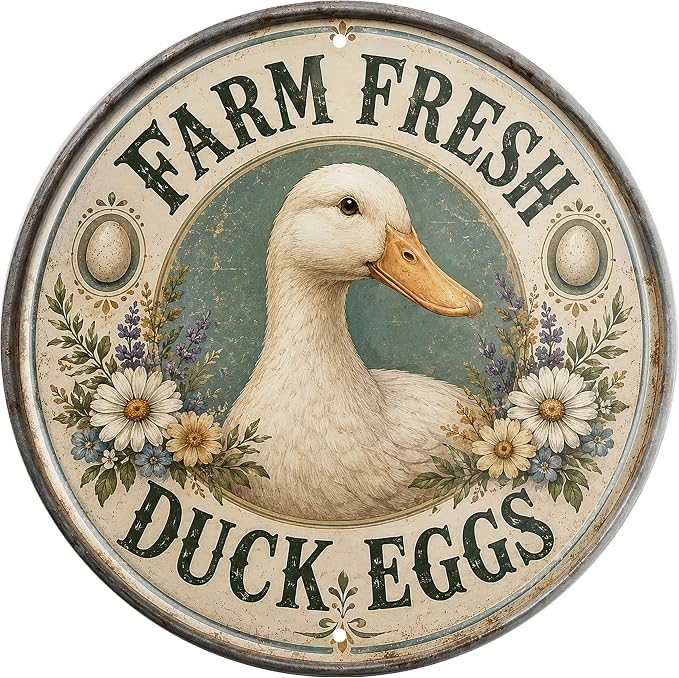
A durable metal sign shaped like a duck egg offers a charming way to mark your homestead or duck coop. Ideal for anyone wanting to add a practical and decorative touch, its biggest strength lies in its sturdy outdoor durability that withstands farm conditions without fading or warping.
Mounting the circular 8-inch plaque is simple, and it holds up well to outdoor elements, making it a reliable piece of signage for a duck coop or farm stand. Its farm fresh duck eggs message helps communicate your homestead’s purpose clearly while adding a bit of rustic charm.
The metal material ensures it won’t easily bend or rust with exposure.
Designed specifically for outdoor use, it handles weather resistance with ease, staying legible and visually appealing through rain or sun. The metal is thick enough to feel solid yet light enough for straightforward hanging. Most praise highlights its lasting material quality, while some note that installation options could be more versatile for different wall types.
It receives high marks for lasting outdoors without damage, maintaining its shape and message well even in tough weather. Some find the mounting options too basic, needing additional hardware to fit specific surfaces securely.
Those wanting a tough, straightforward sign for their duck area will appreciate this metal plaque. People needing flexible installation solutions might want to look for signs with built-in versatile mounting features instead.
Pros
- Strong outdoor durable metal material
- Clear farm fresh duck eggs message
- Perfect size for coop or farm stand
- Simple mounting and lightweight plaque
Cons
- Limited mounting options for various surfaces
- May require extra hardware for some walls
| Specification | Details |
|---|---|
| Shape | 8 inch circular duck egg farm plaque |
| Theme | Farm fresh duck eggs homestead message |
| Material | Outdoor durable farm metal |
| Location | Functional for duck coop or farm stand |
| Brand Name | FXLTJDM |
| Number of Items | 1 |
6. Manna Pro All Flock Crumbles with Probiotics
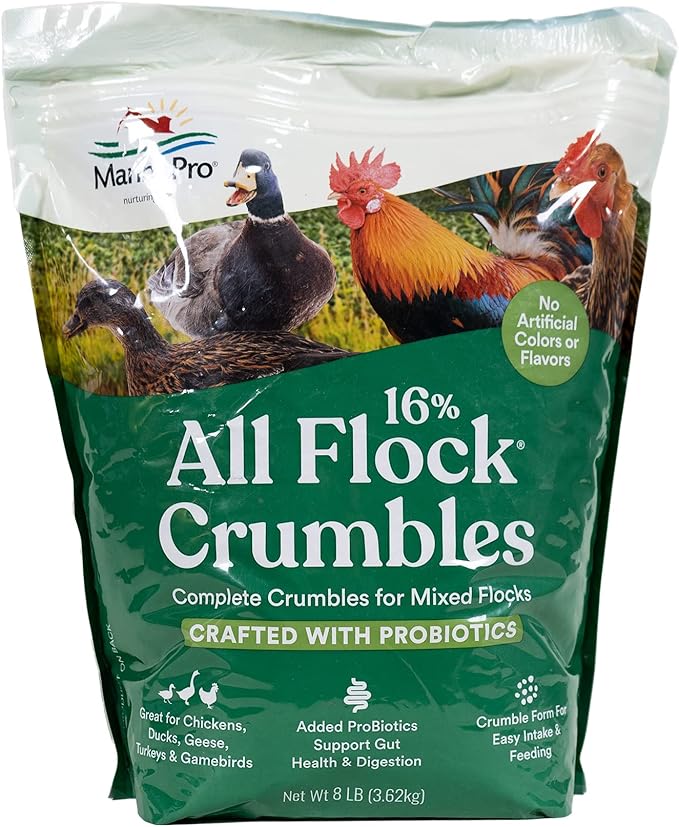
Feeding a variety of backyard birds without juggling different bags can be tricky, but Manna Pro All Flock Crumbles with Probiotics handles that by offering one solution for all. It suits anyone managing mixed poultry like chickens, ducks, turkeys, and geese, focusing on gut health and balanced nutrition as its biggest strength.
Pouring out the crumbles is simple thanks to its bag packaging, and the texture makes it easy for all birds to eat regardless of species or age. Using a single feed across poultry types cuts down on feeding hassle, with probiotics mixed in to support stomach health for healthy growth.
Grain-free and free from artificial flavors, this feed fits well in everyday feeding routines on a homestead with multiple bird breeds.
The crumble form ensures all birds can access the nutrition comfortably, promoting strong energy and steady growth as intended. The balanced formula is reliable in supporting health, though some users mention price could be a downside. Its strength lies in supporting all poultry types, making it a versatile choice over species-specific feeds.
The feed gets strong praise for its ability to support healthy growth and energy in a variety of poultry through well-rounded nutrition and probiotics. Common feedback points to its cost being on the higher side compared to other feeds focused on just one species.
People managing mixed flocks looking for one feed to simplify daily routines will appreciate this product. Those with very specialized feeding needs for a single bird type might want to explore other options tailored precisely for their species.
Pros
- Suitable for multiple poultry species
- Supports gut health with probiotics
- Grain-free for sensitive birds
- Easy-to-eat crumble texture
Cons
- Higher price than some specialized feeds
- May not fully meet species-specific needs
| Specification | Details |
|---|---|
| Brand Name | Manna Pro |
| Flavor | Complete Feed |
| Age Range Description | All Life Stages |
| Item Form | Crumble |
| Animal Food Ingredient Claim | No Artificial Flavors |
| Specific Uses For Product | Stomach |
7. Purina Complete Duck Feed

Containing 60 ppm niacin, this duck feed supports healthy bone growth, especially in ducklings’ legs. Suitable for all life stages and breed sizes, it provides a balanced diet with the right protein and essential nutrients to keep both young and adult ducks healthy.
Feeding is straightforward with pelleted form that ducks readily eat. The inclusion of prebiotics and probiotics supports immune and digestive health daily, making it easier to maintain your flock’s overall wellness.
The formula covers all specific nutrient needs, so there’s no need for supplements or mixing feeds for different ages.
Designed with 19% protein, the feed helps support steady growth and maintains adult ducks’ health. It is unflavored, relying on nutrition rather than additives. The best feature is its focused formula on bone growth and immune support, though some notice that the pellets might not appeal to ducks used to varied diet textures.
Many appreciate the focus on vital nutrients like niacin and the support for immune function, helping ducks stay healthy from duckling to adult. Some find ducks less enthusiastic about the plain pellet texture compared to more varied feed options.
Those wanting a balanced, nutritionally complete feed with easy daily use will find this a solid choice. Ducks that need more flavor variety or prefer different textures could benefit from alternate feeds offering those options.
Pros
- Includes at least 60 ppm niacin for bone growth
- Supports immune and digestive health
- Suitable for all life stages and breeds
- Specific 19% protein for proper duck growth
Cons
- Unflavored pellets may not appeal to all ducks
- No variety in texture for picky eaters
| Specification | Details |
|---|---|
| Niacin Level | At least 60 ppm (mg/kg) |
| Protein Content | 19% |
| Form | Pellet |
| Special Ingredients | Prebiotics, Probiotics |
| Age Range Description | All Life Stages |
| Breed Recommendation | All Breed Sizes |
8. Mallard Ducks Owners Manual

Anyone planning to keep mallard ducks on a homestead will find the Mallard Ducks Owners Manual very useful. It suits those new to duck care who want straightforward advice and clear instructions. Its biggest strength lies in guiding beginners through the essential steps of raising and managing mallard ducks effectively.
Setting up with this manual is simple since it breaks down duck care into manageable daily tasks. You’ll find practical tips on feeding, housing, and handling your ducks, making everyday routines easier to follow.
It focuses on important details like what mallards need to thrive, helping to avoid common mistakes in their care and maintenance.
The manual does a solid job of covering the basics you’ll need to keep mallards healthy and happy. It is well-organized and written in plain language, helping readers learn quickly. Some users note that more advanced topics or troubleshooting could be added, which is the most frequent criticism found in reviews.
However, the clear instructions on fundamental care remain its standout feature.
Clear, concise instructions make daily care straightforward for mallard ducks, while the limited depth leaves some topics less explored. The manual is best suited for those starting out and wanting a reliable intro guide. Serious or experienced duck keepers might look for more extensive resources to cover complex issues or rare circumstances.
People wanting quick, simple advice on mallard duck care will appreciate this manual’s approach. Those needing in-depth knowledge or dealing with special health problems should consider other options that offer greater detail and advanced insights.
Pros
- Easy to understand for new duck keepers
- Covers daily care essentials clearly
- Focused specifically on mallard ducks
- Good organization of topics
Cons
- Lacks advanced care and troubleshooting tips
- Some readers want more detailed information
| Specification | Details |
|---|---|
| Duck Species Covered | Mallard Ducks |
| Care Topics | Feeding, Housing, Handling |
| Skill Level | Beginner Friendly |
| Language Style | Plain English |
9. Storeys Guide to Raising Ducks

Storeys Guide to Raising Ducks stands out as a comprehensive handbook for anyone starting or managing a homestead with ducks. Perfect for beginners and experienced keepers alike, its biggest strength lies in clear advice that covers all the essentials of duck care and raising.
Setting up with the guide involves following straightforward instructions on shelter, feeding, and handling. It covers daily routines that matter most, explaining how to ensure ducks stay healthy and productive. Navigation through topics is simple, making daily reference quick and practical for ongoing care.
The book performs well as a resource, combining practical tips with useful illustrations. It is well-constructed as a reference, valued mainly for its detailed coverage of duck behavior and health management. Some readers note the lack of advanced farming techniques as a drawback for larger scale operations.
Many find the book very helpful for learning how to raise ducks with confidence, appreciating its straightforward approach and useful tips. Common feedback highlights a desire for more advanced content for those expanding their operation.
People starting with backyard duck keeping or small homesteads will get the most from this guide. Those planning large commercial ventures may want a more technical manual tailored to intensive farming needs.
Pros
- Clear and practical advice for everyday duck care
- Covers a wide range of topics from basics to health
- Easy to follow for beginners
Cons
- Limited info on large-scale commercial duck farming
- Some sections lack depth for advanced keepers
| Specification | Details |
|---|---|
| Type | Guidebook |
| Focus | Raising Ducks |
| Audience | Homestead keepers |
| Content scope | Care, feeding, health, breeding |
10. Raising Ducks for Beginners

Raising Ducks for Beginners offers simple, clear guidance for anyone starting with keeping ducks on a homestead. Ideal for novices, its biggest strength lies in straightforward advice that makes understanding duck care manageable and less intimidating.
Getting started is straightforward, with step-by-step instructions covering basic needs such as feeding, housing, and health. Day-to-day tasks like cleaning and feeding become easier by following its clear tips, helping you keep ducks healthy and well taken care of without confusion.
Instructions focus on practical aspects like safety, proper nutrition, and suitable living conditions. The book is well organized and easy to follow, making it accessible even if you have no prior experience.
Some readers noted it lacks in-depth coverage on advanced topics, but it covers all essentials well.
Many find the straightforward advice reassuring for new duck keepers, helping them feel less overwhelmed. However, common feedback highlights a desire for more detailed, technical information for those moving past the beginner stage.
People looking just to get started with ducks in a manageable way will appreciate this guide. Anyone seeking more comprehensive or technical details should consider additional resources to supplement their learning.
Pros
- Clear and easy-to-follow guidance
- Focus on beginner needs
- Practical safety tips included
- Step-by-step daily care instructions
Cons
- Lacks advanced duck-keeping details
- Limited technical data provided
| Specification | Details |
|---|---|
| Target audience | Beginners |
| Focus areas | Duck care basics |
| Safety advice | Included |
| Cleaning guidelines | Provided |
11. Beginners Guide to Raising Ducks and Geese

Easy to follow and clear, the Beginners Guide to Raising Ducks and Geese is ideal for anyone new to keeping waterfowl on a homestead. Its main strength lies in straightforward advice that helps avoid common mistakes, making it feel like a friendly companion through the learning curve.
Setting up involves reading through practical tips on housing, feeding, and managing ducks and geese. Daily care insights help manage their health and growth without feeling overwhelmed.
The guide covers essential topics, so you can rely on it for everyday questions about these birds, making routine care simpler to handle.
Information is presented in a way that’s easy to apply, allowing good results with minimal guesswork. Construction is not physical but in clear writing that supports steady progress throughout your homesteading journey. Positive feedback highlights how approachable the guide is, while some wish it had more advanced details.
The guide is praised for making the basics simple to grasp and care routines manageable, which makes it perfect for someone just starting out. On the other hand, it can feel too basic for those who want in-depth or specialized knowledge about waterfowl care.
Any homesteader new to ducks or geese will find this guide an easy starting point that builds confidence. Those already familiar with waterfowl or needing more complex information may want to look for resources with more comprehensive detail or specific techniques.
Pros
- Clear, easy-to-understand instructions
- Covers both ducks and geese care
- Helpful for avoiding beginner mistakes
- Supports day-to-day homestead routines
Cons
- Limited advanced or detailed information
- Not suitable for experienced keepers
| Specification | Details |
|---|---|
| Type | Guidebook |
| Focus | Raising Ducks and Geese |
| Target Audience | Beginners |
| Content Approach | Practical Advice and Tips |
12. Raising Ducks: Healthy Duck Keeping Guide

Raising Ducks: Healthy Duck Keeping Guide is a practical and straightforward manual designed for anyone interested in keeping ducks healthy and happy. It suits new homesteaders or anyone looking to understand proper duck care. Its single biggest strength lies in clear, useful guidance tailored to everyday duck-keeping challenges.
Setting up with this guide involves following step-by-step advice on housing, feeding, and health routines that matter most. Day-to-day use focuses on maintaining cleanliness, ensuring proper nutrition, and monitoring duck wellbeing, all explained in an accessible way. The book offers sensible tips that fit well into a homestead’s daily rhythm and seasonal changes.
The guide covers key aspects like diet, hygiene, and common illnesses adeptly, making it reliable for maintaining duck health. It’s built on practical knowledge rather than complex jargon, which readers appreciate for easy understanding. The most frequent praise highlights clear instructions, while a common complaint notes a desire for more detailed visuals or photos within the book.
Readers appreciate the guide’s clear and practical advice on feeding and health, making daily duck care approachable. Some wish for more pictures or diagrams to assist understanding during setup and ongoing care.
Those new to keeping ducks or running a homestead will find this guide helpful for maintaining their flock’s health. More experienced duck keepers seeking in-depth technical details or visuals might prefer a different resource.
Pros
- Clear, easy-to-follow care instructions
- Covers health and diet thoroughly
- Written specifically for homesteaders
- Focuses on practical daily maintenance
Cons
- Lacks detailed visual aids or photos
- Might be too basic for advanced keepers
| Specification | Details |
|---|---|
| Content Focus | Healthy duck keeping, feeding, and health management |
| Target Audience | Homesteaders, beginners to moderate duck keepers |
| Format | Guidebook/Text |
| Usability | Step-by-step advice for daily care |
13. How to Raise Strong and Healthy Ducks

Focused on practical guidance, How to Raise Strong and Healthy Ducks offers clear advice suited for anyone starting out with ducks on a homestead. Its biggest strength lies in straightforward instructions that make duck care accessible, even for beginners.
Setting up according to the book’s tips ensures ducks get a healthy environment without unnecessary complications. Daily tasks like feeding, cleaning, and health checks become easier because the book breaks down what materials and routines are truly necessary for good duck wellbeing.
Performance shines in how well it covers essential aspects of duck care, promoting strong growth and resilience. The book is built on simple, actionable advice which many find reliable.
Some readers do mention it could include more on specific breeds, but the core information remains solid and dependable.
The clearest praise focuses on the book’s straightforward guidance that helps maintain ducks’ health and strength effectively. The most common complaint centres on the lack of detailed information about different breeds, which some may find limiting.
Anyone new to duck keeping or running a small homestead will appreciate the practical, clear advice. Those seeking detailed breed-specific or advanced techniques might want to consider additional resources for their needs.
Pros
- Simple, step-by-step care instructions
- Covers health and strength factors clearly
- Good for first-time duck keepers
Cons
- Lacks detail on specific duck breeds
- Limited advanced care techniques
| Specification | Details |
|---|---|
| Focus Area | Raising strong, healthy ducks |
| Advice Style | Practical and straightforward |
| Suitability | Beginners and small homesteads |
| Content Depth | General duck care guidance |
| Application | Daily duck care routines |
14. The Only Guide to Raising Ducks

Quick and straightforward guidance on raising ducks is what stands out here. Ideal for beginners and small homesteads, the book breaks down duck care into simple, easy-to-follow steps. Its strongest point is making duck-raising approachable for anyone new to the process.
Getting started with duck care using the book is easy. It covers the essentials you need to know about feeding, shelter, and daily maintenance. The practical advice helps you set up a comfortable environment for your ducks without overwhelming details.
Day-to-day tasks feel manageable thanks to the clear steps laid out.
Instructions are practical and focused on real-life scenarios in a homestead setting. The book is well organized, so finding info on specific topics such as health or breeding is straightforward.
The main praise mentions it makes raising ducks less intimidating, while some wish it offered more on advanced care or breed varieties.
The guide is praised for making the idea of raising ducks approachable and uncomplicated, giving beginners confidence to get started. Some readers mention it can feel too basic, especially if they look for detailed methods or variety options.
Someone just starting or running a small homestead will find this book a helpful companion. More experienced duck keepers or those interested in specific breeds might want a more detailed resource.
Pros
- Clear instructions for people new to raising ducks
- Focus on essential care and maintenance
- Organized for easy topic reference
- Addresses common homestead situations
Cons
- Lacks depth on advanced duck care
- Does not cover many duck breeds
| Specification | Details |
|---|---|
| Title | The Only Guide to Raising Ducks |
| Format | Book |
| Audience | Beginners and homesteaders |
| Focus | Practical duck care |
15. Manna Pro Duck Starter Grower Crumble

Manna Pro Duck Starter Grower Crumble is perfect for anyone raising young waterfowl who needs a balanced diet with no artificial colors. Its strongest point is the 22% protein content combined with added niacin, which supports excellent leg strength and healthy growth from day one.
Feeding out of the bag is simple, thanks to the pellet form that small breeds can easily eat. It contains alfalfa to add extra nutrition and probiotics to keep gut health in check.
Daily feeding routines become straightforward since it is non-medicated, letting you raise your ducklings or goslings without worrying about unnecessary additives. The crumble format also minimizes waste and mess during feeding.
The product supports fast muscle development and weight gain, addressing key needs for raising young ducks. It balances nutrition well with probiotics for gut health, which is a plus. While many appreciate the non-medicated formula and natural ingredients, a common complaint is that it is only recommended for small breeds, limiting its use for larger waterfowl.
Many note the excellent support for healthy growth due to high protein and niacin. Common complaints focus on its limited suitability for larger waterfowl, as the crumble is better sized for small breeds.
Those raising small breeds or backyard poultry will find the diet fits well and aids in easy growth. Larger ducklings or commercial flocks might need to look for feeds better designed to accommodate their size and nutritional demand.
Pros
- 22% protein supports rapid growth and muscle development
- Added niacin helps strengthen legs
- Contains probiotics for gut health
- No artificial colors or medication included
Cons
- Formulated mainly for small breeds only
- Pellet size may not suit larger ducklings
| Specification | Details |
|---|---|
| Protein Content | 22% |
| Brand Name | Manna Pro |
| Item Form | Pellet |
| Special Ingredients | Alfalfa |
| Probiotics | Included |
| Breed Recommendation | Small Breeds |
Best Ducks for Homestead Comparison Table
| Product | Best For | Breed Recommendation | Age Range | Special Ingredients |
|---|---|---|---|---|
| Backyard Homestead Animals | – | – | – | – |
| Ducks Geese Guineas Guide | – | – | – | – |
| Muscovy Duck Foraging | – | – | – | – |
| Khaki Campbell Ducks | – | – | – | – |
| Farm Fresh Duck Eggs Sign | Homestead Plaque | – | – | – |
| Manna Pro Flock Crumbles | Feed | All Breed Sizes | All Life Stages | Probiotic |
| Purina Duck Feed | Feed | All Breed Sizes | All Life Stages | Prebiotics, Probiotics |
| Mallard Ducks Manual | – | – | – | – |
| Storeys Raising Ducks | – | – | – | – |
| Ducks for Beginners | Beginners | – | – | – |
| Raising Ducks Geese Guide | – | – | – | – |
| Healthy Duck Keeping | – | – | – | – |
| Strong Healthy Ducks | – | – | – | – |
| Only Guide Raising Ducks | Beginners | – | – | – |
| Manna Pro Duck Starter | Starter Feed | Small Breeds | Baby | Alfalfa |
- Best For–
- Breed Recommendation–
- Age Range–
- Special Ingredients–
- Best For–
- Breed Recommendation–
- Age Range–
- Special Ingredients–
- Best For–
- Breed Recommendation–
- Age Range–
- Special Ingredients–
- Best For–
- Breed Recommendation–
- Age Range–
- Special Ingredients–
- Best ForHomestead Plaque
- Breed Recommendation–
- Age Range–
- Special Ingredients–
- Best ForFeed
- Breed RecommendationAll Breed Sizes
- Age RangeAll Life Stages
- Special IngredientsProbiotic
- Best ForFeed
- Breed RecommendationAll Breed Sizes
- Age RangeAll Life Stages
- Special IngredientsPrebiotics, Probiotics
- Best For–
- Breed Recommendation–
- Age Range–
- Special Ingredients–
- Best For–
- Breed Recommendation–
- Age Range–
- Special Ingredients–
- Best ForBeginners
- Breed Recommendation–
- Age Range–
- Special Ingredients–
- Best For–
- Breed Recommendation–
- Age Range–
- Special Ingredients–
- Best For–
- Breed Recommendation–
- Age Range–
- Special Ingredients–
- Best For–
- Breed Recommendation–
- Age Range–
- Special Ingredients–
- Best ForBeginners
- Breed Recommendation–
- Age Range–
- Special Ingredients–
- Best ForStarter Feed
- Breed RecommendationSmall Breeds
- Age RangeBaby
- Special IngredientsAlfalfa
How to Choose the Right Ducks for Homestead
Choosing ducks that suit your climate, space, and purpose helps ensure they thrive and stay healthy. Considering factors like temperament, egg production, and hardiness reduces future problems and expenses, making your homestead more efficient and enjoyable.
Temperament and Behavior
On a busy homestead, ducks that are calm and friendly make daily interactions easier, especially around children and other animals. Some ducks can be noisy and aggressive, creating stress and disruptions that affect everyone nearby. Ducks that remain quiet and sociable tend to settle in well with both people and pets, reducing the risk of conflicts and noise complaints.
A strain known for gentle nature and low noise levels is less likely to cause trouble. Look for breeds described as calm or docile, especially if you expect close contact with other animals.
Noise levels vary significantly; some breeds quack loudly throughout the day, while others produce only soft calls. The right temperament means less time managing stress and more enjoyment on the homestead.
Egg Production and Quality
Regular egg production can be unpredictable at first, but certain ducks reliably lay well over 150 eggs per season. The size and color of the eggs depend on the breed, ranging from small cream-colored ones to large, deep-green or blue eggs.
Consistency is important because irregular laying complicates your planning for daily fresh eggs.
Eggs from productive breeds are often medium to large in size. Expect one duck’s laying pattern to peak mid-season and slow as temperatures change.
Some ducks take breaks between batches, so having a flock with staggered laying habits avoids gaps. Consider breeds known for steady laying if fresh eggs are a main goal on your homestead.
Hardiness and Climate Adaptability
Living outside year-round means ducks must handle rain, cold, and heat without constant shelter changes. Some breeds tolerate wet, chilly weather much better, showing fewer signs of illness in damp conditions. Resistance to common illnesses like duck viral enteritis or respiratory issues is vital for a healthy flock.
Ducks need a dry, draft-free shelter with ample space to avoid crowding, which can lead to disease spread. A minimum of three to four square feet per bird indoors and 10 to 15 square feet outdoors helps maintain health and reduces stress. Breeds hardy against local climate conditions require less intervention, lowering daily management and veterinary costs.
Size and Space Requirements
Adult ducks vary between around 4 to 8 pounds and come in different body sizes that affect how much they move and eat. Larger ducks need more space and food, which increases feed costs but provides more meat if that’s part of your plan. Smaller ducks take less room and consume less but produce less meat.
Plan for at least 3 to 4 square feet per duck inside the coop plus outdoor paddock access of 10 to 15 square feet per bird. Overcrowding leads to stress and disease problems. Feed consumption rises directly with size; bigger ducks eat nearly twice as much daily compared to smaller varieties.
Knowing these details helps budget for feed and housing upgrades.
Purpose and Utility
Certain ducks are best raised strictly for meat, growing quickly and producing tender carcasses while others focus on laying strength with better egg quality but less body mass. Some breeds offer benefits beyond meat and eggs, actively controlling pests like slugs, which naturally supports vegetable gardens.
Foragers reduce feed costs by eating bugs and plants around the homestead. However, integrating ducks with other livestock requires attention so they do not compete or cause stress. Matching the breed to your primary goal, meat, eggs, or pest control, saves time and resources and improves overall homestead harmony.
Proper Care and Maintenance Tips for Homestead Ducks
Providing clean water is essential for ducks since they need it to keep their eyes, nostrils, and beaks clean. Ducks are messy with water, so using a container that minimizes spilling helps maintain dryness in the coop and surrounding area.
Feeding them a balanced diet with grains, proteins, and fresh greens supports strong growth and egg production. Regularly changing bedding reduces the risk of mold and bacteria buildup, which can cause illness. Ducks require shelter that protects them from predators and harsh weather while allowing ventilation to prevent respiratory issues.
Seasonal adjustments in care, such as extra shade in summer or insulated housing in winter, help ducks cope with temperature changes. Routine checks for parasites and injuries detect problems early, ensuring prompt treatment. Setting up a designated swimming area will satisfy their instinctual need for water, which benefits their feather and skin condition.
Comparing Popular Duck Breeds for Egg Production and Meat Quality
Different duck breeds offer distinct advantages depending on whether the focus is on eggs or meat. Khaki Campbell ducks are known for high egg production, often laying over 250 eggs annually. Their smaller size means they consume less feed, making them efficient layer options.
Pekin ducks, by contrast, tend to grow quickly and have a plump body, making them a common choice for meat. Their temperament is calm, and they usually take around 7 to 9 weeks to reach market weight.
Rouen ducks resemble Mallards but have larger bodies, providing flavorful meat, though they mature more slowly compared to Pekins. For dual-purpose use, Indian Runner ducks balance reasonable egg output with good meat quality but require more space due to their active nature.
Choose breeds based on specific homestead goals to maximize resource use and meet production needs.
People Also Asked
How Much Space Do Ducks Need on a Homestead?
Ducks need about 4 to 6 square feet per bird in a coop and at least 15 to 20 square feet in an outdoor run or pond area. Providing enough outdoor space helps reduce stress and prevents overcrowding, especially as they are active and like to forage.
What Are Common Health Problems in Ducks to Watch For?
Common health issues in ducks include bumblefoot, respiratory infections, and parasites like lice or mites. Regularly check their feet for cuts and swelling, and keep their living area clean and dry to minimize the risk of infections.
Can Ducks Live Safely with Other Farm Animals?
Ducks generally get along with other farm animals like chickens and goats but watch for aggression or pecking. Avoid mixing them with animals that may see them as prey such as certain dogs or foxes, and offer separate shelter if needed.
How Do I Care for Ducks in Winter Months?
During winter, keep ducks dry and sheltered from wind and cold by providing insulated housing and plenty of dry bedding. Fresh unfrozen water is essential since frozen water can discourage drinking, so use a heated waterer or change water frequently.
How Long Do Ducks Typically Live on a Homestead?
Ducks typically live 8 to 12 years on a homestead. Their lifespan depends on the breed, care quality, and predator protection, so keeping them safe and stress-free can help them reach the higher end of that range.
Conclusion
Choosing ducks for a homestead depends on factors like the space available, how much egg production you want, and how hardy the breed is in your climate. Consider how much time you can spend on care since some breeds need more attention than others.
Quietness and temperament matter if you have neighbors close by or other animals.
Pick ducks that fit your living situation and budget to avoid surprises down the line. Take a second look at the comparison table and detailed descriptions above to match your needs with the best options for your homestead setup.