Top 15 Best Flowers for Hummingbirds and Butterflies WOW!
Many gardeners know the frustration of planting flowers that attract neither hummingbirds nor butterflies. Choosing the best flowers for hummingbirds and butterflies is key to seeing those delicate visitors frequently in your yard.
Cheap or poorly selected blooms often lack the nectar, color, or shape that these creatures need, leading to wasted time and effort. A flower that fails to meet these basic needs might also struggle to thrive in your climate, disappointing anyone who hoped for lively activity among their plants.
The best flowers for hummingbirds and butterflies have a few clear qualities. Bright colors like red, orange, and pink tend to draw hummingbirds, while butterflies prefer flat-topped clusters where they can land easily. Nectar production is critical, with tube-shaped flowers often giving the right access for hummingbirds’ long bills.
Flowers should be planted in groups to provide enough food, and choosing species that bloom for extended periods makes a garden more inviting. Hardy plants suited to your local environment also mean less maintenance and more consistent wildlife visits.
Need a Quick Check?
| Image | Product | Price |
|---|---|---|
Our Top Picks 1  | Wildflower Butterfly Hummingbird | Check Price |
Our Top Picks 2  | Wildflower Perennial Annual Mix | Check Price |
Our Top Picks 3  | Earth Science Butterfly Blend | Check Price |
Our Selected Top 15 Flowers for Hummingbirds and Butterflies Worth Your Money
This list features the top 15 flowers that attract hummingbirds and butterflies, highlighting their growth performance, ideal growing conditions, and overall appeal. Each review covers strengths and limitations, helping you choose the best plants suited to your garden’s environment and preferences.
1. Wildflower Seeds Butterfly and Hummingbird Mix
Perfect for anyone wanting to attract hummingbirds and butterflies, this mix offers a generous quantity of seeds to create a colorful wildflower area. Its biggest strength lies in the sheer volume and freshness of seeds, giving a high chance of blooming success on a broad patch of garden space.
Planting the seeds is straightforward with clear instructions included, so turning around 100 square feet into a blooming haven feels manageable. The packet’s resealable zipper helps keep unused seeds fresh over time.
Since the seeds adapt to most soil types and require full sun and moderate watering, daily care stays simple, suitable for both new and experienced gardeners.
The mix reliably produces flowers that attract the target wildlife from spring to fall, often reaching heights around four feet. The packaging is sturdy and reusable, which adds value for storage and future planting. The main praise revolves around the seed quality and germination rate, while some mention a slower start in cooler climates as a drawback.
Many users appreciate the freshness and viability of the seeds, leading to successful germination and vibrant blooms. At the same time, a common note is that seeds can take longer to start growing in cooler weather conditions, requiring patience during early stages.
Anyone with a sunny spot looking to cultivate a lively butterfly and hummingbird garden will find this seed mix fits well. Those with shaded gardens or shorter growing seasons might want to consider alternatives better suited to their environment.
Pros
- Generous 1-ounce packet with over 7,500 seeds
- Clear planting instructions included
- Seeds adapt to most soil types
- Reusable, resealable packaging
Cons
- Slower germination in cooler areas
- Requires full sun for best results
| Specification | Details |
|---|---|
| Expected Blooming Period | Spring to Fall |
| Sunlight Exposure | Full Sun |
| Expected Plant Height | 4 feet |
| Soil Type | Adaptable to most soils |
| Moisture Needs | Moderate Watering |
2. Wildflower Seeds Mix Perennial and Annual
Wildflower Seeds Mix offers a blend of 24 annual, perennial, and biennial plants designed for outdoor gardens targeting hummingbirds and butterflies. Ideal for gardeners wanting vibrant blooms and steady pollinator visits, its key strength lies in delivering fresh, high-germination seeds that bring life and color to any sunny garden space.
Planting begins best in spring or summer, requiring full sunlight to thrive. The seeds sprout and bloom within 35 to 75 days, with plants reaching up to about 48 inches tall.
The mix contains no fillers, ensuring nearly every seed you plant turns into a healthy flower, making setup straightforward and rewarding over the growing season.
It effectively attracts a variety of pollinators such as butterflies, bumblebees, and ladybugs, enlivening garden spaces throughout bloom periods. The seeds have been rigorously tested to ensure a 99% purity and live seed rate, which customers appreciate for reliable results.
Some mention waiting for the flowers to establish can take a bit of patience.
Reviews commonly note the seeds grow reliably with vibrant blooms that invite many pollinators. The most frequent drawback is patience required during the 35 to 75 day blooming period before the garden fully comes alive.
Gardeners seeking a lively, pollinator-friendly outdoor space in sunny spots will appreciate this mix. Those lacking full sun or desiring quicker blooms may want to explore other options more suited to their conditions.
Pros
- High germination rate with 99% pure live seed
- Contains 24 varieties of annual, perennial, and biennial plants
- Attracts multiple types of pollinators like butterflies and bees
- Suitable for outdoor planting in sunny locations
Cons
- Waiting period for flowers to fully bloom can feel long
- Only suitable for full sun exposure areas
| Specification | Details |
|---|---|
| Expected Blooming Period | 35-75 days |
| Sunlight Exposure | Full Sun |
| Expected Plant Height | 48 inches |
| Usage | Outdoor |
| Planting Period | Spring and summer |
3. Earth Science Butterfly and Hummingbird Wildflower Blend
A bright mix of wildflowers that keeps your garden buzzing with life from spring to fall. Suited for gardeners looking to attract hummingbirds, butterflies, and other pollinators, its biggest strength lies in its variety and extended blooming period that brings color and activity for months.
Planting the seeds requires a spot with full sun and moderate watering to keep the flowers thriving. One packet covers a large area, about 1,500 square feet, so it works well for both small gardens and bigger patches like meadows. Given the diversity of flowers like Purple Cone Flowers and Black-Eyed Susans, you get a lively and changing display through the seasons.
The blend does a solid job at attracting a variety of native pollinators, keeping gardens lively with colorful blooms. The diverse flower types ensure continuous blossoms, though some have noted certain blooms may be more dominant, crowding others out.
The seed mix itself is dense and of good quality, providing good coverage when spread evenly.
The bloom variety keeps a garden lively with changing colors that attract a wide range of pollinators, but some flowers can dominate, affecting others’ growth. The seed density ensures good coverage if spread properly, making it a solid choice for a diverse pollinator garden.
Gardeners aiming for extended flowering and attracting multiple pollinators will find this mix rewarding. Those with limited watering ability or very small spaces might want to look for a smaller or less demanding seed option instead.
Pros
- Diverse flowers for varied pollinator appeal
- Long blooming season from spring to fall
- Large coverage area with over 40,000 seeds
- Supports native bees, butterflies, and hummingbirds
Cons
- Some flowers may overshadow others when crowded
- Requires consistent moderate watering for best blooms
| Specification | Details |
|---|---|
| Expected Blooming Period | Spring to Fall |
| Sunlight Exposure | Full Sun |
| USDA Hardiness Zone | 4, 5, 6, 7, 8, 9 |
| Moisture Needs | Moderate Watering |
| Seed Coverage | Approx. 1,500 square feet per 4oz |
4. Seed Needs Hummingbird and Butterfly Flower Seed Mix

Seed Needs Hummingbird and Butterfly Flower Seed Mix is perfect for gardeners wanting a vibrant, multicolored garden that attracts pollinators. Its biggest strength lies in the rich variety of annual and perennial seeds that bloom from summer to fall, filling your outdoor space with life and color.
Planting starts in spring, with daily watering required to keep the flowers thriving. Most seeds prefer full sun and average soil, making it straightforward to grow in many garden settings. The mix includes easy-to-grow varieties like snapdragons and cosmos, along with some perennials such as butterfly milkweed, offering both quick blooms and lasting beauty year after year.
The mix does very well at attracting butterflies and hummingbirds while producing a large display of colorful flowers. The flowers typically reach about 36 inches tall, creating a pleasant visual impact. One strong praise is how the mix brings diverse blooms together in one package; a common drawback mentioned is the need for frequent watering to maintain healthy plants.
The seed mix consistently attracts hummingbirds and butterflies while producing a lively mix of colors. Most users appreciate how the variety supports pollinators, though daily watering is necessary to keep the garden healthy, which can feel demanding for some.
Gardeners looking for a colorful, pollinator-friendly garden in full sun will find this mix very rewarding. Those needing low-maintenance or drought-tolerant options may want to explore alternatives better suited to dry or shady spaces.
Pros
- Wide variety of colorful flower seeds
- Includes both annual and perennial options
- Attracts butterflies and hummingbirds effectively
- Works well in average soil and full sun
Cons
- Requires daily watering for best results
- Some flowers need time before blooming
| Specification | Details |
|---|---|
| Expected Blooming Period | Summer to Fall |
| Sunlight Exposure | Full Sun |
| Expected Plant Height | 36 inches |
| Moisture Needs | Water Daily |
| USDA Hardiness Zone | 1,2,3,4,5,6,7,8,9,10 |
5. Hummingbird and Butterfly Wildflower Seed Mix

Gardening spaces often look dull to hummingbirds and butterflies, but this seed mix offers an easy way to attract them. Ideal for gardeners of all levels, it shines at turning 300 square feet into a lively wildflower bed.
The variety of blooms keeps your garden colorful from spring through fall.
Planting is straightforward with no complicated steps involved. Clear the area, pick a sunny to partly shady spot, scatter seeds evenly, press them into the soil, and maintain moderate moisture. The mix includes both annuals for quick color and perennials that establish to return year after year, suiting beginner gardeners well.
Expect a vibrant patch filled with 18 different flower varieties that hummingbirds and butterflies love. Seed quantity covers a wide area, making it great for larger gardens. The seeds thrive outdoors with moderate watering and full sun.
Some users mention enjoying the continuous blooms, though a few note waiting for perennials to mature requires patience.
The mix is praised for providing a wide variety of flowers that reliably attract hummingbirds and butterflies throughout the growing season. Many appreciate the large seed quantity that covers expansive garden spaces. Some users experience a wait before perennial flowers become fully established and start blooming more robustly.
Anyone looking to quickly add diverse color and pollinator activity to a sunny garden with moderate maintenance will find this seed mix satisfying. Those wanting instant results or minimal watering might prefer faster-blooming annual-only options or drought-tolerant plants.
Pros
- Covers large areas with 60,000 seeds
- Includes 18 flower varieties attracting pollinators
- Simple planting process suitable for beginners
- Continuous blooms from spring to fall
Cons
- Perennials require time to fully establish
- Needs moderate watering to thrive consistently
| Specification | Details |
|---|---|
| Expected Blooming Period | Spring to Fall |
| Sunlight Exposure | Full Sun |
| Expected Planting Period | Spring, Summer, Fall |
| USDA Hardiness Zone | 1, 2, 3, 4, 5, 6, 7, 8, 9, 10 |
| Moisture Needs | Moderate Watering |
| Coverage | 60,000 seeds cover 300 sq. ft. |
6. Hummingbird and Butterfly Wildflower Mix

Over 7,500 live seeds in a 1 ounce packet can cover 100 square feet, transforming any garden into a lively spot for hummingbirds and butterflies. Ideal for anyone wanting a colorful, eco-friendly border or wildflower area that encourages pollinator visits throughout the season.
Getting started is simple since the mix is easy to grow. Just scatter the seeds in the chosen area and watch as nectar-rich flowers begin to bloom. Daily maintenance mostly involves ensuring the patch gets enough sunlight and occasional watering until the flowers establish.
This mix supports a thriving pollinator-friendly environment with long-lasting blooms.
The flower mix performs well, consistently attracting hummingbirds and butterflies with its variety of nectar-heavy blooms. It’s well suited for gardens aiming to boost biodiversity and add visual appeal over many weeks.
Most praise highlights the abundant, colorful blossoms. A noted drawback is the uneven germination, with some seeds taking longer to sprout or not all coming up equally.
Flowers grow well and attract many pollinators, but germination can be patchy and unpredictable. Some areas may need reseeding for fuller coverage.
Great for gardeners wanting a colorful, wildlife-supporting flowerbed that blooms over several months. Less suitable for those wanting perfectly even or instant green-up coverage.
Pros
- Large packet covers 100 square feet
- Attracts hummingbirds and butterflies
- Blooms throughout the season
- Easy to grow in various gardens
Cons
- Some seeds have uneven germination
- Not all seeds sprout uniformly
| Specification | Details |
|---|---|
| Unit Count | 1 Ounce |
| Seed Quantity | Over 7,500 seeds |
| Coverage Area | 100 square feet |
| Flower Type | Nectar-rich wildflowers |
7. Home Grown Wildflower Variety Mix

Gardeners looking to attract hummingbirds and butterflies will appreciate this variety mix. It’s packed with 24 different perennial wildflower seeds and made to produce bright, colorful blooms that attract pollinators. The biggest strength lies in its ability to offer a long-lasting garden with flowers blooming from spring through fall.
Planting is straightforward, these seeds can go right into your outdoor garden space without fuss. The mix includes seeds suited for different seasons, so your garden keeps blooming year after year.
It handles drought well and grows nicely in sandy or loam soil with moderate watering, making it a practical choice for both beginners and seasoned gardeners.
Flowers grow to about 2 feet tall and fill your garden with a mix of bold colors and textures that pollinators love. The large quantity of seeds supports a full meadow or cottage-style bed.
While many praise its consistent germination and beauty, some mention that patience is necessary as blooms develop gradually across seasons.
The mix consistently produces vibrant flowers that attract pollinators and has a high seed count for substantial planting. Most users find that the flowers take time to reach full bloom, making patience necessary for the best results.
Anyone wanting a steady stream of colorful wildflowers from spring to fall will be happy with the mix. It suits gardeners comfortable with outdoor planting in full sun. Those needing quicker results or indoor planting options might look elsewhere.
Pros
- Includes 24 different perennial wildflower seeds
- Long blooming period from spring through fall
- High germination rate with non-GMO seeds
- Drought tolerant and easy to grow
Cons
- Blooms can develop slowly across seasons
- Requires full sun to thrive properly
| Specification | Details |
|---|---|
| Expected Blooming Period | Spring to Fall |
| Sunlight Exposure | Full Sun |
| Expected Plant Height | 2 feet |
| Soil Type | Sandy Soil, Loam Soil |
| Moisture Needs | Moderate Watering |
| USDA Hardiness Zone | 3, 4, 5, 6, 7, 8, 9, 10 |
8. Butterfly and Hummingbird Wildflower Mix

High-nectar flowers designed specifically for attracting butterflies and hummingbirds stand out in this wildflower mix. Suitable for anyone wanting to create a colorful, lively garden space, it offers a rich source of nectar that supports pollinators while promising a long blooming season from summer to frost.
Planting is straightforward in spring, spreading seeds over areas like garden beds, borders, or even containers. Full sun and average moisture keep the flowers thriving.
Seeds cover up to 100 square feet, allowing for generous garden coverage. Watching a steady stream of hummingbirds and butterflies makes daily care rewarding and connects you directly to nature.
Each variety in this mix is selected based on nectar production and vibrant color, ensuring it performs well in outdoor settings. The high germination rate means most seeds sprout, creating a dense, colorful display.
Some find certain seeds slower to bloom, but the continuous flowering until frost balances patience with lasting pleasure.
The flowers consistently attract butterflies and hummingbirds as promised, creating a vibrant garden presence from summer through fall. Most enjoy the abundant seed count and bloom longevity, though a few note that some seeds take longer to sprout and flower than others.
Gardeners with sunny spaces looking for a lively, pollinator-friendly patch will appreciate this mix. Those with limited sunlight or who expect immediate blooms might want to explore alternatives or complement this with faster blooming plants.
Pros
- High nectar production attracts many pollinators
- Long bloom season from summer to frost
- Generous seed count covers 100 square feet
- Non-GMO, open-pollinated seeds
Cons
- Some seeds may take longer to bloom
- Requires full sun exposure for best results
| Specification | Details |
|---|---|
| Expected Blooming Period | Summer to Fall |
| Sunlight Exposure | Full Sun |
| Expected Planting Period | Spring |
| Moisture Needs | Average |
| Seed Count | Over 30,000 Non-GMO Seeds |
| Usage | Outdoor |
9. The Old Farmers Almanac Wildflower Pollinator Mix

Old Farmers Almanac Wildflower Pollinator Mix stands out for attracting hummingbirds and butterflies effectively. Ideal for gardeners looking to add color and life to sunny outdoor spaces, its biggest strength is an extended bloom time that lasts from summer through fall, providing ongoing interest and pollinator visits.
Getting started requires planting in full sun with loam soil, and regular watering keeps the flowers healthy. The mix has a high germination rate, making it more likely to grow successfully after sowing. Drought tolerance helps during dry spells, so daily care mostly focuses on maintaining moisture rather than constant watering.
It performs well at drawing pollinators due to its fragrant flowers and varied species. The blooms last over several months, which is great for sustained garden activity. The seed mix covers a broad USDA hardiness zone range from 2 to 11.
A commonly mentioned downside is the need for consistent soil moisture to avoid wilting, despite drought tolerance.
The mix receives praise for attracting a variety of pollinators with a long flowering period and fragrant blooms. The most frequent challenge comes from its need for consistent watering, especially during establishment, which can be a drawback in very dry conditions.
Gardeners seeking vibrant summer-to-fall color and more butterfly and hummingbird visitors will appreciate this seed mix. Those with shady yards or limited time for watering may want to explore other options better suited to those conditions.
Pros
- Attracts hummingbirds and butterflies well
- Extended blooming from summer through fall
- Drought tolerant once established
- High germination rate for easy growth
Cons
- Needs regular watering for best results
- Requires full sun exposure to thrive
| Specification | Details |
|---|---|
| Sunlight Exposure | Full Sun |
| Expected Blooming Period | Summer to Fall |
| Soil Type | Loam Soil |
| Moisture Needs | Regular Watering |
| USDA Hardiness Zone | 2,3,4,5,6,7,8,9,10,11 |
10. Earth Science Wildflower Butterfly and Hummingbird Mix
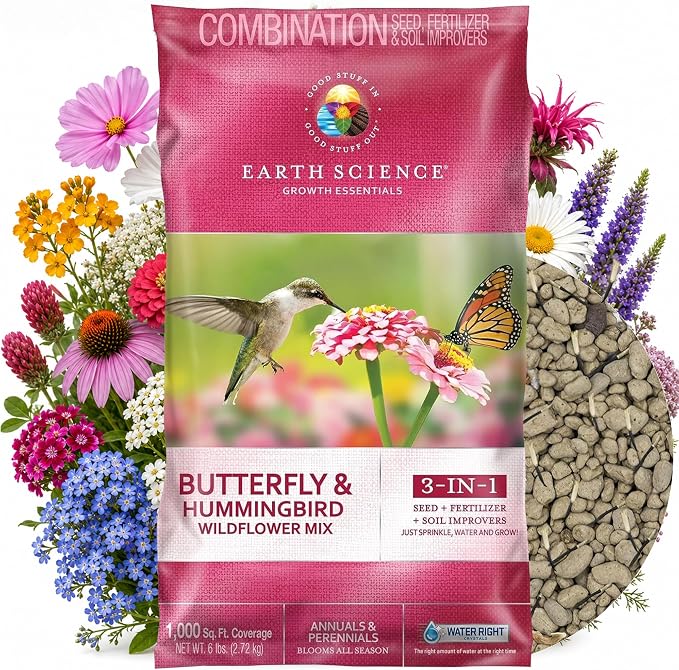
Bright splashes of color appear throughout the garden with Earth Science Wildflower Butterfly and Hummingbird Mix, perfect for anyone wanting to attract pollinators without too much fuss. Its biggest strength lies in a blend that blooms consistently all season long, suiting gardeners who want lively flowers that invite butterflies and hummingbirds.
Planting the mix is straightforward thanks to the granule form, which makes spreading seeds easy and neat. These wildflowers need minimal care once planted, thriving with just occasional watering.
The mix includes a variety of annuals and perennials like zinnia and cosmos that keep the garden lively from early bloom times to late summer, giving day-to-day visual interest without demanding much maintenance or complicated gardening skills.
The flowers reliably attract hummingbirds and butterflies, showing up in the garden as bright, steady visitors. Built from a diverse blend including Shasta daisy and sweet William, the mix supports pollinators well.
People enjoy how simple it is to plant, but some mention that certain varieties could bloom more evenly throughout the season. The seed mix successfully sustains long-term color and wildlife activity.
Strong praise centers on how well the mix attracts hummingbirds and butterflies with minimal care required. The common complaint notes uneven blooming times for some flower types within the blend, which might affect overall visual consistency.
Gardeners seeking an inviting, low-maintenance habitat for pollinators will find this mix satisfying. Those wanting perfectly timed blooms throughout the season might want to consider options with more controlled flowering schedules.
Pros
- Includes a vibrant mix of annuals and perennials
- Attracts a variety of butterflies and hummingbirds
- Requires minimal maintenance during the growing season
- Easy-to-plant granule form for neat application
Cons
- Some flowers may not bloom evenly across the season
- Performance can vary depending on local climate conditions
| Specification | Details |
|---|---|
| Brand Name | Earth Science |
| Item Form | Granule |
| Special Ingredients | Zinnia, Cosmos, Shasta daisy, sweet William, black-eyed Susan |
| Specific Uses For Product | Active |
| Animal Food Ingredient Claim | Non-GMO |
| Flavor | Wildflower |
11. Home Grown Monarch Butterfly Wildflower Mix
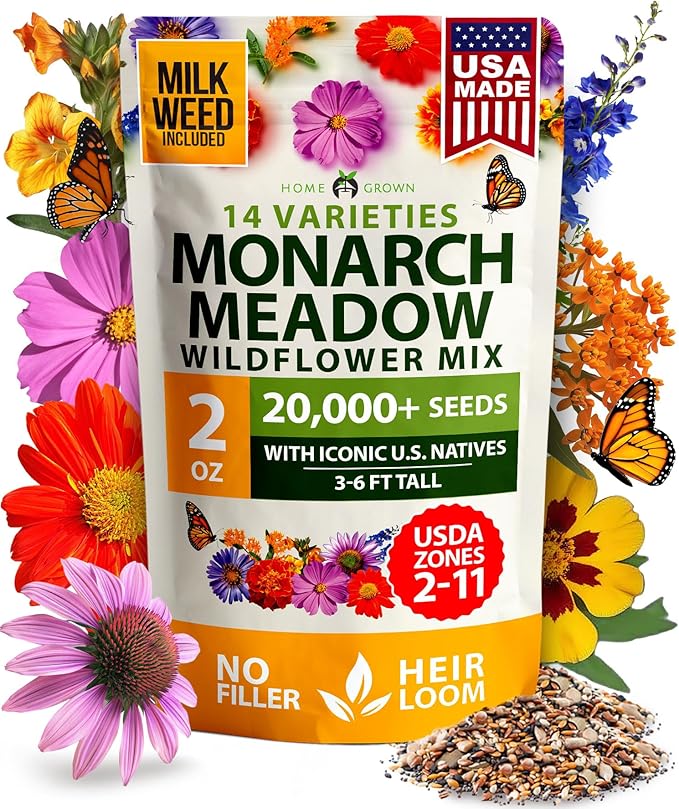
Perfect for anyone wanting to support monarch butterflies and hummingbirds, this wildflower mix stands out for its ability to create a lively, pollinator-friendly space. The biggest strength lies in its rich variety of seeds designed to bloom continuously from spring through fall, making it great for long-lasting color and wildlife attraction.
Planting involves sowing the mix in full sun during spring or fall, in loam soil with moderate watering needs. The mix grows to about 2 feet tall and produces blooms in orange, purple, yellow, and white.
Its perennial seeds return year after year, reducing the need to replant annually. It works well in outdoor gardens where you want a natural meadow look that attracts bees, hummingbirds, and especially monarchs.
The seed variety successfully supports pollinators by including milkweed and nectar-rich flowers, creating a vibrant and inviting environment for butterflies and hummingbirds. It’s made to thrive in USDA zones 3 through 9, proving versatile across many climates.
A common praise is the long, colorful blooming season from spring to summer, though some mention the need for consistent moderate watering to maintain healthy growth.
People appreciate the long blooming season and vibrant colors that attract a variety of pollinators, especially monarch butterflies. Some find the moderate watering requirement a bit demanding, as consistent moisture is necessary to keep the flowers healthy and thriving.
This mix fits gardeners who want to create a lively pollinator habitat with relatively low maintenance and a splash of color that lasts through several seasons. Those with shaded yards or who prefer low-water plants might want to look for alternatives better suited to their conditions.
Pros
- Attracts monarchs, bees, and hummingbirds effectively
- Offers continuous blooms through multiple seasons
- Perennial seeds regrow yearly for lasting appeal
- Suitable for a wide range of USDA zones
Cons
- Requires moderate watering for best growth
- Needs full sun, limiting shaded garden use
| Specification | Details |
|---|---|
| Expected Plant Height | 2 feet |
| Sunlight Exposure | Full Sun |
| Moisture Needs | Moderate Watering |
| Expected Blooming Period | Spring to Summer |
| USDA Hardiness Zone | 3, 4, 5, 6, 7, 8, 9 |
| Soil Type | Loam Soil |
12. Sereniseed Hummingbird Wildflower Mix

Seed mix crafted from non-GMO, open pollinated wildflower varieties ideal for outdoor planting. Perfect for gardeners focused on attracting hummingbirds and butterflies, it delivers a wide range of blooms from spring to summer.
Its strongest feature is the impressive selection of flowers that thrive in full sun and suit many USDA hardiness zones.
Sowing in spring requires loam soil with moderate watering for best growth. The resealable 2 oz pouch keeps seeds fresh for up to a year, ensuring good viability.
Flowers reach about 30 inches tall and bloom steadily from spring through summer, offering a vibrant display that supports pollinators. Gardens need full sun exposure to get the most from these seeds.
The mix performs well in attracting a variety of pollinators, a key goal for its use. Storage in controlled conditions contributes to high germination rates, making planting rewarding. Many appreciate the diverse species included, but some users note that growth and flowering can vary depending on local soil and climate.
It is well suited for various regions, ranging from USDA zones 1 through 13.
The mix is praised for its diverse flower options and success in attracting pollinators. Some challenges involve variable growth depending on climate and soil conditions, making results less predictable in some areas.
Gardeners in USDA zones 1 through 13 looking for a colorful, wildlife-friendly garden will find this mix a good fit. Those with shaded gardens or very dry soil may want to consider alternatives better suited to those environments.
Pros
- Wide variety of flower species included
- High germination rate guaranteed
- Attracts hummingbirds and butterflies effectively
- Resealable pouch keeps seeds fresh
Cons
- Performance depends on local soil and climate
- Requires full sun for best bloom
| Specification | Details |
|---|---|
| Sunlight Exposure | Full Sun |
| Expected Blooming Period | Spring to Summer |
| Plant Height | 30 inches |
| Soil Type | Loam Soil |
| Moisture Needs | Moderate Watering |
| USDA Hardiness Zone | 1 to 13 |
13. Camas Pollinator Wildflower Seed Packets

Bright, varied, and full of life, the flower seed packets are ideal for anyone wanting to attract a range of pollinators to their garden. It suits gardeners keen on supporting bees, butterflies, and hummingbirds with an easy-to-grow mix of 11 different wildflower types.
Sowing the seeds in your garden is straightforward, making it friendly for both kids and adults. The selection includes familiar blooms like Bachelor Button and Zinnias which grow well together, creating a lively, colorful space. Daily care mostly revolves around keeping the soil moist and watching the variety of pollinators visit the flowers as they bloom over time.
Each packet helps support local pollinators by delivering a variety of seeds that naturally feed bees, butterflies, and hummingbirds. The seed mix feels thoughtfully chosen to suit large gardens or smaller decorative spots. The main compliment is how well the assortment attracts many pollinators, while some mention wanting more information on growing conditions for each flower type.
The seed mix attracts a broad range of pollinators effectively, making a lively and colorful garden spot. Common feedback highlights the need for clearer guidance on the specific care each flower requires, which can be a challenge for beginners.
Anyone eager to support pollinators and enjoy varied blooms will appreciate this pack’s diversity and ease. Gardeners seeking uniform bloom times or detailed planting tips might consider other options better tailored for those needs.
Pros
- Includes 11 diverse wildflower seeds
- Attracts multiple pollinator species
- Suitable for gifting on many occasions
- Kid-friendly and easy to plant
Cons
- Lack of detailed growing instructions per flower
- Not all flowers bloom at the same time
| Specification | Details |
|---|---|
| Brand Name | CAMAS POLLINATOR SUPPLY CO. |
| Item Form | Seed |
| Target Species | Bee, Butterfly, Hummingbird |
| Recommended Uses For Product | Garden decoration, Gifting, Large-scale gardening |
| Animal Food Diet Type | Plant-Based |
14. Hummingbird and Butterfly Wildflower Mix

Hummingbird and Butterfly Wildflower Mix is a great choice for garden lovers wanting to attract vibrant hummingbirds and butterflies. With 23 nectar-rich wildflower varieties, it stands out by filling a small area densely with bright colors and sweet fragrances suitable for full sun and sandy soil gardens.
Planting the mix requires about 2 square feet of space and moderate daily watering to keep soil moist without overdoing it. It needs full sun, which makes it perfect for sunny spots.
Germination takes between 12 and 30 days, so patience is key during the early stage. The variety in seeds means blooms appear in several forms, offering diversity in your garden’s daily view.
Flowers grow well once established, with colors and scents that attract hummingbirds and butterflies consistently through the season. The mix contains popular varieties like Snapdragon, Poppy, and Cosmos, which add both beauty and functionality.
The biggest praise highlights its vibrant results and scent, while some find the germination time and variable difficulty in growing from seed a bit frustrating.
Bright and aromatic wildflowers bring hummingbirds and butterflies into gardens regularly. However, growing from seeds involves waiting up to a month and can sometimes prove tricky.
Gardeners with sunny spots and sandy soil who enjoy watching wildlife will appreciate this mix. Those seeking quick or foolproof blooms might look for alternative options.
Pros
- Contains 23 nectar-rich wildflower varieties
- Bright, aromatic flowers attract wildlife well
- Compact coverage suitable for small garden spots
- Suitable for full sun and sandy soil conditions
Cons
- Growing from seed can be unpredictable
- Long germination period requires patience
| Specification | Details |
|---|---|
| Sunlight Exposure | Full Sun |
| Soil Type | Sandy Soil |
| Moisture Needs | Moderate Watering |
| Package Size | 5 grams |
| Coverage Area | About 2 square feet |
| Germination Time | 12 to 30 days |
15. Butterfly Bush Seeds Perennial Plant

Adding more butterflies and hummingbirds to a garden often means choosing the right flowers that thrive outdoors and bloom consistently. The Butterfly Bush Seeds Perennial Plant is a solid choice for gardeners wanting a full-sun spot buzzing with pollinators.
Its standout feature is attracting a variety of butterflies and hummingbirds, making any yard livelier and more colorful.
Starting these seeds indoors about six to eight weeks before the last frost allows for careful control over moisture and light, improving germination chances. Pressing the seeds lightly on moist soil makes a difference, as they need light to sprout. After moving the seedlings outdoors, the plant grows tall with noticeable flower spikes that suit the back of flower beds or as a centerpiece shrub, requiring full sun throughout the day.
The main appeal lies in how well it pulls in pollinators, keeping a garden vibrant throughout the year. It holds up as a substantial, mounding shrub that adds height and color.
Some find starting the seeds a bit fiddly because the seeds need gentle care until sprouting, which can be a bit time-consuming for those wanting instant blooms. Still, the plant’s consistent performance in attracting wildlife is a major plus.
Pollinators are drawn to this plant consistently across all seasons, creating a dynamic garden environment. The main challenge lies in careful seed starting, which needs specific moisture and light attention to get going.
Perfect for gardeners with sunny spaces eager to create pollinator-friendly spots. Those seeking quick and easy planting without seed starting might look for pre-grown options instead.
Pros
- Attracts many butterflies and hummingbirds
- Year-round blooming keeps garden lively
- Grows tall, adds vertical interest
- Works well as background or standalone plant
Cons
- Seeds need light and moist soil to germinate well
- Requires full sun, not suitable for shaded areas
| Specification | Details |
|---|---|
| Indoor Outdoor Usage | Outdoor |
| Expected Blooming Period | Year Round |
| Sunlight Exposure | Full Sun |
| Sowing Guidance | Start indoors 6-8 weeks before last frost |
| Seed Germination | Light aids germination |
Best Flowers for Hummingbirds and Butterflies Comparison
| Product | Blooming Period | Sunlight Exposure | Moisture Needs | Attracts Pollinators |
|---|---|---|---|---|
| Wildflower Butterfly Hummingbird | Spring to Fall | Full Sun | Moderate Watering | – |
| Wildflower Perennial Annual Mix | 35-75 days | Full Sun | – | – |
| Earth Science Butterfly Blend | Spring to Fall | Full Sun | Moderate Watering | – |
| Seed Needs Hummingbird Mix | Summer to Fall | Full Sun | – | Yes |
| Classic Hummingbird Butterfly Mix | Spring to Fall | Full Sun | Moderate Watering | Yes |
| Garden Hummingbird Butterfly Mix | – | – | – | – |
| Home Grown Wildflower Mix | – | – | – | Yes |
| Natural Butterfly Hummingbird Mix | Summer to Fall | Full Sun | Average | Yes |
| Old Farmers Almanac Pollinator | Summer to Fall | Full Sun | – | Yes |
| Earth Science Wildflower Mix | – | – | – | – |
| Home Grown Monarch Mix | – | – | – | Yes |
| Sereniseed Hummingbird Mix | Spring to Summer | Full Sun | – | Yes |
| Camas Pollinator Seeds | – | – | – | Yes |
| Premium Hummingbird Butterfly Mix | – | Full Sun | Moderate Watering | – |
| Butterfly Bush Perennial Seeds | Year Round | Full Sun | – | Yes |
- Blooming PeriodSpring to Fall
- Sunlight ExposureFull Sun
- Moisture NeedsModerate Watering
- Attracts Pollinators–
- Blooming Period35-75 days
- Sunlight ExposureFull Sun
- Moisture Needs–
- Attracts Pollinators–
- Blooming PeriodSpring to Fall
- Sunlight ExposureFull Sun
- Moisture NeedsModerate Watering
- Attracts Pollinators–
- Blooming PeriodSummer to Fall
- Sunlight ExposureFull Sun
- Moisture Needs–
- Attracts PollinatorsYes
- Blooming PeriodSpring to Fall
- Sunlight ExposureFull Sun
- Moisture NeedsModerate Watering
- Attracts PollinatorsYes
- Blooming Period–
- Sunlight Exposure–
- Moisture Needs–
- Attracts Pollinators–
- Blooming Period–
- Sunlight Exposure–
- Moisture Needs–
- Attracts PollinatorsYes
- Blooming PeriodSummer to Fall
- Sunlight ExposureFull Sun
- Moisture NeedsAverage
- Attracts PollinatorsYes
- Blooming PeriodSummer to Fall
- Sunlight ExposureFull Sun
- Moisture Needs–
- Attracts PollinatorsYes
- Blooming Period–
- Sunlight Exposure–
- Moisture Needs–
- Attracts Pollinators–
- Blooming Period–
- Sunlight Exposure–
- Moisture Needs–
- Attracts PollinatorsYes
- Blooming PeriodSpring to Summer
- Sunlight ExposureFull Sun
- Moisture Needs–
- Attracts PollinatorsYes
- Blooming Period–
- Sunlight Exposure–
- Moisture Needs–
- Attracts PollinatorsYes
- Blooming Period–
- Sunlight ExposureFull Sun
- Moisture NeedsModerate Watering
- Attracts Pollinators–
- Blooming PeriodYear Round
- Sunlight ExposureFull Sun
- Moisture Needs–
- Attracts PollinatorsYes
How to Choose Flowers That Attract Hummingbirds and Butterflies
Choosing flowers with bright colors, tubular shapes, and rich nectar ensures they attract hummingbirds and butterflies effectively. Selecting native or well-adapted plants reduces maintenance and increases survival rates, saving time and money while creating a thriving garden that supports local pollinators.
Flower Type and Nectar Availability
Hummingbirds and butterflies rely on flowers that produce a steady supply of nectar, which varies widely among species. Some flowers generate enough nectar naturally, making feeders unnecessary, while others might need supplemental feeding to keep these pollinators around. Ignoring nectar availability can lead to little or no visitor activity despite having a colorful garden.
Pay attention to flower types known for high nectar output, such as trumpet vine or bee balm, to attract these creatures effectively.
Seasonal blooming plays a crucial role in maintaining a consistent food source throughout the warmer months. A garden with only early bloomers leaves a gap in nectar availability later in the season. Select a range of flowers that bloom at different times, ensuring continuous nourishment.
This strategy keeps your outdoor space lively over several months rather than just briefly in spring or summer.
Color and Shape
Vibrant colors catch the eyes of hummingbirds and butterflies naturally. Flowers in shades of red, orange, pink, and purple generally attract more attention from these pollinators. However, color alone is not enough; the flower’s shape matters significantly for feeding.
Tubular or trumpet-shaped blooms suit the long beaks of hummingbirds, giving them direct access to nectar without much effort.
For butterflies, flower accessibility depends on whether their proboscis can easily reach nectar. Large, flat clusters or flowers with open petals work better for species with shorter feeding tubes.
Choosing a mix of shapes ensures a broader range of butterfly visitors. Lack of suitable flower shapes often results in minimal pollinator visits despite bright colors.
Plant Hardiness and Growing Conditions
Matching flowers with your local climate and soil drastically improves survival and nectar production. Some plants prefer well-drained, sandy soil, while others thrive in clay or loam. When this alignment is off, flowers tend to wilt, bloom sparsely, or die early, frustrating efforts to attract pollinators.
Make sure to check your soil type and choose flowers accordingly.
Sunlight exposure is another key factor. Most pollinator-attractive plants need full sun for at least six hours daily. Shade-tolerant species exist but generally provide less nectar.
Drought tolerance is useful for areas with inconsistent rainfall, reducing the need for constant watering. Only selecting hardy plants cuts down on maintenance and improves garden longevity.
Bloom Duration and Growth Cycle
Flowers with long bloom periods keep feeding visitors around for weeks or months instead of days. Annuals might provide a quick burst of color and nectar but need replacement every year. Perennials tend to bloom for extended periods and come back each season, saving effort and providing stability.
Growth rate affects when your garden will start attracting pollinators. Fast growers provide quicker results, ideal for last-minute planting or projects with tight timelines.
Slow-growing varieties might require patience but often reward with more substantial blooms. Planning around blooming duration and growth speed ensures consistent and timely nectar availability to your garden’s wildlife.
Ecological Impact and Pesticide Use
Flowers treated with pesticides or herbicides can harm hummingbirds and butterflies or drive them away. Many common chemical treatments linger in the soil or on petals, creating toxic feeding grounds.
Planting nontoxic species avoids this issue entirely, fostering a safer environment for pollinators.
Choosing native plants supports local ecosystems by providing familiar nectar sources and habitat. Non-native or invasive species might spread aggressively, outcompeting native flora and disrupting the balance of local wildlife. Avoid those that can dominate the area and replace native plants to maintain ecological health and ensure the presence of pollinators in the long term.
Optimal Garden Layouts to Attract Hummingbirds and Butterflies
Clusters of nectar-rich flowers work best to catch the attention of hummingbirds and butterflies. Placing plants in groups rather than scattered helps pollinators find food sources more easily. A sunny spot is essential since both hummingbirds and butterflies rely on warmth to stay active.
Here are some layout tips:
- Layer your plants: Taller flowers like bee balm or salvia can serve as a backdrop, with mid-height blossoms such as coneflowers in front, and low-growing species near paths or seating areas.
- Create corridors: Arrange plants along walkways or garden edges to provide easy access and rest stops for pollinators in flight.
- Include water sources: Shallow dishes or birdbaths placed nearby attract hummingbirds, while damp soil patches can help butterflies.
This setup establishes a feeding and resting zone that encourages repeated visits.
Tips for Maintaining Healthy Flower Beds That Support Pollinators
Regular watering is critical, especially during dry spells. Pollinator-friendly plants often need consistent moisture to produce abundant nectar. Removing spent blooms also promotes more flowering and keeps beds looking tidy.
Using organic mulch helps retain soil moisture and controls weeds that compete for nutrients. Avoid pesticides and herbicides since chemical residues can harm both butterflies and hummingbirds.
Here are some additional maintenance tips:
- Check soil health: Adding compost improves structure and fertility, supporting stronger growth and longer blooming.
- Provide shelter: Leaving some natural debris or planting grasses offers cover and protection for pollinators during bad weather.
- Seasonal clean-up: Cutting back perennials in late winter reduces disease risk without removing all habitats needed by some butterfly species.
Consistent care keeps flower beds vibrant and beneficial for pollinators.
People Also Asked
What Flowers Attract Hummingbirds and Butterflies to My Garden?
Red tubular flowers like trumpet vine, bee balm, and salvia attract both hummingbirds and butterflies. Plant these in sunny spots to get the best activity; both creatures look for bright, nectar-rich blooms during the day.
How Do I Care for Flowers That Attract Hummingbirds and Butterflies?
These flowers usually need regular watering and deadheading to keep blooming longer. Avoid strong fertilizers that promote more leaves than flowers; a balanced one helps, but watch the soil moisture carefully.
Are These Flowers Safe for Pets and Children at Home?
Many nectar-rich flowers like zinnias and lantanas are safe around pets and kids, though lantana berries can be toxic if ingested. It’s best to keep unknown plants out of reach to avoid any chewing or swallowing accidents.
How Long Do Nectar-Producing Flowers Typically Last in Bloom?
Nectar-producing flowers generally last several weeks, but their bloom time depends on species and weather. Deadheading spent blooms encourages the plant to produce more flowers rather than seeds.
Can I Plant Hummingbird and Butterfly Flowers Together in One Garden?
Planting flowers that attract hummingbirds and butterflies together works well and can save garden space. Choose plants with different bloom times for extended seasonal interest and varied nectar sources.
Conclusion
Choosing the best flowers for attracting hummingbirds and butterflies means focusing on a few key points. Pick plants with tubular flowers for hummingbirds and flat or clustered blooms for butterflies. Also, consider native species since they tend to thrive better and suit local wildlife.
Flower colors like red, pink, and purple usually get more attention from these creatures.
Think about your garden’s size and how much care you can give the plants when deciding what to grow. Some need more sun, water, or space than others.
Review the comparison table and detailed picks above to find flowers that fit your environment and schedule, making it easier to keep your garden vibrant and lively throughout the season.