Top 15 Best Telephoto Lens You Can’t Miss Today!
Trying to capture sharp images of distant subjects often leads to frustration with a poor telephoto lens. The best telephoto lens cuts through common issues like blurry photos caused by low-quality glass or excessive weight that makes handholding difficult. A lens that drags your camera around doesn’t just tire you out, it also makes it harder to maintain steady shots for clear, detailed pictures.
These lenses are essential for wildlife, sports, or any scenario where you can’t get physically close but need tight framing and good resolution.
What sets a good telephoto lens apart is primarily the optical quality, including the type of glass and coatings used, which affects sharpness and minimizes aberrations. Focal length typically ranges from 100mm to 400mm or more, balancing reach and portability.
A well-made lens often features a wide maximum aperture, like f/2.8 or f/4, for better performance in low light and faster shutter speeds. Build quality matters too, with weather sealing to protect against dust and moisture, plus a sturdy but manageable size for easy handling and cleaning.
Need a Quick Check?
| Image | Product | Price |
|---|---|---|
Our Top Picks 1  | Canon RF 100-400mm | Check Price |
Our Top Picks 2  | Canon RF 200-800mm | Check Price |
Our Top Picks 3  | High-Power 420-1600mm Lens | Check Price |
Our Selected Top 15 Telephoto Lens Worth Your Money
This list features carefully chosen telephoto lenses that vary in performance and design to suit different photography needs. Each review explains how the lens performs, highlights its strengths and weaknesses, and identifies the type of user who will benefit most from it.
1. Canon RF 100-400mm USM Lens
Compact and lightweight for a telephoto zoom, the Canon RF 100-400mm USM stands out with its impressive image stabilization. Ideal for photographers who want versatility in reach without lugging around heavy gear, it offers reliability across various shooting situations, especially with Canon’s EOS R series cameras.
Setting up is simple with the Canon RF mount, and the lens feels balanced on compatible cameras. Autofocus runs quietly and smoothly thanks to Nano USM, which helps keep shots sharp without distraction. Zooming between 100mm and 400mm is responsive, making capturing subjects at different distances straightforward.
The 2.89 feet minimum focusing distance at 200mm lets you get closer than expected for a telephoto.
The lens delivers sharp images throughout the zoom range, supported by up to 5.5 stops of optical image stabilization and even more when paired with IBIS cameras. The build is solid yet maintains a comfortable weight for extended use. Most praise centers on its effective shake correction and autofocus speed.
The primary downside some mention is the maximum aperture of f/5.6, which isn’t ideal for low light.
Many highlight the lens’s strong image stabilization, especially paired with IBIS on EOS R cameras, allowing for sharp handheld shots. At the same time, the fixed f/5.6 aperture limits performance when light is scarce, making it harder to capture fast-moving subjects without raising ISO.
Photographers seeking a versatile telephoto zoom with reliable stabilization and quiet autofocus will find this lens well-suited to their needs. Those prioritizing low-light capability or wider apertures may want to consider other options better adapted to such conditions.
Pros
- Compact and lightweight for a telephoto zoom
- Up to 5.5 stops of optical image stabilization
- Fast, smooth, and quiet autofocus
- Close minimum focusing distance at 200mm
Cons
- Maximum aperture limited to f/5.6
- Less effective in low-light conditions
| Specification | Details |
|---|---|
| Focal Length | 100 to 400 Millimeters |
| Lens Mount | Canon RF |
| Image Stabilization | Optical, up to 5.5 Stops |
| Minimum Focusing Distance | 2.89 feet at 200mm |
| Maximum Aperture | f/5.6 |
| Focus Type | Auto Focus with Nano USM |
2. Canon RF 200-800mm USM Lens
Canon RF 200-800mm USM Lens delivers unmatched telephoto reach, ideal for photographers chasing distant subjects. Its standout feature is extending up to 800mm while maintaining autofocus, which suits wildlife and sports photographers needing a versatile, long-range lens.
Daily use benefits from the lens’s lightweight and compact design, helping with handheld shooting during long sessions. Zooming from 200mm to 800mm is smooth, and the ability to pair with RF1.4x and RF2x extenders adds extra flexibility. Its optical image stabilization ensures steadier shots even at maximum zoom.
Performance matches the expectations of a super-telephoto zoom. Image quality stays sharp throughout its range thanks to an optimized optical design tailored for RF mount cameras. Build feels solid but not bulky, making mobility easier.
Common praise highlights sharp autofocus, while the maximum aperture of f/6.3 is often noted as limiting in low light.
Autofocus performance impresses most, keeping distant subjects crisp and clear, but the narrow maximum aperture means low-light photography challenges remain. Handling remains easy due to its light weight relative to other super-telephoto lenses.
Photographers needing an 800mm zoom with autofocus and portability will appreciate this lens’s balance of reach and size. Those requiring faster apertures for dim conditions might want to look elsewhere.
Pros
- Extends to 800mm with autofocus
- Lightweight and compact for 800mm zoom
- Compatible with RF1.4x and 2x extenders
- Optical image stabilization included
Cons
- Maximum aperture of f/6.3 limits low-light use
- Sharpness can vary at extreme focal lengths
| Specification | Details |
|---|---|
| Focal Length Description | World’s first AF super-telephoto zoom lens with telephoto end of 800mm |
| Zoom Ratio | 4.0:1 |
| Maximum Aperture | 6.3 f_stop |
| Number of Diaphragm Blades | 9 |
| Compatible Camera Mount | Canon RF |
| Image stabilization | Optical |
3. High-Power 420-1600mm f/8.3 Telephoto Zoom Lens
Using a telephoto lens that stretches from 420mm to 1600mm gives a serious edge when shooting distant subjects, especially for wildlife and sports photography. Suits anyone needing intense zoom power on compatible Canon cameras. Its standout feature is the zoom range itself, offering incredible reach for capturing fine details at long distances.
Setup requires attaching the lens carefully using the Canon EF mount, and switching to manual focus since autofocus isn’t available. The lens is quite large, so handling might need some practice, especially when balancing on smaller Canon bodies. The 2X teleconverter doubles the zoom from 800mm to a full 1600mm, which is handy for getting shots that would otherwise be out of reach.
Digital image stabilization helps compensate for shake but steady hands or a tripod remain essential.
The lens performs strongly at long distances, pulling in faraway subjects with clarity that’s hard to achieve with shorter focal lengths. Construction feels solid with HD coating to improve light transmission, yet manual focus is the biggest limitation some will notice compared to modern autofocus lenses.
The max aperture stays at f/8.3, which means lower light situations are more challenging. Cases of image softness at maximum zoom are the main downside noted, though it still delivers impressive detail overall.
The 420-1600mm range impresses with its long-distance capture ability, while manual focus often requires extra care to nail sharp images at full zoom. Users note image softness can appear at maximum telephoto, needing patience for best results.
Photographers aiming to capture distant wildlife or sports in bright light will appreciate the reach and compatibility. Those needing fast autofocus or better low-light performance should look to other options with wider apertures and autofocus capabilities.
Pros
- Extensive zoom range up to 1600mm
- Compatible with many Canon cameras
- HD coating improves image clarity
- Includes 2X teleconverter for extra reach
Cons
- Manual focus only, no autofocus
- Low maximum aperture limits low-light use
| Specification | Details |
|---|---|
| Focal Length Description | 420-1600 millimeters |
| Maximum Aperture | 8.3 f_stop |
| Focus Type | Manual Focus |
| Lens Mount | T Mount |
| Zoom Ratio | 3.81:1 |
4. EF/EF-S/F 420-1600mm f/8.3 Telephoto Zoom Lens

Perfect for capturing distant wildlife and moon shots, the EF/EF-S/F 420-1600mm f/8.3 Telephoto Zoom Lens suits photographers who need extreme reach on a tripod. Its standout feature is the extensive focal length reaching up to 1600mm with the included teleconverter, providing incredible zoom power for static subjects.
Daily use involves mounting the lens on a sturdy tripod since it’s designed for manual focus only, which keeps you in control over precise adjustments. The lens requires shooting in manual mode, so expect to spend time adjusting focus when composing shots of birds or landscapes far away.
The zoom range from 420mm to 1600mm lets you fine-tune your framing without moving the setup.
The lens performs well when capturing detailed shots from extreme distances. It’s solidly built for handling and stays stable on a tripod, but the lack of autofocus and image stabilization means handheld use or fast-moving subjects are not practical.
Users praise the sharpness and reach but note focusing can be tricky and slow, especially on moving targets.
Sharp images from far distances are possible thanks to the super-telephoto reach and tripod setup, but the manual focus nature slows down capturing fast or moving subjects. The lens requires time and patience to lock focus accurately.
Photographers capturing still scenes such as lunar shots, nature views, or perched birds will find this lens well-suited. Those needing autofocus or handheld versatility should consider other options better fitted for dynamic shooting.
Pros
- Extremely long zoom reaching up to 1600mm
- Works well on a tripod with static subjects
- Included 2X teleconverter doubles focal range
- Compatible with Canon EF and EF-S mounts
Cons
- No autofocus, manual focus only
- Not suitable for handheld or fast action shooting
| Specification | Details |
|---|---|
| Focal Length Description | 420-1600mm |
| Maximum Aperture | f/8.3 |
| Focus Type | Manual Focus |
| Compatible Camera Mount | Canon EF, EF-S |
| Zoom Ratio | 2 |
| Image Stabilization | No |
5. Tamron 70-300mm Di III RXD E-Mount Lens

Lightweight construction stands out, making this lens ideal for telephoto shooters who value portability without sacrificing image quality. Designed specifically for Sony E-mount mirrorless cameras, it offers a versatile 70-300mm zoom range that fits well with creative outdoor and wildlife photography.
Setup is straightforward with reliable autofocus and manual focus options. The moisture-resistant body allows use in varied weather conditions without worry. Close focusing distances of 31.5 at wide and 59.1 at telephoto enable detailed close-up shots, making it suitable for capturing subjects both near and far with ease.
Image quality is sharp and detailed thanks to 15 elements in 10 groups and BBAR coating that reduces glare. The lens shows durability through moisture resistance, ideal for unpredictable shooting environments. Most users appreciate its lightness for long shooting sessions.
Lack of image stabilization is a noted drawback, requiring steady hands or tripod use in lower light.
Strong praise comes from its lightweight design combined with excellent optical clarity that suits extended outdoor sessions. The most common complaint centers around the absence of image stabilization, which can make handheld shooting tricky in dim conditions.
Those who prioritize portability and sharp zoom capabilities will find this lens meets their needs well. Photographers needing built-in stabilization or a faster aperture might consider other options better suited for low-light or action photography.
Pros
- Lightweight for easy handheld use
- Good close-up performance at different focal lengths
- Moisture-resistant design for outdoor use
- Clear and sharp images with BBAR coating
Cons
- No image stabilization included
- Maximum aperture of 4.5 may limit low-light performance
| Specification | Details |
|---|---|
| Focal Length | 70-300 millimeters |
| Compatible Camera Mount | Sony E |
| Minimum Focus Distance (Wide) | 31.5 inches / 1:9.4 |
| Minimum Focus Distance (Tele) | 59.1 inches / 1:5.1 |
| Lens Construction | 15 elements in 10 groups |
| Maximum Aperture | 4.5 |
6. Canon EF 75-300mm f/4-5.6 III Lens

Lightweight and easy to carry, this Canon EF 75-300mm f/4-5.6 III Lens suits hobbyists and beginners looking to explore telephoto photography without a heavy setup. Its main strength lies in smooth zooming that helps capture distant subjects comfortably.
Attaching to any Canon EF mount camera is straightforward, and the lens remains balanced on most bodies thanks to its modest 16.8-ounce weight. The autofocus runs on a DC motor, which keeps it quiet but not the fastest.
Zooming feels smooth thanks to an improved mechanism and a tactile silver ring near the front. The 4.9-foot minimum focus distance allows some close-up shots within reason.
The lens covers the 75-300mm range well for telephoto shots, suitable for wildlife or sports at a budget level. Build quality is reasonable with a solid feel but remains mostly plastic.
Super Spectra Coating aids in reducing flare and ghosting. Praises often highlight smooth zooming as a standout, while common complaints center on average autofocus speed and limited low-light performance due to the f/4-5.6 aperture range.
Smooth zooming receives consistent praise for dialing in shots quietly and comfortably. The most frequent drawback comes from autofocus not keeping up during fast action or dim conditions, sometimes requiring manual focus adjustment.
Those starting telephoto shooting seeking a light, affordable lens will find it meets basic needs well. Photographers needing faster focusing or better low-light capabilities should consider lenses with wider apertures or more advanced autofocus systems.
Pros
- Lightweight and easy to carry
- Smooth zoom ring with tactile feedback
- Quiet autofocus with DC motor
- Super Spectra coating reduces flare
Cons
- Autofocus speed not very fast
- Aperture limits low-light performance
| Specification | Details |
|---|---|
| Focal Length Description | 75-300 |
| Aperture Range | f/4-45 |
| Minimum Focus Distance | 4.9 feet |
| Weight | 16.8 ounces |
| Filter Thread Diameter | 58mm |
7. Sony E 70-350mm f/4.5-6.3 G OSS Lens

Perfect for Sony APS-C shooters needing reach without bulk, this 70-350mm telephoto zoom stands out for its sharp corner-to-corner clarity. It handles wildlife, sports, and distant subjects well while staying remarkably lightweight and easy to carry compared to heavier alternatives.
Setting it up is straightforward on Sony E-mount cameras, where the zoom covers an impressive 105-525mm full-frame equivalent range. The optical steady image stabilization keeps shots steady even at long distances.
Autofocus is fast and silent thanks to the XD linear motor, which helps track moving subjects with accuracy. Handling feels balanced because it weighs just 22 ounces, making it less tiring to use during extended shoots.
Image quality delivers clear, crisp shots all across the frame. The build feels solid but not bulky, making it easy to bring on adventures without extra shoulder strain. Many appreciate how sharp it is despite its zoom range, while some wish for a faster aperture in low light.
The seven-blade diaphragm produces nicely rounded bokeh but at f/4.5-6.3, it’s not the brightest lens in dim conditions.
Sharpness and steady zoom performance are praised most, making distant subjects clear and detailed. However, the relatively slow aperture means dim conditions can be challenging without extra light or higher ISO settings.
Photographers who prioritize light, reach, and image clarity will enjoy this lens. Those needing faster apertures for indoor or very low-light shooting might look for a different option better suited to those demands.
Pros
- Lightweight and easy to handle
- Fast, quiet autofocus with XD linear motor
- Optical SteadyShot image stabilization
- Sharp image quality corner-to-corner
Cons
- Maximum aperture is slow for low light
- Not the brightest lens in its class
| Specification | Details |
|---|---|
| Focal Length Description | 70-350mm |
| Compatible Camera Mount | Sony E |
| Image stabilization | Optical |
| Weight | 22oz. |
| Maximum Aperture | 4.5 f_stop |
| Zoom Ratio | 5:1 |
8. Canon EF 75-300mm f/4-5.6 III Lens

Capturing distant subjects is easy with a versatile telephoto zoom that suits enthusiasts on a budget. This lens delivers a wide 75-300mm range, letting you get close without moving, which makes it great for wildlife or sports photography where distance is key.
Attaching to Canon EF mount cameras is straightforward, and the lens balances well on mid-range DSLRs. Zooming from 75mm to 300mm is smooth but requires some care as the front element extends during use. Autofocus operates quietly through a micromotor, though it isn’t the fastest.
The minimum focusing distance of 1.5 meters allows decent close-up shots for subjects not too near. No image stabilization means steadiness depends on your handling or tripod use.
Sharpness at the shorter focal lengths is acceptable for casual shooting, but it softens noticeably when zoomed fully to 300mm. Build feels mostly plastic with moderate durability for the price. Most appreciate the affordable reach into telephoto territory, yet some find the lack of image stabilization and slower autofocus limiting under certain conditions.
Quiet autofocus and good reach within budget attract users looking for distant shots, but image quality softness at 300mm and lack of stabilization are common trade-offs mentioned. It performs best in bright light and when steadied.
Ideal for beginners or hobbyists needing telephoto range without heavy investment. Professionals or shooters needing crisp, stabilized images at long focal lengths might want to consider other more advanced lenses.
Pros
- Affordable access to 300mm telephoto reach
- Lightweight for comfortable handheld shooting
- Quiet autofocus suitable for general use
- Super Spectra Coating reduces flare
Cons
- No image stabilization for shake correction
- Soft image quality at full zoom length
| Specification | Details |
|---|---|
| Focal Length | 75-300 millimeters |
| Maximum Aperture | f/4-5.6 |
| Focus Adjustment | Front group rotating extension system with Micromotor |
| Closest Focusing Distance | 1.5m / 4.9 ft. |
| Lens Mount | Canon EF |
| Image Stabilization | No |
9. Canon RF 75-300mm f/4-5.6 Lens

Offering a 75-300mm zoom range, this Canon RF telephoto lens fits well with Canon mirrorless cameras and suits photographers wanting a powerful reach for distant subjects. Its ability to pull subjects close with professional-looking background blur stands out as its biggest strength.
Setting up is straightforward since it fits the Canon RF mount, and the auto/manual focus lets you switch quickly depending on the shot. Having a zoom ratio of 4 means you can cover a wide field without changing lenses.
Without image stabilization, though, steadiness depends on your hands or a tripod during longer shots.
This lens delivers strong magnification and keeps focus locked even at full zoom thanks to servo AF and pupil detection. The build feels standard rather than rugged, matching its affordable price. Reviews praise its impressive zoom range for capturing subjects clearly, while a common gripe is the lack of image stabilization making handheld shooting challenging at the longer end.
Focus tracking remains reliable even at the longest focal length, helping keep subjects sharp. Lack of image stabilization is often noted as it can make handheld shots appear blurry, especially when zoomed in all the way. The lens design suits casual telephoto needs, but steady handling is necessary.
Photographers looking for a budget-friendly telephoto zoom with solid reach and decent autofocus will find this lens suitable. Those requiring low-light capability or frequent handheld shooting might consider options with wider apertures or image stabilization features instead.
Pros
- Long 75-300mm focal range suitable for distant subjects
- Compatible with Canon RF mirrorless cameras
- Focus tracking works well at maximum zoom
- Affordable and accessible telephoto option
Cons
- No built-in image stabilization
- Maximum aperture limits low-light performance
| Specification | Details |
|---|---|
| Focal Length | 75–300mm |
| Maximum Aperture | f/4-5.6 |
| Lens Mount | Canon RF |
| Zoom Ratio | 4 |
| Focus Type | Auto/Manual |
| Image Stabilization | No |
10. Sony FE 200-600mm f/5.6-6.3 G OSS Lens

Birdwatchers, wildlife photographers, and sports fans looking for a long-reach zoom lens that doesn’t compromise on clarity will appreciate a telephoto lens like the Sony FE 200-600mm f/5.6-6.3 G OSS. Its biggest strength lies in delivering excellent resolution across the entire zoom range, capturing distant subjects with great detail.
Setting up the lens on a Sony E-mount or FE-mount camera is straightforward. The autofocus runs quietly and fast thanks to the Direct Drive Supersonic Wave Motor.
Optical image stabilization helps keep shots steady, especially at extreme zoom levels. Nano AR and multiple coatings reduce unwanted glare and ghosting, making it practical in bright or backlit conditions. The zoom is smooth, with a 3:1 ratio from 200 to 600mm.
This lens performs impressively when it comes to detailed, sharp shots all the way through 600mm. The build quality feels solid but not overly heavy, balancing well for handheld shots or tripod setups.
The most common compliment praises the exceptional image clarity. On the flip side, some find the maximum aperture of f/5.6-6.3 limiting in low light situations.
Sharpness and detail remain consistent through the full 200-600mm zoom, making faraway shots look crisp. Optical stabilization is helpful, but the lens’s narrower maximum aperture means it struggles a bit in dimmer scenes compared to faster lenses.
Photographers who prioritize reach and image quality in good lighting will be very satisfied. Those regularly shooting in poor light or needing a lighter setup might want to consider lenses with wider apertures or smaller sizes instead.
Pros
- Excellent sharpness across entire zoom range
- Fast, quiet autofocus motor
- Optical image stabilization included
- Effective coatings to reduce flare and ghosting
Cons
- Maximum aperture limits low-light performance
- Relatively large size for handheld use
| Specification | Details |
|---|---|
| Focal Length Description | 200-600mm |
| Lens Mount | Sony E |
| Zoom Ratio | 3:1 |
| Maximum Aperture | 5.6 millimeters |
| Focus Type | Auto Focus |
| Image stabilization | Optical |
11. Canon RF 100-500mm L USM Lens

Offering a versatile zoom range from 100 to 500mm, this lens suits photographers needing a powerful telephoto setup for wildlife or sports. Its optical image stabilization stands out, providing up to 5 stops of shake correction, making handheld shooting more reliable in challenging conditions.
Attaching smoothly to Canon full-frame mirrorless cameras, it quickly becomes part of your gear. The Dual Nano USM autofocus brings speed and quiet operation, useful for capturing fleeting moments without distraction. Switching between stabilization modes adapts well to different shooting styles, while a close minimum focusing distance of 3.0 ft.
allows for surprisingly detailed shots up close.
The lens delivers sharp images across its entire zoom range and feels solid in hand with a professional L-series construction. Most praise highlights its stable, steady shots even at maximum zoom. Some users mention the weight as a factor on long shoots, requiring good support or rest periods.
Strong image stabilization ensures steady shots even at long focal lengths, praised repeatedly. The lens’s weight can become noticeable during extended handheld use, making support necessary for comfort.
Photographers who prioritize powerful zoom and sharp results will appreciate this lens’s capabilities. Those needing lighter gear or brighter apertures might look for alternatives.
Pros
- Wide 100-500mm zoom range
- Up to 5 stops optical image stabilization
- Quiet and smooth autofocus system
- Close focusing at 3.0 ft. minimum distance
Cons
- Heavier than some telephoto lenses
- Maximum aperture only f/4.5 limits low light
| Specification | Details |
|---|---|
| Focal Length Description | Telephoto 100 to 500 Millimeters |
| Image Stabilization | Optical with up to 5 stops* Shake Correction |
| Minimum Focusing Distance | 3.0 ft. / 0.9 m |
| Focus Type | Auto Focus with Dual Nano USM |
| Compatible Camera Mount | Canon RF |
| Maximum Aperture | 4.5 f_stop |
12. Canon EF 75-300mm f/4-5.6 III Lens

Canon EF 75-300mm f/4-5.6 III Lens is a telephoto zoom lens designed for Canon EF-mount DSLR cameras. It works well for photographers needing a versatile zoom range from 75 to 300 millimeters, with its smooth zooming mechanism standing out as a key advantage.
Setting it up on a compatible Canon SLR is straightforward, and the improved zoom ring with a silver accent makes adjustments easy during shoots. Weighing just 16.8 ounces and measuring under 5 inches long, it’s light enough to carry around without strain. The auto-focus works reliably, though no image stabilization means you’ll want to use a tripod or steady hands for sharper shots at the long end.
The lens offers a decent focal length range for wildlife or sports, with a closest focusing distance of 4.9 feet giving some flexibility. Build quality feels moderate, with the lens designed for everyday use rather than rugged conditions.
Users like the smooth zoom but often mention the lack of image stabilization as a drawback, which can make handheld photos at longer focal lengths harder to keep sharp.
This lens is praised for its smooth zooming and light weight, making it comfortable for extended use. However, the absence of image stabilization is a common issue noted, especially for handheld shooting at longer zoom ranges. The auto-focus performs well but doesn’t compensate for shake during slower shutter speeds.
People looking for a budget-friendly telephoto option with solid zoom control will find this lens suits their needs. Photographers needing image stabilization or tougher build should consider different lenses that include those features instead.
Pros
- Smooth and improved zooming mechanism
- Lightweight design for easy carrying
- Compatible with Canon EF-mount DSLR cameras
- Autofocus feature aids faster focusing
Cons
- No image stabilization included
- Build quality feels average, not rugged
| Specification | Details |
|---|---|
| Focal Length | 75 to 300 Millimeters |
| Maximum Aperture | f/4-5.6 |
| Closest Focusing Distance | 4.9 feet |
| Weight | 16.8 ounces |
| Lens Mount | Canon EF |
13. Nikon NIKKOR Z 28-400mm f/4-8 VR Lens
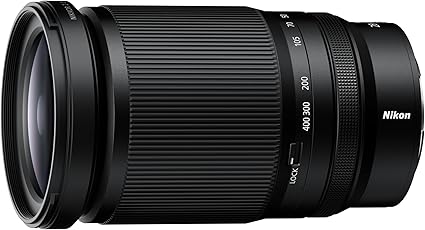
Lightweight and versatile, it fits comfortably in your hand during long shoots and covers a huge zoom range. Ideal for photographers wanting one lens that handles everything from wide-angle landscapes to distant wildlife, it shines most with its incredible 28-400mm focal stretch that replaces a bag full of lenses.
Setting it up is straightforward on any Nikon Z mount camera, and handling feels balanced thanks to its modest 1.6 lbs weight. The built-in vibration reduction helps steady shots, especially at full zoom or in low light.
With a minimum focus distance of 0.2 m at the wide end, you can get surprisingly close to subjects for creative shots without switching lenses.
Performance at various focal lengths is reliable with sharp images and smooth autofocus transitions. Built solid yet compact, it resists bulk while still feeling durable.
Most praise highlights the exceptional zoom range combined with lightness, though some note the variable aperture can limit low-light shooting and depth of field control.
Its standout trait is the broad 14.2x zoom spanning wide angle to super telephoto while maintaining a lightweight feel. Common drawbacks include the narrow maximum aperture range, which can restrict performance in dim conditions or when seeking shallow depth of field.
Photographers valuing convenience and expansive zoom over constant wide aperture will find a lot to like here. Those prioritizing low-light capability or faster apertures might prefer more specialized telephoto lenses.
Pros
- Covers 28mm to 400mm focal lengths
- Lightest in its class at 1.6 lbs
- Effective 5-stop vibration reduction
- Close focus distance of 0.2 meters
Cons
- Variable maximum aperture limits low-light use
- Zoom range compromises aperture size
| Specification | Details |
|---|---|
| Focal Length Description | Wide Angle 28 millimeters to Super Telephoto 400mm |
| Weight | Approx. 1.6 lbs (725 g) |
| Minimum Focus Distance | 0.2 m at 28mm |
| Image stabilization | Optical VR, 5.0-stop equivalent |
| Maximum Aperture | f/4 to f/8 |
| Number of Diaphragm Blades | 9 |
14. Canon RF 70-200mm f/2.8 L USM Lens

Ideal for Canon full-frame mirrorless cameras, this telephoto zoom lens shines with its bright f/2.8 aperture and sharp image quality. It delivers excellent reach at 70-200mm, making it a solid choice for photographers needing a versatile lens with strong stabilization and quiet autofocus.
Setting up on an EOS R body is straightforward since it’s designed for the Canon RF mount. The lens stays surprisingly compact and lightweight given its zoom range and fast aperture. Optical image stabilization provides up to 5 stops of shake correction, which really helps during handheld shooting.
Autofocus is smooth and quiet thanks to the dual Nano USM, and the close focusing distance of 2.3 ft opens up creative framing options.
It performs well in producing sharp, clear images across the zoom range with a consistent f/2.8 aperture. The build feels solid and professional, typical of Canon’s L series lenses, and the Nano AR coating helps reduce flare.
The loudest complaint often relates to its size compared to primes, but it’s still compact for a zoom in this class. It balances optical performance, usability, and build quality effectively.
Users praise the image stabilization combined with fast autofocus, which keeps shots sharp and in focus even when handheld or shooting fast action. Common complaints revolve around the size and weight being more than primes, which can feel bulky during extended shoots.
Photographers needing a versatile telephoto zoom with wide aperture and solid stabilization will appreciate this lens. Those who prioritize the lightest gear or want the absolute smallest setup might prefer a prime lens or something more compact.
Pros
- Bright f/2.8 aperture throughout zoom range
- Compact and relatively lightweight for 70-200mm
- Optical image stabilization with up to 5 stops correction
- Quiet and smooth autofocus with dual Nano USM
Cons
- Larger and heavier than prime lenses
- Minimum aperture listed as 7 centimeters seems unclear
| Specification | Details |
|---|---|
| Focal Length Description | Telephoto 70 to 200 Millimeters |
| Maximum Aperture | 2.8 f_stop |
| Minimum Focusing Distance | 2.3 ft. by 0.7 M |
| Image Stabilization | Optical, up to 5 Stops |
| Compatible Camera Mount | Canon RF |
| Number of Diaphragm Blades | 9 |
15. APEXEL 10X Tele-Macro Dual Lens for iPhone

Made with a durable optical design featuring a 12-element structure, this telephoto lens suits iPhone users who want both zoom and close-up shots in one. Its standout feature is the dual-functionality, combining a 10X telephoto with a macro lens to capture distant scenes and tiny details clearly.
Attaching the lens to your phone is straightforward, and manual focus allows for precise adjustments whether you’re zooming in or getting up close. The macro function works best at about 8 inches, so you can photograph small subjects like flowers or insects without disturbing them. Without built-in image stabilization, steady hands or a tripod help maintain sharpness during use.
The lens performs well at bringing distant subjects closer with a 10X zoom, preserving clarity thanks to the multi-layer coating that minimizes glare. The build feels solid, with a fixed focal length of 50 millimeters and HD coating contributing to sharp images. The most common drawback is the absence of image stabilization, which means some shots can blur if the phone isn’t steady.
The dual-purpose lens captures distant and close-up images with clear sharpness, especially praised for macro shots without shadows or disturbance. The lack of image stabilization means holding the phone very steadily is necessary, making some photos tricky without support.
Anyone looking for a versatile zoom and macro lens for their iPhone will find this useful, especially when shooting nature or events from afar. Those needing stabilized video or one-touch focusing might prefer other lenses with built-in image stabilization or autofocus.
Pros
- Combines telephoto and macro lenses in one unit
- Reduces glare and distortions with multi-layer coating
- Focuses well at 8 inches for close-up shots
- Manual focus allows precise control
Cons
- No image stabilization included
- Manual focus requires patience for sharp shots
| Specification | Details |
|---|---|
| Focal Length Description | 30cm~∞ |
| Lens Design | Zoom |
| Maximum Aperture | 1.05 f_stop |
| Zoom Ratio | 10X |
| Focus Type | Manual Focus |
| Real Angle Of View | 8.6 degrees |
Comparison of Best Telephoto Lenses Reviewed
| Product | Focal Length Range | Compatible Mount | Focus Type | Lens Design |
|---|---|---|---|---|
| Canon RF 100-400mm | 100-400mm | Canon RF | Auto Focus | Zoom |
| Canon RF 200-800mm | 200-800mm | Canon RF | Auto/Manual | Zoom |
| High-Power 420-1600mm Lens | 420-1600mm | Canon EF | Manual Focus | Zoom |
| EF/EF-S 420-1600mm Lens | 420-1600mm | Canon EF, EF-S | Manual Focus | Zoom |
| Tamron 70-300mm Di III | 70-300mm | Sony E | Auto/Manual | Zoom |
| Canon EF 75-300mm III | 75-300mm | Canon EF | Auto Focus | Zoom |
| Sony E 70-350mm G OSS | 70-350mm | Sony E | Auto Focus | Zoom |
| Canon EF 75-300mm III (Alt) | 75-300mm | Canon EF | Auto Focus | Zoom |
| Canon RF 75-300mm | 75-300mm | Canon RF | Auto/Manual | Zoom |
| Sony FE 200-600mm G OSS | 200-600mm | Sony E, FE | Auto Focus | Zoom |
| Canon RF 100-500mm L | 100-500mm | Canon RF | Auto Focus | Zoom |
| Canon EF 75-300mm III (Rep) | 75-300mm | Canon EF | Auto Focus | Zoom |
| Nikon Z 28-400mm VR | 28-400mm | Nikon Z | Auto/Manual | Zoom |
| Canon RF 70-200mm L | 70-200mm | Canon RF | Auto Focus | Zoom |
| APEXEL 10X Tele-Macro | 30cm~∞ | Fill Light, Filter | Manual Focus | Zoom |
- Focal Length Range100-400mm
- Compatible MountCanon RF
- Focus TypeAuto Focus
- Lens DesignZoom
- Focal Length Range200-800mm
- Compatible MountCanon RF
- Focus TypeAuto/Manual
- Lens DesignZoom
- Focal Length Range420-1600mm
- Compatible MountCanon EF
- Focus TypeManual Focus
- Lens DesignZoom
- Focal Length Range420-1600mm
- Compatible MountCanon EF, EF-S
- Focus TypeManual Focus
- Lens DesignZoom
- Focal Length Range70-300mm
- Compatible MountSony E
- Focus TypeAuto/Manual
- Lens DesignZoom
- Focal Length Range75-300mm
- Compatible MountCanon EF
- Focus TypeAuto Focus
- Lens DesignZoom
- Focal Length Range70-350mm
- Compatible MountSony E
- Focus TypeAuto Focus
- Lens DesignZoom
- Focal Length Range75-300mm
- Compatible MountCanon EF
- Focus TypeAuto Focus
- Lens DesignZoom
- Focal Length Range75-300mm
- Compatible MountCanon RF
- Focus TypeAuto/Manual
- Lens DesignZoom
- Focal Length Range200-600mm
- Compatible MountSony E, FE
- Focus TypeAuto Focus
- Lens DesignZoom
- Focal Length Range100-500mm
- Compatible MountCanon RF
- Focus TypeAuto Focus
- Lens DesignZoom
- Focal Length Range75-300mm
- Compatible MountCanon EF
- Focus TypeAuto Focus
- Lens DesignZoom
- Focal Length Range28-400mm
- Compatible MountNikon Z
- Focus TypeAuto/Manual
- Lens DesignZoom
- Focal Length Range70-200mm
- Compatible MountCanon RF
- Focus TypeAuto Focus
- Lens DesignZoom
- Focal Length Range30cm~∞
- Compatible MountFill Light, Filter
- Focus TypeManual Focus
- Lens DesignZoom
How to Choose the Right Telephoto Lens
Choosing the right telephoto lens depends on factors like focal length, image stabilization, and aperture size, as these impact image quality and ease of use. Selecting the right combination ensures better photos and avoids extra costs or frustration from unsuitable gear.
Focal Length and Aperture
Longer focal lengths bring subjects closer, but the field of view narrows significantly, making framing more challenging. A 300mm lens, for example, offers strong magnification but may require careful positioning to keep the subject fully in frame. Aperture size affects how much light reaches the sensor; lenses with maximum apertures like f/2.8 perform significantly better in low-light conditions and allow more control over background blur compared to slower lenses such as f/5.6.
Zoom range influences versatility, but lenses covering wide focal lengths tend to sacrifice sharpness or add bulk. Using a prime or a zoom with a moderate range, such as 70-200mm, hits a practical balance.
Larger apertures lead to bigger, heavier lenses; opting for f/4 can reduce size without severely limiting performance. Choosing the right mix depends on shooting style and lighting situations.
Optical Quality and Image Stabilization
Lens coatings and high-quality glass elements cut down on flare, ghosting, and chromatic aberrations, resulting in crisper images. Lenses with multiple aspherical or low-dispersion elements maintain sharpness across the zoom range rather than just at one focal length. These features help keep colors true and contrast strong, especially important when shooting nature or wildlife where detail counts.
Image stabilization built into the lens allows for handheld shooting at slower shutter speeds without blur, which is crucial when using long focal lengths above 200mm. The effectiveness varies; some lenses claim around 4 stops of stabilization, meaning shots that would otherwise be shaky can remain sharp. This reduces the need for tripods and helps in fast-changing scenes.
Build Quality and Weather Sealing
Using metal or reinforced composite materials in the lens barrel improves durability without adding excessive weight. Cheaper plastic construction often leads to wear issues and less reliable handling. Lenses designed for outdoor use usually include weather sealing around mounting points and switches to keep out dust and moisture, which can damage internal components over time.
Strong lens mounts prevent wobbling and ensure stable connection to the camera even under heavy use. Focus rings and internal mechanisms built with tighter tolerances resist wear and maintain smooth operation after many hours of shooting. Professional-grade lenses usually have durable construction that explains their higher cost by offering long-lasting reliability and consistent performance.
Autofocus Performance and Manual Control
Fast autofocus systems reduce missed shots, especially when tracking subjects like birds or sports players. Lenses with ultrasonic or stepping motor drives provide quick and quiet focusing that makes a noticeable difference in capturing action.
Accuracy is just as important; a lens that focuses slightly behind or in front slows the workflow by requiring frequent manual adjustments.
Switching to manual focus should be simple, either through a dedicated switch or by pulling the focus ring. The manual focus feel is best when smooth and precise enough for fine adjustments.
Some lenses communicate effectively with camera bodies to allow focus fine-tuning or customization, improving compatibility across different models.
Size, Weight, and Portability
Large lens size and heavy weight make long shooting sessions tiring and can slow down reaction times. A 2 kilogram lens may be manageable for short periods but becomes cumbersome after a few hours.
Carrying additional support gear such as monopods is often necessary with the largest lenses. Compact designs, often primes or shorter zooms, improve comfort and mobility.
Traveling with a bulky lens requires more planning and protective carrying cases, which adds to overall luggage. Choosing a lens built with portability in mind means some compromises in aperture or zoom range, but the trade-off is easier handling on hikes or long trips.
Balancing feature needs against physical weight is key for steady, enjoyable shooting outside the studio.
Maximizing Image Quality: Tips for Using Telephoto Lenses Effectively
Telephoto lenses require careful handling to get the sharpest images possible. Start by stabilizing the camera with a tripod or a monopod. A longer focal length amplifies even slight movements, causing blur.
Using a faster shutter speed also helps reduce motion blur, especially when hand-holding the camera. Most telephoto lenses come with image stabilization, but combining this with a solid support system produces better results.
Focus point selection plays a critical role. Choose a single focus point rather than letting the camera decide automatically, as this allows precise control over which part of the image remains sharp. Shooting in good light conditions improves autofocus accuracy and reduces noise at lower ISO settings.
- Use a tripod or monopod to stabilize your shot.
- Select a fast enough shutter speed relative to the focal length.
- Set autofocus to a single point for critical focus.
- Shoot during bright conditions to improve detail and reduce noise.
Proper Cleaning and Maintenance Techniques for Telephoto Lenses
Cleaning telephoto lenses regularly prevents dust and smudges from degrading image quality. Start by using a blower bulb to remove loose dust. Avoid using compressed air cans as they might damage lens coatings or introduce moisture.
For smudges or fingerprints, use a microfiber cloth made for optics. Apply gentle circular motions without pressing too hard. Specialty lens cleaning solutions designed for camera lenses ensure residues are safely removed.
Never use household cleaners which can damage lens coatings.
Keep caps on the front and rear when the lens is not in use to avoid scratches and dirt buildup. Store the lens in a padded case with silica gel packets to reduce moisture that encourages fungus.
- Blow off dust before wiping.
- Use microfiber cloth and lens cleaning fluid for smudges.
- Keep lens caps on when not shooting.
- Store lens in dry environment to prevent fungus.
People Also Asked
How Do I Safely Clean a Telephoto Lens?
Use a blower to remove loose dust first, then gently wipe the lens with a microfiber cloth and lens cleaning solution. Avoid touching the glass with your fingers or using household cleaners, as this can damage the coating.
Will a Telephoto Lens Fit My Camera Body?
A telephoto lens will fit your camera body if it has the correct mount designed for your camera brand and model. Check the lens mount type and make sure it matches your camera before purchasing.
How Long Can a Telephoto Lens Last with Proper Care?
Proper care can make a telephoto lens last 10 years or more. Keeping the lens caps on when not in use and storing it in a padded case helps prevent scratches and internal dust buildup.
What Are Common Problems with Telephoto Lenses to Watch For?
Common problems include lens fogging, dust inside the lens, and focus motor issues. Regular maintenance and gentle handling reduce these problems; avoid extreme temperatures that can cause fogging.
How Do I Properly Size a Telephoto Lens for My Needs?
Choose a telephoto lens focal length based on the distance you plan to shoot from; 300mm is good for wildlife, while 70-200mm is versatile for sports and portraits. Consider the weight and stabilization features for handheld use.
Conclusion
Choosing a telephoto lens mostly comes down to the focal length you need, the image quality it delivers, and how it handles in your hands. Consider weight and size too, especially if you plan to carry it around a lot.
Autofocus speed and compatibility with your camera body also play crucial roles.
Keep in mind how often you will use the lens and where you intend to shoot. A heavy lens might be great for occasional wildlife trips, but inconvenient for everyday use.
Check the comparison table and detailed picks above to find the right balance for your needs and budget.