Top 15 Best Thermal Monocular You Can’t Miss Today
Trying to spot a target in total darkness or through dense fog often ends in frustration with a cheap thermal monocular. Poor image resolution and sluggish refresh rates make identifying objects difficult, leading to missed observations or mistaken identifications. The best thermal monocular offers sharper images and quicker response times, eliminating that guesswork and improving accuracy in low-visibility conditions.
Key factors that distinguish a good thermal monocular include sensor resolution, detection range, and battery life. A decent model usually starts with a resolution around 320×240 pixels, allowing for a clear thermal image.
Detection ranges of at least 500 meters help confirm targets without getting dangerously close. Battery life of 4 to 6 hours strikes a balance between weight and field time, and a compact, ergonomic design improves handling during extended use outdoors.
Need a Quick Check?
| Image | Product | Price |
|---|---|---|
Our Top Picks 1  | TOPDON TS004 Monocular | Check Price |
Our Top Picks 2  | Vortex Veil 400 | Check Price |
Our Top Picks 3  | RIX Stride ST6 Lite | Check Price |
Our Selected Top 15 Thermal Monocular Worth Your Money
This list features a carefully chosen variety of thermal monoculars suited for different needs and budgets. Each review highlights performance, ideal users, and key advantages and disadvantages, helping readers make an informed decision based on practical features and usability.
1. TOPDON TS004 Thermal Imaging Monocular
With a high IR resolution of 256×192, this thermal monocular excels in delivering clear, detailed images that suit outdoor enthusiasts and wildlife watchers looking for precise thermal views. Its standout feature is unmatched clarity paired with an extended battery life that keeps it running up to 11 hours uninterrupted.
Setup is straightforward, powered by a single included Lithium Ion battery with manual focus to adapt to various distances. The wireless connection to your smartphone through the TopInfrared App allows real-time monitoring without extra fuss.
Its 8x zoom and 13.5-degree field of view make scanning an area manageable while on the move or stationary.
Performance-wise, the thermal imaging offers vivid and accurate visuals, making it reliable for spotting details day and night. Build quality feels solid with a monocentric eye-piece lens and manual focus that respond well to quick adjustments.
Users often praise the image clarity, though some mention the need for manual focusing can slow quick targeting at times.
The most praised feature is the vivid thermal clarity that sharply captures details, helping you spot targets easily in low visibility. The most common issue experienced is the manual focus system, which can slow down quick adjustments when tracking moving subjects.
People who need detailed, long-lasting thermal imaging and value wireless smartphone monitoring will find this device fitting. Those who require rapid focus changes during fast action might want to consider alternatives with auto-focus functionality.
Pros
- Clear thermal images with high resolution
- Long battery life of 11 hours
- Easy wireless connection to smartphone app
- 8x zoom for better target viewing
Cons
- Manual focus can slow quick observations
- Limited to single battery use per session
| Specification | Details |
|---|---|
| IR Resolution | 256×192 |
| Refresh Rate | 50Hz |
| Battery Life | Up to 11 hours |
| Zoom Ratio | 8x |
| Field Of View | 13.5 degrees |
| Compatible Devices | Smartphone |
2. Vortex Veil 400 Thermal Monocular
Hunters and outdoors enthusiasts looking for clear thermal imaging at night will find this thermal monocular a solid fit. Its main strength lies in producing sharp images with a 400×300 resolution and a smooth 50 Hz refresh rate, making it easier to spot targets in low-light situations.
Setting up the monocular is straightforward with manual focus and multiple color palettes to choose from, including White Hot and Red Hot. The built-in 32 GB memory lets you capture photos and videos on the fly using a quick-press button, and the digital zoom up to 4× lets you get a closer look at distant objects without losing much of the surrounding view.
The imaging quality is impressive at night with a detection range up to 1100 yards. The 25mm objective lens combined with a 2.3× base magnification provides a good balance between field of view and detail.
Reviews show that the image clarity is one of the best features, but some users note the single nonstandard battery can be inconvenient for replacement or charging.
Sharp image quality at 400×300 resolution stands out as a major positive, making night targets clear. The frequent downside is the single nonstandard battery requirement, which some find inconvenient for quick swaps or finding replacements during extended trips.
People valuing crisp thermal images and easy media saving will appreciate this device. Those needing longer battery life or quicker power options should consider alternatives with standard or multiple battery configurations.
Pros
- Sharp thermal imaging with good resolution
- Long detection range up to 1100 yards
- Multiple color palettes for varied viewing conditions
- Built-in 32 GB memory for photo and video capture
Cons
- Uses a single nonstandard battery complicating replacements
- Manual focus may take time to adjust precisely
| Specification | Details |
|---|---|
| Sensor Resolution | 400×300 with 12μm pixel pitch |
| Refresh Rate | 50 Hz |
| Magnification | 2.3x base with 1x, 2x, 4x digital zoom |
| Objective Lens | 25 mm |
| Memory | 32 GB built-in |
| Batteries | 1 Nonstandard Battery |
3. RIX Stride ST6 Lite 640 Thermal Monocular
Designed to be worn on a helmet, the RIX Stride ST6 Lite 640 thermal monocular stands out with its true 1× base magnification that keeps your natural view intact. Perfect for hunters or patrol officers who need hands-free thermal vision, it allows you to survey surroundings without image distortion.
Setting up the device is straightforward, thanks to compatibility with helmet mounts, tripods, and vehicle mounts. Running on one included lithium-ion battery, it feels lightweight and easy to carry.
Switching between handheld, helmet, and vehicle use happens quickly, making it great for various night-time tasks like exploring or search and patrol work.
In terms of performance, the 17.5-degree field of view comfortably shows enough area to spot movement or heat sources. The build is compact and versatile, designed to hold up during outdoor use. Most praise goes to its reliable hands-free design, while a common complaint involves the limited magnification range, which might not suit long-distance viewing.
The hands-free design coupled with true 1× magnification is highly praised, allowing comfortable all-night use while maintaining situational awareness. On the downside, the magnification range is somewhat limited, which can be a drawback for users needing long-range observation.
People looking for a flexible thermal tool that attaches to helmets or vehicles will benefit from its convenience. Those requiring higher magnification or an extended field of view might want to consider other options tailored to those needs.
Pros
- True 1× magnification preserves natural perspective
- Versatile mounting options for different uses
- Compact and easy to carry
- Included rechargeable battery
Cons
- Magnification may feel limited for distant targets
- Field of view could be wider for some tasks
| Specification | Details |
|---|---|
| Mount | Helmet and Vehicle Mount |
| Compatible Devices | Helmet Mount, Tripod, Vehicle Mount |
| Number of Batteries | 1 Lithium Ion batteries required. (included) |
| Field Of View | 17.5 degrees |
| Additional Features | Helmet-Mounted, Wide FOV, Adjustable Magnification |
4. ATN BlazeTrek 6 Thermal Monocular

ATN BlazeTrek 6 Thermal Monocular stands out for its long-range thermal observation, making it a solid pick for anyone needing detailed heat signature detection at distance. It suits outdoors enthusiasts or professionals wanting clear image quality and flexible viewing options with strong zoom capabilities.
Daily use involves choosing between two germanium lens sizes, either 19 mm for wider views or 25 mm for spotting targets up to 1300 meters away. Manual focus lets you fine-tune the image, and the WiFi mount allows easy connection to your smartphone or tablet. Its compact design and single included battery keep it straightforward to carry and operate.
Performance-wise, the 640×512 sensor with ≤18 mK NETD delivers sharp detail, while SHARPIR AI helps separate edges and targets in complex scenes. Its build feels solid yet lightweight for field use.
Reviews say the clarity at range is excellent, but some mention the battery life can run short during extended trips.
The monocular delivers excellent clarity for spotting heat signatures at long distances, praised for detailed images and target separation. Commonly noted is the limited battery life, which may interrupt extended monitoring and require spare batteries.
People who need sharp, long-distance thermal views with device connectivity will appreciate it, especially where compact gear is critical. Those needing longer continuous use or easier focusing might want to consider alternatives with longer battery life or autofocus.
Pros
- Clear thermal imagery with strong detail at long range
- Flexible lens choices for wide or distant views
- WiFi compatibility with various smart devices
- Compact and portable design
Cons
- Single battery operation limits long use
- Manual focus may require practice
| Specification | Details |
|---|---|
| Sensor Resolution | 640×512 |
| Lens Options | 19 mm / 25 mm Germanium Lens |
| Zoom Ratio | 8x |
| Focus Type | Manual Focus |
| Mount | WiFi |
| Compatible Devices | Smartphone, Tablet, Camera |
5. RIX Pocket K2 Thermal Monocular

Carrying a thermal monocular that fits comfortably in a pocket feels surprisingly convenient. Designed for hikers, hunters, or explorers needing clear thermal imaging, its standout feature is the sharp 256×192 resolution paired with a fast 50Hz refresh rate. This combination makes spotting temperature differences in various weather straightforward and reliable.
Setting it up is quick since it comes battery-powered with one included lithium ion battery. The fixed focus lens and 19.4-degree field of view mean there’s no fiddling with adjustments while on the move. Its lightweight design feels lighter than a smartphone, so slipping it into your pocket is second nature.
Compatible smartphone connection offers extra ways to view and share images wherever you go.
Performance in detecting subtle heat signatures excels thanks to a 12μm sensor and NETD under 25mK. Viewing on the vibrant 800×600 OLED display reveals strong contrast and detail that makes tracking easy.
The monocular’s IP67 waterproof rating ensures durability outside, enhancing its reliability. Most praise highlights the clear, crisp image quality, while some users note the fixed focus limits close-range sharpness.
Clear thermal images stand out as the monocular’s strength, delivering detailed views in various weather, while fixed focus creates some frustration with close-range observations. Battery life relies on a single lithium ion cell included, which sets practical limits during extended outings.
Anyone needing a lightweight, pocketable thermal tool for spotting wildlife or navigation will find this suitable. Users requiring adjustable focus or longer battery endurance might want to explore other options that better suit those specific needs.
Pros
- Compact and lighter than a typical smartphone
- High refresh rate for smooth image viewing
- Compatible with smartphones for sharing images
- Waterproof and durable for outdoor use
Cons
- Fixed focus limits close-up clarity
- Single battery powers device, limited runtime potential
| Specification | Details |
|---|---|
| Resolution | 256×192 |
| Display | 800×600 OLED |
| Field Of View | 19.4 degrees |
| Zoom Ratio | 7 |
| Power Source | 1 Lithium Ion battery (included) |
| Waterproof Rating | IP67 |
6. AGM Global Vision Taipan V2 Thermal Monocular

Designed for outdoor enthusiasts needing reliable night vision, the AGM Global Vision Taipan V2 Thermal Monocular excels in clear thermal detection with its high-sensitivity sub-35mK 12m detector. Ideal for hunters and nighttime observers, it offers exceptional clarity in total darkness as its defining feature.
Setting it up involves simply powering on with its included batteries and adjusting the auto-focus. Everyday use benefits from a wide 10-degree field of view and versatile 1.5x to 12x digital zoom, giving you control over viewing distance. Built-in recording and smartphone compatibility allow easy sharing and documentation of what you see on the go.
Performance stays sharp across different terrains and conditions, delivering detailed heat signatures that help spot targets easily. The build feels solid and suited for rugged outdoor environments. Users often highlight the clarity and zoom range positively, while the most frequent drawback is the reliance on two nonstandard batteries, which can be harder to replace on the trail.
Clear thermal images and powerful digital zoom earn frequent praise for identifying heat sources effectively, even in complete darkness. The most common complaint involves the need for nonstandard batteries, which can be harder to source and replace during extended use.
Hunting and nighttime surveillance enthusiasts looking for sharp imaging and smartphone integration will appreciate this model. Those needing longer battery life or a wider field of view may want to explore other options better suited to those specific needs.
Pros
- Clear imaging with sub-35mK thermal detector
- Wide 10-degree field of view for scanning
- Auto focus adjusts easily in all conditions
- Compatible with smartphones for easy recording
Cons
- Uses two nonstandard batteries, less convenient
- Limited field of view compared to some competitors
| Specification | Details |
|---|---|
| Eye Piece Lens Description | Standard/Wide-field |
| Focus Type | Auto Focus |
| Field Of View | 10 degrees |
| Zoom Ratio | 1.5x-12x |
| Number of Batteries | 2 Nonstandard Battery batteries required (included) |
7. GOYOJO G210 Thermal Monocular

Lightweight and designed for handheld use, the GOYOJO G210 Thermal Monocular suits outdoor enthusiasts looking for clear thermal imaging without complicated setup. Its main strength lies in high-quality thermal sensing, delivering accurate results even in low-light or no-light situations.
Getting started involves placing one lithium polymer battery inside, already included, and powering up. The fixed focus lens means no fussing with adjustments, while the 4X zoom helps zero in on details.
Switching between six color palettes allows tailoring the display to what’s easiest for your eyes. It’s simple to carry around and even mounts on a tripod if needed.
It reveals heat signatures quickly and clearly, thanks to a 256×192 sensor and 12μm infrared detector. The multi-coated Plossl eyepiece lens is solid enough for regular field use.
A common highlight is the sharp thermal detection that makes spotting animals or objects easy. Some users mention the zoom ratio is only 2X, which limits closer views slightly.
Precision thermal sensing with the 256×192 sensor consistently shows clear images, appreciated by users for spotting details. The limited zoom ratio of 2X is a frequent comment, as some need more magnification for distant targets.
Great for those wanting straightforward, accurate thermal views in a compact setup, especially for hiking or casual wildlife observation. People needing higher zoom or advanced optics might look at other models.
Pros
- Quick and precise thermal detection
- Six color palette options for viewing
- Generous 16GB image storage included
- Light and easy to handle
Cons
- Zoom limited to 2X only
- No finderscope included
| Specification | Details |
|---|---|
| Eye Piece Lens Description | Plossl |
| Focus Type | Fixed Focus |
| Power Source | Battery Powered |
| Field Of View | 17.5 degrees |
| Zoom Ratio | 2 |
| Number of Batteries | 1 Lithium Polymer battery (included) |
8. RIX Pocket K3 Thermal Monocular
Compact and easy to carry, the RIX Pocket K3 Thermal Monocular suits outdoor enthusiasts who need strong thermal imaging on the go. Its most noticeable strength is the high-resolution 384×288 sensor that delivers clear thermal images, making it a practical choice for spotting in various conditions.
Setup is straightforward thanks to its pocket-sized design, fitting comfortably in your hand or pocket during hikes or night watches. The built-in 2× magnification and 17.5° field of view let you spot heat signatures quickly.
Wi-Fi connectivity adds convenience for sharing images or streaming, while the tripod interface helps during longer observation sessions to keep the view steady.
Performance is solid with a detection range reaching up to 853 yards under ideal testing environments, although real-life range varies with weather and terrain. The solid build feels durable and compact, though some mention the limited zoom as a drawback. Most users appreciate the image clarity, but note it might struggle in low contrast or humid conditions.
The RIX Pocket K3 stands out for delivering sharp thermal images in a compact frame, earning praise for clarity and portability. Some find its 2× zoom limiting when details at distance are needed, and reported variations in detection effectiveness due to moisture and terrain complexity.
Ideal for hikers or hunters needing a portable thermal tool for general spotting. Better suited for users who accept some performance limits; those requiring higher magnification or guaranteed reliability in all conditions might look elsewhere.
Pros
- Compact and lightweight for easy carry
- High resolution thermal sensor provides clear images
- Wi-Fi connectivity for quick sharing
- Tripod mount allows steady viewing
Cons
- Limited 2× magnification can restrict detailed viewing
- Performance affected by environmental factors
| Specification | Details |
|---|---|
| Field Of View | 17.5 degrees |
| Zoom Ratio | 2× |
| Mount | 1/4″-20 tripod interface |
| Detection Range | Up to 853 yards |
| Thermal Sensor Resolution | 384×288 |
9. AGM Global Vision Rattler V2 Thermal Scope
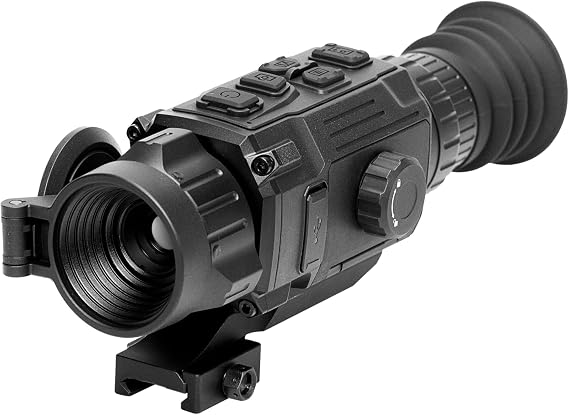
Fast target acquisition combined with extended battery life makes this ideal for hunters focused on close- to mid-range thermal spotting. Suited for those needing quick response times in dense brush or dynamic environments, it excels at keeping moving targets visible without lag.
Setting up on a rifle is straightforward with the Picatinny mount, and the 2.5x base magnification starts you off wide for scanning large areas. Eye relief at 45 millimeters feels comfortable even during longer sessions.
The dual rechargeable batteries mean you can keep hunting late into the night, swapping power cells without downtime. The 9.3-degree field of view is a good balance between detail and overall scene awareness.
With a top magnification of 20x, spotting animals at a distance feels precise and clear through this scope. Constructed robustly, it handles rough use well, though some find the 19-millimeter lens limiting in very low-light thermal detail. Many appreciate the quick targeting ability, but a few mention that the bulkiness can add noticeable weight on smaller rifles.
A common compliment highlights the long battery life combined with fast target acquisition as key strengths, making it reliable for extended hunting trips. Some users point out the smaller lens size restricts thermal clarity in very dark conditions, and the overall weight may not suit all rifle setups comfortably.
Hunters who value quick spotting and long runtime during close to mid-range hunts will find satisfaction here. Those prioritizing detailed thermal imaging at long distances or minimal weight should consider alternative options.
Pros
- Wide field of view aids fast target scanning
- Runs 11.5 hours on a single charge
- Includes two rechargeable batteries for backup
- Easy Picatinny mounting on rifles
Cons
- 19-millimeter lens limits thermal detail in darkness
- Can feel bulky on smaller rifles
| Specification | Details |
|---|---|
| Magnification Minimum | 2.5 x |
| Magnification Maximum | 20 x |
| Objective Lens Diameter | 19 millimeters |
| Field Of View | 9.3 degrees |
| Mounting Type | Picatinny Mount |
| Eye Relief | 45 millimeters |
10. Pulsar Axion Compact Thermal Monocular

Tracking in dense brush or scanning terrain during hunting trips calls for clear, detailed thermal imaging you can rely on. Pulsar Axion Compact Thermal Monocular suits outdoor enthusiasts who need sharp mid-range heat detection without carrying bulky gear. Its standout strength lies in crisp, vivid thermal visuals that make spotting animals in tough conditions easier.
Setup is straightforward with a single 9V battery included, keeping power simple and replaceable. Manual focus allows tailored adjustments when shifting attention between different distances.
The compact design fits comfortably in hand or pocket, making it ideal for quick starts and extended use in the field. The AMOLED screen stays clear and responsive regardless of weather or time of day, allowing better detection in low visibility situations.
It excels at revealing subtle heat differences even during fog or rain, thanks to a <20 NETD sensor sensitivity, delivering sharp images on a bright 640x400 display. The monocular holds up well against rough outdoor conditions, though some mention its manual focus takes time to get used to. Most praise centers on image clarity and compact handling, while the common complaint is around the focus being a bit fiddly when moving fast.
The most praised aspect is its sharp, clear thermal imaging even in fog and dusk, making it reliable in tough environments. On the other hand, the manual focus method may slow quick adjustments during fast-paced tracking. It’s a trade-off for higher image quality and compactness.
People who want detailed thermal views without bulky gear will appreciate its lightweight design and vivid screen. Those needing rapid autofocus or a wider field of view might want to look at other models better suited for fast moving scenarios or broad area scans.
Pros
- Crisp thermal images in varied weather
- Compact, easy to carry all day
- Long battery life with simple replacement
- Bright AMOLED display resists glare well
Cons
- Manual focus can feel slow in action
- Limited field of view for wide scanning
| Specification | Details |
|---|---|
| Eye Piece Lens Description | Uncooled microbolometer detector |
| Focus Type | Manual Focus |
| Power Source | Battery Powered |
| Number of Batteries | 1 9V batteries required (included) |
| Field Of View | 19.5 degrees |
| Zoom Ratio | 1.5-6x |
11. Pulsar Axion 2 35mm Thermal Monocular
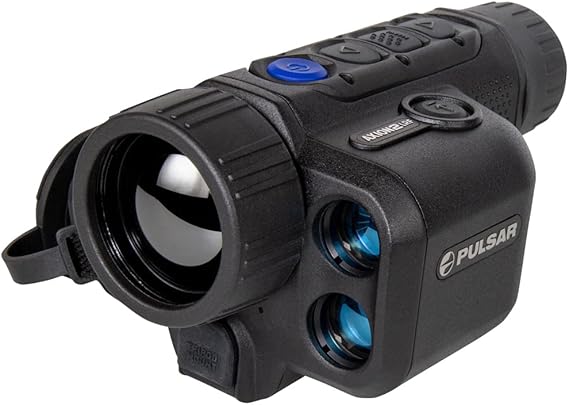
Offering a built-in laser rangefinder with an 1,100-yard range, this thermal monocular suits hunters and outdoor enthusiasts needing precise distance measurements on the go. Its standout feature is accurate laser scanning during continuous and single mode use, ensuring swift decisions in the field without guesswork.
Setup involves manual focus adjustments and installing a single battery included with the device, making it ready quickly. Day-to-day use relies on a 2-8x zoom to get closer looks at distant targets.
The compact design fits easily in one hand or pack, and adjustments for brightness and contrast help spot animals through changing weather conditions. It pairs well with smartphones or tablets for sharing or storing images.
Performance shows clear thermal imagery thanks to Lynred sensors with 384×288 resolution, providing reliable detection even in poor weather. The build is solid yet lightweight, perfect for long outdoor sessions. Praised for its rangefinder accuracy, some mention the manual focus requires patience to get sharp images, which can slow quick scanning in fast action moments.
The built-in laser rangefinder with precise distance measurement gets the most praise, making it very useful for outdoor decision-making. The main drawback cited is the manual focus, which may require extra time to sharpen images when tracking moving subjects.
Suitable for people needing long-distance thermal detection with accurate range readings, especially in varying weather. Those wanting quicker autofocus or longer battery life might want to consider other options better tailored to those needs.
Pros
- Laser rangefinder with ±1m accuracy
- Compact and easy to carry
- Clear thermal images in different weather
- Connects to mobile devices
Cons
- Manual focus can be slow to adjust
- Single battery limits extended use
| Specification | Details |
|---|---|
| Focus Type | Manual Focus |
| Power Source | Battery Powered |
| Zoom Ratio | 2-8x |
| Compatible Devices | Smartphone, Tablet |
| Number of Batteries | 1 Product Specific batteries required (included) |
12. Pulsar Telos LRF Thermal Monocular

Ideal for hunters and outdoor enthusiasts who need precise thermal imaging over long distances, the Pulsar Telos LRF Thermal Monocular stands out for combining clear thermal detection with an integrated laser rangefinder. Its strongest point is the ability to accurately detect targets up to 1,900 yards away.
Setting it up is straightforward thanks to manual focus and portability from its lightweight magnesium alloy body. Daily use involves connecting to your smartphone or tablet via Wi-Fi through the Stream Vision 2 app, which lets you view and record thermal images easily. With over 8 hours of battery life, it stays ready for extended outings without frequent recharges.
The 1024×768 AMOLED display and <18mK NETD sensor deliver sharp thermal images, making the main task of spotting heat signatures very reliable. It’s built tough but light enough to carry with ease.
Positive feedback highlights its clear imaging and rangefinder accuracy, while the main complaint involves manual focus requiring some adjustment during use.
Clear and sharp thermal images paired with an accurate laser rangefinder make spotting long-range targets effective. Users note the manual focus needs attention during use but adds precision once set.
This device suits those who prioritize detection accuracy and durability during extended outdoor activities. People seeking fully automatic focusing or multiple batteries in the package might consider other options.
Pros
- High-resolution thermal display
- Long detection and ranging distances
- Lightweight yet durable construction
- Extended battery life for all-day use
Cons
- Manual focus requires periodic adjustment
- Only one battery included
| Specification | Details |
|---|---|
| Display Resolution | 1024×768 pixel AMOLED |
| Sensor NETD | <18mK |
| Detection Range | 1,900 yards |
| Laser Rangefinder | 1,000 yards built-in |
| Battery Life | Over 8 hours continuous |
| Material | Magnesium alloy housing |
13. Flir Breach PTQ136 Thermal Monocular

Flir Breach PTQ136 stands out for its sharp thermal imaging through smoke, fog, and darkness. Ideal for midnight patrols or wildlife scouts, it packs high-quality thermal detection into a lightweight, pocket-sized design without sacrificing clarity or ease of use.
Setting up involves inserting a single CR123A battery, which comes included, and manually focusing using the monocentric lens. Daily use is straightforward; carrying it in your pocket or mounting it on a helmet using the built-in mini-rail suits fast-paced action. Capturing video and snapshots is handy, storing up to 1,000 images, making it easy to record important moments without extra gear.
It performs well in spotting details in total darkness thanks to the Boson 12μm thermal core and 24-degree field of view. The build is solid yet lightweight at 7.4 ounces, supporting handheld or helmet-mounted use without fatigue. Common praise highlights the clear image quality, while some find the manual focus a bit fiddly in certain situations.
Clear imaging through tough conditions receives strong praise, making it reliable for tactical situations and scouting. The most common issue noted is the manual focus mechanism, which some find difficult to adjust quickly when timing is critical.
Anyone needing a lightweight, easily mountable thermal monocular for handheld or helmet use will appreciate this device. Those who prefer autofocus or longer battery life may want to consider other options available in the market.
Pros
- Lightweight at just 7.4 ounces
- Built-in mini-rail for helmet mounting
- Records video and stores images onboard
- Sharp detail through smoke, fog, and darkness
Cons
- Manual focus can be tricky in some conditions
- Limited to one CR123A battery at a time
| Specification | Details |
|---|---|
| Power Source | 1 CR123A batteries required (included) |
| Field Of View | 24 degrees |
| Focus Type | Manual Focus |
| Weight | 7.4 ounces |
| Onboard Recording and Storage | Up to 1,000 snapshots |
14. FLIR Ocean Scout Pro Thermal Monocular

FLIR Ocean Scout Pro Thermal Monocular excels at spotting people and pets in the water up to 500 meters away, making it ideal for nighttime outdoor activities. Its quick startup and simple single-hand operation suit anyone needing reliable thermal imaging without fuss. The standout feature is its long battery life paired with real-time video streaming to your mobile device.
Setting up involves just turning it on and focusing with the fixed 32mm lens. The intuitive interface allows easy zooming from 2x up to 8x, all manageable with one hand. On a daily basis, the wide 32-degree field of view helps scan large areas, while the companion app lets you share live video, making it practical for security or search tasks.
Battery life lasting up to 6 hours ensures extended use without frequent recharging.
Performance-wise, it delivers clear thermal imaging that reliably detects heat signatures in darkness and across water. Its build feels compact at 7.5 by 2.5 by 2.5, with a tripod mount for stationary viewing. Praise centers on the user-friendly design and dependable battery, while some mention that the fixed focus limits flexibility for closer objects.
The device is praised for being easy to use with reliable battery performance and good thermal detection in darkness. Common feedback points out the fixed focus lens isn’t ideal for seeing close objects sharply, and only iOS users can access the video streaming feature.
People needing a straightforward thermal monocular for long evening sessions and streaming video on the go will find this reliable. Those requiring adjustable focus or Android compatibility might want to look elsewhere for a better fit.
Pros
- Long 6-hour battery life
- Real-time video streaming to iOS app
- Wide 32-degree field of view lens
- Single-hand operation with intuitive interface
Cons
- Fixed focus limits close-up clarity
- Only compatible with iOS devices
| Specification | Details |
|---|---|
| Field Of View | 32 degrees |
| Battery Life | Up to 6 hours |
| Focal Length | 32mm |
| Zoom Ratio | 2x, 4x, 6x, 8x |
| Size | 7.5″W x 2.5″H x 2.5″D |
15. Pulsar Telos Thermal Monocular
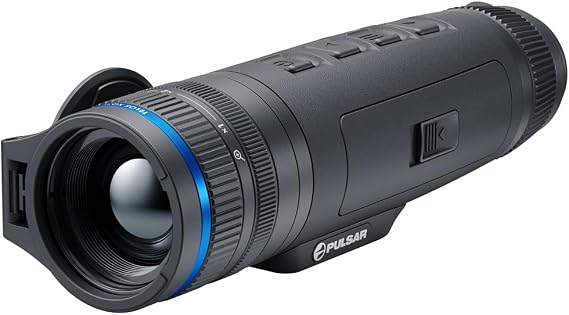
Feels incredibly reliable when scouting at night, especially on hunting trips where clear vision matters most. A solid fit for anyone who needs long-range detection in low-light settings, with its standout Image Boost Technology making thermal details clearer than many rivals.
Getting started involves setting up a single battery that comes with the unit, so you’re ready without extra hassle. Manual focus lets you quickly adjust views depending on distance.
The compatible smartphone feature is handy for saving images or videos on the go. Portable size means it slides easily into a jacket pocket, which makes quick retrieval at night very convenient.
Thermal performance is sharp, thanks to a 384×288 <25mK NETD sensor giving clear detection out to 1,421 yards. The multi-coated eyepiece lens helps reduce glare for easier viewing, and the reflex finderscope improves target acquisition. Strong build quality makes it feel durable, though some mention the manual focus requires attention in fast-paced moments.
Clear, long-distance thermal imaging is what stands out most, making this excellent for night use in challenging conditions. Some users find the manual focus demanding when swift adjustments are required.
Great choice for hunters and outdoor enthusiasts needing reliable long-range viewing in the dark. Those who prefer quick autofocus might want to explore alternatives better suited for fast action.
Pros
- Long detection range suitable for nocturnal hunting
- Image Boost Technology sharpens thermal imaging
- Portable size fits comfortably in hand or pocket
- Compatible with smartphones for easy media sharing
Cons
- Manual focus can slow quick target acquisition
- Only one battery included may require spares
| Specification | Details |
|---|---|
| Thermal Imaging Sensor | 384×288 <25mK NETD |
| Detection Range | 1,421 yards |
| Eye Piece Lens | Multi-Coated |
| Focus Type | Manual Focus |
| Power Source | Battery Powered, 1 Battery Included |
| Field Of View | 10.7 degrees |
Best Thermal Monoculars Side by Side Comparison
| Product | Focus Type | Compatible Devices | Batteries Required | Field Of View |
|---|---|---|---|---|
| TOPDON TS004 Monocular | Manual Focus | Smartphone | 1 Lithium Ion | – |
| Vortex Veil 400 | Manual Focus | Rifles | 1 Nonstandard Battery | – |
| RIX Stride ST6 Lite | – | Helmet, Tripod, Vehicle | 1 Lithium Ion | 17.5 degrees |
| ATN BlazeTrek 6 | Manual Focus | Smartphone, Tablet, Camera | 1 Nonstandard Battery | – |
| RIX Pocket K2 | Fixed Focus | Smartphone | 1 Lithium Ion | 19.4 degrees |
| AGM Taipan V2 | Auto Focus | Smartphone, Tablet | 2 Nonstandard Battery | 10 degrees |
| GOYOJO G210 | Fixed Focus | Smartphone | 1 Lithium Polymer | – |
| RIX Pocket K3 | – | Tripod, Hunting Equipment | – | 17.5 degrees |
| AGM Rattler V2 Scope | – | Rifle | – | 9.3 degrees |
| Pulsar Axion Compact | Manual Focus | – | 1 9V Battery | 19.5 degrees |
| Pulsar Axion 2 35mm | Manual Focus | Smartphone, Tablet | 1 Product Specific | – |
| Pulsar Telos LRF | Manual Focus | Smartphone, Tablet | 1 Product Specific | – |
| Flir Breach PTQ136 | Manual Focus | Mounts, Cases | 1 CR123A | – |
| FLIR Ocean Scout Pro | Fixed Focus | Smartphone, Tablet | – | 32 degrees |
| Pulsar Telos | Manual Focus | Smartphone | 1 Product Specific | – |
- Focus TypeManual Focus
- Compatible DevicesSmartphone
- Batteries Required1 Lithium Ion
- Field Of View–
- Focus TypeManual Focus
- Compatible DevicesRifles
- Batteries Required1 Nonstandard Battery
- Field Of View–
- Focus Type–
- Compatible DevicesHelmet, Tripod, Vehicle
- Batteries Required1 Lithium Ion
- Field Of View17.5 degrees
- Focus TypeManual Focus
- Compatible DevicesSmartphone, Tablet, Camera
- Batteries Required1 Nonstandard Battery
- Field Of View–
- Focus TypeFixed Focus
- Compatible DevicesSmartphone
- Batteries Required1 Lithium Ion
- Field Of View19.4 degrees
- Focus TypeAuto Focus
- Compatible DevicesSmartphone, Tablet
- Batteries Required2 Nonstandard Battery
- Field Of View10 degrees
- Focus TypeFixed Focus
- Compatible DevicesSmartphone
- Batteries Required1 Lithium Polymer
- Field Of View–
- Focus Type–
- Compatible DevicesTripod, Hunting Equipment
- Batteries Required–
- Field Of View17.5 degrees
- Focus Type–
- Compatible DevicesRifle
- Batteries Required–
- Field Of View9.3 degrees
- Focus TypeManual Focus
- Compatible Devices–
- Batteries Required1 9V Battery
- Field Of View19.5 degrees
- Focus TypeManual Focus
- Compatible DevicesSmartphone, Tablet
- Batteries Required1 Product Specific
- Field Of View–
- Focus TypeManual Focus
- Compatible DevicesSmartphone, Tablet
- Batteries Required1 Product Specific
- Field Of View–
- Focus TypeManual Focus
- Compatible DevicesMounts, Cases
- Batteries Required1 CR123A
- Field Of View–
- Focus TypeFixed Focus
- Compatible DevicesSmartphone, Tablet
- Batteries Required–
- Field Of View32 degrees
- Focus TypeManual Focus
- Compatible DevicesSmartphone
- Batteries Required1 Product Specific
- Field Of View–
How to Choose the Right Thermal Monocular
Key factors like image resolution, detection range, and battery life are essential when selecting a thermal monocular because they directly impact performance and usability. Choosing the right features ensures clear visibility and longer use, preventing costly upgrades or replacements later.
Image Resolution and Sensor Quality
Sharpness and detail in thermal imaging often hinge on image resolution and sensor quality. Devices with low-resolution sensors can produce grainy or blurred images that make it difficult to identify objects at a distance.
This shortcoming becomes a real problem in low-visibility conditions such as fog or rain, where the sensor must compensate for poor environmental factors. A resolution of at least 320×240 pixels feels standard for clear, usable images, with higher resolutions providing even finer detail.
Sensor quality has a direct impact on detection capabilities. Higher-quality sensors with sensitivity around 50 mK or lower pick up smaller temperature differences, allowing for greater accuracy in distinguishing targets from the background.
A subpar sensor can delay recognition or cause confusion between heat signatures, which is frustrating during activities that require quick identification.
Detection Range and Field of View
Detection range and field of view are crucial for matching the device to the task at hand. A monocular with a long detection range, say around 1000 yards, suits hunting where spotting game from afar is essential.
On the other hand, a wider field of view, around 20 degrees or more, helps cover more area at once in surveillance but sacrifices some detail at longer distances.
Choosing between these depends on what matters more: seeing a broad scene or focusing on specific targets. Some units balance this tradeoff by offering variable zoom, letting users switch from wide coverage to detailed inspection.
Missing the right balance can mean constantly adjusting your position or straining to identify distant heat sources.
Battery Life and Power Management
Battery life determines how long a device stays operational during extended outings. Many models run between 4 and 8 hours on a single charge, which can feel limiting during overnight surveillance or long hikes. Devices that use common replaceable batteries like AA or CR123A offer the flexibility to carry extras, reducing downtime.
Rechargeable lithium-ion batteries are convenient but require access to power sources for recharging.
Power-saving modes that automatically adjust screen brightness or shut off after inactivity extend usage but may affect immediate readiness. Also, quick and tool-free battery replacement is vital when time is short or conditions are tough. Avoid models where changing batteries means disassembling multiple parts under low light or with gloves on.
Ergonomics and Portability
Weight and size strongly affect how comfortable the device feels during prolonged use. A monocular that weighs under 15 ounces fits well in one hand without causing fatigue, while compact designs slide easily into pockets or packs.
Rough, textured grips prevent slipping even when hands are wet or gloved, which is critical when conditions get damp or cold.
Button placement deserves attention since awkward controls slow down adjustments. Buttons clustered too close force fumbling, whereas well-spaced ones with tactile feedback allow quick use without looking.
Durable construction with water resistance rated IP67 or higher keeps the unit functional in rain or dust, matching the demands of real outdoor environments.
Display and User Interface
The quality of the display directly influences how easy it is to interpret thermal images. OLED or high-contrast LCD screens are common because they reduce eye strain by offering crisp visuals in bright or dark settings. Displays with adjustable brightness prevent washed-out images outdoors or overly dim views indoors.
Having color palette options, such as white-hot, black-hot, or rainbow, helps highlight different temperature contrasts for clarity. Controls should be straightforward, ideally with menus that are quick to browse using a few buttons without diving deep into submenus. Slow or complicated interfaces become a hassle when time is critical or you need instant readings.
Optimizing Thermal Monocular Performance in Different Environmental Conditions
Thermal monoculars detect heat signatures, which means their effectiveness can vary significantly based on the environment. In hot climates, surfaces tend to retain heat longer, making it harder to distinguish objects from their background. Cooler environments, especially at night, often provide clearer thermal contrasts.
Optimizing performance involves:
- Allowing the device to acclimate to the surrounding temperature before use, which can improve the sensor’s accuracy.
- Using adjustable contrast and brightness settings to tailor the image to current conditions.
- Avoiding looking through glass or reflective surfaces, as these can distort heat signatures.
- Regularly cleaning the lens to prevent dirt or moisture from interfering with image clarity.
Understanding the limitations in various environments helps in selecting the right model and settings for your specific needs and ensures you get the most reliable thermal imagery under changing conditions.
Comparing Thermal Monoculars with Night Vision Devices: Advantages and Limitations
Thermal monoculars and night vision devices serve similar purposes but operate on different principles. Thermal monoculars detect infrared radiation emitted by objects based on their heat, while night vision amplifies available light.
Thermal devices have clear advantages:
- They function effectively in total darkness and through light fog, smoke, or light vegetation.
- They can spot warm-blooded animals and humans even when concealed behind some obstacles.
Night vision devices excel in low-light conditions without complete darkness and often provide more detailed images with recognizable shapes and colors. However, they struggle in environments with insufficient light and are more affected by weather conditions like fog.
Choosing between the two depends on your intended use, the typical environmental conditions, and the level of detail you need to identify targets or objects.
People Also Asked
How Do I Properly Care for a Thermal Monocular?
Keep a thermal monocular dry and clean, especially the lens. Wipe the lens gently with a microfiber cloth after use and store the device in a padded case to protect it from bumps or scratches. Avoid exposing it to extreme temperatures for long periods.
What Is the Ideal Size for a Handheld Thermal Monocular?
A handheld thermal monocular should fit comfortably in one hand, typically weighing under 15 ounces. It needs to be easy to hold steady for extended viewing sessions, so compact size and good grip are important to prevent hand fatigue.
Are Thermal Monoculars Safe to Use Around Pets?
Thermal monoculars are safe around pets since they do not emit harmful light or radiation. However, the display screen light can catch a pet’s attention, so keep an eye on them to prevent damage if they get curious about the device.
How Long Does the Battery Typically Last in a Thermal Monocular?
Most thermal monoculars have battery lives ranging from 4 to 6 hours on a full charge. Carrying spare batteries or a portable charger can be helpful for longer outings to avoid running out of power during use.
What Common Problems Should I Expect with Thermal Monoculars?
Fogging inside the lens and software glitches are common issues. Condensation usually happens when moving between temperatures, so letting the device acclimate slowly and performing firmware updates regularly helps maintain smooth operation.
Conclusion
Choosing the right thermal monocular comes down to clear image quality, reliable detection range, and battery life that fits your needs. A good build and easy controls help during use, but the most important part is how well it helps you see what’s important in your environment.
Think about where you will use the device most and how often you will need it before making a decision. Keep your budget in mind, as features and performance can vary widely.
Take another look at the comparison table and the detailed reviews above to find the best fit for your situation.