Top 15 Best Yard Seed That Will Transform Your Lawn Fast
Settling for a cheap or poorly chosen yard seed often means dealing with patchy growth, weak grass blades, and a lawn that struggles to bounce back after a dry spell. The best yard seed avoids these issues by providing a mix of grass types suited to your climate and soil, ensuring thicker coverage and better durability throughout the year.
Players on the cheap end usually skip this variety, leading to bare spots and weeds dominating your yard.
A good yard seed blend consists primarily of species that match local conditions, cool-season grasses for northern areas, warm-season for southern regions. Seed size and purity matter too; higher purity means fewer weed seeds mixed in, typically over 90% pure. Germination rate also plays a key role, with reputable seed offering germination percentages above 80%, so the lawn establishes quickly without wasting seeds.
These factors together create a solid foundation for a healthy lawn.
Need a Quick Check?
| Image | Product | Price |
|---|---|---|
Our Top Picks 1  | Pennington Kentucky 31 Fescue | Check Price |
Our Top Picks 2  | Scotts EZ Seed Patch Repair | Check Price |
Our Top Picks 3  | Pennington Contractors Grass Mix | Check Price |
Our Selected Top 15 Yard Seed You Can Trust
This list features top-quality yard seeds chosen for durability, growth rate, and ease of care. Each review explains how the seed performs in different conditions, who it’s best suited for, and highlights its main advantages and drawbacks to help you make an informed decision.
1. Pennington Kentucky 31 Tall Fescue Grass Seed
Pennington Kentucky 31 Tall Fescue Grass Seed fits well for lawns needing grass that thrives in both sunny and medium shade areas. Its standout feature is its adaptability to different light conditions and tough clay soils, making it a solid pick for a variety of outdoor spaces up to 4,000 sq. ft.
Planting the seed is straightforward, ideally done in spring for best results. It requires regular watering to keep the soil moist. Its coated seed helps with better germination, and the grass grows to about 3 inches tall.
The seed suits outdoor use, handling both direct sun and partial shade with 4 to 8 hours of sunlight daily.
This seed handles tough conditions well, especially in zones 1 through 8. It grows steadily from spring to summer and stands up well to clay soils that can be challenging for some grasses. Common praise highlights its hardiness, while some note that consistent watering is necessary to maintain its health during establishment.
Strong resilience in both sunny and moderately shaded spots is widely appreciated, especially for lawns with clay soil. The main downside comes from requiring careful, ongoing watering during the early growth phase to prevent patchy results.
The grass seed suits those with mixed sun and shade areas who can provide steady moisture. People looking for taller or faster-growing grass might want to look for alternatives better suited to those needs.
Pros
- Performs well in sun and medium shade
- Good seed coating for germination support
- Works with clay soil types
- Covers a large area with one bag
Cons
- Needs regular watering to establish
- Growth limited to about 3 inches tall
| Specification | Details |
|---|---|
| Sunlight Exposure | 4-8 Hours of Sun |
| Expected Plant Height | 3 inches |
| Soil Type | Clay Soil |
| Moisture Needs | Regular Watering |
| Coverage Area | Up to 4,000 sq. ft. |
2. Scotts EZ Seed Patch & Repair
Grass patches and bare spots can be frustrating to fix, especially when the lawn gets uneven or damaged. Scotts EZ Seed Patch & Repair is designed to make filling those gaps simple and effective, suitable for anyone looking to restore their lawn in both sunny and shaded areas.
Its greatest strength lies in combining seed, fertilizer, and mulch for a one-step repair solution.
Applying the product involves prepping the bare spot, spreading the seed evenly, and watering until the ground won’t absorb more moisture. The seed mix contains Kentucky bluegrass, perennial ryegrass, and fine fescue, best planted when daytime temperatures hover between 60°F and 80°F without frost risk.
Its coverage area is about 85 square feet per 3.75-pound jug, so smaller jobs are perfect for this size.
Grass grows steadily with consistent watering, and the mix handles both sun and shade well. The combination of seed, mulch, and fertilizer in one product simplifies the process.
Reviews commonly say it works well for quick patch repairs, though some users wish coverage extended for larger areas. The build in the jug makes it easy to handle and measure out consistently.
Strong praise highlights how well the patch and repair seed grows in bare spots with minimal effort due to the combined mulch and fertilizer. A common complaint mentions it covers smaller areas, making it less ideal for big lawn repairs.
People with small to medium patch repair needs and variable sun conditions will appreciate this product. Those aiming for extensive lawn reseeding or lawn repair might find a larger or different product better suited to their needs.
Pros
- Includes seed, mulch, and fertilizer in one mix
- Covers both sun and shade areas
- Easy application in three simple steps
- Compact jug allows easy spreading and measuring
Cons
- Covers only up to 85 sq. ft., limiting larger use
- Best between 60°F and 80°F, not for colder climates
| Specification | Details |
|---|---|
| Brand | Scotts |
| Coverage | Up to 85 sq. ft. |
| Seed Mix | Kentucky bluegrass, perennial ryegrass, fine fescue |
| Unit Count | 64 Ounce (3.75 lb.) |
| Model Number | Scotts – 17508 |
3. Pennington Contractors Central Grass Seed Mix
Covers up to 4,000 sq. ft.
, ideal for new lawns or lawn repair, and grows quickly within 7 to 21 days. Perfect for anyone looking to refresh their yard with grass suited to their region, combining spring and fall seed varieties in one mix.
Planting works best in spring with moderate watering and about 4-6 hours of sunlight daily. The coated seeds make spreading easier and help protect the seeds during germination.
It handles outdoor conditions well and adapts to several USDA hardiness zones, making it practical for regional use.
Growth is steady and reaches around 3 inches in height. It regenerates patches fast and blends in well with existing grass. Praised for its fast germination time.
Some mention it requires consistent moisture early on to avoid patchy spots.
Seed mix grows quickly and covers large areas effectively, but maintaining the right moisture and sunlight is important to avoid patchy growth. The coating on seeds helps ensure better germination and protection in outdoor use.
Those wanting to seed a large yard with regional grass suitable for spring or fall will find this mix handy. Gardeners with inconsistent watering or shade-heavy spaces might need a different option tailored to those conditions.
Pros
- Covers large areas up to 4,000 sq. ft.
- Fast germination within 7 to 21 days
- Suitable for spring and fall planting seasons
- Coated seeds for easier handling and protection
Cons
- Requires moderate watering for best results
- Needs consistent sunlight of 4-6 hours daily
| Specification | Details |
|---|---|
| Coverage | Up to 4,000 sq. ft. |
| Expected Blooming Period | Fall |
| Sunlight Exposure | 4-6 Hours of Sun |
| Expected Planting Period | Spring |
| USDA Hardiness Zone | 1, 2, 3, 4, 5 |
| Expected Plant Height | 3 inches |
4. Pennington Annual Ryegrass

Anyone looking to keep their southern lawn green through winter will appreciate how reliable Pennington Annual Ryegrass is. Best suited for overseeding warm-season grasses like Bermuda and Zoysia, this seed’s biggest strength lies in its ability to establish quickly and stay vibrant in cooler months.
Preparation means planting in an area that gets about 6 to 8 hours of sunlight, ideally during the spring. Its coated seeds simplify spreading, and you should see grass sprouting in as little as 3 days.
Daily care involves regular watering at a moderate level to keep the new grass healthy. This quick color boost makes it easy to fill in thin spots and keep your lawn looking lively when warm-season grasses go dormant.
Performance is solid, with fast germination and good durability under foot traffic. It handles well in many climates across the USA and shows resistance to common lawn diseases.
The main compliment comes from how quickly it delivers green cover, but some users note that since it is annual ryegrass, it only provides temporary support, especially in northern lawns.
Speedy establishment and noticeable color within a week are what make this ryegrass stand out. Common drawbacks arise from its annual nature, meaning it won’t replace permanent lawns and requires re-seeding to maintain coverage each year.
Those wanting a quick green-up over warm-season grasses in southern climates will find it suited to their needs. Gardeners looking for a long-lasting lawn solution or living solely in northern regions should consider perennial options instead.
Pros
- Fast germination in 3 to 7 days
- Works well with Bermuda and Zoysia
- Disease resistant variety
- Handles foot traffic effectively
Cons
- Temporary grass option, not permanent
- Needs moderate watering during establishment
| Specification | Details |
|---|---|
| Sunlight Exposure | Full Sun to Light Shade (6-8 hrs sun) |
| Planting Period | Spring |
| Blooming Period | Winter |
| Expected Plant Height | 3 inches |
| Moisture Needs | Moderate Watering |
| USDA Hardiness Zone | 1-12 |
5. Scotts PatchMaster Lawn Repair Mix

Scotts PatchMaster Lawn Repair Mix suits anyone tackling bare spots in their yard with sun and shade areas. Its biggest strength lies in combining seed, mulch, and fertilizer into one mix designed for fast and effective lawn repair.
Setup is simple thanks to the ready-to-grow seed mix that takes root quickly, usually within 7 days. The mulch holds moisture well, absorbing three times its weight in water, which helps keep the seed in place during growth. Feeding lasts up to six weeks, so watering and lawn care are straightforward once the patch is down.
Performance delivers thick grass from seed thanks to the controlled-release nitrogen fertilizer that encourages fast growth. The blend works well in loam soil and provides good coverage for bare spots.
One common complaint is the need for moderate watering, which may demand regular attention. It’s well built for outdoor use and offers solid sun and shade tolerance.
The product’s mulch component stands out by effectively retaining moisture, making it easier for seeds to establish quickly. The most frequent complaint involves the ongoing need for moderate watering, which could be a challenge for those looking for low-maintenance repairs.
Anyone with loam soil and a bare spot that gets sun and shade will find it suits well for spring planting. Those with different soil types or limited ability to water regularly might want to consider an alternative solution better matched to their yard conditions.
Pros
- All-in-one mulch, seed, and fertilizer mix
- Seed grows in as few as 7 days
- Mulch holds three times its weight in water
- Feeds seedlings for up to 6 weeks
Cons
- Requires moderate watering consistently
- Best suited for loam soil only
| Specification | Details |
|---|---|
| Indoor Outdoor Usage | Outdoor |
| Expected Blooming Period | Fall |
| Sunlight Exposure | shade |
| Expected Planting Period | Spring |
| Soil Type | Loam Soil |
| Moisture Needs | Moderate Watering |
6. Pennington Bare Spot Repair Mix Central

Pennington Bare Spot Repair Mix Central is designed to quickly fix bare patches and thin areas in your lawn. It suits those who want fast-growing grass seed that works in different regions across the USA. Its biggest strength lies in showing noticeable improvements within just 5 to 14 days, making it reliable for the impatient gardener.
Bare spot repair involves just three simple steps, allowing easy planting in any outdoor spot that gets 4 to 8 hours of sun daily. It prefers moderate watering to germinate well and can be applied in spring for the best results. The seed mix grows to about 3 inches tall, maintaining a neat look without extra upkeep.
The seed establishes quickly, showing new growth in less than two weeks, which is ideal for bringing life back to dull, patchy lawns. It can thrive across USDA zones 1 to 12, offering broad adaptability. The likely complaint is that it requires consistent watering early on to perform at its best, which might be time-consuming for some.
Fast growth within two weeks is the most appreciated aspect, helping lawns fill bare spots quickly. Regular watering during the initial stages is necessary, which might be a drawback for some due to the time it takes.
People looking for a quick lawn fix adaptable across many climates will appreciate this seed mix. Those wanting a low-maintenance, all-season solution might want to explore other options that suit different planting conditions.
Pros
- Shows results in 5 to 14 days
- Works anywhere in the USA
- Only 3 simple steps to apply
- Grows well in partial shade
Cons
- Needs consistent moderate watering
- Limited to spring planting for best success
| Specification | Details |
|---|---|
| Sunlight Exposure | Full Sun to Medium Shade (4-8 hrs sun) |
| Expected Planting Period | Spring |
| Expected Blooming Period | Spring |
| Expected Plant Height | 3 inches |
| Moisture Needs | Moderate Watering |
| USDA Hardiness Zone | 1-12 |
7. Scotts Turf Builder Thickr Lawn Seed

Getting a thicker, greener lawn feels achievable with this seed mix because it works well both in sun and shade. Ideal for anyone wanting to fix thin and patchy spots, the biggest advantage is how it combines seed, fertilizer, and soil improver into one product, making your lawn care straightforward.
Applying the mix twice a year, once in late spring and again in late summer or early fall, fits easily into a lawn care routine. It spreads over thin patches to fill gaps while feeding the grass and strengthening roots at the same time. The coverage from a 10 lb bag is decent, so you don’t have to worry about running out quickly.
It reliably thickens lawns, sometimes up to 50% denser when properly cared for, though results differ based on lawn condition. The built-in fertilizer and soil improver support growth beyond just seeds. Most people appreciate how it does more than just seed thin spots, but some find the full sun requirement limiting depending on their yard’s shade levels.
Many find the ability to thicken and green up weak, patchy lawns with one product very convenient. A common downside is that it needs full sun exposure to work properly, which isn’t ideal for heavily shaded yards.
People with mostly sunny yards looking to fix thin lawns will appreciate this seed mix. Those with primarily shaded landscapes might want to look for options tailored specifically for low-light environments.
Pros
- Combines seed, fertilizer, and soil improver
- Helps achieve up to 50% thicker lawn
- Covers thin spots for greener turf
- Suitable for both sun and shade areas
Cons
- Requires full sun exposure for best results
- Effectiveness depends heavily on existing lawn condition
| Specification | Details |
|---|---|
| Sunlight Exposure | Full Sun |
| Coverage | 10 lb. |
| Application Timing | Late spring and late summer or early fall |
| Product Type | 3-in-1 grass seed, fertilizer, soil improver |
8. Scotts Turf Builder Grass Seed Sun & Shade Mix
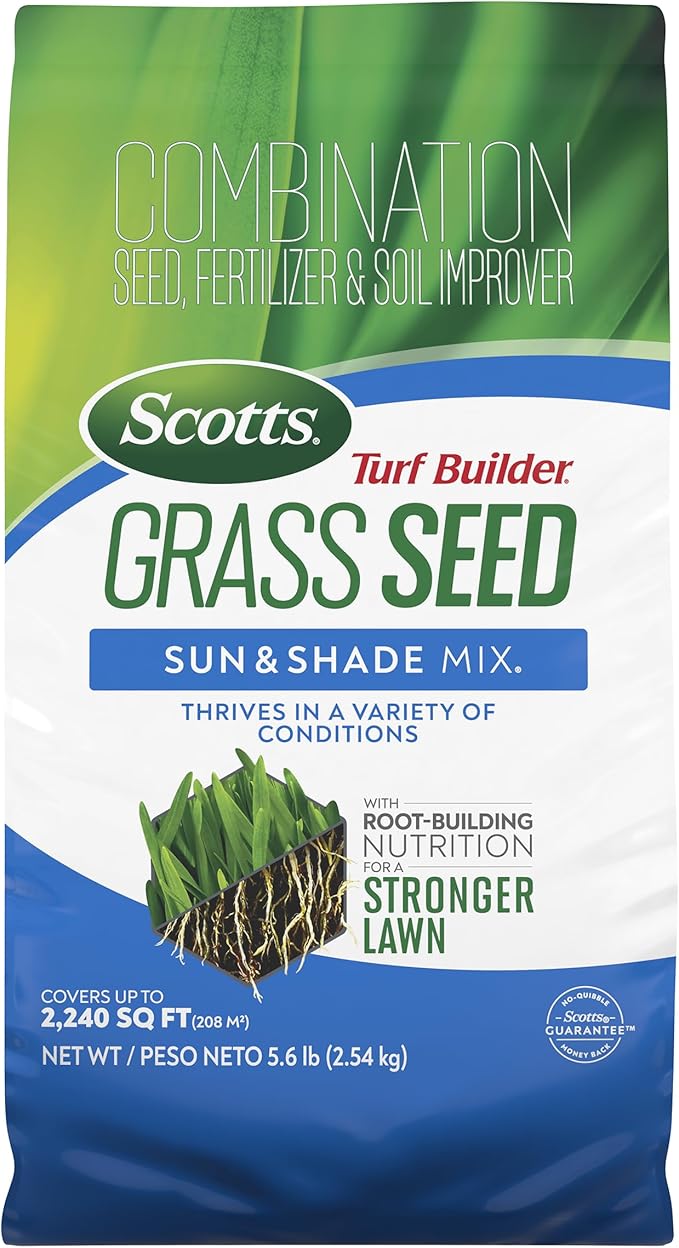
Scotts Turf Builder Grass Seed Sun & Shade Mix offers a dependable way to grow thick, green grass suitable for lawns with mixed sun and shade. Its biggest strength lies in its root-building nutrition that supports a stronger lawn over time, making it ideal for yards needing resilience in varying light conditions.
Planting is best done in spring with regular watering to help the seed establish well. The product includes a mix of grass types that adapt to both sun and moderate shade, and the package also serves as fertilizer and soil improver, simplifying lawn care. Using a Scotts spreader helps distribute it evenly, which is key for consistent growth.
This seed mix performs well in creating a durable, medium drought-tolerant lawn. It combines Kentucky bluegrass, perennial ryegrass, and several fescues to handle different environments.
While it builds strong roots as promised, some find the medium drought tolerance limits its use in very dry areas. The overall build quality of the seed mix is solid with a good balance of sun and shade grasses.
Strongest praise highlights how the root-building nutrition helps establish a thicker, greener lawn that can handle sun and moderate shade well. The most common complaint involves the need for regular watering and modest drought tolerance, which may not suit very dry or low-maintenance situations.
Those looking for a resilient, mixed-condition lawn with the time and commitment to water regularly will find this seed mix suitable. Anyone facing extreme drought or minimal lawn care should consider other options better suited to tougher conditions.
Pros
- Good mix for sun and shade areas
- Includes lawn fertilizer and soil improver
- Supports deep root growth
- Medium drought tolerance
Cons
- Needs regular watering to establish
- Not ideal for very dry climates
| Specification | Details |
|---|---|
| Sunlight Exposure | Full Sun |
| Expected Planting Period | Spring |
| Moisture Needs | Regular Watering |
| USDA Hardiness Zone | 5 |
| Seed Treatment Method | Scotts Spreader |
| Durability | Medium to High |
9. Scotts Turf Builder Grass Seed Fall Mix

A mix of Kentucky bluegrass, perennial ryegrass, and creeping red fescue makes the Scotts Turf Builder Grass Seed Fall Mix ideal for lawns that see full sun or light shade. Best suited for fall seeding, its quick-establishing seeds and root-building nutrients are designed to give a strong start before the first frost.
Applying the mix in your yard comes with ease since it combines seed and fertilizer, reducing the need for extra steps. For best results, apply it during fall, which aligns with the recommended planting period.
The coverage from a 2.4 lb bag is enough for a moderate-sized lawn, and the seed’s medium durability means maintaining a lush look during everyday wear and light drought conditions.
The seeds establish quickly and show noticeable growth before frost, allowing your lawn to fill in nicely come spring. The root-building nutrition helps the grass stay resilient over time, although it may not be ideal in areas prone to long droughts due to low drought resistance.
Reviews often mention how well it promotes lawn thickness but also that performance can lag in harsher, drier spots.
The product’s ability to establish quickly and promote root strength is highly praised, especially when used as directed in fall. The most frequent complaint deals with its performance in drought-prone areas, where the low drought resistance limits grass survival during dry spells.
Those looking to seed a lawn that typically gets regular water and some shade will find this mix works well. For yards facing prolonged dry periods or intense sun without irrigation, exploring mixes with higher drought tolerance would be advisable.
Pros
- Quick seed establishment before frost
- Combined seed and fertilizer in one product
- Good for full sun and light shade areas
- Supports strong root growth
Cons
- Low drought resistance
- May struggle in very dry conditions
| Specification | Details |
|---|---|
| Indoor/Outdoor Usage | Outdoor |
| Expected Blooming Period | Fall |
| Sunlight Exposure | Full Sun |
| Expected Planting Period | Fall |
| Seed Mix Components | Kentucky bluegrass, perennial ryegrass, creeping red fescue |
| Durability | Medium |
10. Pennington Clover Grass Seed Mix

Pennington Clover Grass Seed Mix stands out with its unique combination of white clover and grass, perfect for northern US lawns. It’s especially suited for those looking to grow a thick, green lawn that thrives with moderate sunlight and regular watering. The blend’s strength lies in its ability to cover a large area efficiently, making it a convenient choice for medium-sized yards.
Preparation involves sowing in the fall, when cooler temperatures help the seeds establish best. Spreading 7 lbs of seed across up to 1,400 square feet means you get good coverage with one bag. Since the mix grows well with just 4-6 hours of sunlight daily, it fits lawns with partial sun exposure.
Keeping the soil moist through regular watering helps it grow steadily, reaching about 2 inches in height, which keeps the lawn low-maintenance.
The grass and clover mix performs well outdoors by supporting growth across USDA hardiness zones 1 to 12, making it adaptable to many climates. The combination allows the lawn to remain green through fall, with white clover blooms adding a touch of color.
Reviews commonly note how healthy and dense the lawn looks once established. The most frequent complaint is the need for consistent watering to keep it thriving during dry spells.
The mix receives praise for creating a lush, green lawn with low maintenance height, providing good ground cover when watered regularly. A common issue is that it requires consistent moisture, which can be challenging during dry periods or irregular watering schedules.
Gardeners in cooler northern regions who can water regularly will find this seed mix well suited to their lawn needs. Those in hotter or very dry areas might want to consider alternatives that tolerate drought or bloom outside of the fall season.
Pros
- Covers up to 1,400 sq ft with 7 lbs
- Thrives in northern US climates
- Grows well with partial sunlight
- Low height keeps lawn tidy
Cons
- Needs regular watering to stay healthy
- Only blooms in the fall
| Specification | Details |
|---|---|
| Indoor Outdoor Usage | Outdoor |
| Expected Blooming Period | Fall |
| Sunlight Exposure | 4-6 Hours of Sun Per Day |
| USDA Hardiness Zone | 1-12 |
| Expected Plant Height | 2 inches |
| Moisture Needs | Regular Watering |
11. Pennington No Mow Mix Fescue Grass Seed

Perfect for those who want a low-maintenance lawn, Pennington No Mow Mix Fescue Grass Seed suits yards with slopes, hills, or tricky terrain. Its biggest appeal lies in growing tall and naturally laying down to avoid constant mowing, saving time and fuss in yard care.
Getting started is straightforward: preparing the soil well is key, then spreading the seed evenly using a grass seed spreader works best. Regular watering encourages uniform growth, and the grass manages with 4-6 hours of sun daily.
Since it’s drought tolerant, it handles dry spells better than many traditional lawn seeds.
Growth reaches about 12 inches tall before naturally dropping to a more manageable 6 inches, which cuts down on mowing without looking unkempt. The mix performs well on erosion-prone hills and slopes, maintaining decent coverage. Some users note occasional patchiness during establishment, but overall it holds up as a sustainable lawn option.
The grass seed mix grows tall then naturally flops to about half that height, reducing the need for mowing, which many consider its strongest feature. The most common complaint involves some patchy or inconsistent coverage during early growth, requiring attention to soil prep and watering.
Anyone wanting a low-maintenance lawn on challenging terrain will appreciate this mix. Those who prefer a perfectly even, short lawn without patches might look for other seed options better suited for frequent mowing and fast coverage.
Pros
- Grows up to 12 inches, then flops naturally
- Drought tolerant for dry areas
- Good for erosion-prone slopes and hills
- Requires less mowing time
Cons
- Needs regular watering during growth phase
- May have uneven coverage at first
| Specification | Details |
|---|---|
| Expected Plant Height | 12 inches |
| Sunlight Exposure | 4-6 Hours of Sun Per Day |
| Expected Planting Period | Fall |
| Moisture Needs | Regular Watering |
| USDA Hardiness Zone | 1-12 |
12. Pennington Smart Seed Perennial Ryegrass Mix

Lawn areas with partial sun can be tough to keep green and full. Ideal for spots getting 4 to 6 hours of sunlight, this perennial ryegrass mix grows quickly and stays green late into the year. Its biggest strength lies in using less water while still creating a dense, fine-bladed lawn that lasts through seasons.
Easy to seed in spring, it covers up to 750 square feet, enough for small to medium yards. The coated seeds make sowing straightforward and reduce watering needs by about 30%.
Expect to see new grass emerge between 8 and 14 days after planting, which helps keep your lawn looking fresh and tidy without waiting forever.
Once established, the grass handles regular foot traffic well and resists common lawn diseases. Its moderate water needs and ability to survive winter colors make it stand out.
Some notes mention it’s better suited to cooler climates since it thrives as a permanent cool-season lawn but also works temporarily in warm seasons, so consistency depends on your local weather.
Many find it impressive that this ryegrass forms a thick, green lawn quickly and keeps color through winter. The most common downside is it doesn’t function as well in warmer months when used as a permanent lawn.
Those wanting a low-water lawn with partial sun exposure in cooler climates will appreciate its strengths. People looking for a warm-season lawn all year or for large areas might want to explore other seed mixes with broader coverage or heat tolerance.
Pros
- Grows well with limited sunlight
- Uses up to 30% less water
- Fast germination in 8 to 14 days
- Resistant to diseases and foot traffic
Cons
- Best suited for cooler seasons
- Covers only up to 750 sq. ft. per bag
| Specification | Details |
|---|---|
| Sunlight Exposure | 4-6 Hours |
| Coverage | Up to 750 sq. ft. |
| Expected Blooming Period | Spring, Winter |
| Seed Treatment Method | Coated |
| Moisture Needs | Moderate Watering |
| Expected Plant Height | 3 inches |
13. X-Seed Ultra Premium Lawn Seed Mixture

Covers up to 4,900 sq ft and made for cool-season climates, this blend is great for central and northern regions wanting a dense, green lawn. Its ability to absorb 50% more water than regular seed mixes stands out, promoting quicker and fuller growth in both sun and shade.
Setup involves spreading the seed evenly across new or existing lawns. Moisture Boost Technology makes sure the seed grabs water efficiently, helping it sprout fast even with moderate watering.
It works well on high-traffic spots and can handle challenges from dogs or heavy use, so it suits busy yards handling different conditions.
This seed mix grows a dense lawn combining perennial ryegrass, fine fescue, and Kentucky bluegrass. It’s made for both sun and partial shade areas, focusing on resilience and quick recovery.
The biggest praise comes from its lush green results in weeks, while some find the initial coverage limited for very large new lawns.
The most praised feature is the quick, dense green growth seen in just weeks thanks to a carefully balanced seed blend and moisture absorption. The common complaint points to the coverage being too limited for very large new lawn projects without buying multiple bags.
Anyone aiming to quickly green up a medium to large yard in cooler climates will benefit greatly. Those with very extensive new lawns might want to consider additional seed bags or other bulk options for full coverage.
Pros
- Fast germination with moisture boost technology
- Works well in sun and shade areas
- Durable on high-traffic and pet areas
- Covers large areas with one bag
Cons
- Less ideal for very large new lawns
- Requires moderate watering to thrive
| Specification | Details |
|---|---|
| Coverage area (existing lawn) | 4,900 sq ft |
| Coverage area (new lawn) | 2,450 sq ft |
| Grass species | Perennial ryegrass, fine fescue, Kentucky bluegrass |
| Sunlight exposure | Full Sun |
| USDA Hardiness Zone | 2a |
| Watering requirements | Moderate |
14. Jonathan Green Black Beauty Ultra Grass Seed

People looking to establish a new lawn or repair bare spots quickly will find this seed mix suitable. Its biggest strength lies in rapid germination, helping a yard fill in fast with a lush, dark green turf that stands up well to foot traffic.
Setting the seed is straightforward, best done in spring or fall with regular watering to keep the soil moist. It thrives in full sun to partial shade and adapts well to clay soil. Early growth kicks off within about one to two weeks, which means you don’t have to wait long to see progress on thin or damaged patches.
Performance on moisture retention stands out since the deep roots and waxy leaves reduce evaporation effectively. The mix grows up to 4 feet tall and supports a mix of tall fescues, Kentucky bluegrass, and perennial ryegrass, combining durability with an attractive dark green color.
Many appreciate how quickly it fills in bare spots, though some find it requires consistent watering, especially during dry spells.
The seed is praised for establishing new yards and filling bare spots rapidly with rich green grass, making it a quick solution for lawn repair. Some drawbacks include a need for regular watering and limited tolerance to full shade environments.
Those wanting a strong lawn that can handle regular foot traffic and quick growth will be satisfied. People with heavily shaded yards or who cannot water consistently should consider other options.
Pros
- Germinates quickly in 7-14 days
- Produces dense, dark green turf
- Roots grow as deep as 4 feet
- Resists heavy foot traffic
Cons
- Needs consistent watering to thrive
- Best suited for full sun to partial shade only
| Specification | Details |
|---|---|
| Expected Planting Period | Spring or Fall |
| Sunlight Exposure | Partial Shade |
| Expected Plant Height | 4 feet |
| Soil Type | Clay Soil |
| Moisture Needs | Regular Watering |
| Indoor/Outdoor Usage | Outdoor |
15. Scotts EZ Seed Patch & Repair Bermudagrass
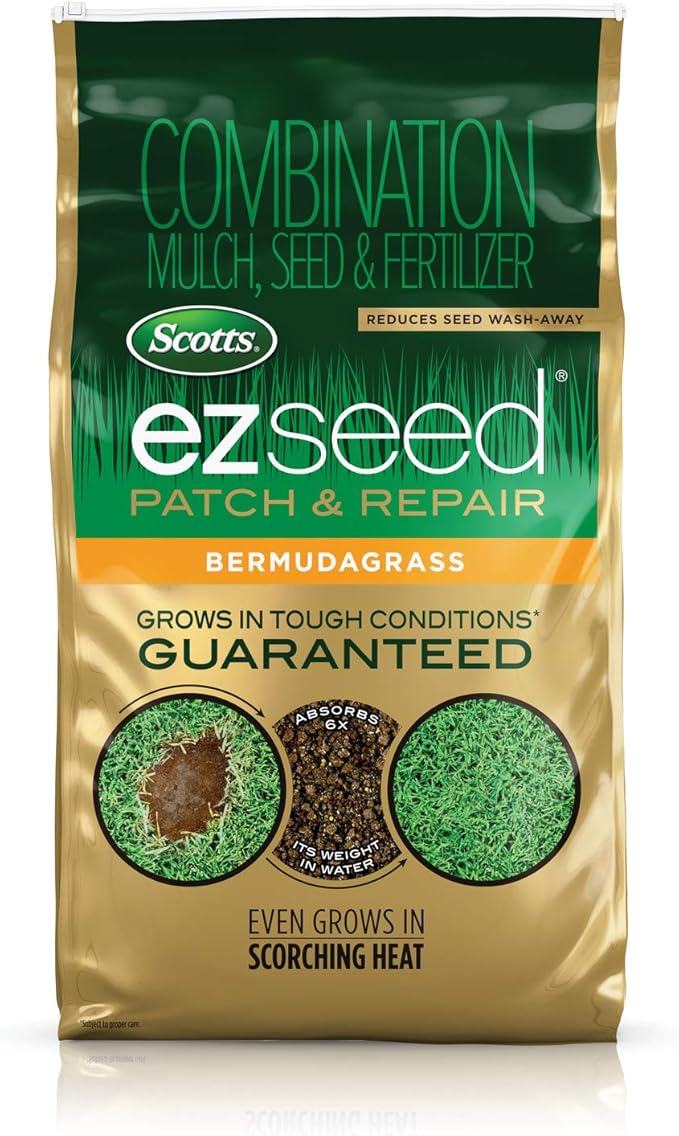
Perfect for anyone looking to fix bare spots quickly, this seed mix stands out because it combines grass seed with mulch, fertilizer, and protectants all in one. It suits outdoor use in warm-season regions and is especially helpful for those needing an easy repair solution without juggling multiple products.
Application is straightforward, as the seed is designed to work best in daytime temperatures between 70°F and 90°F, making spring to fall ideal. The mulch expands around the seed to keep it in place, so you just need to water regularly on loam soil. It’s intended for full sun areas and requires some care to keep seedlings safe from disease and prevent washout.
Performance delivers on patching and repair in challenging lawn spots. The controlled-release fertilizer provides steady feeding while the tackifier helps reduce seed loss from rain or watering. Reviews show most appreciate how well it protects seedlings, though some note it may need multiple applications for larger patches.
The package covers plenty of area with 10 pounds of seed mix, built specifically for USDA zones 7 to 10.
Many find the combination of seed and mulch effective in protecting and rooting new grass, though some mention it might not fully cover bigger lawn patches with just one application. Consistent watering is important for the best germination results.
Ideal for warm-season climates and smaller repair spots, this product fits those wanting a simple all-in-one solution. It might not be the best fit for cold climates or very extensive lawns needing heavy reseeding.
Pros
- Combines seed, mulch, fertilizer, and protectant
- Expanding mulch keeps seed in place
- Protects seedlings from harmful diseases
- Good coverage with one 10 lb. bag
Cons
- Works best only in warmer temperatures
- May require multiple applications for large areas
| Specification | Details |
|---|---|
| USDA Hardiness Zone | 10, 7, 8, 9 |
| Expected Blooming Period | Spring to Fall |
| Sunlight Exposure | Full Sun |
| Soil Type | Loam Soil |
| Moisture Needs | Regular Watering |
| Expected Planting Period | When daytime temperatures are between 70°F and 90°F |
Best Yard Seed Comparison Table
| Product | Sunlight Exposure | Planting Period | USDA Hardiness Zone | Moisture Needs |
|---|---|---|---|---|
| Pennington Kentucky 31 Fescue | 4-8 Hours Sun | Spring | Zones 1-8 | – |
| Scotts EZ Seed Patch Repair | Sun and Shade | – | – | – |
| Pennington Contractors Grass Mix | 4-6 Hours Sun | Spring | Zones 1-5 | Moderate Watering |
| Pennington Annual Ryegrass | Full Sun to Shade | Spring | Zones 1-12 | Moderate Watering |
| Scotts PatchMaster Lawn Repair | Shade | Spring | – | Moderate Watering |
| Pennington Bare Spot Mix | Full Sun to Shade | Spring | Zones 1-12 | – |
| Scotts Turf Builder ThickR | Full Sun | – | – | – |
| Scotts Turf Builder Sun Shade | Full Sun | Spring | – | – |
| Scotts Turf Builder Fall Mix | Full Sun | Fall | – | – |
| Pennington Clover Grass Mix | 4-6 Hours Sun | Fall | Zones 1-12 | Regular Watering |
| Pennington No Mow Fescue | 4-6 Hours Sun | Fall | Zones 1-12 | Regular Watering |
| Pennington Smart Seed Ryegrass | 4-6 Hours | Spring | Zones 1-12 | Moderate Watering |
| X-Seed Ultra Premium Seed | Full Sun | – | Zone 2a | Moderate Watering |
| Jonathan Green Black Beauty | Partial Shade | Spring or Fall | – | Regular Watering |
| Scotts EZ Seed Bermudagrass | Full Sun | Warm Temperatures | Zones 7-10 | Regular Watering |
- Sunlight Exposure4-8 Hours Sun
- Planting PeriodSpring
- USDA Hardiness ZoneZones 1-8
- Moisture Needs–
- Sunlight ExposureSun and Shade
- Planting Period–
- USDA Hardiness Zone–
- Moisture Needs–
- Sunlight Exposure4-6 Hours Sun
- Planting PeriodSpring
- USDA Hardiness ZoneZones 1-5
- Moisture NeedsModerate Watering
- Sunlight ExposureFull Sun to Shade
- Planting PeriodSpring
- USDA Hardiness ZoneZones 1-12
- Moisture NeedsModerate Watering
- Sunlight ExposureShade
- Planting PeriodSpring
- USDA Hardiness Zone–
- Moisture NeedsModerate Watering
- Sunlight ExposureFull Sun to Shade
- Planting PeriodSpring
- USDA Hardiness ZoneZones 1-12
- Moisture Needs–
- Sunlight ExposureFull Sun
- Planting Period–
- USDA Hardiness Zone–
- Moisture Needs–
- Sunlight ExposureFull Sun
- Planting PeriodSpring
- USDA Hardiness Zone–
- Moisture Needs–
- Sunlight ExposureFull Sun
- Planting PeriodFall
- USDA Hardiness Zone–
- Moisture Needs–
- Sunlight Exposure4-6 Hours Sun
- Planting PeriodFall
- USDA Hardiness ZoneZones 1-12
- Moisture NeedsRegular Watering
- Sunlight Exposure4-6 Hours Sun
- Planting PeriodFall
- USDA Hardiness ZoneZones 1-12
- Moisture NeedsRegular Watering
- Sunlight Exposure4-6 Hours
- Planting PeriodSpring
- USDA Hardiness ZoneZones 1-12
- Moisture NeedsModerate Watering
- Sunlight ExposureFull Sun
- Planting Period–
- USDA Hardiness ZoneZone 2a
- Moisture NeedsModerate Watering
- Sunlight ExposurePartial Shade
- Planting PeriodSpring or Fall
- USDA Hardiness Zone–
- Moisture NeedsRegular Watering
- Sunlight ExposureFull Sun
- Planting PeriodWarm Temperatures
- USDA Hardiness ZoneZones 7-10
- Moisture NeedsRegular Watering
How to Choose the Best Yard Seed
Choosing the right yard seed involves considering your climate, soil type, and how much sunlight your lawn receives. Selecting seeds suited to your environment ensures healthier growth, reducing the need for extra care and preventing wasted time and money on replacements or repairs.
Seed Type and Grass Variety
Cool-season grasses can struggle in hot, dry summers, while warm-season types may go dormant in cold winters, leaving patchy spots. Choosing a type matched to local climate reduces brown patches and helps the lawn stay green longer. Soil also plays a role; clay-heavy soils retain water differently from sandy ones, affecting seed success.
Seeds designated as tolerant of shade handle trees or buildings that block sunlight better, which matters in many urban yards.
Knowing how fast the grass spreads and how often it needs mowing or watering impacts daily yard care. For example, Kentucky bluegrass spreads via rhizomes, filling in gaps but requires more water.
Tall fescue grows in clumps and tolerates drought but can look coarse if not mowed properly. A well-matched variety minimizes frustration and time spent trying to fix bare spots or uneven growth.
Seed Purity and Germination Rate
Seed bags showing 90% purity mean most of what you’re planting is the actual grass variety you want, rather than fillers like weed seeds or inert matter. Lower purity can lead to unexpected weeds popping up and competing with grass seedlings.
Germination rate indicates what portion of seeds you can expect to sprout under good conditions. A rate below 80% can leave bare patches or require extra reseeding.
Labels often reveal the percentage of weed seeds present; anything above 1-2% can quickly reduce lawn quality. Watching for this detail avoids frustration of battling unwanted plants soon after seeding. High purity and germination rates correlate with quicker lawns that need less patching later on.
Seeding Rate and Coverage
Recommended seeding rates vary because spreading too thin leads to sparse lawns prone to weeds, while overseeding too thickly wastes seed and can suffocate seedlings. For typical cool-season grasses, rates around 5 to 10 pounds per 1,000 square feet work well, but always consult product labels. Some mixes specify amounts for new lawns versus overseeding existing turf.
Even distribution affects the lawn’s uniformity; small, lightweight seeds often spread more evenly, which influences seeders and spreaders used. Certain types perform best when directly planted into soil, and others mix well with existing grass, guiding whether to remove old sod or not.
Package Size and Storage Life
Packages too small force multiple purchases, adding cost and storage hassle. Oversized bags risk seeds spoiling if unused too long. Bags ranging from 5 to 20 pounds fit most residential lawns nicely.
Many products list a shelf life around one to two years, but improper storage, like damp or hot spots in garages, can significantly cut viability.
Packaging with moisture barriers and resealable zippers help keep seeds dry and safe from insects during storage. Seeds kept in original unopened bags stored in cool, dry places maintain germination better than those transferred to loose containers.
Soil and Lawn Preparation Requirements
Many grass seeds benefit from soil pH between 6.0 and 7.0, so testing soil beforehand avoids wasted efforts planting seeds doomed to struggle. Some brands specify needing loosened soil or added organic matter for best root contact. Skipping prep often results in poor seed-to-soil contact, slowing germination and leaving patches to weeds.
Raking away debris and creating a fine seedbed improve outcomes considerably. Some seed types recommend applying starter fertilizer high in phosphorus to boost root development during establishment.
Paying attention to these prep steps can cut down on time spent reseeding or repairing weary lawns afterwards.
Effective Seeding Techniques for a Lush and Healthy Yard
Preparing the soil thoroughly before seeding is crucial to encourage strong seed-to-soil contact, which promotes better germination. Use a rake to level the ground and remove debris or old grass patches. Spreading the seed evenly prevents clumpy growth areas, so dividing the seed into two batches and applying them at right angles to each other helps cover the yard consistently.
Watering plays a critical role:
- Start with light watering immediately after sowing to keep the soil moist but not soggy.
- Maintain moisture daily until the seeds sprout, reducing frequency as the grass develops deeper roots.
Using a lawn roller lightly after seeding can press the seeds into the soil, improving contact without compacting the ground excessively. Avoid mowing until the grass reaches at least 3 inches tall to prevent disrupting young shoots. These steps help set the foundation for a dense and healthy turf.
Common Mistakes to Avoid When Planting and Maintaining Lawn Seed
Skipping soil preparation is a common mistake that leads to patchy growth. Soil that is hard, compacted, or rich in debris makes it difficult for seed roots to establish.
Fertilizing immediately after sowing can sometimes burn seeds if the fertilizer is too strong or improperly timed. Wait until grass sprouts and shows a few healthy blades before applying any fertilizer.
Overwatering often causes more harm than good by promoting fungal diseases and washing away seeds. It’s important to keep the soil just moist during germination rather than saturated.
Applying seed too thickly creates overcrowded grass that struggles for nutrients and light, which results in weak growth.
Be patient and avoid frequent mowing of immature grass, which can damage young plants: Let the new lawn establish properly before the first cut. Neglecting these details can reduce seed survival and slow down achieving a nicely green yard.
People Also Asked
How Long Does Yard Seed Typically Take to Germinate?
Yard seed usually takes about 7 to 21 days to germinate, depending on the grass type and temperature. Warmer soil speeds up the process, so planting in spring or early fall is ideal. Keep the soil moist during this period to avoid drying out the seeds.
What Is the Best Way to Prepare Soil Before Planting Yard Seed?
Loosen the soil to a depth of at least 4 inches and remove debris before planting yard seed. You may also want to add a thin layer of compost or starter fertilizer to improve nutrient levels. Rake the surface to create a good seed-to-soil contact.
Can I Use Yard Seed Safely Around Pets and Children?
Most yard seed products are safe around pets and children once the seed is watered in and the lawn starts growing. Avoid letting pets dig or play in freshly seeded areas to prevent disruption. Check the product label to confirm any chemical treatments.
How Often Should I Water New Yard Seed After Planting?
Water new yard seed lightly but frequently, about twice per day, to keep the top inch of soil consistently moist until seeds sprout. After germination, reduce watering gradually to encourage deep root growth. Early morning watering helps reduce disease risk.
What Are Common Problems When Growing Yard Seed and How to Fix Them?
Common problems include poor germination, weed invasion, and fungal diseases. Ensure proper watering, seed-to-soil contact, and avoid overwatering to fix these. Removing weeds quickly and using a fungicide if necessary can help protect young grass.
Conclusion
Choosing the right yard seed comes down to climate compatibility, grass type suitable for your soil, and how much care you are ready to put in. Picking seeds that fit your local environment will make growing easier and improve the lawn’s durability.
Also, consider how the grass will be used, some types handle heavy foot traffic better than others.
Match your seed choice to your specific yard size and how much work you want to do maintaining it. Keeping these practical needs in mind will help you get the best results for your space and budget.
Check the comparison table above for details and to find the seed that fits your situation best.