Top 15 Best Bluegrass Seed That Will Transform Your Lawn!
Choosing the best bluegrass seed can save many headaches later on, especially if the lawn ends up patchy or thin. Cheap or poor-quality seed often results in slow germination, uneven growth, and a turf that struggles to recover from foot traffic or seasonal stress. People who have dealt with these issues know how frustrating it can be to spend weeks on overseeding, only to see weak shoots that fail to establish a lasting lawn.
What sets a good bluegrass seed apart is primarily the purity and seed count per pound, which affects coverage and germination rates. High-quality bluegrass seed usually contains over 90% pure seed with minimal weed or other grass contamination.
Germination rates should be above 85% for consistent sprouting within 14-21 days. Seed size plays a role; medium-sized seeds tend to balance quick germination and strong root development better than very small or oversized varieties.
Need a Quick Check?
| Image | Product | Price |
|---|---|---|
Our Top Picks 1  | Pennington Smart Seed Bluegrass | Check Price |
Our Top Picks 2  | Jonathan Green Blue Panther | Check Price |
Our Top Picks 3 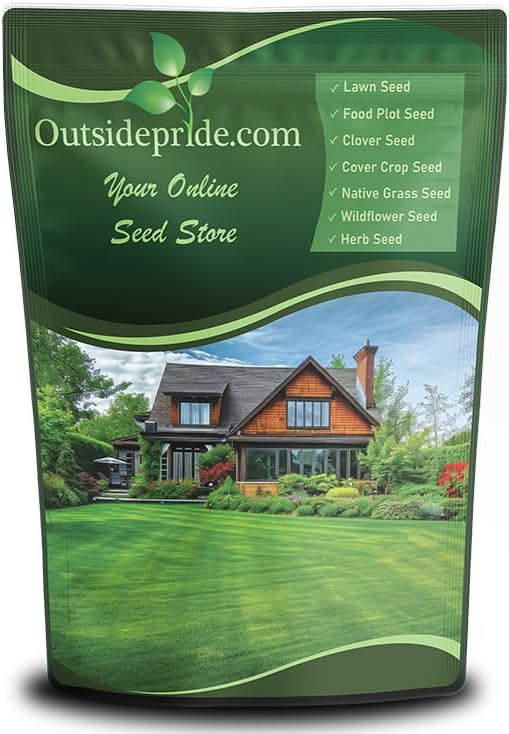 | Outsidepride Midnight Bluegrass | Check Price |
Our Selected Top 15 Bluegrass Seed for Every Budget
This list features carefully chosen bluegrass seed options suitable for various needs and budgets. Each review explains how the seed performs, its ideal use, and highlights both strengths and potential drawbacks to help you make an informed choice.
1. Pennington Smart Seed Kentucky Bluegrass Blend
Kentucky bluegrass seeds coated with the right amount of fertilizer make up this blend, aimed at lawns receiving 4 to 6 hours of sunlight each day. Ideal for those wanting a dense, green lawn with lower water needs, its best feature is how it saves water while growing thick and durable grass.
Planting is designed for spring, with seeds suitable for regular outdoor watering. Because it’s formulated for moderate sunlight, it fits well in yards with some shade. The coating helps the seeds establish quickly, showing visible growth between 15 and 30 days.
It tackles foot traffic and disease without extra effort, making lawn maintenance smoother over time.
Growth results in a lush, dense turf about 3 inches tall during its fall bloom period. It handles wear well, making it practical for active outdoor spaces. Most praise highlights its water savings and quick greening.
A few mention it needs consistent watering to stay healthy. Resilience in USDA zones 1 through 7 adds to its versatility in different climates.
Growth appears quickly with greener, thicker coverage that can sustain some wear and disease. The main drawback is the need for consistent watering to keep it thriving, otherwise the lawn may suffer. Users appreciate water savings but must stay on top of lawn care routines.
Those with lawns getting moderate sunlight and willing to water regularly will like this bluegrass blend. People with either too much shade or very dry conditions might want to look for seed mixes that better fit those extremes.
Pros
- Contains fertilizer for better growth
- Water-saving up to 30% compared to similar seeds
- Resistant to disease and foot traffic
- Visible results within 15 to 30 days
Cons
- Requires regular watering to maintain health
- Limited to areas with 4-6 hours of sunlight
| Specification | Details |
|---|---|
| Sunlight Exposure | 4-6 Hours |
| Expected Blooming Period | Fall |
| Expected Plant Height | 3 inches |
| Expected Planting Period | Spring |
| USDA Hardiness Zone | 1, 3, 4, 5, 6, 7 |
2. Jonathan Green Blue Panther Kentucky Bluegrass
Jonathan Green Blue Panther Kentucky Bluegrass stands out for producing an evenly dark green lawn, ideal for those wanting a true 100% Kentucky bluegrass yard. It suits anyone looking to maintain or introduce KBG in their lawn with a low maintenance approach.
The seed works well when establishing a new yard or filling in thinning areas of an existing Kentucky bluegrass lawn. It thrives best in outdoor settings needing regular watering and partial sun.
Usage over sandy soil complements its growth, making daily lawn care manageable without complicated steps.
Performance-wise, it grows dense and healthy turf with good leaf texture and traffic tolerance. Many praise its uniform dark green color.
The most common drawback relates to consistent watering needs to keep it looking its best. It is designed to produce sod-quality grass from seed with a slow but steady growth pace.
The grass seed is well-regarded for creating a dense, healthy, and visually uniform lawn. The most common issue users mention is the need for regular watering to maintain its lush appearance and avoid patches. It does take some patience during establishment but results in a sod-quality lawn.
Gardeners wanting a dark green, low maintenance Kentucky bluegrass lawn on sandy soil will appreciate this seed. Those with limited access to partial sunlight or inconsistent watering may want to explore more drought-tolerant grass varieties.
Pros
- Produces uniform dark green turf
- Low maintenance for Kentucky bluegrass
- Good for overseeding or new lawns
- Withstands high traffic well
Cons
- Requires consistent watering to thrive
- Limited to partial sun exposure
| Specification | Details |
|---|---|
| Indoor/Outdoor Usage | Outdoor |
| Sunlight Exposure | Partial Sun |
| Soil Type | Sandy Soil |
| Moisture Needs | Regular Watering |
| Expected Blooming Period | Spring to Fall |
3. Outsidepride Midnight Kentucky Bluegrass Seed
Outsidepride Midnight Kentucky Bluegrass Seed suits anyone looking for a durable lawn with rich color and easy establishment. Its greatest appeal is the OptiGrowth coating, simplifying spreading and promoting even growth, making it ideal for various outdoor spaces, especially in northern or transition zones.
Getting the seed ready is straightforward as it works best when planted in spring on loam soil with moderate moisture. The OptiGrowth coating helps scatter the seed uniformly across your lawn, ensuring better coverage without manual effort.
It thrives in full sun, making daily lawn care about regular watering without worrying much about temperature extremes thanks to its heat and cold tolerance.
Performance matches its appearance with a thick, dark blue-green turf that feels soft to walk on. It handles different seasons well and maintains color without fading quickly.
Some notes mention that it needs moderate watering and performs best in loam soil, so overly sandy or heavy clay soils might not see the same results. The seed package comes as heirloom variety, which adds a bit of heritage appeal.
The seed delivers a beautifully dense lawn with a vibrant dark blue-green look that stands up well through different seasons. Some users mention that ensuring the right soil type and watering routine is key to achieving the best outcomes. The ease of spreading the seeds thanks to the OptiGrowth coating gets high marks, but the ongoing care demands moderate moisture.
Gardens and lawns in northern or transitional climates benefit most from this variety, especially where full sun is plentiful. Lawns placed in heavy clay or sandy soils might want to consider other options better suited to those conditions. Anyone ready to provide moderate watering and proper soil prep will find success shaping a rich, soft turf.
Pros
- OptiGrowth coating for easy spreading
- Dark blue-green color with soft texture
- Good heat and cold tolerance
- Suitable for northern and transition zones
Cons
- Best results require loam soil type
- Needs consistent moderate watering
| Specification | Details |
|---|---|
| Sunlight Exposure | Full Sun |
| Expected Planting Period | Spring |
| USDA Hardiness Zone | 3 |
| Soil Type | Loam Soil |
| Moisture Needs | Moderate Watering |
4. GreenView Pure Kentucky Bluegrass Blend

Getting a lush green lawn in various soil types can be tricky, but this seed blend works well for many outdoor environments. Perfect for anyone aiming to cover large areas or patch up bare spots, its biggest strength lies in its adaptability to different soil conditions and resilience against common lawn stresses.
Spreading the seed over your yard is straightforward since it covers a large area, up to 10,000 sq. ft. for new lawns and twice that for overseeding.
Regular watering helps the fine, dark green blades take root. The seed handles partial shade and resists heat, drought, and disease, which reduces the effort needed to maintain a healthy lawn throughout the seasons.
It grows into a thick carpet of Kentucky Bluegrass with a fine texture that looks great from curbside. Reviews highlight how well it recovers in shaded spots and hot conditions, though some mention the need for consistent watering to keep it thriving.
Its broad coverage makes it a solid choice for bigger yards but might be more than needed for very small spaces.
This seed blend delivers a dense, healthy lawn that stands up well to shade and heat while requiring regular watering to avoid thinning out. Many appreciate how it fills in bare spots, but some find the amount excessive for limited spaces.
Great choice for homeowners with medium to large yards and typical garden soils wanting resilient grass. Those with very small lawns or who prefer a no-water-needed option may want to consider alternatives better suited for minimal upkeep.
Pros
- Adapts to all common soil types
- Resistant to disease, drought, heat, and shade
- Provides large coverage area for lawns
- Dark green, fine textured blades
Cons
- Needs consistent watering to maintain health
- May be more seed than required for small yards
| Specification | Details |
|---|---|
| Soil Adaptability | Grows in all common soil types |
| Sunlight Exposure | Partial Shade |
| Moisture Needs | Regular Watering |
| Coverage Area | 10,000 sq. ft. new lawn, 20,000 sq. ft. overseed |
| Special Features | Disease, Drought, Heat, Shade Resistant |
5. Pennington Kentucky 31 Tall Fescue Grass Seed

Pennington Kentucky 31 Tall Fescue Grass Seed grows thick blades that resist hot summers and heavy rains, making it a solid choice for lawns facing tough weather. It works well in full sun to medium-shaded areas, fitting yards that need durable grass able to handle foot traffic on up to 4,000 sq.
ft.
Spreading the seed in spring is straightforward. This variety tolerates sandy soil and needs moderate watering to get started. Its coverage area is generous for many home lawns, and results become visible within 8 to 21 days, so you won’t be waiting long to see new growth.
It handles a mix of sun and shade, which means it adapts well to various yard spots.
The grass stands up well to the main challenges of heat and heavy rain, maintaining a thick, resilient carpet. While plenty of users appreciate how durable the lawn remains, some mention the grass height stays relatively low at about 3 inches, which may not suit those wanting a taller, plush look.
The seed is Penkoted, which helps with even spreading and germination.
The strongest point is how well this tall fescue stays thick and tough through weather extremes and foot traffic. The most common drawback is its relatively short height, which may leave some users wanting a fuller, taller lawn appearance.
Gardeners looking for a hardy, adaptable lawn that handles sun, shade, and wear will find this seed fits perfectly. Those aiming for a taller, denser turf or growing in non-sandy soils might consider other options to better meet their needs.
Pros
- Thick blades resist hot summers and heavy rain
- Suitable for full sun to medium shade
- Withstands foot traffic well
- Fast germination time, 8 to 21 days
Cons
- Only grows about 3 inches tall
- Best in sandy soils, less ideal for others
| Specification | Details |
|---|---|
| Expected Plant Height | 3 inches |
| Sunlight Exposure | 4-8 Hours of Sun |
| Soil Type | Sandy Soil |
| Moisture Needs | Moderate Watering |
| Expected Planting Period | Spring |
| Coverage | Up to 4,000 sq. ft. |
6. Jonathan Green Black Beauty Ultra Grass Seed

Grass seed that suits homeowners looking to quickly establish or repair a lawn with a rich green appearance. Its biggest strength is fast germination combined with deep root growth that helps retain moisture and handle foot traffic well.
Preparing the soil and sowing this seed works best in spring or fall when temperatures match its ideal growing conditions of full sun to partial shade. It sprouts between 7 and 14 days, which means you won’t wait long to see new growth. Regular watering helps maintain the dark green turf, while the seed mix thrives even in clay soil types.
The seed mix combines tall fescues, Kentucky bluegrass, and perennial ryegrass to create a thick lawn that stands up to wear. Roots growing up to 4 feet deep help conserve moisture, aiding durability in demanding spots.
Common praise highlights its rapid filling of bare patches, though some mention the need for consistent watering to keep it looking its best.
The seed quickly fills in lawn gaps and produces a dense, dark green turf, praised for its fast germination and deep root system. Maintaining consistent watering is essential to keep the grass healthy, which some find challenging over time.
Those wanting a rapidly growing, durable lawn in areas with partial shade will be satisfied. Avoid this if you need a low-maintenance lawn or have very dry conditions without regular watering options.
Pros
- Grows in 7-14 days for quick results
- Roots grow up to 4 feet deep
- Retains moisture well with waxy leaf coating
- Handles heavy foot traffic without damage
Cons
- Requires regular watering to maintain health
- Best results need full sun to partial shade
| Specification | Details |
|---|---|
| Expected Planting Period | Spring or Fall |
| Expected Blooming Period | Summer |
| Sunlight Exposure | Partial Shade |
| Soil Type | Clay Soil |
| Moisture Needs | Regular Watering |
7. Scotts Turf Builder Kentucky Bluegrass Mix

Scotts Turf Builder Kentucky Bluegrass Mix stands out with its Root-Building Nutrition that encourages deep root growth for a thick, green lawn. Ideal for those wanting a durable lawn that thrives in full sun and light shade, it’s designed to handle medium drought conditions while building strength from the ground up.
Setting up the seed is straightforward when planted in spring, needing regular watering for best results. It suits outdoor areas that receive plenty of sunlight but can handle a bit of shade as well.
The grass grows to about 2 inches tall, creating a dense, green turf that requires consistent care to keep its durability intact over time.
The seed blend grows a strong, visually appealing lawn with plenty of density. Its root-building approach helps with lawn health and longevity.
Most comments on this product praise its ability to establish a thick growth, while some mention that it needs regular watering to perform well and can struggle a bit under tougher drought conditions.
The seed’s strong point lies in its root-building formula, leading to dense, resilient turf. Some users note it demands consistent watering during establishment and can face challenges in drier conditions.
Gardens that can provide steady moisture and have mostly sunny spots benefit most from this mix. For areas with prolonged drought or heavy shade, looking for a seed blend better suited to those specific conditions would be advisable.
Pros
- Encourages deep root growth for a thicker lawn
- Handles full sun and light shade well
- Creates dense, green turf
- High durability once established
Cons
- Requires regular watering to establish
- Less effective in severe drought conditions
| Specification | Details |
|---|---|
| Sunlight Exposure | Full Sun |
| Expected Plant Height | 2 inches |
| Moisture Needs | Regular Watering |
| Expected Planting Period | Spring |
| Durability | High |
| Drought Resistance | Medium |
8. Scotts Turf Builder Fall Mix Grass Seed

Scotts Turf Builder Fall Mix Grass Seed is best for establishing a lawn in full sun or light shade during the fall season. It suits those looking for a quick-start mix that includes Kentucky bluegrass, ryegrass, and creeping red fescue. Its biggest strength is providing a balance of grass types that grow before the first frost.
Applying it involves spreading the seed in the fall and keeping the soil moist until the grass reaches about 2 inches tall. The mix includes fertilizer so it both seeds and feeds your lawn simultaneously, which simplifies care. It grows well in outdoor areas receiving full sun and some light shade.
Regular watering is key during early growth stages to support strong roots.
Performance is solid for a fall seeding product, given it grows quickly before frost and supports root development with built-in nutrition. One strong point is quick establishment of the bluegrass and ryegrass blend. A common complaint is its low drought resistance, meaning regular watering remains important once established.
It builds a medium durability lawn that holds up well with some care.
The product is praised for quick germination and strong root development thanks to its fertilizer component. Most find the low drought tolerance challenging as it requires frequent watering to maintain health after planting.
People wanting a fast-growing lawn mix in fall that they can regularly water will be satisfied. Those in drier climates or unable to water frequently may want to pick a mix with higher drought resistance.
Pros
- Contains a mix of three grass seeds
- Includes fertilizer for root building
- Establishes quickly before frost
- Suitable for full sun and light shade
Cons
- Low drought resistance
- Needs consistent moisture during early growth
| Specification | Details |
|---|---|
| Sunlight Exposure | Full Sun |
| Expected Plant Height | 2 inches |
| Moisture Needs | Keep soil surface moist until seedlings reach 2 inches tall |
| Expected Planting Period | fall or spring |
| Indoor/Outdoor Usage | Outdoor |
9. Outsidepride SPF-30 Hybrid Bluegrass Seed

Outsidepride SPF-30 Hybrid Bluegrass Seed suits homeowners and lawn pros dealing with hot southern summers. It’s best for people needing a grass that stays green with minimal fuss, especially in places like Florida. Its strong point is handling heat and drought while growing thick, green grass all year round.
Using it means planting in spring on loam soil and making sure it gets full sun. It requires hardly any watering and mowing once established, saving time and effort during the busy summer months.
The seed mix repairs itself well, so bare patches fill in naturally without extra work.
It does a solid job staying green even when temps soar, thanks to the hybrid Kentucky and Texas bluegrass mix. The seed’s built for outdoor conditions with full sun exposure.
Most praise comes from how it recovers from damage quickly, while a few find it slow to settle in early on.
The seed mix’s ability to bounce back from lawn damage stands out as a big plus, giving a healthy, green lawn with less effort. Some find initial growth slower, needing patience early on. It performs best under full sun and in loam soil types.
People in hot, dry southern climates will appreciate a lawn that stays green with little watering. Those with different soil types or needing quick covers might want to explore other options better suited for their needs.
Pros
- Thrives in southern heat and drought
- Self-repairs bare patches quickly
- Requires minimal watering and mowing
- Year-round green coverage
Cons
- Slow to establish at first
- Best suited to specific soil types
| Specification | Details |
|---|---|
| Heat & Drought Tolerance | Yes |
| Sunlight Exposure | Full Sun |
| Soil Type | Loam Soil |
| Moisture Needs | Little To No Watering |
| Expected Planting Period | Spring |
| USDA Hardiness Zone | 6 |
10. Seeds2Go Kentucky Bluegrass Lawn Grass Seed

Seeds2Go Kentucky Bluegrass Lawn Grass Seed suits northern regions looking for a durable lawn with rich green color. Its greatest strength lies in how well it tolerates cold weather and drought, making it reliable for outdoor spaces that need to handle busy foot traffic and varying climates.
Planting works best in early spring with soil temperatures between 50°F and 65°F, and a pH close to neutral. Seed-to-soil contact is crucial, along with watering until puddles appear. Expect new grass in about three to four weeks.
It thrives in full sunlight but struggles in shade, requiring moderate watering to maintain its dense, emerald-green appearance.
The seed produces a thick, comfortable lawn that handles wear well and recovers quickly. It adapts to cold winters and dry spells without much trouble, making it a solid choice for lasting turf.
Some find the germination period a bit slow, but most praise how well the grass self-repairs and stands up to rough use.
Grass grows thick and recovers quickly, ideal for heavy use outdoors. Germination is slow, taking up to four weeks before noticeable growth. Handling sun and watering needs carefully improves results.
Those wanting a resilient, winter-hardy lawn will appreciate this seed. Shadier yards or those needing faster lawn establishment may want to consider other options better suited for those conditions.
Pros
- High tolerance for cold and drought
- Strong self-repair ability
- Produces dense, rich green lawn
- Handles high traffic well
Cons
- Requires full sun, limited shade tolerance
- Germination takes 21–28 days
| Specification | Details |
|---|---|
| Sunlight Exposure | Full Sun |
| Moisture Needs | Moderate Watering |
| Expected Plant Height | 18 inches |
| Expected Planting Period | Spring |
| Indoor Outdoor Usage | Outdoor |
| Drought Tolerant | Yes |
11. Kentucky Bluegrass Grass Seed

Kentucky Bluegrass Grass Seed features a special blend of cultivars aimed at producing a deep, dark green lawn. Perfect for those wanting a lush, elegant outdoor space, it stands out by focusing on a fine texture and natural disease resistance that suits various sunlight conditions.
Setup involves spreading the seed in areas receiving full sun, partial sun, or partial shade. The dense growth pattern quickly creates a soft, inviting lawn that feels comfortable to walk on.
Regular watering and care allow the blend’s natural disease resistance to reduce the need for extra chemical treatments. It works well on many types of yards.
Performance is impressive, with a rich green color that gives your lawn a premium appearance. The seed’s fine texture and density hold up well under normal foot traffic, contributing to an elegant feel. Reviews agree that the main strength is the deep color it produces, while some mention that it may take a bit longer to establish fully in shaded areas.
The seed delivers a deep, dark green color that many find outstanding in appearance, enhancing any yard. Most find the natural disease resistance helpful, reducing chemical use. However, some notice it can take a bit longer to get going, especially in spots with more shade.
Those seeking an elegant, soft lawn with strong color will appreciate this blend’s qualities. People with mostly shaded yards or those wanting very rapid growth might want to consider alternatives better suited for their specific conditions.
Pros
- Dark green color for a luxurious lawn
- Fine texture feels soft underfoot
- Dense growth pattern covers well
- Natural resistance to common lawn diseases
Cons
- Slower to establish in heavy shade
- Requires consistent watering initially
| Specification | Details |
|---|---|
| Sunlight Exposure | Full Sun, Partial Shade, Partial Sun |
12. Jacklin Seed Heisman Mix Kentucky Bluegrass Blend

Bright, thick growth stands out as the key feature. Ideal for anyone wanting a durable and fast-germinating lawn, it mainly focuses on Kentucky Bluegrass with a bit of Perennial Ryegrass to kickstart growth.
Its biggest strength lies in creating a dense, attractive lawn over time.
Planting goes smoothly in sandy soil during spring or fall. Regular watering helps the mix thrive.
The early ryegrass sprouts quickly, giving green coverage while the Kentucky Bluegrass gradually thickens and crowds out the ryegrass. It works well with full or partial sun, so the lawn stays healthy through various light conditions.
Durability and wear tolerance make it suitable for active outdoor areas. The blend resists diseases and recovers fast from damage.
Reviews often praise the lush, consistent lawn it produces, though some mention the ryegrass phase takes a while to fade. Expect a well-built, dense grass surface that holds up through summer.
This bluegrass mix quickly shows green with its ryegrass, then gradually builds a dense, long-lasting Kentucky Bluegrass lawn. Many find the waiting period for the ryegrass to fade as the main downside. Regular watering and suitable soil conditions are important for best results.
Anyone wanting a vibrant, thick lawn that can handle wear will appreciate this blend. Those who want an instant pure Kentucky Bluegrass lawn or need less maintenance might look for alternatives that don’t include ryegrass.
Pros
- Fast germination from ryegrass component
- Strong wear tolerance for active lawns
- Broad disease resistance
- Maintains thick summer density
Cons
- Ryegrass takes time to fully disappear
- Needs regular watering to thrive
| Specification | Details |
|---|---|
| Indoor Outdoor Usage | Outdoor |
| Sunlight Exposure | Full or Partial Sun |
| Soil Type | Sandy Soil |
| Moisture Needs | Regular Watering |
| Planting Period | Spring to Fall |
| Blend Ratio | 85% Kentucky Bluegrass, 15% Perennial Ryegrass |
13. Blue Resilience Lawn Grass Seed Mixture
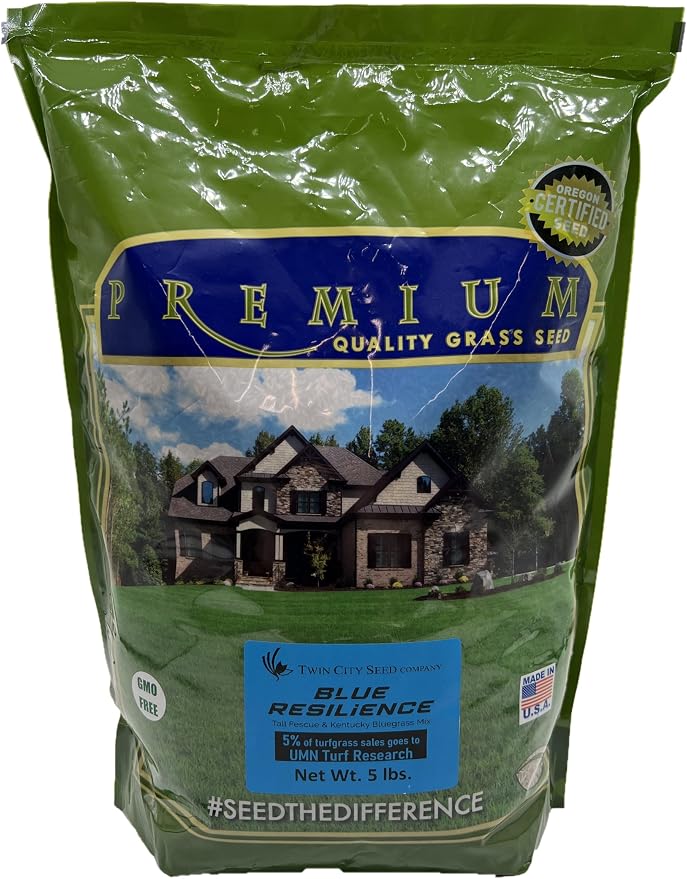
Perfect for lawns dealing with foot traffic and varying shade, this seed mix focuses on durability and recovery. It suits anyone wanting a dark, fine-textured turf that can self-repair and handle drought without demanding constant watering.
Its biggest strength lies in combining tall fescues with rhizomes to bounce back quickly.
Starting a lawn with this mix involves watering regularly until the seedlings establish, usually in under two weeks. It grows well in full sun or shady spots and tolerates different soil types. Mowing at 2 to 4 inches keeps the lawn healthy without stressing the grass, and its drought tolerance means less worry during dry spells.
Grass from this seed shows resilience by recovering swiftly from wear and tear. The fine leaf texture and rich dark green appearance create an attractive lawn that handles summer heat and colder winters alike. While most appreciate how fast it comes up and repairs itself, some note that germination needs ideal conditions to hit the 5-10 day range.
Many find that the seed mixture grows quickly and recovers well after lawn traffic, creating a dense and attractive turf. A common downside is needing consistent moisture during the germination period to get the best results within 5 to 10 days.
Those looking for a lawn that can handle heavy use and varying light conditions will appreciate this blend. People aiming for instant germination success or with very dry soil might want to explore alternatives better suited to less ideal starting environments.
Pros
- Self-repairing thanks to rhizomes
- Good performance in sun or shade
- Strong drought tolerance
- Dark color and fine leaf texture
Cons
- Requires watering until seedlings establish
- Germination depends on ideal conditions
| Specification | Details |
|---|---|
| Sunlight Exposure | Full sun to shade |
| USDA Hardiness Zone | 3-8 |
| Mown Height | 2-4 inches |
| Germination Time | 5-10 days |
| Seed Coverage for New Lawn | 7-9 lbs per 1000 sq ft |
| Drought Tolerance | Excellent |
14. Blue Eagle Kentucky Bluegrass Seed

Patchy, thin lawns can be frustrating when you want a green, inviting yard. Blue Eagle Kentucky Bluegrass Seed suits anyone looking to repair or establish a resilient, blue-green lawn in cooler climates.
Its main strength lies in producing a dense, attractive turf that stays healthy with moderate care.
Setting up involves spreading the seed during spring or fall on any soil type, ensuring consistent moisture to encourage germination. It thrives in partial shade, making it versatile for yards with trees or buildings that limit sunlight. Regular watering during early growth helps the grass build durability against foot traffic and pests.
The grass grows to about 6 inches and adapts well across USDA zones 3 through 10. It resists pests and shade better than many alternatives, while remaining low maintenance and pet friendly.
Most people find the seed germinates reliably when moisture is maintained, yet some might find it demanding on watering during the initial stage.
Strong germination occurs when the soil stays moist, creating dense, long-lasting turf. Complaints often focus on the need for regular watering at the start, which can be a drawback in drier conditions. The grass is pet friendly and handles shaded areas well compared to other varieties.
Those wanting a cool-season lawn with moderate upkeep will be satisfied, especially in northern regions. Lawns in very hot, dry climates might find a different seed better suited to those conditions. It fits best where some shade and regular moisture are present.
Pros
- Fine-textured turf with appealing blue-green color
- Handles shade better than typical bluegrass
- Low maintenance and pest resistant
- Suitable for repairing or overseeding lawns
Cons
- Needs consistent moisture during early growth
- Mostly suited for cooler climates only
| Specification | Details |
|---|---|
| Expected Plant Height | 6 inches |
| Sunlight Exposure | Partial Shade |
| Expected Planting Period | Spring, Fall |
| USDA Hardiness Zone | 3, 4, 5, 6, 7, 8, 9, 10 |
| Soil Type | All Soil Types |
| Moisture Needs | Regular Watering |
15. Barenbrug Kentucky Bluegrass Seed

High Germination Rate makes Barenbrug Kentucky Bluegrass Seed ideal for those wanting a dense, green lawn in sunny to moderately shaded areas. It suits gardeners prepared to care for loam soil and moderate watering routines.
Its biggest strength is reliability in sprouting healthy bluegrass during winter planting.
Preparing the soil involves ensuring it’s loam, consistent with the seed’s preference. Sowing in winter is key to successful growth. The seed thrives under full sun but tolerates some moderate shade, fitting many yard conditions.
Managing moderate watering helps maintain a healthy lawn without overdoing moisture, keeping the grass lush as it establishes.
Growth quality stands out with the seed’s high germination rate, resulting in a thick and vibrant grassy area. The product comes in a 7Lb bag, making it manageable for personal lawn sizes.
Reviews praise its reliable seed quality, though some find it best suited for specific soils and sunlight, requiring attention to its needs.
Reports commonly highlight the seed’s high germination rate resulting in a lush and healthy bluegrass lawn when planted in appropriate conditions. The main drawback noted is the seed’s specific soil and seasonal planting requirements, which can limit options for less ideal environments.
Gardeners with loam soil and winter planting ability will appreciate the reliable growth and consistent results. Those with different soil types or seeking more flexible planting times might want to consider alternatives better suited to their climate and land.
Pros
- High germination rate ensures thick lawn
- Suitable for full sun to moderate shade areas
- 7Lb bag size practical for home use
- Prefers moderate watering, not demanding
Cons
- Requires loam soil for best results
- Winter planting limits seasonal flexibility
| Specification | Details |
|---|---|
| Seed Type | 100% quality Kentucky Bluegrass |
| Sunlight Exposure | Full Sun |
| Expected Planting Period | Winter |
| Soil Type | Loam Soil |
| Moisture Needs | Moderate Watering |
| Bag Weight | 7Lb |
Best Bluegrass Seeds Compared Side by Side
| Product | Usage | Sunlight Exposure | Moisture Needs | USDA Hardiness Zone |
|---|---|---|---|---|
| Pennington Smart Seed Bluegrass | Outdoor | 4-6 Hours | Regular Watering | 1,3,4,5,6,7 |
| Jonathan Green Blue Panther | Outdoor | Partial Sun | Regular Watering | – |
| Outsidepride Midnight Bluegrass | Outdoor | Full Sun | Moderate Watering | 3 |
| GreenView Pure Bluegrass Blend | Outdoor | Partial Shade | Regular Watering | – |
| Pennington Kentucky 31 Tall Fescue | Outdoor | 4-8 Hours | – | 1,2,3,4,5,6,7,8 |
| Jonathan Green Black Beauty Ultra | Outdoor | Partial Shade | Regular Watering | – |
| Scotts Turf Builder Bluegrass Mix | Outdoor | Full Sun | Regular Watering | – |
| Scotts Turf Builder Fall Mix | Outdoor | Full Sun | Keep soil moist | – |
| Outsidepride SPF-30 Bluegrass | Outdoor | Full Sun | Little To No Watering | 6 |
| Seeds2Go Kentucky Bluegrass | Outdoor | Full Sun | Moderate Watering | – |
| Generic Kentucky Bluegrass Seed | – | Full Sun, Partial Shade, Partial Sun | – | – |
| Jacklin Seed Heisman Mix | Outdoor | Full or Partial Sun | Regular Watering | – |
| Blue Resilience Grass Seed | – | Full sun to shade | – | 3-8 |
| Blue Eagle Kentucky Bluegrass | Outdoor | Partial Shade | – | 3,4,5,6,7,8,9,10 |
| Barenbrug Kentucky Bluegrass | – | Full Sun | Moderate Watering | – |
- UsageOutdoor
- Sunlight Exposure4-6 Hours
- Moisture NeedsRegular Watering
- USDA Hardiness Zone1,3,4,5,6,7
- UsageOutdoor
- Sunlight ExposurePartial Sun
- Moisture NeedsRegular Watering
- USDA Hardiness Zone–
- UsageOutdoor
- Sunlight ExposureFull Sun
- Moisture NeedsModerate Watering
- USDA Hardiness Zone3
- UsageOutdoor
- Sunlight ExposurePartial Shade
- Moisture NeedsRegular Watering
- USDA Hardiness Zone–
- UsageOutdoor
- Sunlight Exposure4-8 Hours
- Moisture Needs–
- USDA Hardiness Zone1,2,3,4,5,6,7,8
- UsageOutdoor
- Sunlight ExposurePartial Shade
- Moisture NeedsRegular Watering
- USDA Hardiness Zone–
- UsageOutdoor
- Sunlight ExposureFull Sun
- Moisture NeedsRegular Watering
- USDA Hardiness Zone–
- UsageOutdoor
- Sunlight ExposureFull Sun
- Moisture NeedsKeep soil moist
- USDA Hardiness Zone–
- UsageOutdoor
- Sunlight ExposureFull Sun
- Moisture NeedsLittle To No Watering
- USDA Hardiness Zone6
- UsageOutdoor
- Sunlight ExposureFull Sun
- Moisture NeedsModerate Watering
- USDA Hardiness Zone–
- Usage–
- Sunlight ExposureFull Sun, Partial Shade, Partial Sun
- Moisture Needs–
- USDA Hardiness Zone–
- UsageOutdoor
- Sunlight ExposureFull or Partial Sun
- Moisture NeedsRegular Watering
- USDA Hardiness Zone–
- Usage–
- Sunlight ExposureFull sun to shade
- Moisture Needs–
- USDA Hardiness Zone3-8
- UsageOutdoor
- Sunlight ExposurePartial Shade
- Moisture Needs–
- USDA Hardiness Zone3,4,5,6,7,8,9,10
- Usage–
- Sunlight ExposureFull Sun
- Moisture NeedsModerate Watering
- USDA Hardiness Zone–
How to Choose the Right Bluegrass Seed
Selecting bluegrass seed involves considering climate compatibility, soil type, and intended lawn use to ensure healthy growth and durability. Choosing the right seed reduces the need for excess watering, fertilizing, or reseeding, ultimately saving money and preventing future lawn problems.
Seed Purity and Germination Rate
Some seed bags include a lot of filler, weed seeds, chaff, or other debris, that can seriously slow down the process of growing a dense, healthy lawn. A bag with high purity means fewer unwanted plants cropping up, which saves time and effort on upkeep. The percentage number on germination rates gives a real clue about how many seeds will actually sprout; a higher figure means less waste and a thicker, more reliable lawn.
Certified seed grades offer an extra level of trust. They go through testing to confirm quality, which reduces the chance of buying poorly sorted blends. Look for purity above 90 percent and germination rates greater than 80 percent for good everyday results.
Seed Blend and Variety
Choosing the right match for your soil and climate makes a noticeable difference over the seasons. Some blends focus on varieties that survive drought well, good for dry summers, while others highlight shade tolerance to keep things green under trees.
Understanding which mix fits your yard’s conditions affects how much maintenance you’ll need later.
Seasonal growth patterns also matter. Some varieties grow quickly then slow down, while others maintain steady growth, which influences mowing schedules and water needs. Think about combining drought-resistant types with those suited for shady spots to cover various problems.
These factors define how balanced the lawn looks throughout the year.
Seed Quantity and Coverage
Seed quantity is often overlooked until you run out halfway through seeding. Bags vary widely in size, from small packets to bulk options, so consider your lawn’s square footage carefully.
The recommended seeding rate printed on the packaging guides how much you’ll need to get uniform coverage without patches.
It’s important to get enough seed without overspending on excess. For a typical lawn, rates range from 1 to 3 pounds per 1,000 square feet depending on the blend and intended lawn density. Choosing an appropriate bag size avoids having leftover seed that loses viability over time.
Disease and Pest Resistance
Some standard lawn grasses can fall victim to fungal diseases or insect attacks that damage the turf quickly. Seeds bred for resistance against common problems like rust or dollar spot reduce the chance of brown patches and unsightly wear.
This resistance eases long-term maintenance and lowers the need for chemical treatments.
Pest-resistant traits help keep the grass healthier without constant intervention. Resistant varieties keep the turf intact even under stress, meaning fewer replacements and quicker recovery.
Over time, this translates to a thicker lawn that withstands typical garden pests and diseases better than unselected seed.
Establishment Speed and Maintenance
The speed at which seeds sprout and fill in determines how soon you can relax and enjoy your lawn instead of worrying about bare spots. Seeds that establish quickly mean less risk of erosion and weeds taking over initially.
Pay attention to the germination timeline on the package, it can vary from a week to several weeks for a full cover.
Maintenance requirements differ widely too. Some varieties need frequent mowing because they grow faster or taller, while others thrive with minimal watering once established.
Choose seeds that align with how much time you want to spend on lawn care. Selecting adaptable types fits your routine better and keeps the grass healthier overall.
Optimal Soil Preparation and Seeding Techniques for Bluegrass
Bluegrass thrives best when the soil is well-prepared. Start by testing the soil’s pH to ensure it falls between 6.0 and 7.0, which supports healthy growth.
Removing weeds and debris beforehand helps reduce competition for nutrients and water. Loosening the soil to a depth of 4–6 inches allows bluegrass roots to establish properly. For seeding, spread the seeds evenly to avoid bare spots and overcrowding.
Use a seed spreader or hand broadcasting, followed by light raking to cover seeds with a thin soil layer, this promotes good seed-to-soil contact. After planting, it’s vital to water consistently but avoid overwatering that can cause seed rot.
Aim for moist soil until seedlings are well-rooted, which usually takes about two weeks under ideal conditions. Regular monitoring during this period ensures adjustments can be made, promoting uniform growth and a healthier lawn.
Comparing Bluegrass Seed Varieties for Different Climate Zones
Not all bluegrass varieties perform equally across different climates. Kentucky bluegrass is a common choice in cooler, northern regions due to its cold tolerance and ability to recover quickly from wear.
In transition zones, mixes that include drought-resistant strains, like tough bluegrass hybrids, handle heat and humidity better. Southern climates often require blends that include creeping bluegrass types, which withstand warmer temperatures and occasional dry periods.
When choosing bluegrass seed, consider:
- Climate adaptability: Select varieties suited for local temperature ranges and rainfall patterns.
- Disease resistance: Some cultivars resist common fungal issues better, reducing maintenance.
- Growth rate: Faster germinating seeds help establish lawns quicker in short growing seasons.
- Appearance: Some types have finer blades and denser growth, which may suit aesthetic preferences.
Matching the seed variety to the climate zone can improve lawn durability and reduce watering needs.
People Also Asked
How Do I Properly Care for Bluegrass Seed After Planting?
Keep the soil consistently moist after planting bluegrass seed by watering lightly once or twice daily until sprouts appear. Avoid heavy watering that can wash away seeds. After germination, reduce watering frequency gradually to strengthen roots.
What Is the Ideal Amount of Bluegrass Seed per Square Foot?
About 2 to 3 pounds of bluegrass seed per 1,000 square feet is a typical seeding rate. Spreading seed evenly avoids bare spots and clumping, which can create weak areas in the lawn. Filling in thin patches later is easier than overseeding too thickly.
Is Bluegrass Seed Safe for Pets and Children in Lawns?
Bluegrass lawns are generally safe for pets and children. It does not contain harmful chemicals, but bare soil or mud from watering can pose slipping risks. Keep pets away during initial growth to prevent damage from digging or running.
How Long Does Bluegrass Seed Typically Take to Fully Germinate?
Bluegrass seed usually takes 10 to 21 days to germinate under favorable conditions. Cooler soil temperatures slow germination, so planting in early fall or spring works best. Keep soil moist and avoid heavy foot traffic during this period to protect young sprouts.
What Common Problems Should I Watch for When Growing Bluegrass?
Watch for problems like weed invasion, fungal diseases, and drought stress with bluegrass. Overwatering can lead to mold or root rot, while under-watering weakens the grass. Proper mowing height and timely fertilizing help maintain healthy, dense growth.
Conclusion
Choosing the right bluegrass seed comes down to how quickly it grows, its durability under foot traffic, and how well it handles your local climate. You want seed that can germinate in your specific conditions and blend well with the existing lawn. Focusing on these factors helps ensure a healthier, more permanent lawn.
Pick a seed type that fits the size of your lawn and how much effort or money you want to invest. Smaller areas need less seed, while tougher locations might require more durable varieties.
Check the comparison table above to find the best fit for your needs based on growth rates, resilience, and cost.