Top 15 Best Fescue Seed for Lush, Green Lawns Today
Trying to grow a lawn with cheap or low-quality seed can lead to patchy grass that struggles through the season. The best fescue seed ensures a denser, more durable lawn that handles traffic and varying weather better than most other cool-season grasses. Choosing the wrong seed often results in slow germination, poor color, and thin blades that don’t hold up well to wear or drought.
The quality of fescue seed mainly depends on purity, germination rate, and seed size. A good batch typically has 90% purity or higher, ensuring you’re planting mostly the grass you want, not weed or other seeds.
Germination rates above 80% are common and important so the lawn fills in quickly. Seed size affects how deeply it can be planted and how fast it sprouts, with medium-sized seeds often striking the best balance for even growth and easy handling.
Need a Quick Check?
| Image | Product | Price |
|---|---|---|
Our Top Picks 1  | Pennington Kentucky 31 Fescue | Check Price |
Our Top Picks 2  | Scotts Turf Builder Fescue | Check Price |
Our Top Picks 3  | Pennington No Mow Fescue | Check Price |
Our Selected Top 15 Fescue Seed You Can Trust
This list features a variety of high-quality fescue seeds chosen for their growth performance and suitability for different lawn needs. Each review explains how the seed performs, highlights its advantages and drawbacks, and identifies the ideal user or environment for the product.
1. Pennington Kentucky 31 Tall Fescue Grass Seed
Known for its ability to handle both sun and shade, this grass seed suits those aiming for a resilient lawn in varying light conditions. Its standout feature is the thick, hardy blades that withstand hot summers and heavy rains better than many alternatives.
Planting the seed is straightforward, best done in spring with moderate watering to encourage growth. Seeing new grass sprout between 8 to 21 days offers a quick reward, covering up to 4,000 square feet helps with larger yards too.
It thrives in sandy soil and adapts easily to areas receiving 4 to 8 hours of sun daily.
The grass stands up well to frequent foot traffic, making it a practical choice for families or people with pets. Growth reaches about 3 inches, growing dense and durable through the fall blooming period. Most praise focuses on its toughness and reliability, while the occasional complaint points to its moderate water needs requiring some attention.
Growth often impresses with quick results within three weeks and strong resistance to weather, but keeping the moisture consistent can be demanding. The seed’s resilience toward foot traffic and ability to grow dense grass are its biggest strengths.
Anyone looking for a dependable, hardy lawn seed that manages sun and shade will appreciate this choice. Those who prefer very tall lawns or require grass with lower water needs might want to look elsewhere.
Pros
- Thick blades stand up to harsh weather
- Fits both full sun and medium shade spots
- Covers large lawn areas up to 4,000 sq. ft.
- Quick sprouting from seed to grass
Cons
- Needs consistent moderate watering to thrive
- Growth limited to about 3 inches height
| Specification | Details |
|---|---|
| Sunlight Exposure | 4-8 Hours of Sun |
| Expected Plant Height | 3 inches |
| Soil Type | Sandy Soil |
| Moisture Needs | Moderate Watering |
| Expected Blooming Period | Fall |
| Expected Planting Period | Spring |
2. Scotts Turf Builder Tall Fescue Grass Seed
Scotts Turf Builder Tall Fescue Grass Seed suits anyone looking to grow a durable lawn that stands up to tough conditions. It shines most in its ability to promote strong root growth, combining seed and fertilizer in one mix for a convenient solution that helps establish a thick, green lawn.
Getting started involves planting the seed in spring or fall when temperatures stay between 65°F and 85°F. It prefers full sun to moderate shade and needs loam soil with moderate watering to thrive. The built-in soil improver and fertilizer mean the lawn establishes deep roots, making daily care about consistent watering and occasional mowing once the grass grows in fully.
The grass seed excels at creating a resilient lawn that can tolerate drought, maintaining green hues through spring and beyond. Its triple-action formulation means less fuss over separate fertilizing or soil treatment.
The most common downside is needing moderate watering to keep the grass healthy, which might challenge those in very dry regions.
Strong root development combined with integrated fertilizer helps build a lawn that’s resistant to harsh conditions, though the need for moderate watering is a common limitation. It’s ideal for those ready to provide consistent care during its establishment.
Gardeners aiming for a tough, green lawn in the right climate will find this seed mix rewarding. People facing severe drought without irrigation options should explore other drought-proof grass types.
Pros
- Includes fertilizer and soil improver
- Promotes strong, deep root growth
- Drought tolerant once established
- Works well in full sun to moderate shade
Cons
- Requires moderate watering for best results
- Best planted only during specific temperature range
| Specification | Details |
|---|---|
| Sunlight Exposure | Full Sun |
| Expected Planting Period | Spring |
| Soil Type | Loam Soil |
| Moisture Needs | Moderate Watering |
| Indoor/Outdoor Usage | Outdoor |
| Special Features | Drought Tolerant |
3. Pennington No Mow Fescue Grass Seed
Growing up to 12 inches and then settling down to about 6 inches, Pennington No Mow Fescue Grass Seed suits anyone wanting a lush lawn without frequent mowing. Its biggest strength lies in creating a naturally low-maintenance grass area that looks good on slopes, hills, or typical lawns.
Set up involves prepping the soil, spreading seeds evenly using a grass seed spreader, and keeping the area watered regularly. Regular watering helps the grass grow uniformly from spring to fall, needing about 4-6 hours of sunlight daily.
Once established, this seed mix thrives outdoors across a wide range of hardiness zones, making it practical for many garden types.
Performance is solid with consistent coverage across uneven or erosion-prone areas, and the grass’s drought tolerance adds to its resilience. Its build as a no-mow seed mix reduces yard work significantly and supports sustainable lawn care.
The most appreciated feature is its low maintenance, while some point out it needs regular watering to look its best.
Pennington No Mow Fescue Grass Seed delivers a dependable, low-maintenance lawn that adapts well to slopes and erosion-prone areas. Most users value its drought tolerance and ease of upkeep, though some find the requirement for regular watering necessary to keep it looking good.
Gardeners looking for a natural, slow-growing lawn that cuts down on mowing will enjoy this seed. Those unable to provide consistent watering or preferring a faster-growing turf might want to explore other options.
Pros
- Low-maintenance with natural no-mow height
- Drought tolerant for dry or tough spots
- Great for hills and erosion-prone areas
- Works outdoors in all USDA zones 1-12
Cons
- Needs regular watering to maintain growth
- Best planted in fall for optimal results
| Specification | Details |
|---|---|
| Expected Plant Height | 12 inches |
| Sunlight Exposure | 4-6 Hours of Sun Per Day |
| Expected Blooming Period | Spring to Fall |
| Expected Planting Period | Fall |
| USDA Hardiness Zone | 1-12 |
| Moisture Needs | Regular Watering |
4. Outsidepride Legacy Fine Fescue Grass Seed Mix

Outsidepride Legacy Fine Fescue Grass Seed Mix suits homeowners and property managers wanting a fine-textured lawn that grows well in both sun and shade. Its biggest strength is the blend of hard, chewings, and creeping red fescue varieties designed for a northern or southern lawn.
Planting works best in spring by spreading the pure raw seed on loam soil that receives partial sun. Moderate watering is necessary to keep the seeds moist during germination and early growth, while its tolerance for a range of sunlight levels makes upkeep manageable in varying shaded areas.
Growth produces a lush, dense turf that feels fine and soft underfoot. It handles outdoor conditions in USDA zone 3 with moderate watering.
Several reviews mention the pure seed quality with no fillers, but some note that germination takes patience and regular watering before the lawn thickens.
The seed mix is appreciated for its purity, free from weed contamination, producing a fine turf that handles shade and sun well. The main drawback is needing consistent watering and time before the grass fully fills in as expected.
Anyone looking for a fine fescue mix that can grow in shaded or sunny areas in cooler zones will find this helpful. Those needing rapid growth or indoor planting alternatives will want to consider other options.
Pros
- Pure seed with no fillers or weed seeds
- Suitable for full sun to dense shade
- Fine-textured turf mix for northern and southern lawns
- Moderate watering keeps it thriving
Cons
- Germination requires patience and steady moisture
- Limited to outdoor use only
| Specification | Details |
|---|---|
| Sunlight Exposure | Partial Sun |
| Moisture Needs | Moderate Watering |
| Expected Planting Period | Spring |
| USDA Hardiness Zone | 3 |
| Soil Type | Loam Soil |
| Indoor Outdoor Usage | Outdoor |
5. Pennington the Rebels Tall Fescue Grass Seed

Coated seed designed for resilience, Pennington The Rebels Tall Fescue Grass Seed suits anyone needing a tough, durable lawn that keeps its color. Its main strength is deep, dense roots that support growth even in difficult conditions, making it a solid choice for various soil types and light levels.
Planting is best done in spring, requiring about 4 to 6 hours of sunlight daily and regular watering. Growth appears fairly quickly, visible in 8 to 16 days. The seed thrives outdoors and can manage traffic, heat, and pests well, reducing the time and effort needed for ongoing care.
Performance-wise, the grass creates a darker, greener, and thicker lawn compared to other tall fescues, especially Kentucky-31. Its construction, with deep roots and a dense profile, means it stands up well under heavy wear. Some users mention it needs consistent watering to maintain its vibrant look, which is the main drawback noted.
Most people notice how fast the grass grows and how thick the lawn gets, thanks to its strong roots. A common issue is the need for steady watering, which can be demanding for areas prone to drought or limited irrigation.
Gardeners wanting a green lawn that endures traffic and varied light will find this seed a good match. Those looking for low-water options or extremely fast-growing grass might want to explore other types better suited to those needs.
Pros
- Thrives in partial shade to full sun
- Dense roots support tough conditions
- Darker and greener than many tall fescues
- Handles heavy traffic and drought well
Cons
- Needs consistent watering to stay healthy
- Growth speed might vary between 8 to 16 days
| Specification | Details |
|---|---|
| Sunlight Exposure | 4-6 Hours of Sun |
| Expected Blooming Period | Spring |
| Moisture Needs | Regular Watering |
| Expected Plant Height | 3 inches |
| USDA Hardiness Zone | 1-8 |
6. Envy Turf Type Tall Fescue Grass Seed

Deep green color stands out right away and suits anyone looking for a lawn that stays vibrant and healthy. Best for outdoor spaces under full sun that need a tough, disease-resistant turf with good drought tolerance.
Sprinkling the seed evenly is straightforward, with a high germination rate that gets things growing quickly. Regular watering keeps it thriving, and it handles shade better than many other fescues.
Low maintenance means less time worrying about disease or patchiness, even under heavy foot traffic thanks to its excellent wear tolerance.
It performs strongly in producing dense, uniform grass that looks neat and lasts through tough conditions. The mixture’s disease resistance and drought tolerance make a real difference during dry spells or in shady spots.
Most praises highlight how quickly the lawn fills in, while the main downside is that it needs consistent watering to reach its full potential.
The seed mixture quickly produces a dense, deep green lawn that resists disease and stands up well to wear. The most frequently mentioned downside is the need for regular watering to keep the turf vibrant and healthy.
Those wanting a low-maintenance but visually appealing lawn under full sun will find this blend very satisfying. People with irregular watering schedules or seeking an indoor option should look elsewhere.
Pros
- Rich deep green color that lasts through seasons
- Strong disease resistance for healthier lawn
- Excellent drought tolerance under sustained dry conditions
- High germination rate for quick lawn coverage
Cons
- Needs regular watering to maintain lushness
- Non refundable and non returnable product
| Specification | Details |
|---|---|
| Indoor Outdoor Usage | Outdoor |
| Sunlight Exposure | Full Sun |
| Moisture Needs | Regular Watering |
| Shade Resistance | Yes |
| Seed Composition | Spyder 2LS 33.20%, Firecracker G-LS 33.55%, Titanium G-LS 31.65% |
| Weed/Crop Seed Content | 0% Weed Seed, 0% Crop Seed |
7. Scotts EZ Seed Patch & Repair Grass Seed

Great for patching bare spots in lawns, Scotts EZ Seed Patch & Repair Grass Seed suits anyone looking to fix damage without redoing the entire yard. Its biggest strength lies in combining Kentucky bluegrass, perennial ryegrass, and fine fescue seeds to work in both sun and shade.
Applying the seed mix involves just three steps: prepping the bare area, spreading the seed evenly, and watering until the ground stops soaking up water. Ideal when temperatures are between 60°F and 80°F with no frost risk, this product takes care of patches up to 85 square feet in size without much fuss.
The seed mix performs well for its intended purpose, quickly filling in bare spots and surviving in shaded or sunny areas. The combination mulch and fertilizer help maintain growth, and the product comes in a 3.75 lb jug that’s easy to handle. The most common problem noted is that coverage only extends to about 85 sq.
ft., limiting use for larger yard repairs.
Mixing Kentucky bluegrass, perennial ryegrass, and fine fescue makes the seed adaptable to various lawn conditions, with mulch and fertilizer boosting growth. Users appreciate how well it patches bare spots, though some find its coverage limiting, especially for larger lawn areas.
Anyone repairing small to medium bare patches in moderate temperatures will find this seed mix practical and easy to apply. Those needing to reseed large lawns or work in cooler or hotter climates might prefer other options that offer broader coverage or better temperature flexibility.
Pros
- Covers bare spots in sun or shade
- Combination of three grass seed types
- Includes mulch and fertilizer
- Easy three-step application
Cons
- Only covers up to 85 sq. ft.
- Best used in specific temperature range
| Specification | Details |
|---|---|
| Brand | Scotts |
| Unit Count | 64 Ounce |
| Coverage | Up to 85 sq. ft. |
| Seed Mix | Kentucky bluegrass, perennial ryegrass, fine fescue |
| Application Temperature | 60°F to 80°F, no frost |
8. Jonathan Green Black Beauty Tall Fescue Grass Seed

Keeping a lawn green and healthy even during dry spells can be a real challenge. Jonathan Green Black Beauty Tall Fescue Grass Seed is great for folks wanting a durable lawn that handles drought well.
Its ability to develop really deep roots makes it especially suited to those dealing with hot, dry summers.
Planting this grass seed involves picking a spot with at least 5 hours of sunlight a day, whether it’s mostly sun or partly shady. Make sure the soil stays moist while the seeds are germinating, especially if you plant between mid-March to mid-May or mid-August to mid-October.
This tall fescue blend avoids shredding when mown, so you won’t have to worry about uneven turf texture after cutting.
It does a solid job of growing thick, dark green grass that’s uniform in texture and can handle tough conditions. The roots reach pretty deep, which really helps in droughts, and the waxy leaf coating helps keep moisture inside.
Most praise focuses on how well it stands up to dry weather, while some mention that it needs consistent watering during germination to get started properly.
Grass grown from this seed stays green in dry weather thanks to roots that grow up to 4 feet deep and leaves that retain moisture. People often find that the seed demands extra attention with watering while it’s getting started to ensure good germination. Without that, the lawn may struggle at first.
Anyone living in areas with hot summers and some shade will appreciate how this grass holds up. Those who want to plant outside the recommended periods or want something less sensitive during germination might want to consider other options.
Pros
- Deep roots for superior drought tolerance
- Performs well in both sunny and shady spots
- Dark green, uniform leaf texture
- Does not shred after mowing
Cons
- Needs regular watering during germination
- Limited to specific planting periods
| Specification | Details |
|---|---|
| Sunlight Exposure | 5+ hours of sunlight per day |
| Moisture Needs | Keep Moist During Germination |
| Expected Planting Period | Mid-March to Mid-May, Mid-August to Mid-October |
| Indoor Outdoor Usage | Outdoor |
| Drought Tolerant | Yes |
9. Pennington Smart Seed Sun & Shade Tall Fescue

Pennington Smart Seed Sun & Shade Tall Fescue offers a grass seed and fertilizer mix tailored for lawns with 4 to 6 hours of sun exposure. Its biggest strength is handling both sunny and moderately shaded areas, making it a solid choice for southern lawns that face warm and humid conditions.
Planting during spring is straightforward since the mix already contains the right fertilizer, reducing extra steps. You’ll notice it grows best with moderate watering, fitting well in areas with some sun but also shade. It’s designed to thrive in hot climates, so daily maintenance mainly involves keeping the moisture consistent without overwatering.
Growth starts showing within 8 to 21 days, which is reasonably quick for grass seed. This tall fescue holds up well against heat and humidity, maintaining a healthy lawn through tough weather.
The seed’s dual-function as fertilizer means your lawn doesn’t need much help outside typical watering. Some users mention the grass height maxes out around 3 inches, which might not suit those wanting a taller yard.
It performs well in harsh southern conditions, supporting fast germination thanks to the integrated fertilizer mix. Common feedback points out the grass stays relatively short, which may not fit all lawn preferences. It’s built for reliable lawn growth rather than tall or thick grass.
People with lawns that get a mix of sun and shade and need heat-resistant grass will appreciate this seed. Lawns with less consistent watering or those wanting taller grass might prefer alternate seed options that suit their exact needs better.
Pros
- Contains fertilizer for easier lawn care
- Thrives in hot, humid southern climates
- Suitable for sun and moderate shade areas
- Shows growth within 8 to 21 days
Cons
- Maximum grass height is only about 3 inches
- Requires moderate watering; not drought-tolerant
| Specification | Details |
|---|---|
| Sunlight Exposure | 4-6 Hours |
| Expected Plant Height | 3 inches |
| Moisture Needs | Moderate Watering |
| Expected Blooming Period | Spring |
| USDA Hardiness Zone | 12, 5, 8 |
10. X-Seed Oregon Grown Kentucky 31 Tall Fescue Grass Seed

Gardeners looking to establish a durable cool-season lawn in both sunny and shady areas will find this seed worth considering. Its key strength lies in a moisture coating that helps seeds absorb water quickly, encouraging faster germination and fuller grass coverage, perfect for varied southern and central US climates.
Preparing the soil and spreading these moisture-coated seeds is straightforward. They work well from spring through fall and require moderate watering to keep them healthy. The ability to handle both sun and shade allows flexibility in where you can plant, making it practical for high-traffic lawns or spots that get less sun throughout the day.
Performance-wise, the seed delivers consistent dense turf, with good tolerance for heat and drought, lasting through changing seasons. The build of the seed coating ensures rapid growth but some users note a need for close attention to watering early on.
Durability stands out, but occasional thinning in extreme dry spells has been remarked upon.
Seeds coated for moisture absorption help kickstart germination and support a thick lawn. Some note the grass requires careful watering during establishment to avoid thinning. Heat and drought resistance hold up well once mature, maintaining coverage through seasonal changes.
A good fit for home lawns exposed to mixed sunlight and modest watering schedules. Those expecting a fully drought-proof grass in harsher dry climates might want to consider other varieties better suited for extremely dry conditions.
Pros
- High germination rate ensures quick start
- Moisture coating aids water retention
- Tolerant to heat and drought stress
- Works well in sun or shade
Cons
- Needs attentive moderate watering early on
- May thin out in prolonged dry conditions
| Specification | Details |
|---|---|
| Indoor Outdoor Usage | Outdoor |
| Expected Blooming Period | Spring to Fall |
| Sunlight Exposure | Partial Shade |
| Expected Planting Period | Spring to Fall |
| Expected Plant Height | 4 inches |
| Moisture Needs | Moderate Watering |
11. Pennington Smart Seed Sun & Shade Tall Fescue
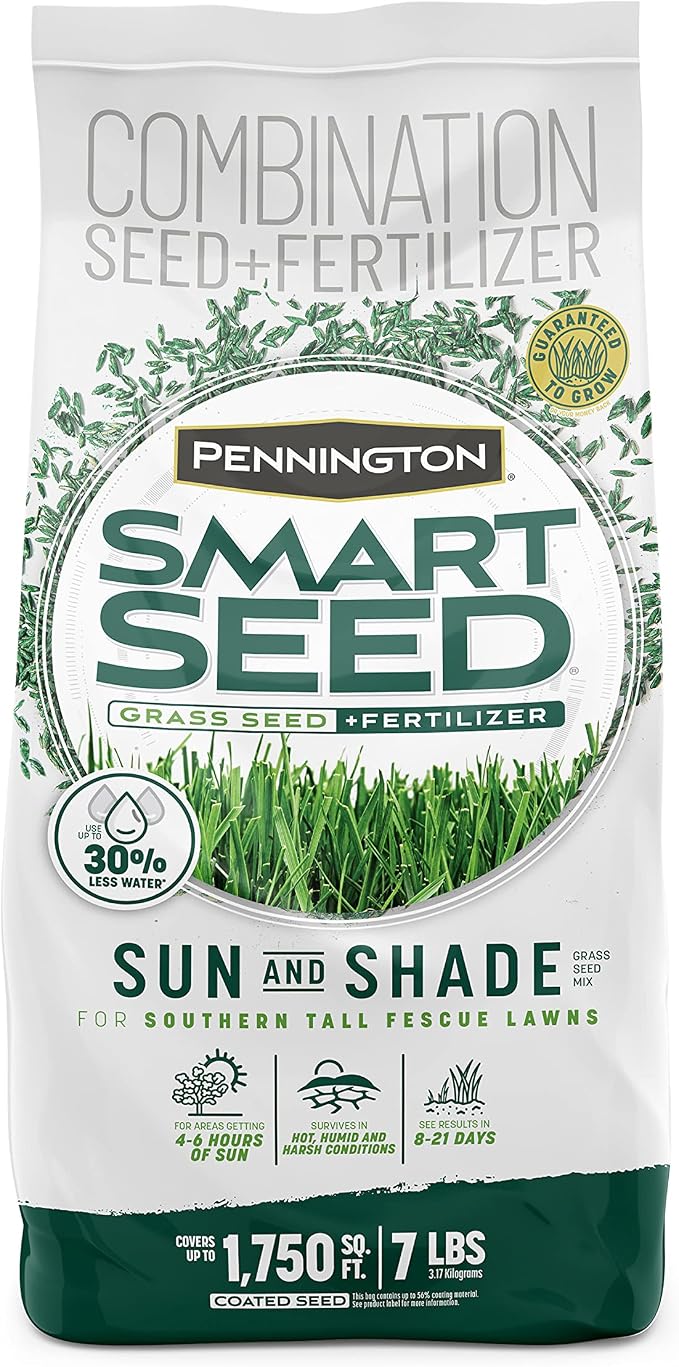
Pennington Smart Seed Sun & Shade Tall Fescue is designed for lawns that get both sun and moderate shade, especially suited for southern climates. Its main strength lies in combining grass seed with fertilizer, which supports lawn growth even in hot, humid, and tough conditions.
Planting requires moderate watering and works best during spring. The seed mix thrives on lawns receiving 4 to 6 hours of sunlight daily, balancing sun and shade needs.
It stands out by helping you save up to 30% more water compared to ordinary grass seed. Watching the lawn start to grow can take between 8 and 21 days, so patience is key.
The grass grows to about 3 inches, maintaining a healthy look in challenging climates within USDA zones 5, 8, and 12. It handles the southern heat and humidity quite well, making it a solid choice for those environments.
The fertilizer in the mix gives the lawn a good boost, but some note it needs consistent watering during establishment. Generally, it performs reliably for those conditions.
Grows reliably in challenging southern climates and helps reduce water use by up to 30%. Common complaints focus on needing steady watering early on to establish well. Growth appears between 8 and 21 days, which requires some patience.
Best suited for lawns in zones 5, 8, and 12 with a mix of sun and shade. Lawns in full shade or needing less maintenance might benefit from other seed types more adapted to those conditions.
Pros
- Saves up to 30% more water than regular seed
- Includes fertilizer for better lawn success
- Thrives in hot, humid southern conditions
- Grows well with a mix of sun and shade
Cons
- Needs consistent watering during early growth
- Limited to areas with 4 to 6 hours of sunlight
| Specification | Details |
|---|---|
| Sunlight Exposure | 4-6 Hours |
| Expected Plant Height | 3 inches |
| Moisture Needs | Moderate Watering |
| USDA Hardiness Zone | 5, 8, 12 |
| Expected Blooming Period | Spring |
12. Turf Type Tall Fescue Grass Seed

Turf Type Tall Fescue Grass Seed is designed for lawns that need durability and a rich, green appearance. Perfect for active families or areas with a lot of foot traffic, its standout feature is drought tolerance paired with a vibrant, lasting green color that keeps your yard looking fresh through changing seasons.
Planting is recommended during winter, and the seed thrives both in full sun and partial shade conditions. Its deep root system helps maintain the lawn’s health during dry spells, which makes daily lawn care easier by reducing the need for constant watering.
The grass adapts well to typical yard environments, handling wear without losing its color or density.
Performance-wise, it holds up impressively against heavy use, thanks to its tough root system. The deep green shade remains consistent throughout the year, making for an inviting lawn. Most appreciate its drought resilience, while some note it can take a bit longer than other types to fully establish in cooler climates.
Durability and rich green color are top features that make this blend stand out, but it needs patience to see full growth especially when planted outside recommended seasons. Users appreciate its drought tolerance and wear resistance as practical benefits for everyday lawn use.
Those with busy yards or areas prone to dry spells will find this blend especially fitting. Lawns in very cold or shady regions may want to consider other seed varieties that establish faster or better in less sunlight.
Pros
- Deep green color stays vibrant year-round
- Highly drought tolerant with deep roots
- Handles heavy foot traffic well
- Suitable for a mix of sun and shade
Cons
- Slower to establish in cooler climates
- Best performance requires winter planting
| Specification | Details |
|---|---|
| Expected Blooming Period | Winter |
| Sunlight Exposure | Full Sun, Partial Shade, Partial Sun |
| Expected Planting Period | Winter |
13. Eretz Kentucky 31 Tall Fescue Grass Seed

Strong and reliable grass that stands up well to everyday wear and tear. Perfect for anyone needing a tough turf that handles foot traffic and varying weather without losing its green appeal. Its biggest strength lies in its durability and drought tolerance, making it easy to maintain in less-than-ideal conditions.
Getting the seed down is straightforward, especially since it can thrive in full sun, partial sun, or even some shade. Regular watering helps keep the grass healthy, and it recovers quickly from damage caused by people, animals, or vehicles.
Its hardy nature means you don’t need to fuss over it too much, which suits outdoor areas like barns, lanes, or pastures.
The seed grows into dense, durable grass that holds up well with continuous use, making it excellent turf for high-traffic spots. It’s built to endure droughts and abuse from animals or machinery.
One strong point mentioned is its reliability and purity as a certified seed, ensuring you’re getting quality grass. Some users note that it needs regular watering for best results, so dry periods without irrigation can be a challenge.
Durability and drought tolerance stand out as the strongest benefits. Many find it excellent for tough environments like barnyards or sodded driveways, but it does require steady watering to stay green and healthy. Its certified purity guarantees dependable growth without unwanted weeds.
Great for those wanting a hardy grass that takes a beating and recovers well. Those facing long dry periods without access to regular watering may want to look for a lower-maintenance option.
Pros
- Highly durable under foot and animal traffic
- Performs well in varied sunlight conditions
- Certified seed ensures quality and purity
- Drought tolerant for easier maintenance
Cons
- Needs regular watering for best growth
- May struggle in prolonged dry spells without irrigation
| Specification | Details |
|---|---|
| Durability | Extremely durable and hardy |
| Drought Tolerance | Drought tolerant |
| Sunlight Exposure | Full Sun, Partial Shade, Partial Sun |
| Moisture Needs | Regular Watering |
| Seed Purity | At least 98% pure seed, less than 2% inert matter |
14. Pennington the Rebels Sun and Shade Grass Seed

Strong and adaptable, this seed mix suits lawns that face a mix of sun and shade. Ideal for anyone wanting a rich, green look with less fuss, its biggest benefit is thriving under tough conditions, making it reliable in various environments.
Planting requires 4 to 6 hours of sunlight daily and regular watering. It grows from spring through fall, reaching about 3 inches tall.
Seed coating aids in planting and germination, with visible growth starting between 8 and 21 days. Takes well to different soils, whether in partial shade or full sun, making it simple to fit into many yard setups.
Designed with deep, dense roots, the grass holds up well against heat, drought, heavy foot traffic, and insects. It produces a thicker, darker lawn compared to other tall fescues.
Most users note its toughness and lush appearance, though some find the watering demands higher than expected during dry spells.
The grass seed produces a noticeably thicker and greener lawn that can tolerate heavy traffic and drought better than many alternatives. However, consistent watering is important, especially in drier conditions, to keep it looking its best.
Gardeners looking for a durable lawn that thrives in both sun and shade will appreciate how well this seed performs. Anyone with very shaded yards or who wants minimal watering might look for another option.
Pros
- Thick, deep, and dense root system
- Thrives in sun and shade
- Withstands heat, drought, and traffic
- Soon visible growth in 8 to 21 days
Cons
- Needs regular watering to stay healthy
- Not ideal for areas with less than 4 hours sun
| Specification | Details |
|---|---|
| Sunlight Exposure | 4-6 Hours of Sun Per Day |
| Expected Plant Height | 3 inches |
| Expected Blooming Period | Spring to Fall |
| Seed Treatment Method | Coated |
| Moisture Needs | Regular Watering |
15. Jonathan Green Full Sun Grass Seed

Made for full sun environments, Jonathan Green Full Sun Grass Seed focuses on heat and drought tolerance, making it a solid choice for areas with tough growing conditions. Ideal for those looking to cover sunny spots with resilient fescue, its biggest strength lies in handling dry, hot weather without constant care.
Using this grass seed involves spreading one of the two 1-pound bags across your lawn, which covers up to 850 square feet each when overseeding. Daily lawn care becomes a bit easier thanks to its natural insect resistance, cutting down the need for pesticides. Perfect for outdoor use, especially in places that get a lot of sun and occasional dry spells.
It performs well by establishing a hardy, green lawn that withstands heat better than many other fescue types. The product is consistent with good coverage and germination, but some reviews mention slow growth at the start.
The strongest praise is for its durable, drought-resistant turf, while the most noted complaint revolves around patience needed for full lawn establishment.
The grass seed creates a tough lawn that handles heat and drought well, praised for withstanding harsh outdoor conditions. A common issue is the slow establishment time, requiring some patience before the lawn fills in fully.
This seed works best for anyone needing a resilient lawn in sunny, dry climates who can wait for growth to develop. Those wanting quick lawn coverage or for shaded areas might want to consider other grass varieties.
Pros
- Good coverage for overseeding and new lawns
- Heat and drought tolerant grass seed
- Natural insect resistance reduces pest problems
- Suitable for outdoor full sun areas
Cons
- Slower initial growth reported by some users
- Limited to smaller lawn areas per bag
| Specification | Details |
|---|---|
| Indoor Outdoor Usage | Outdoor |
| Overseeding Coverage | Up to 850 sq. ft. per bag |
| New Lawns Coverage | Up to 425 sq. ft. per bag |
| Sunlight Exposure | Full Sun |
| Heat and Drought Tolerance | Yes |
| Insect Resistance | Natural |
Comparison of Top Rated Fescue Seeds
| Product | Sunlight Exposure | Planting Period | USDA Hardiness Zone | Special Features |
|---|---|---|---|---|
| Pennington Kentucky 31 Fescue | 4-8 Hours Sun | Spring | 1-8 | Kentucky 31 Tall Fescue |
| Scotts Turf Builder Fescue | Full Sun | Spring | – | Drought Tolerant |
| Pennington No Mow Fescue | 4-6 Hours Sun | Fall | 1-12 | No Mow Mix |
| Outsidepride Legacy Fine Fescue | Partial Sun | Spring | 3 | Seeds |
| Pennington The Rebels Fescue | 4-6 Hours Sun | Spring | 1-8 | Tall Fescue |
| Envy Turf Type Fescue | Full Sun | – | – | Disease & Drought Resistant |
| Scotts EZ Seed Repair | – | – | – | Sun & Shade Mix |
| Jonathan Green Black Beauty Fescue | 5+ Hours Sun | Mar-May, Aug-Oct | – | Drought Tolerant |
| Pennington Smart Seed Sun & | 4-6 Hours Sun | Spring | 5,8,12 | Sun & Shade Mix |
| X-Seed Oregon Kentucky 31 | Partial Shade | Spring-Fall | All | High Germination Rate |
| Pennington Smart Seed Fescue | 4-6 Hours Sun | Spring | 5,8,12 | Sun & Shade Mix |
| Turf Type Tall Fescue | Full Sun, Partial Shade | Winter | – | – |
| Eretz Kentucky 31 Fescue | Full Sun, Partial Shade | – | – | Durable |
| Pennington The Rebels Sun Shade | 4-6 Hours Sun | Spring | – | Sun & Shade Mix |
| Jonathan Green Full Sun Seed | Full Sun | Spring | – | Heat and Drought Tolerant |
- Sunlight Exposure4-8 Hours Sun
- Planting PeriodSpring
- USDA Hardiness Zone1-8
- Special FeaturesKentucky 31 Tall Fescue
- Sunlight ExposureFull Sun
- Planting PeriodSpring
- USDA Hardiness Zone–
- Special FeaturesDrought Tolerant
- Sunlight Exposure4-6 Hours Sun
- Planting PeriodFall
- USDA Hardiness Zone1-12
- Special FeaturesNo Mow Mix
- Sunlight ExposurePartial Sun
- Planting PeriodSpring
- USDA Hardiness Zone3
- Special FeaturesSeeds
- Sunlight Exposure4-6 Hours Sun
- Planting PeriodSpring
- USDA Hardiness Zone1-8
- Special FeaturesTall Fescue
- Sunlight ExposureFull Sun
- Planting Period–
- USDA Hardiness Zone–
- Special FeaturesDisease & Drought Resistant
- Sunlight Exposure–
- Planting Period–
- USDA Hardiness Zone–
- Special FeaturesSun & Shade Mix
- Sunlight Exposure5+ Hours Sun
- Planting PeriodMar-May, Aug-Oct
- USDA Hardiness Zone–
- Special FeaturesDrought Tolerant
- Sunlight Exposure4-6 Hours Sun
- Planting PeriodSpring
- USDA Hardiness Zone5,8,12
- Special FeaturesSun & Shade Mix
- Sunlight ExposurePartial Shade
- Planting PeriodSpring-Fall
- USDA Hardiness ZoneAll
- Special FeaturesHigh Germination Rate
- Sunlight Exposure4-6 Hours Sun
- Planting PeriodSpring
- USDA Hardiness Zone5,8,12
- Special FeaturesSun & Shade Mix
- Sunlight ExposureFull Sun, Partial Shade
- Planting PeriodWinter
- USDA Hardiness Zone–
- Special Features–
- Sunlight ExposureFull Sun, Partial Shade
- Planting Period–
- USDA Hardiness Zone–
- Special FeaturesDurable
- Sunlight Exposure4-6 Hours Sun
- Planting PeriodSpring
- USDA Hardiness Zone–
- Special FeaturesSun & Shade Mix
- Sunlight ExposureFull Sun
- Planting PeriodSpring
- USDA Hardiness Zone–
- Special FeaturesHeat and Drought Tolerant
How to Choose the Right Fescue Seed
Selecting the right fescue seed involves considering your climate, soil type, and intended lawn use to ensure healthy growth and durability. Choosing the appropriate seed saves money by reducing the need for frequent reseeding and minimizes problems like poor germination or weak turf.
Seed Variety
Lawns in the northern United States often struggle with tall fescue’s coarse texture, but it excels in heat and drought tolerance compared to fine fescue, which thrives in cooler, shaded areas. Chewings fescue, on the other hand, provides a finer leaf blade and performs well in shaded, low-nutrient conditions.
Using the wrong type can lead to patchy growth or an uneven look, especially if the soil is poor or the climate mismatched.
Diseases such as brown patch affect tall fescue more than fine or chewings fescue, so pest resistance varies significantly. Know your local conditions: tall fescue suits clay or loam soils and warm areas, while fine and chewings fescues handle shade and acidic soils better. Choosing the right variety means less pest and disease treatment and a lawn that holds together through seasonal shifts.
Germination Rate and Purity
A seed mix listing 85% germination will produce a thin, uneven lawn if planted at standard rates because around 15% of those seeds won’t sprout. Purer seed with less than 2% weed content keeps unwanted plants from competing for nutrients and water. Lawn density depends on how many viable seeds actually establish themselves; a bag showing 90% germination and 98% purity usually results in fuller coverage.
Less pure seed often means more hand weeding or chemical interventions later. Many packages include germination dates and purity levels; look for recent testing to avoid old seed with diminished sprouting power. An uneven lawn is often the result of overlooking these numbers rather than improper planting techniques.
Seed Density and Coverage
New lawns typically need 5 to 8 pounds per 1,000 square feet for thick coverage, while overseeding existing lawns requires only about 3 to 4 pounds. Using too little seed causes bare spots and thin turf, whereas excess seed can cause overcrowding and make the lawn more vulnerable to disease. Spread seeds evenly to maintain uniformity and avoid clumps.
Adjust based on the specific variety as some have smaller seeds requiring higher planting rates. For example, fine fescue seeds are smaller and need a bit more per area than tall fescue to achieve the same density.
Proper seeding rates ensure a lawn looks full and healthy instead of sparse or patchy.
Adaptability and Climate Tolerance
Shady yards perform better with fine or chewings fescue, which tolerate low sunlight and need less water. These types also handle cold winters better, maintaining color and density longer than tall fescue, which favors full sun and warmer temperatures.
Tall fescue’s deep roots make it more drought-resistant, but it will suffer without regular watering in hot, dry spells.
Expect a lawn with poor adaptability to yellow or thin out quickly. Choosing seed suited to the amount of sun, typical rainfall, and temperature swings in your area results in less lawn stress and fewer patches.
Strong drought tolerance means watering can be less frequent, saving time and resources.
Packaging Size and Storage
Small yards often do fine with one to five pounds of seed bags, but large properties require bulk bags or 25-pound options to avoid multiple purchases. Packaging with resealable bags or heavy-duty plastic containers better protects seed from moisture and pests during storage.
Loose or torn bags can cause seed loss or contamination.
Store seed in a cool, dry place away from direct sunlight after opening. Older seeds or those stored improperly lose germination quickly.
Keeping them airtight and in consistent conditions preserves seed viability for months, making future planting or overseeding more effective.
Optimal Planting Conditions for Fescue Seed
Fescue seed thrives best when planted in soil temperatures between 50 and 65 degrees Fahrenheit. Sow during early fall or spring for ideal germination and growth. Consistent moisture is crucial during the first two weeks after planting; dry soil can kill young seedlings quickly.
Keep in mind these points for successful planting:
- Prepare the soil by removing debris and loosening it to a depth of about 4 to 6 inches.
- Apply seed evenly to avoid patchy growth, and cover lightly with soil or straw to retain moisture.
- Water gently but frequently to maintain a moist environment without causing runoff.
Sun exposure should be moderate. Most fescue types tolerate partial shade well and do not require full sun all day.
This flexibility makes them suitable for varied lawn locations.
Common Mistakes to Avoid When Growing Fescue Lawns
One common error is planting fescue seed in hot summer months, which leads to poor germination and stressed plants. Soil that is too dry or too compacted also hinders seedling establishment.
Other mistakes to avoid include:
- Neglecting to water regularly during the germination phase.
- Applying too much fertilizer too early, which can burn new grass.
- Cultivating heavily shaded areas without selecting shade-tolerant fescue varieties.
- Failing to address weeds before planting, which compete for nutrients and space.
Proper timing and maintenance during early growth stages have a large impact on achieving a healthy, dense fescue lawn that can withstand seasonal changes.
People Also Asked
How Do I Properly Care for Newly Planted Fescue Seed?
Newly planted fescue seed needs consistent moisture to germinate properly. Water lightly but frequently, keeping the soil damp without puddles until the grass establishes. Avoid heavy foot traffic on the area during this period to prevent seed displacement.
What Is the Ideal Seed Size for Planting Fescue Grass?
Fescue seed is relatively small, about 1 to 2 millimeters in size, which helps with easy spreading. Using a spreader helps distribute the seed evenly, preventing patchy growth. Mixing the seed with sand or sawdust can improve seed-to-soil contact.
Is Fescue Seed Safe to Use Around Pets and Children?
Fescue seed is generally safe around pets and children once established. However, the seed coating sometimes contains treatments that can irritate, so keeping pets and kids off newly seeded areas until the grass grows is a good practice.
How Long Does Fescue Grass Typically Last After Planting?
Fescue grass usually stays healthy for several years when cared for properly. Regular mowing, watering, and occasional feeding will help maintain a green lawn through multiple seasons before reseeding is necessary.
What Common Problems Should I Watch for with Fescue Grass?
Common issues with fescue include fungal diseases, thinning, and brown patches from over- or under-watering. Watching for changes in color and texture helps catch problems early, and applying fungicides or adjusting water schedules often improves lawn health.
Conclusion
Choosing the right fescue seed depends mostly on your climate, how much sunlight your lawn gets, and how much foot traffic the area will receive. Look for seed mixes that suit your specific environmental conditions, whether it’s shade tolerance or drought resistance.
The durability of the grass under wear is also important if you want it to last over time.
Before buying, consider your lawn size and budget to avoid buying more seed than necessary. A smaller bag might be better for a small yard or occasional reseeding. Check the comparison table and the detailed reviews above to find the option that fits your needs best.