Top 15 Best Parrots as Pets That’ll Blow Your Mind!
Cheap or poorly chosen best parrots as pets often come with issues like loud noise, aggressive biting, or health problems due to inadequate care. These problems can turn what should be a joyful companionship into a frustrating experience.
Many people new to parrots underestimate the time and effort required to train and socialize them, often leading to unexpected behavioral challenges.
What separates a good pet parrot from a troublesome one mostly comes down to species, temperament, and size. Smaller parrots like budgerigars or cockatiels tend to be easier to handle, requiring cages around 18 by 18 inches and less daily interaction than larger ones. Parrots with a calm nature and the ability to bond with humans also make better pets.
Safety of the cage material and ease of cleaning affect long-term care because parrots produce a lot of dust and droppings. Adequate space and a quiet environment help keep a parrot calm and healthy.
Need a Quick Check?
| Image | Product | Price |
|---|---|---|
Our Top Picks 1  | Parrots Pet Birds Guide | Check Price |
Our Top Picks 2  | Amazon Parrots Care Guide | Check Price |
Our Top Picks 3  | Rosella Parrot Beginners | Check Price |
Our Selected Top 15 Parrots as Pets Worth Considering
This list includes 15 popular parrot species commonly kept as pets, offering insights into their behavior, care requirements, and how they get along with people. Each review highlights the bird’s strengths, challenges, and ideal living situations to help readers make informed choices based on lifestyle and preferences.
1. Parrots and Other Pet Birds Care Guide
Parrots And Other Pet Birds Care Guide is a handy resource for anyone considering a parrot as a pet. It shines in providing clear, practical advice about parrot care and daily maintenance.
People new to parrots or looking to understand their needs can rely on it to get their basics right.
Using the guide day to day is straightforward since it explains feeding, cage setup, and social interaction in simple language. It covers important topics like diet variety, safe toys, and common health issues, making sure you have solid knowledge to manage routine care. The guide focuses heavily on keeping your bird happy and safe without overwhelming you with jargon.
This guide delivers its main role well by being comprehensive yet accessible, making it a reliable reference. The strongest point is the clear and easy-to-understand instructions that help build confidence in parrot care.
A common critique is that it may not provide enough detailed information for advanced bird enthusiasts seeking specialized knowledge.
The guide is praised for clear instructions that build beginner confidence in parrot care. The main complaint is it doesn’t dive deep enough for those seeking more advanced or detailed information. It concentrates on basic but important topics, making it a great fit for most people who are new to parrots.
Anyone new to parrots will find it a great starting point to learn everyday care essentials. Experienced bird keepers looking for detailed expert knowledge should consider other resources that offer more specialized guidance and interactive content.
Pros
- Clear, beginner-friendly language
- Covers all basic care topics
- Includes health and behavior advice
- Focus on practical day-to-day care
Cons
- Lacks specialized, advanced details
- No digital or interactive format
| Specification | Details |
|---|---|
| Type | Care Guide Book |
| Focus | Parrots and Other Pet Birds |
| Content | Feeding, Housing, Health, Behavior |
| Usability | Beginner Friendly |
2. Amazon Parrots Care and Housing Guide
Living with the Amazon Parrots Care and Housing Guide brings clarity to the often overwhelming task of keeping an Amazon parrot healthy and happy. Perfect for anyone wanting clear, practical advice, its biggest strength lies in breaking down care essentials into understandable steps that really help you manage daily bird care confidently.
Setting up routines from the guide makes day-to-day care more manageable, focusing on safe housing, suitable diet, and mental stimulation for the parrot. The guide’s emphasis on cage size, perches, and cleaning practices helps you create a comfortable and safe environment without guesswork. The straightforward language makes following advice easier even on busy days.
The guide delivers well on advice about diet, social needs, and cage setup. It’s built around real-world experience and practical care tips. Strong praise commonly highlights its usefulness for beginners, while some mention it could have more visuals.
Readers appreciate the clarity but occasionally find the lack of detailed troubleshooting limiting.
The strongest praise centers on the guide’s simple and direct advice, which helps establish a reliable routine for Amazon parrots. The most common complaint is its minimal use of images, which might make some care steps harder to follow without visuals. The clear instructions, however, make it a trusted resource for basic care needs.
People new to keeping Amazon parrots or those wanting straightforward guidance will find this guide very helpful. Those seeking in-depth problem-solving or detailed behavior explanations might want to look for a more comprehensive resource with visuals and advanced tips.
Pros
- Clear, easy-to-follow care instructions
- Focus on safe and suitable housing
- Practical advice for daily parrot needs
- Accessible language for beginners
Cons
- Lacks visual aids for demonstration
- Limited detail on advanced troubleshooting
| Specification | Details |
|---|---|
| Focus | Care and housing of Amazon parrots |
| Content Type | Practical care guide |
| Parrot enthusiasts and people who have parrots as pets | |
| Format | Written guide |
3. Rosella Parrot Beginners Care Guide
Great for anyone new to keeping parrots, Rosella Parrot Beginners Care Guide simplifies getting started. It’s especially useful for first-timers looking to understand daily parrot care clearly and thoroughly.
The biggest advantage is the straightforward advice that helps avoid common beginner mistakes.
Setting up with the guide feels manageable since it covers the essentials like diet, environment, and handling. Each step is practical, perfect for daily routines around your parrot’s needs. Cleaning and feeding tips reduce stress, making it easier to maintain a healthy living space for your bird.
The instruction quality is high, with clear explanations and easy-to-follow care strategies. Most users find that following the guide leads to a happier, healthier parrot. Some say the guide could cover more advanced behaviors, which might leave experienced parrot enthusiasts wanting more detail.
Many find the guide straightforward and helpful for setting up daily parrot care routines. The main criticism involves the absence of more in-depth behavior training sections that some wanted after mastering the basics.
Simple, practical advice makes it ideal for newcomers who want a solid foundation in parrot care. Those with more parrot experience might prefer a guide with deeper behavioral insights or specialized topics.
Pros
- Clear advice for people new to keeping parrots.
- Focuses on essential daily care tasks
- Practical tips on feeding and cleaning routines
Cons
- Lacks advanced behavior training info
- May feel basic for experienced parrot keepers
| Specification | Details |
|---|---|
| Suitability | Beginners |
| Focus | Parrot daily care |
| Content clarity | Simple and practical |
| Coverage | Diet, environment, handling |
4. Quaker Parrots Owners Manual

Printed on durable paper with clear illustrations, the Quaker Parrots Owners Manual is perfect for anyone who cares for a Quaker parrot. Its biggest strength is providing comprehensive, easy-to-follow guidance on caring for these lively birds, making it a valuable resource for both new and experienced bird keepers.
Setting up involves reading sections that explain diet, habitat needs, and social behavior clearly. The manual breaks down daily feeding routines, cleaning tips, and interaction guidelines in a straightforward way, helping you keep your parrot healthy and happy without overwhelming details.
It performs well as a detailed reference, covering typical questions and care challenges. The material feels sturdy enough to withstand repeated use, while some find the layout a bit dense or too detailed at times, which might slow quick look-ups.
It succeeds in addressing core care topics thoroughly.
Most users appreciate the thorough, well-illustrated information that covers all aspects of Quaker parrot care, helping avoid common mistakes. Some find the detailed layout can make it harder to find quick answers during busy daily routines.
Those wanting a reliable, in-depth print guide will find this manual very useful. People who prefer instant digital access or shorter summaries might want to look for additional resources alongside it.
Pros
- Comprehensive care guidance for Quaker parrots
- Clear illustrations aid understanding
- Easy to follow daily care instructions
Cons
- Some sections feel too detailed for quick reference
- Manual format less convenient than digital options
| Specification | Details |
|---|---|
| Format | Printed Manual |
| Material | Durable Paper |
| Coverage | Diet, Habitat, Behavior |
| Illustrations | Clear and Informative |
5. Parrot Training Guide

Parrot Training Guide suits anyone ready to teach their bird new skills with clear, step-by-step instructions. Its biggest strength is in clear explanations that make training accessible for both beginners and experienced parrot enthusiasts.
Setting it up means following clearly outlined lessons focused on key behaviors, making daily practice manageable. The guide covers essential training stages without overwhelming details, which helps maintain consistency. Regular use of the methods promised keeps interactions positive and engaging for both pet and owner.
Effectiveness depends largely on sticking to the guide’s clear approach, which most appreciate for making training less confusing. The material is written in plain language and well-organized, though some users mention wanting more visuals. The guide successfully breaks down routines into achievable tasks, but a few wished for more advanced tips.
Clear explanations and a structured format make training approachable, while the absence of visuals leaves some techniques harder to grasp. Users find the guide helps maintain a consistent routine but desire more depth for complex behaviors.
Those wanting straightforward instruction and a well-paced training plan will appreciate this guide. Choosing a more comprehensive resource is better for anyone needing detailed visuals or advanced training methods.
Pros
- Simple language makes learning easy
- Structured lessons for steady progress
- Suitable for a range of skill levels
- Focuses on positive reinforcement
Cons
- Lacks visual guides to demonstrate techniques
- Advanced training advice is limited
| Specification | Details |
|---|---|
| Format | Step-by-step training lessons |
| Target Audience | Beginners and experienced parrot enthusiasts |
| Focus | Basic to intermediate parrot behavior training |
| Instruction Style | Clear, easy-to-follow language |
6. African Grey Parrots Care Guide

Perfect for anyone serious about caring for African Grey parrots, this guide stands out by offering detailed, expert advice tailored to their unique needs. It’s ideal for people looking for clear, actionable information rather than just basic pet care tips. Its biggest strength lies in covering all critical aspects of parrot care comprehensively.
Setting up daily routines using this guide is straightforward, focusing on proper diet, social interaction, and habitat safety. It emphasizes the importance of mental stimulation and regular health checks.
Readers can follow step-by-step instructions to maintain a clean environment and avoid common pitfalls related to parrot behavior and nutrition.
The information is well organized, making it easy to access specific topics like training and health issues. The guide is built on solid, practical knowledge that helps prevent typical mistakes.
Praised most for its thoroughness, some mention that the amount of detail can feel overwhelming at first.
Users appreciate the guide’s thoroughness in covering all aspects of African Grey care, from diet to behavioral advice. The most frequent complaint notes the dense information, which might intimidate those new to parrot keeping. Its step-by-step detail is valued for preventing costly mistakes.
Anyone committed to understanding every detail of African Grey care will find the guide very helpful. Those new to parrots wanting quick basics or visual aids might prefer a simpler or more illustrated resource instead.
Pros
- Detailed care instructions specific to African Greys
- Guidance on diet and mental stimulation
- Clear step-by-step health and safety tips
- Organized for easy reference
Cons
- Information can be overwhelming for those new to caring for parrots
- Lacks visual aids or pictures
| Specification | Details |
|---|---|
| Focus | Care and maintenance of African Grey parrots |
| Content Type | Comprehensive care advice |
| Target Audience | People who have African Grey parrots and enthusiasts |
| Usability | Step-by-step care guidance |
7. Conure Parrots Care and Training

Finding clear guidance on caring for conure parrots can be tricky, especially for those new to parrot care. Conure Parrots Care and Training is designed to offer focused and practical advice suited for anyone looking to build a strong relationship with these lively birds. Its biggest strength lies in straightforward instruction on daily care and training techniques.
Setting up routines based on the guide helps manage the bird’s needs efficiently. It covers essentials like diet, social interaction, and environmental enrichment, making day-to-day parrot care less overwhelming.
Tips on training help ensure better communication and behavior management, which is key for a pet that thrives on attention and mental stimulation.
Instructions provide clear steps to handle common challenges, showing care and training as linked tasks rather than separate ones. The guide is built on tried-and-true methods, focusing on safety and wellbeing.
Praise centers around its practicality and ease of understanding, while some find it lacks detail on advanced training techniques.
The guide receives strong praise for being straightforward and helpful in daily parrot care, making it easy to understand and apply. At the same time, most commonly mentioned complaints note that it lacks comprehensive information on more complex training challenges.
Anyone starting out with conure parrots and looking for reliable basics will find this guide very useful. Those seeking more in-depth or specialized advice for specific behaviors might prefer a more detailed resource.
Pros
- Clear, practical advice on everyday care
- Step-by-step training instructions
- Focuses on safety and wellbeing
- Easy for those new to parrots to follow
Cons
- Limited detail on advanced training
- May not cover all behavioral issues
| Specification | Details |
|---|---|
| Focus | Care and Training of Conure Parrots |
| Target Audience | Parrot keepers and enthusiasts |
| Content Type | Instructional and practical advice |
| Approach | Step-by-step guidance for daily care |
8. Colorful Parrot Foraging Toy

Filled with natural materials safe for chewing, the Colorful Parrot Foraging Toy is great for birds needing mental stimulation and exercise. It suits parrots that enjoy nibbling and climbing, helping keep their minds sharp and bodies active while inside the cage.
Setting it up is easy thanks to the included rope and hook, allowing you to hang it securely in the cage or another indoor spot. Birds can chew on the different textures, climb around on the ropes, and stay entertained. The size (8.7×6.3×2 inches) fits well without taking up too much space.
The toy delivers well on chewing and climbing opportunities, promoting physical and mental activity. Natural materials and food-safe coloring offer safe playtime.
Some users mention that the toy is not water resistant, so it needs to be kept dry to avoid damage. Its portability is a bonus for moving or adjusting placement.
The toy is praised for its natural materials and ability to keep birds engaged through chewing and climbing. It does require care to avoid water exposure since it is not water resistant. Portability is appreciated for moving it around or repositioning in the cage.
Parrot caregivers looking for a safe, engaging toy for indoor use will really like this product. Birds that enjoy nibbling and climbing will find it engaging. Those needing an outdoor or water-resistant toy should consider other options.
Pros
- Made of various natural materials safe for birds
- Includes rope and hook for flexible hanging
- Encourages chewing and physical activity
- Compact size fits most birdcages
Cons
- Not water resistant, should stay dry
- Only intended for indoor use
| Specification | Details |
|---|---|
| Pet Toy Type | Chew Toy |
| Breed Recommendation | Birds |
| Recommended Uses For Product | Place it in a birdcage |
| Indoor Outdoor Usage | Indoor |
| Size | 8.7×6.3×2 inches (approx. 22x16x5 cm) |
| Scent | Unscented |
9. Paper Bird Toy Platform
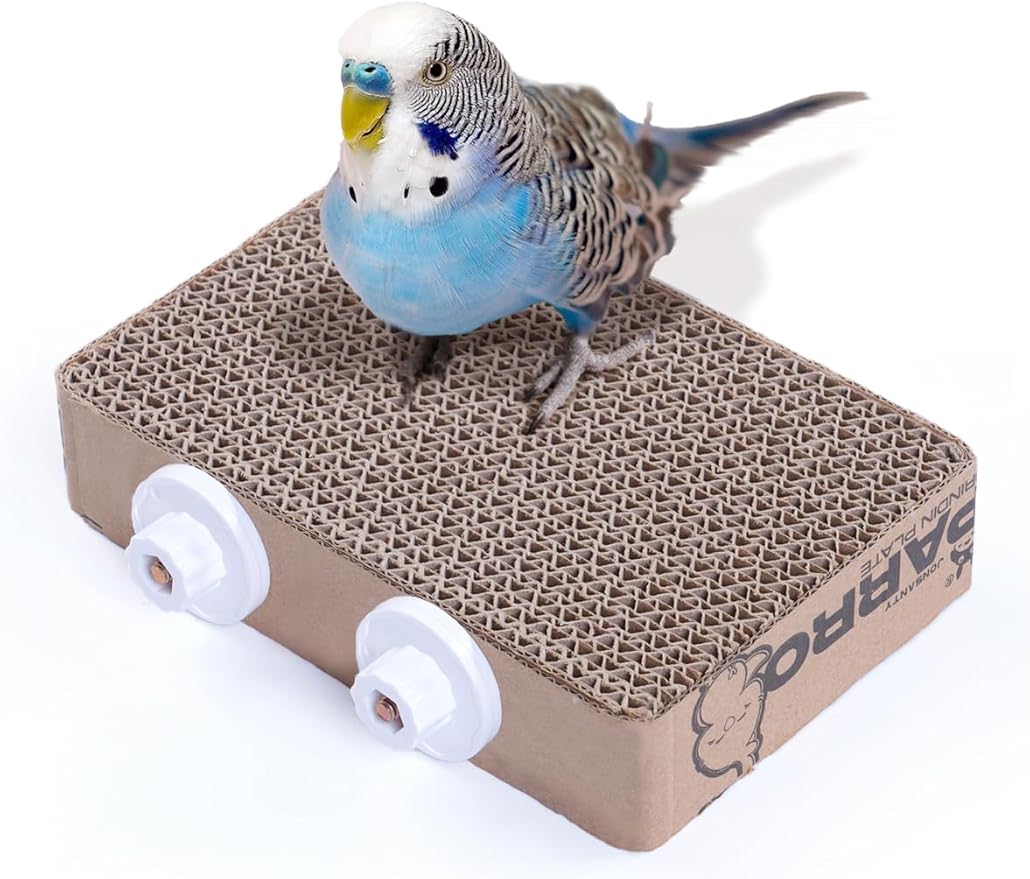
People looking for a natural, safe toy that keeps parrots entertained and comfortable will appreciate this bird platform. It suits all sizes of birds and focuses on fulfilling their instinctive need to chew and explore. Its main strength lies in using completely natural corrugated cardboard, which guarantees a safe playtime environment.
Setting it up indoors is straightforward, simply place it where your bird can reach it easily. The material is lightweight yet inviting for beaks to peck, shred, and gnaw. Its natural cardboard texture encourages natural behaviors like simulated hunting and chewing.
Easy to swap out when torn, it keeps your parrot engaged without adding any harmful chemicals to their surroundings.
The platform performs well as a play surface and chew toy, meeting the curiosity and exploration instincts of birds. Built from all-natural corrugated cardboard, it is safe and comfortable for birds to rest on and tear apart. The main praise is how it successfully mimics natural materials, while some note it may wear out faster than sturdier toys due to the cardboard construction.
The biggest praise is the safety and natural feel of the cardboard, which keeps birds comfortable and stimulated. The most frequent drawback is that the cardboard wears down faster than harder materials, requiring more frequent replacement. Birds enjoy the texture for natural behaviors but it doesn’t last as long.
Those wanting a safe, chemical-free, and natural-feeling toy will enjoy this platform. It is perfect for people aiming to encourage pecking and shredding indoors. Anyone needing a more durable or outdoor-safe option might consider alternatives designed with sturdier materials.
Pros
- Made from all-natural corrugated cardboard
- No harmful substances in production
- Suitable for all bird breed sizes
- Encourages natural chewing and shredding
Cons
- Cardboard material wears out quickly
- Designed for indoor use only
| Specification | Details |
|---|---|
| Breed Recommendation | All Breed Sizes |
| Recommended Uses For Product | Indoor |
| Brand Name | JONS NTY |
| Unit Count | 1 Count |
| Pet Type | Bird |
| Number of Items | 1 |
10. Little Live Pets Talking Bird Toy

Indie from Little Live Pets offers a lively pet bird experience perfect for kids aged 5 to 15 who want a playful companion without the real bird care. Its standout feature is how lifelike it feels with moving beak and natural flocked feathers, quickly capturing the charm of a real bird’s sounds and reactions.
Getting started involves popping in the included two AAA batteries and reading the simple instruction manual. The bird responds to your voice and touch with chirps and whistles, making day-to-day interaction engaging.
You can record your own voice for the bird to mimic or whistle back tunes, keeping playtime fresh and entertaining without needing much setup or maintenance.
Performance-wise, the talking bird does a good job mimicking sounds with over 20 reactions, giving it a fun and interactive personality. It’s made with flocked feathers and a moving beak that add realism. Most praise revolves around how entertaining it is, while some mention occasional syncing issues between voice recording and playback as a minor frustration.
Indie’s biggest appeal lies in the lively and varied sounds it makes, paired with physical movement that closely mimics a real bird. Common complaints highlight occasional issues with how the bird repeats recorded sounds, which can feel a bit off at times.
Kids who enjoy interactive toys and pretend pet care will find this bird entertaining and easy to manage. Those looking for a more advanced or customizable pet experience, or for older users, might prefer a different model or real bird.
Pros
- Realistic flocked feathers and moving beak
- Repeats voice with chirpy tone
- Whistles back with musical tunes
- Includes cage and batteries for ready use
Cons
- Sometimes voice playback syncs imperfectly
- Limited to youth age range 5-15 years
| Specification | Details |
|---|---|
| Brand Name | Little Live Pets |
| Included Components | 2 AAA Batteries, 1 Bird, 1 Cage, 1 Instruction Manual |
| Model Number | 26691 |
| Model Series | Really Real Bird |
| Manufacturer recommended age | 5 – 15 years |
11. Bird Foraging Chewy Rings Toys
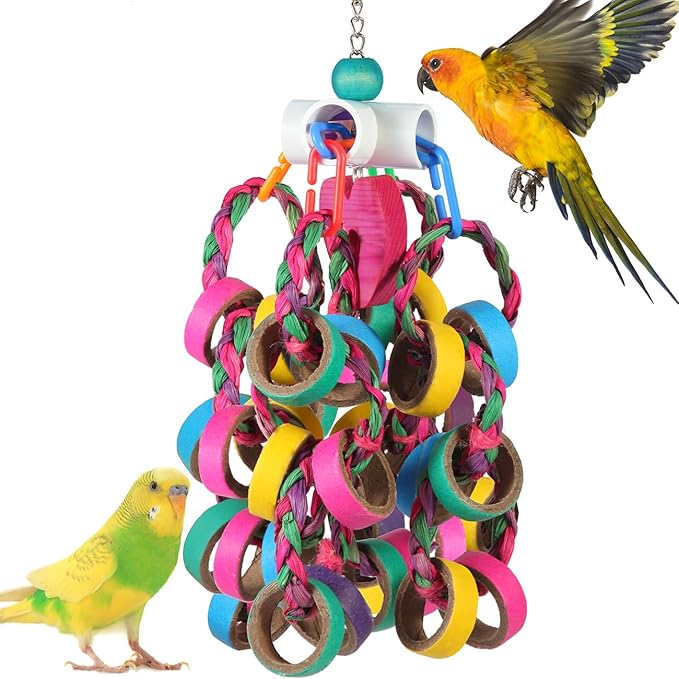
LovyoCoCo Bird Foraging Chewy Rings Toys bring fun and mental stimulation to pet birds by encouraging natural chewing and shredding behaviors. Designed for bird enthusiasts who want to keep their pets active and engaged, its standout feature combines chewable cardboard rings with natural husks that promote foot dexterity and play.
Setting up these toys is straightforward since they are lightweight and portable, allowing you to hang or place them indoors or outdoors. Your bird can grip, spin, and shred the rings, which are designed to be easy for small beaks to manipulate. The sturdy plastic core holds everything together, while the bagels and husks keep your bird occupied and physically engaged throughout the day.
The toys do a solid job satisfying chewing instincts while encouraging physical activity like hanging and swinging. Built with a durable plastic core and soft, compressed cardboard rings, they balance sturdiness with shreddable materials.
Praises often highlight how the toys stimulate natural behaviors effectively, while common complaints mention the lack of water resistance, which limits outdoor use in damp conditions.
Praise for the toy often highlights how well it keeps birds engaged with chewing and playing, supporting their natural instincts. The most frequent drawback is its lack of water resistance, which means it requires caution when used outdoors or in damp environments.
People with birds seeking an interactive and stimulating toy that encourages natural behaviors will appreciate this product. Those needing a fully weatherproof toy or with birds that aggressively destroy toys might consider other options better suited to harsh conditions or intense chewing.
Pros
- Promotes natural chewing and shredding
- Encourages foot dexterity and physical activity
- Lightweight and easy to hang
- Includes natural materials like palm and corn husk grass
Cons
- Not water resistant
- Plastic core may limit appeal for heavy shredders
| Specification | Details |
|---|---|
| Pet Toy Type | Chew Toy |
| Breed Recommendation | bird |
| Recommended Uses For Product | Chewing |
| Indoor Outdoor Usage | Indoor, Outdoor |
| Additional Features | Lightweight, Portable |
| Water Resistance Level | Not Water Resistant |
12. Green Cheeked Conure Care Guide

Green Cheeked Conure Care Guide is perfect for anyone thinking about bringing a green cheeked conure into their home. It shines in making complicated care routines understandable, helping both new and experienced bird keepers feel confident.
Its biggest strength lies in breaking down care details into clear, manageable steps.
Setting up with this guide is straightforward since it focuses on the basics like diet, habitat, and social needs. It covers day-to-day care essentials such as feeding schedules and cleaning habits, which makes keeping your bird healthy feel less overwhelming. The guide helps you stay organized and informed about what your conure needs to thrive.
The guide delivers with thorough insights on nutrition and daily maintenance, making sure you know what really matters in raising a happy parrot. It’s easy to follow and well-structured, although some wish it included more on behavior training.
Many appreciate how it simplifies complex care topics, but a few mention it could go deeper into advanced bird handling.
Many find the guide helpful for managing daily feeding and habitat cleaning with clear steps. A common complaint is that it doesn’t cover more advanced behavior training and tricks for these intelligent birds. The focus stays on fundamental care, which suits beginners well.
People wanting straightforward advice on caring for a green cheeked conure will appreciate this guide. Those seeking a deep dive into training and bird psychology might want to look for additional resources to complement basic care knowledge.
Pros
- Clear and easy-to-follow care instructions
- Focuses on essential aspects of bird care
- Helps build confidence in pet caregivers
Cons
- Lacks detailed behavior training tips
- Covers mostly basic care topics
| Specification | Details |
|---|---|
| Target Bird | Green Cheeked Conure |
| Focus Areas | Diet, Habitat, Social Needs |
| Coverage | Basic Care Routines |
| Audience | New and Experienced Bird Enthusiasts |
13. African Grey Parrots Care Guide

A well-organized care guide for African Grey Parrots makes daily care simpler and clearer. Perfect for anyone new to these intelligent birds, it focuses on practical advice that helps keep these parrots healthy and happy in a home environment.
Its biggest strength lies in delivering essential information in a straightforward way.
Using the guide feels like having a knowledgeable friend explaining what your parrot needs day by day. Setup revolves around understanding diet, social interaction, and environmental needs to create a suitable habitat. The guide breaks down topics like feeding, cage setup, and behavioral training, making routine care less daunting.
You can quickly find advice on addressing common challenges.
The guide thoroughly covers all major aspects of African Grey care. It’s clear and easy to follow, built with simple language rather than jargon. The strongest praise from reviews highlights the helpfulness of the practical tips, while the most common complaint is a desire for more detailed background on the bird’s origin and natural behaviors.
Most users appreciate how straightforward and accessible the care advice is for everyday parrot keeping. However, there is a consistent request for more detailed insight into natural behaviors and origins to better understand the bird’s instincts.
Those just starting with African Greys will find this guide very helpful for routine care basics. Experienced bird enthusiasts looking for advanced knowledge or breeding information may need to supplement it with more specialized resources.
Pros
- Clear step-by-step care instructions
- Focus on diet and environment setup
- Easy to understand language
- Practical daily use tips
Cons
- Lacks in-depth behavioral background
- Not comprehensive for advanced bird caretakers
| Specification | Details |
|---|---|
| Target Species | African Grey Parrots |
| Content Focus | Daily care, diet, habitat setup |
| Format | Written guide |
| Language Style | Simple and clear |
| Use Case | Beginner to intermediate parrot keepers |
14. Moluccan Cockatoo Care Guide

Printed on durable, easy-to-handle paper, the Moluccan Cockatoo Care Guide suits anyone planning to welcome a Moluccan cockatoo into their home. Its biggest strength lies in the clear, practical advice tailored specifically to the needs of this demanding parrot species.
Setting up with the guide involves following straightforward steps on diet, habitat, and socialization. Day-to-day use means referring back to its sections for cleaning routines, feeding schedules, and behavior tips.
It provides useful reminders and detailed care instructions that make the task less overwhelming for beginners.
Performing well as a reference, the guide breaks down complex care issues into manageable parts. It stands out for readability and helpfulness.
The most common drawback is a lack of in-depth technical data or visuals to accompany the text, which some readers mention as a limitation.
The guide receives praise for its straightforward, easy-to-follow advice that helps demystify the complex needs of Moluccan cockatoos. However, many find it falls short by not including more pictures or in-depth technical details, limiting its usefulness for experienced caretakers seeking comprehensive info.
Anyone new to Moluccan cockatoos will appreciate the simplicity and focus of this guide. Those wanting a visual-heavy resource or advanced veterinary knowledge should look for additional materials to supplement it.
Pros
- Clear, species-specific care instructions
- Compact and easy to handle
- Good for beginners
- Practical daily routines outlined
Cons
- Lacks detailed visuals or images
- Does not cover advanced health issues
| Specification | Details |
|---|---|
| Format | Printable guide |
| Focus Species | Moluccan Cockatoo |
| Content Type | Care instructions and advice |
| Ease of Use | Simple language, stepwise guidance |
15. Wild Harvest Parrot Food

Wild Harvest Parrot Food stands out with its wide variety of seeds, grains, and vegetables designed for large breed parrots. It suits those looking to mimic a natural diet that encourages foraging behaviors while supporting overall health.
Its biggest strength lies in the balanced nutrition packed into every bowl.
Daily feeding involves giving between ½ to ¾ cup for large parrots, making it easy to follow portion guidelines. The blend includes corn, oat groats, sunflower seeds, millet, peanuts, and other ingredients, which keep mealtime interesting for your bird. The grain-free and vegetarian formula ensures a diverse intake without common allergens like celery.
Performance-wise, the food promotes healthy skin and shiny feathers due to added vitamins, minerals, and Omega-3 fatty acids. It consistently attracts parrots thanks to the irresistible mix of flavors, reported to encourage natural foraging instincts.
Packaging in a bag keeps ingredients fresh. A common downside is the need to manage leftover hulls and seed remnants after feeding.
The blend of ingredients in every bag makes it a favorite for large parrots who enjoy diverse textures and flavors, supporting shiny feathers and healthy skin. Managing leftover hulls can be a minor nuisance, requiring cleanup after each feeding session.
People with large parrot breeds will appreciate the tailored nutrition and variety offered, especially when encouraging natural behaviors. Those with smaller parrots or looking for pellet-based food might consider other options better suited to their needs.
Pros
- Balanced variety of seeds, grains, and vegetables
- Includes vitamins, minerals, and Omega-3 fatty acids
- Encourages natural foraging behavior
- Suitable for large breed parrots of all life stages
Cons
- Seed hulls can create mess after feeding
- Not suitable for small or medium-size parrots
| Specification | Details |
|---|---|
| Brand Name | Wild Harvest |
| Breed Recommendation | Large Breeds |
| Special Ingredients | Grain Free, Vegetarian |
| Age Range Description | All Life Stages |
| Item Form | Seed |
| Allergen Information | Celery Free |
Best Parrots as Pets Side by Side Comparison
| Product | Best For | Usage | Portability | Indoor/Outdoor |
|---|---|---|---|---|
| Parrots Pet Birds Guide | – | – | – | – |
| Amazon Parrots Care Guide | – | – | – | – |
| Rosella Parrot Beginners | Beginners | – | – | – |
| Quaker Parrots Manual | – | – | – | – |
| Parrot Training Guide | Training | – | – | – |
| African Grey Care Guide | – | – | – | – |
| Conure Parrots Training | Training | – | – | – |
| Colorful Parrot Toy | Birds | Place in birdcage | Portable | Indoor |
| Paper Bird Toy Platform | All Breed Sizes | Indoor | – | Indoor |
| Little Live Talking Bird | Youth | Play | – | – |
| Bird Chewy Rings Toys | Birds | Chewing | Lightweight, Portable | Indoor, Outdoor |
| Green Cheeked Conure Guide | – | – | – | – |
| African Grey Parrot Guide | – | – | – | – |
| Moluccan Cockatoo Guide | – | – | – | – |
| Wild Harvest Parrot Food | Large Breeds | Food | – | – |
- Best For–
- Usage–
- Portability–
- Indoor/Outdoor–
- Best For–
- Usage–
- Portability–
- Indoor/Outdoor–
- Best ForBeginners
- Usage–
- Portability–
- Indoor/Outdoor–
- Best For–
- Usage–
- Portability–
- Indoor/Outdoor–
- Best ForTraining
- Usage–
- Portability–
- Indoor/Outdoor–
- Best For–
- Usage–
- Portability–
- Indoor/Outdoor–
- Best ForTraining
- Usage–
- Portability–
- Indoor/Outdoor–
- Best ForBirds
- UsagePlace in birdcage
- PortabilityPortable
- Indoor/OutdoorIndoor
- Best ForAll Breed Sizes
- UsageIndoor
- Portability–
- Indoor/OutdoorIndoor
- Best ForYouth
- UsagePlay
- Portability–
- Indoor/Outdoor–
- Best ForBirds
- UsageChewing
- PortabilityLightweight, Portable
- Indoor/OutdoorIndoor, Outdoor
- Best For–
- Usage–
- Portability–
- Indoor/Outdoor–
- Best For–
- Usage–
- Portability–
- Indoor/Outdoor–
- Best For–
- Usage–
- Portability–
- Indoor/Outdoor–
- Best ForLarge Breeds
- UsageFood
- Portability–
- Indoor/Outdoor–
How to Choose the Perfect Pet Parrot
Selecting a pet parrot involves considering factors like size, lifespan, noise level, and social needs to ensure a good fit for your lifestyle. Matching these traits helps prevent future challenges and expenses, making pet ownership more enjoyable and sustainable.
Size and Space Requirements
Seeing a young bird grow into its full size can be surprising, especially when wings start to stretch beyond the cage bars. Adult birds often have a wingspan twice their body length, so cages that seemed big at first can quickly feel cramped.
Living space dedicated to flight or exercise makes a huge difference to their health and happiness. A cage for a medium-sized bird should be at least 24 inches wide, 36 inches long, and 48 inches tall with horizontal bars for climbing.
Many people underestimate the space required, which leads to restless, bored birds. Less room means the bird can’t stretch or flap wings properly, which leads to stress and destructive behaviors.
Providing a sturdy play gym or daily out-of-cage flight time helps but requires a safe environment. Think carefully about the room you can consistently commit to for the bird’s physical and mental well-being.
Temperament and Social Needs
Some birds thrive on attention and interaction throughout the day, while others prefer to be left alone for long stretches. Parrots have distinct personalities; a sociable bird might demand hours of play and vocal engagement. Neglecting their social needs often results in screaming, feather plucking, or aggression.
Knowing how much time you can realistically spend helps avoid frustration.
Households with children or other pets should pick birds known to be tolerant and calm around others. Smaller parrots might tolerate gentle kids better but still need supervised interaction.
Offer daily interaction and mental stimulation, especially for highly social species. Birds left isolated will become lonely and stressed, affecting their overall health.
Noise Level and Vocalization
Much noise comes standard with parrot ownership, particularly with species known for loud calls. Early mornings or sudden sounds can trigger vocal bursts lasting minutes. Repetitive screaming can wear on patience, especially in apartments or quiet neighborhoods.
Some parrots squawk frequently throughout the day, which can strain relationships with neighbors or household members.
Picking a quieter species or one with lower vocalization frequency reduces noise challenges. Consider daily noise tolerance before choosing.
Training and providing distractions help, but inherent volume is hard to change. Look for birds rated as “quiet” if peace is a priority; expect around 60-70 decibels from louder parrots, more than typical speaking volumes.
Lifespan and Commitment
Owning a bird means planning for decades ahead; some live 50 years or more. The lifespan directly influences long-term care cost and lifestyle adjustments. Birds’ behaviors change with age, including periods of increased vocalization or health risks requiring veterinary visits.
Older birds often need more attention and adjustments to their environment.
Commitment means considering future moves, potential family changes, and your evolving capabilities. Selling or rehoming a bird later is complex and stressful for them. Understanding the average lifespan between 15 and 80 years depending on species makes clear the need for serious, careful planning.
Prepare for this lifetime responsibility before acquiring one.
Diet and Health Care Needs
Creating a balanced diet for a bird involves more than just seeds. Fresh fruits, vegetables, and formulated pellets prevent deficiencies common in seed-only diets.
Birds require a variety of nutrients to avoid issues like vitamin A deficiency or fatty liver disease. Shopping for fresh produce and quality pellets can raise monthly food costs.
Regular health checks by an avian veterinarian are essential. Symptoms of illness can be subtle, like weight loss or changes in droppings. Parrots also need routine beak, nail clipping, and parasite control.
Finding a vet experienced with birds might require travel but makes a big difference in maintaining health. Keeping to a diet that suits the species’ natural preferences and needs helps reduce medical problems over time.
Parrot Socialization and Behavioral Training Techniques
Parrots are highly social animals that require consistent interaction to stay mentally healthy. Developing a daily routine helps in building trust and reducing behaviors like screaming or feather plucking.
Training sessions should be short and frequent, using positive reinforcement such as treats or praise to encourage desired behaviors. Avoid punishments, as parrots respond better to gentle guidance.
Effective techniques include:
- Clicker training to mark good behavior precisely
- Target training to teach parrots to move to specific spots
- Regular exposure to new sounds and environments to decrease fearfulness
- Providing plenty of toys and foraging opportunities to prevent boredom
Socialization should start early and continue throughout the parrot’s life. Hand-feeding young birds can promote bonding, making future training easier. Spending time outside the cage daily, even just for 20-30 minutes, encourages natural behaviors and strengthens the human-animal connection.
Common Health Issues and Preventive Care for Pet Parrots
Common health problems in pet parrots include nutritional deficiencies, respiratory infections, and feather issues. A balanced diet rich in pellets, fresh fruits, and vegetables helps prevent vitamin and mineral shortages that lead to illness. Avoiding seeds as the sole diet reduces risks of obesity and liver problems.
Preventive care tips:
- Keep cages clean and well-ventilated to limit bacterial and fungal growth
- Schedule regular veterinary check-ups with avian specialists
- Observe daily for signs like changes in droppings, appetite, or behavior
- Maintain proper humidity levels to support respiratory health
Parrots are sensitive to household toxins like smoke or strong chemicals, so minimizing exposure is critical. Early detection of symptoms through attentive observation often leads to better treatment outcomes.
People Also Asked
How Much Space Do Parrots Need in a Home Cage?
Parrots need a cage large enough to allow them to spread their wings fully and move around comfortably. The cage should be wider than it is tall, with enough space for toys and perches that keep them engaged and active.
Are Parrots Safe to Keep Around Small Children?
Parrots can be safe around small children with supervision and teaching proper handling. It helps to instruct kids not to grab or scare the bird to avoid bites or stress.
What Common Health Issues Do Pet Parrots Face?
Common health issues include feather plucking, respiratory infections, and vitamin deficiencies. Regular vet check-ups and a varied diet with fresh foods can help prevent these problems.
How Long Do Parrots Typically Live as Pets?
Most parrots live between 20 to 60 years depending on the species, some even longer. Providing good nutrition and mental stimulation contributes to their longevity.
Can Parrots Live Peacefully with Other Household Pets?
Parrots can coexist with other household pets if introductions are slow and supervision is constant. Keeping the parrot in a secure cage when other pets are around reduces risk to both.
Conclusion
Choosing a parrot as a pet comes down to size, noise level, and care requirements. Larger parrots often need more space and attention, while smaller ones might be easier to handle but could be noisier.
Consider your lifestyle and how much time you have to spend on daily feeding, socializing, and cleaning.
Keep your living space and budget in mind before deciding. Some parrots need bigger cages and more toys, which add to the cost.
Check the comparison table above to see which options fit your needs and review the details in the picks to find a good match for your home and schedule.