Top 15 Best Planetary Scope That Will Blow Your Mind!
Many people who start stargazing quickly run into the frustrations of a poorly made telescope, spoiling the experience. A cheap or badly chosen planetary scope often struggles with blurry images and unstable mounts, making it hard to focus on details like Jupiter’s bands or Saturn’s rings. The best planetary scope avoids these issues by offering clear optics and solid stability, essential for appreciating the nuances of distant planets.
What really matters in a good planetary scope is the quality of its objective lens or mirror, usually around 90mm to 130mm in diameter, which determines light gathering power and sharpness. Magnification capabilities also make a difference; typically, 50x to 200x provide suitable views without distortion.
Stability in the mount and easy adjustment are critical for tracking planets smoothly, while the scope’s build materials affect durability and ease of cleaning after outdoor use.
Need a Quick Check?
| Image | Product | Price |
|---|---|---|
Our Top Picks 1  | Celestron Travel Scope 70mm | Check Price |
Our Top Picks 2  | Dwarf Mini Smart Scope | Check Price |
Our Top Picks 3  | 90mm Refractor 800mm | Check Price |
Our Selected Top 15 Planetary Scope Worth Considering
This list features a variety of planetary scopes designed for different experience levels and purposes. Each review explains performance details, suitability for various users, and highlights strengths and weaknesses to help you make an informed choice.
1. Celestron Travel Scope 70mm Telescope
Getting clear views of the Moon, planets, or distant daytime scenes without lugging around heavy gear can be tough. This is a good pick for beginners or families wanting something light and portable with surprisingly sharp optics for its size.
Its main strength lies in delivering crisp images in a travel-ready package.
Setting up takes just moments since no tools or complicated assembly are involved. The full-height tripod adjusts easily for comfortable viewing, and the compact telescope tube fits neatly in the provided backpack. Manual focus lets you dial in views precisely while the reflex finderscope helps line up objects in the sky or on land quickly.
The optics feature fully coated glass lenses with a 70mm aperture that provides bright, sharp views with good clarity. The build feels sturdy enough for regular trips, without the bulk of larger scopes.
Most users praise the crispness of the images, but some note that manual focusing can be a bit fiddly when tracking moving targets like planets.
Users appreciate the crispness and clarity the 70mm fully coated glass lenses produce, especially given how portable the whole setup is. The most common downside mentioned is the manual focus, which some find tricky when trying to keep planets or other points of interest in sharp view as they move.
People looking for a lightweight, beginner-friendly scope that works well both day and night will find this meets their needs nicely. Those wanting higher magnification or more advanced focusing controls might want to look at other options better suited for those features.
Pros
- Lightweight and easy to carry with included backpack
- Quick setup with no tools required
- Sharp, bright views thanks to 70mm aperture
- Suitable for both kids and adults
Cons
- Manual focus can be challenging on moving objects
- Limited zoom ratio of 2
| Specification | Details |
|---|---|
| Eye Piece Lens Description | Glass |
| Mount | Altazimuth Mount |
| Focus Type | Manual Focus |
| Finderscope | Reflex |
| Coating | Fully Coated |
| Focal Length Description | 400 millimeters |
2. Dwarf Mini Smart Portable Telescope
Weighing just 1.85 lbs, the Dwarf Mini Smart Portable Telescope fits perfectly in a backpack or large pocket. It suits anyone looking for a compact digital telescope with easy app control and automated tracking. Its standout feature is the quick setup paired with the built-in sky atlas, making stargazing accessible.
Setting up takes only a few minutes, thanks to the DWARFLAB App that handles aiming and tracking the target automatically. Manual and auto focus options let you tailor views, while the 360° pivot rotation provides full freedom to explore the sky. Its battery-powered design means you can take it camping or hiking without worrying about power outlets.
Image clarity meets expectations for its size, managing solid astronomical views with basic anti-reflection coating. Built with both Altazimuth and Equatorial mounts, it supports precise positioning. The most frequent praise is about how quickly it gets going; the main complaint revolves around the basic lens coating which can limit light transmission in some conditions.
The Dwarf Mini impresses with a quick and straightforward setup through its app, enabling users to start observing within minutes. Its most common downside is the basic anti-reflection coating, which might reduce image brightness under certain conditions.
Anyone needing a lightweight, travel-friendly telescope that pairs easily with a smartphone will find this suitable. Those looking for a more advanced glass coating or traditional optics might want to consider other options.
Pros
- Ultra-lightweight at 1.85 lbs
- App control with built-in interactive star map
- Auto GOTO for automatic tracking
- 360° pivot freedom for complete sky access
Cons
- Basic anti-reflection coating limits light transmission
- Requires nonstandard battery
| Specification | Details |
|---|---|
| Weight | 1.85 lbs (840g) |
| Focal Length | 150 mm |
| Field of View | 2.45 degrees |
| Mount Type | Altazimuth and Equatorial Mount |
| Power Source | Battery Powered, 1 Nonstandard Battery included |
| Features | App-Controlled, Auto GOTO, 360° Pivot, EQ Mode, Smart Cloud Processing |
3. 90mm Refractor Telescope 800mm
Ideal for amateur astronomers and casual stargazers, this 90mm refractor scope offers clear views of planets and lunar details using a 90mm aperture lens. Its standout feature is the bright, crisp images made possible by the full multi-coating technology, which ensures accurate color and sharpness.
Setting up the telescope is straightforward with its equatorial mount and manual focus. Swapping between the 25mm and 10mm eyepieces along with the 3X Barlow lens lets you smoothly change magnifications from 40X up to 240X, making it easy to explore both wide views and highly magnified planetary details.
The included reflex finderscope helps with aiming, and the smartphone adapter lets you capture views easily.
Image quality really shines when observing lunar craters and planetary rings, thanks to the 90mm large aperture and FMC coating that promises near 100% light transmission. The telescope’s build feels solid with a sturdy tripod, although the manual focus can be a bit fiddly for precise adjustments.
One consistent note from reviews is how bright and detailed images are, while some users wish focusing was smoother.
The telescope delivers bright, detailed views of craters and planetary rings with excellent color fidelity due to its 90mm aperture and FMC coating. Manual focusing tends to slow down precise targeting, requiring some patience during setup and use.
Anyone seeking detailed planetary and lunar observation with moderate magnification flexibility will appreciate this model. Users wanting quicker focus adjustment or simpler mounts might look for alternatives better suited for that ease of use.
Pros
- Bright, sharp images with accurate true colors
- Wide zoom range from 40X to 240X magnification
- Comes with a sturdy tripod and easy smartphone adapter
- Full multi-coating boosts light transmission to 99.8%
Cons
- Manual focus can be challenging for fine tuning
- Equatorial mount setup takes some patience
| Specification | Details |
|---|---|
| Eye Piece Lens Description | Barlow |
| Mount | Equatorial Mount |
| Focus Type | Manual Focus |
| Finderscope | Reflex |
| Compatible Devices | Smartphone |
| Additional Features | Large Aperture, Fully Coated Optics, Multiple Magnifications, Sturdy Tripod, Smartphone Adapter |
4. Celestron Advanced VX 6 Refractor Telescope
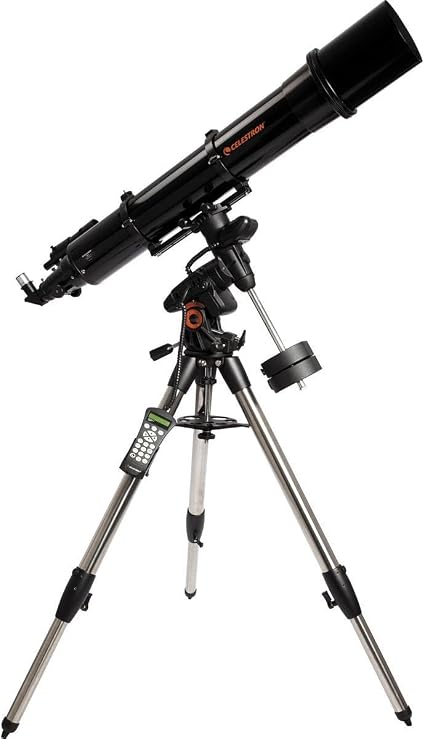
Designed especially for those who want crisp, high-contrast planetary views, the Celestron Advanced VX 6 Refractor Telescope excels with a 6-inch refractor tube that caters well to detailed imaging and brighter deep-sky observations. Its biggest strength lies in combining powerful optics with an advanced computerized GoTo mount for precise tracking.
Setting up the telescope is straightforward thanks to the Advanced VX mount, which includes integrated alignment and guiding systems. The improved motors provide steady movement and handle small load imbalances without struggling. Manual focusing paired with a reflex finderscope makes it easy to locate and lock onto celestial objects during night sessions.
Optical performance delivers sharp planetary details and impressive contrast, especially notable through its fully multi-coated lenses and long 1200mm focal length. The tube’s rigid design helps reduce flexure, ensuring stability during imaging.
Praises often highlight its imaging quality, while some find the battery-powered setup limiting for extended use.
The very best feature praised is the excellent contrast and imaging clarity, especially noticeable with planets and bright deep-sky objects. The most cited downside is the reliance on batteries, which can restrict observing time if no backup power is available.
Those wanting detailed planetary views and astrophotography will appreciate the combination of optics and mount. Individuals seeking longer continuous use without battery concerns might want to explore alternative mount power options or models.
Pros
- High contrast optics ideal for planetary imaging
- Computerized mount with smooth tracking and guiding
- Compact, rigid design minimizes flexure
- Fully multi-coated lenses improve light transmission
Cons
- Battery power may limit longer observing sessions
- Manual focus requires steady hands for fine adjustments
| Specification | Details |
|---|---|
| Optical Tube | 6-Inch Refractor |
| Focal Length | 1200 millimeters |
| Mount Type | Equatorial Mount |
| Focus Type | Manual Focus |
| Power Source | Battery Powered |
| Finderscope | Reflex |
5. Smart Refractor Portable Digital Telescope

Smart Refractor Portable Digital Telescope delivers sharp, bright views with its 80mm aperture and 300mm focal length, making it ideal for adults interested in detailed planetary and moon observation. Its standout feature is the combination of powerful optics and integrated 4k imaging for capturing clear astrophotos without vibration.
Setting up involves mounting the telescope on the included tripod, then connecting it to your smartphone, tablet, or computer via a mobile app. The auto-focus feature adjusts the view quickly, while the wireless remote lets you snap photos or record video without touching the telescope, keeping images crisp.
The dual control system makes regular stargazing smooth and enjoyable, especially in low-light conditions.
Optically, it delivers impressive clarity at magnifications up to 350x, bringing distant celestial objects into sharp focus. The build feels sturdy, with an orthoscopic eyepiece and reflex finderscope aiding navigation.
Most users appreciate the shake-free 4k imaging, though some note reliance on nonstandard batteries as inconvenient. Despite that, the 30mp photo quality is notable for a portable, digital telescope.
Reviews praise the ultra-crisp 30mp stills and 4k video capture without vibration, thanks to the wireless remote. Common feedback points to inconvenience regarding nonstandard battery usage, which can disrupt longer observation sessions.
Amateurs seeking detailed planetary imaging and easy digital capture will find this telescope rewarding. Those preferring fully standalone, battery-friendly models might want to explore alternatives with standard power sources and less app dependency.
Pros
- Crystal-clear views with powerful 80mm aperture
- Shake-free imagery with wireless remote control
- Auto focus simplifies sharp viewing
- Compatible with smartphone, tablet, and computer
Cons
- Uses nonstandard batteries requiring replacement
- Dependent on app for most advanced controls
| Specification | Details |
|---|---|
| Aperture | 80mm |
| Focal Length | 300mm |
| Magnification | Up to 350x |
| Eye Piece Lens | Orthoscopic |
| Focus Type | Auto Focus |
| Additional Features | 4K Astrophotography Camera, App & Remote Control |
6. Gskyer 90mm AZ Refractor Telescope

Using the Gskyer 90mm AZ Refractor Telescope feels straightforward and satisfying, especially for those interested in detailed planetary views. Its standout quality lies in offering high magnification options combined with a clear image thanks to high-quality optics, making it suitable for beginners and hobbyists wanting sharp views.
Setting it up is simple thanks to the adjustable aluminum tripod that stretches from about 31.5-inch to 49-inch, allowing comfortable viewing from different positions. Switching between three eyepieces and a 3x Barlow lens quickly changes magnification levels without fuss.
No tools are needed for assembly or focusing, making everyday use smooth and practical.
The telescope delivers impressive clarity with a 600mm focal length and fully coated glass lenses designed to protect your eyes while giving vivid views. The manual focus works well once adjusted, though some note that finely tuning focus can take patience.
It has a sturdy build; however, the aluminum tripod might feel a bit light for very steady mounting under windy conditions.
The telescope impresses with clear, sharp images and convenient high magnification options. Many find the tripod’s lightness a drawback as it can affect steadiness during viewing sessions. The manual focus works well but might need patience to get just right.
Those wanting a manageable, versatile telescope for planetary viewing will appreciate this model’s optics and magnification range. People needing extremely steady or professional-level gear might want to explore sturdier, heavier tripods or more advanced focus systems elsewhere.
Pros
- Three eyepieces with 3x Barlow for varied magnification
- Fully coated optics for bright, clear images
- Adjustable tripod suits different viewing heights
- Simple manual focus, no tools needed
Cons
- Tripod can feel lightweight for extra stability
- Focusing requires careful adjustment for sharpness
| Specification | Details |
|---|---|
| Aperture | 90mm |
| Focal Length | 600 millimeters |
| Eyepieces Included | 24X, 60X, 120X |
| Barlow Lens | 3x Barlow lens included |
| Tripod | Adjustable aluminum tripod, 31.5 – 49 inches |
| Mount Type | Altazimuth Mount |
7. Gskyer 130EQ Reflector Telescope

Great for amateur astronomers, the Gskyer 130EQ Reflector Telescope offers impressive image clarity through its 5.1 inch aperture and high-quality all-glass optics. Its biggest draw is the bright, detailed views it provides of the Moon, planets, and some deep-sky objects, making it suitable for those eager to explore space without a steep learning curve.
Setting up is straightforward thanks to the short 24 inch optical tube and the Equatorial mount that helps track objects smoothly. The toothless focusing base makes it easy to fine-tune views without sudden jumps, which is handy when viewing planets or star clusters. Using a smartphone with the finderscope adds convenience for capturing or identifying celestial sights.
Performance-wise, it delivers clear and bright images thanks to multi-coated optics and a fast f/5 focal ratio. It’s solidly built with manual focus and reliable wireless remote control, allowing steady observations.
Users praise its clarity and brightness, though some note the manual focus can take some patience to get perfectly sharp views.
Bright image quality and easy focusing are frequently praised, making star and planet observation enjoyable. Some find the manual focus requires time to perfect, which can be challenging during brief observing windows. The wireless remote adds a useful convenience for fine adjustments without touching the scope.
Those new to astronomy or looking for a solid, user-friendly scope will be pleased with this option. Users wanting very high zoom or quick focus changes might prefer a different model with motorized focusing and a longer optical tube.
Pros
- Bright, clear optics for detailed views
- Easy focusing with toothless base
- Equatorial mount helps smooth tracking
- Compatible with smartphone for better viewing
Cons
- Manual focus needs careful adjustment
- Short optical tube limits some distant observations
| Specification | Details |
|---|---|
| Aperture | 5.1 inch |
| Focal Length | 650 millimeters |
| Mount | Equatorial Mount |
| Focus Type | Manual Focus |
| Eye Piece Lens | Barlow |
| Additional Features | Toothless Focusing Base, Wireless Remote Control |
8. Celestron AstroMaster 70AZ Refractor Telescope

Lightweight aluminum construction and a simple altazimuth mount make the AstroMaster 70AZ an approachable choice for beginner stargazers and kids. Its strongest feature is delivering bright, clear views without any complicated setups, ideal for those first steps in astronomy.
Setting it up is straightforward, with manual focus and the included StarPointer red dot finderscope guiding you quickly to objects. The 20mm and 10mm eyepieces let you switch between wide-field and closer views, useful for exploring both celestial and terrestrial sights. It’s small enough to carry around, making spontaneous daytime wildlife observation or night sky sessions easy to manage.
Sharp and detailed thanks to the fully coated 70mm achromatic lens, it handles Moon craters and planet views well but isn’t designed for very faint deep sky objects. Build quality feels sturdy for the price, though the manual focus can require patience at higher magnifications.
The most common critique is limited magnification power, but the simplicity helps beginners avoid frustration.
Clear views of the Moon and planets stand out as this scope’s strongest point, while limited zoom and manual focus can slow down observations of dimmer targets. The balance makes it great for beginners who want straightforward operation without overwhelming complexity.
People starting out in astronomy or families looking for accessible star and nature viewing will appreciate it. Those aiming to study deep space or requiring higher magnification should look for more advanced telescopes.
Pros
- Bright, clear views with fully coated optics
- Simple manual focus for easy adjustments
- Included StarPointer red dot finderscope
- Versatile for both day and night use
Cons
- Power limited for very faint objects
- Manual focus can be fiddly at high magnification
| Specification | Details |
|---|---|
| Eye Piece Lens Description | 20mm and 10mm |
| Mount | Altazimuth Mount |
| Focus Type | Manual Focus |
| Finderscope | StarPointer™ red dot finderscope |
| Focal Length Description | 900 millimeters |
| Zoom Ratio | 45 multiplier x |
9. 70mm Refractor Telescope with LCD Display

Digital and optical dual-viewing catches the eye of anyone interested in exploring the Moon. It suits beginners and families eager to enjoy hands-on and digital observations alike. Its biggest strength lies in offering two distinct ways to observe the Moon without the need for additional devices.
Setting up involves straightforward assembly with an altazimuth mount that makes aiming simple. The built-in 4.5-inch LCD display means you don’t have to rely on a phone or laptop to see what you’re observing. Manual focusing keeps things tactile, while the battery-powered system provides mobility.
Capturing photos or videos directly from the scope adds a unique fun element to nightly viewing sessions.
Image details come through with clarity thanks to fully multi-coated optics and the 400mm focal length lens. The attached wireless remote helps control the viewing experience without constantly touching the scope. Build quality feels suitable for beginner use, though some might find the manual focus requires patience.
Most praise highlights the ease of toggling between digital and optical views, while common complaints include battery type and manual focus fineness.
The switch between digital and optical views is smooth, allowing users to see the Moon in two different ways. Most users find the battery type inconvenient and focusing manually requires some patience but adds to the hands-on feel.
People new to telescope use and families looking for engaging moon viewing will find this practical and fun. Those wanting higher power, automatic focus, or standard batteries might want to explore alternative models better suited for advanced astronomy.
Pros
- Dual viewing: digital display and optical eyepiece
- No smartphone needed for viewing or capturing
- Easy altazimuth mount for quick aiming
- Wireless remote control for convenience
Cons
- Uses nonstandard battery type
- Manual focus can be tricky for beginners
| Specification | Details |
|---|---|
| Focal Length Description | 400mm |
| Focus Type | Manual Focus |
| Mount | Altazimuth Mount |
| Power Source | Battery Powered |
| Number of Batteries | 1 Nonstandard Battery batteries required. (included) |
| 4.5″ LCD Display | Yes |
10. Digital Auto-Focus Refractor Telescope

For anyone wanting a powerful view of the night sky or wildlife, the Digital Auto-Focus Refractor Telescope stands out with its 350x zoom and sharp clarity. It suits those who want detailed planetary observations and easy group viewing without fussing over manual focus.
Daily use involves quick setup thanks to the auto-focus and wireless app control, so you spend more time observing than adjusting. The fold-out screen with an anti-glare hood lets a few people watch at once comfortably.
Rechargeable batteries mean no hunting for disposables, and the dual-screen setup with vision adjustment helps tailor the view to personal needs.
It delivers crystal-clear views with an 80mm aperture and a 300mm focal length, revealing crisp craters and stellar details even in low light. Build quality meets expectations for a digital telescope of this type, combining solid optics with a lightweight design. Reviews praise the sharpness and vivid 4K imaging, though some mention the nonstandard batteries can be inconvenient.
The telescope’s biggest strength lies in its sharp, vivid views supported by the high-quality starlight-grade sensor and strong magnification. The most frequent gripe comes from the use of nonstandard batteries which can pose a challenge during extended sessions.
People who want high-powered, low-light planetary observation and don’t mind carrying a modestly sized device will appreciate it. Those preferring lightweight, highly portable scopes with standard battery types might want to look elsewhere.
Pros
- Auto-focus speeds up viewing setup
- Dual screens allow group observation
- 4K clarity for detailed imaging
- Rechargeable battery for convenience
Cons
- Requires nonstandard batteries
- May feel bulky for casual travel
| Specification | Details |
|---|---|
| Focus Type | Auto Focus |
| Finderscope | Reflex |
| Focal Length | 300mm |
| Additional Features | Dual Screens, Wireless App Control, Remote Control |
| Optical Sensor | Starlight-grade |
| Magnification | Up to 350x |
11. Celestron Travel Scope 80mm Telescope

For anyone keen to explore the Moon, planets, or distant landscapes without lugging a heavy setup around, this 80mm travel scope fits the bill. It’s a straightforward refractor designed for beginners who want bright, clear views without the fuss and weight.
Setting up happens in a flash with no tools needed. The manual focus and altazimuth mount make aiming intuitive, and it all packs into the included backpack for easy transport. A 5×24 finderscope helps target objects, and the smartphone adapter lets you snap what you see, which adds a nice touch for quick sharing or documentation.
The optics deliver impressively sharp and bright images given the size, thanks to the fully coated lenses and the 80mm aperture. Build quality feels solid for the price and weight, though manual focusing requires a bit of patience. Some find the zoom ratio limited, but the simplicity supports a truly beginner-friendly experience.
The scope’s standout feature is its bright and sharp views enabled by fully coated lenses and a decent 80mm aperture, making celestial and terrestrial sights clear. Setting up rapidly without tools is praised, but some users note the manual focus feels a bit fiddly and the zoom options are minimal.
Those looking for an easy, portable telescope to explore the night sky and daytime scenes alike will find this well-suited. People needing more advanced zoom or motorized focus might want to consider a different model.
Pros
- Lightweight and travel-friendly design
- Bright, sharp views from fully coated optics
- Quick, tool-free setup with included backpack
- Includes smartphone adapter for easy photo capture
Cons
- Manual focus can be tricky for some users
- Zoom ratio limited to 2x
| Specification | Details |
|---|---|
| Aperture | 80mm |
| Focal Length | 457 millimeters |
| Mount | Altazimuth Mount |
| Focus Type | Manual Focus |
| Finderscope | 5×24 |
| Zoom Ratio | 2 |
12. ZWO Seestar S30 Pro Smart Telescope

Automatic GOTO targeting and tracking set this smart telescope apart for beginners eager to explore the night sky with ease. It suits those who want a clear and simple way to view celestial objects without manual setup hassle.
Its biggest strength lies in smart app control that brings the universe to your smartphone instantly.
Setting up only takes powering on and connecting the app, so you don’t need prior experience. The alt-azimuth mount with optional equatorial mode fits many viewing preferences. Auto and manual focus let you decide how much control you want, while one-tap Milky Way imaging simplifies capturing stunning photos.
Battery power makes it portable for nightly outings anywhere, even in cities thanks to built-in light pollution filters.
Sharp views come from apochromatic optics and fully multi-coated lenses, reducing color distortion and increasing contrast against urban skies. The reflex finderscope helps aim the telescope quickly.
Strongest points include simple app-based navigation and impressive image quality for the price. The main complaint is the single nonstandard battery which might require extra care to replace.
Strong praise focuses on the ease of use through the app and the clarity of images thanks to apochromatic optics and light pollution filters. Common criticism revolves around the need for a nonstandard battery that might complicate power management compared to more common battery types.
This telescope suits beginners or casual stargazers wanting quick setup and sharp, vivid views in urban areas. Those looking for wider fields of view or more standard power sources might want to explore different options designed for advanced astrophotography or longer sessions.
Pros
- Automatic GOTO targeting and tracking
- App controlled with live night sky view
- Built-in light pollution filters for urban use
- One-tap Milky Way imaging feature
Cons
- Requires nonstandard single battery
- Limited field of view at 4.6 degrees
| Specification | Details |
|---|---|
| Mount | Alt-Azimuth Mount (Supports Equatorial Mode) |
| Focus Type | Auto Focus, Manual Focus |
| Power Source | Battery Powered |
| Finderscope | Reflex |
| Compatible Devices | Smartphone, Tablet |
| Focal Length Description | 160mm |
13. Celestron NexStar Evolution 8 Schmidt-Cassegrain

Anyone keen on diving deep into planet observation and star gazing will find this scope suits well. Designed for enthusiasts who appreciate tech-assisted tracking, its standout feature is the computerized GoTo mount that keeps objects in view with impressive accuracy.
Setting up the scope is straightforward thanks to the single fork arm mount and integrated WiFi. Connecting a smartphone or tablet lets you control and explore through an app, making navigation intuitive.
Manual focusing requires attention, but with the StarBright XLT coatings, the views stay clear. Power options include battery or corded electric, so flexibility in location is there.
Performance is strong with an 80-inch focal length and reliable worm gears minimizing gear backlash for steady tracking. The build feels solid and designed for steady altitude-azimuth movement.
The best feature users noticed is the precise tracking that keeps planets centered. The most frequent drawback mentioned is the manual focusing, which can slow quick adjustments.
The tracking accuracy stands out, keeping celestial objects steady and easy to follow, making the viewing experience much better. The main challenge lies in having to manually adjust focus, which some find less convenient when switching targets quickly.
This setup is suited for those who want computerized targeting and good stability but don’t mind manual focusing. Casual stargazers seeking instant focus adjustments might prefer a different model with motorized focus controls.
Pros
- Accurate tracking with high-performance worm gears
- Easy app control via integrated WiFi
- Flexible power options, battery or corded
- StarBright XLT coatings improve image clarity
Cons
- Manual focus can be slow during quick viewing changes
- Requires one nonstandard battery for operation
| Specification | Details |
|---|---|
| Mount | Computerized Altitude-Azimuth Single Fork Arm |
| Focus Type | manual focus |
| Eye Piece Lens Description | Plossl |
| Power Source | Battery Powered,Corded Electric |
| Focal Length Description | 80.0 inches |
| Additional Features | Integrated WiFi for app-based control and exploration |
14. Celestron Advanced VX 8 Newtonian Telescope

Designed for serious planetary observation, it suits amateur astronomers seeking sharp, wide-field views without compromise. The 8 (200mm) f/5 optical design with a parabolic primary mirror sets it apart by delivering clearer images and reducing distortion common in similar scopes.
Setup involves aligning the mount using the All-Star Polar Alignment feature and the included hand controller, which simplifies tracking celestial objects. The equatorial mount with integer gear ratios and programmable periodic error correction reduces tracking errors, meaning adjustments are less frequent during observation sessions.
Manual focusing combined with a multi-element eyepiece allows precise control over sharpness and zoom, enhancing viewing comfort on any clear night.
Performance impresses with improved motors that handle load imbalances smoothly, giving steady tracking of planets like Jupiter or Saturn. Its updated industrial design provides rigidity and reduces flexure, contributing to stable images through the eyepiece.
Most praise points to its accurate and consistent tracking; some find the need for manual focus less convenient compared to motorized options.
Precision in tracking planetary movement stands out because of programmable error correction and improved motors, offering steady views. The biggest drawback is the reliance on manual focus, which demands more effort during fine adjustments. The sturdy equatorial mount and wide field views contribute to consistent performance.
Astronomy enthusiasts accustomed to manual focusing and desktop setups will appreciate this scope. Those needing lightweight or battery-powered options might explore alternatives. It suits users prioritizing image clarity and tracking accuracy over convenience features like motorized focusing or portable power sources.
Pros
- Parabolic primary mirror reduces spherical aberration
- Programmable periodic error correction improves tracking
- Improved motors overcome load imbalances effectively
- All-Star Polar Alignment simplifies setup process
Cons
- Manual focus can feel less convenient during observation
- Requires DC power supply, limiting portability
| Specification | Details |
|---|---|
| Optical Design | 8 (200mm) f/5 Newtonian |
| Mount | Equatorial Mount |
| Focal Length | 1000 millimeters |
| Focus Type | Manual Focus |
| Finderscope | Reflex |
15. Celestron Advanced VX 8 Schmidt-Cassegrain Telescope

Celestron Advanced VX 8 Schmidt-Cassegrain Telescope opens up clear, detailed views of planets and deep sky objects. Perfect for intermediate stargazers wanting strong magnification combined with computer-controlled tracking. Its single biggest strength lies in delivering high resolution and contrast through an 8-inch aperture and StarBright XLT coatings.
Setup requires assembling the tripod and mounting the 8 telescope on the Advanced VX equatorial mount, which aligns smoothly with the NexStar+ hand control. The manual focus combined with the computerized GoTo tracking makes it easier to find and keep objects in view during nighttime sessions.
The included 6×30 finderscope adds convenience for locating targets, and it can connect to cameras or smartphones for astrophotography.
Optical performance stands out with a 2032mm focal length offering 102x magnification standard and up to 480x with extra eyepieces. The build feels solid and durable enough for regular use. Praise often highlights sharp, high-contrast views of planets and deep space, while some notice the manual focus requires fine adjustments.
The mount’s smooth tracking helps but involves a learning curve.
Sharp views of planets and deep sky objects are the strongest feature thanks to its 8″ aperture and coatings. The most common drawback comes from the manual focusing that requires patience and practice to get crisp images. The mount’s computerized tracking is helpful but not instantly intuitive.
People wanting detailed planetary viewing with some astrophotography will enjoy this model. Beginners new to equatorial mounts or those preferring fully automated focus might seek simpler alternatives.
Pros
- Sharp, high-contrast optics for detailed views
- Computerized GoTo tracking simplifies locating objects
- Includes sturdy tripod and NexStar+ controller
- Compatible with cameras and smartphones for photos
Cons
- Manual focus needs precise adjustment
- Learning curve with equatorial mount alignment
| Specification | Details |
|---|---|
| Mount | Equatorial Mount |
| Focal Length | 2032mm (80″) |
| Eyepiece Lens Description | Plossl |
| Finderscope | 6×30 |
| Focus Type | manual Focus |
| Coating | StarBright XLT |
Best Planetary Scopes Compared Side by Side
| Product | Mount Type | Focus Type | Power Source | Focal Length |
|---|---|---|---|---|
| Celestron Travel Scope 70mm | Altazimuth Mount | Manual Focus | – | 400 mm |
| Dwarf Mini Smart Scope | Altazimuth and Equatorial | Manual and Auto | Battery Powered | 150 mm |
| 90mm Refractor 800mm | Equatorial Mount | Manual Focus | – | 800 mm |
| Celestron Advanced VX 6 | Equatorial Mount | Manual Focus | Battery Powered | 1200 mm |
| Smart Digital Refractor | Tripod Mount | Auto Focus | Battery Powered | 300 mm |
| Gskyer 90mm AZ | Altazimuth Mount | Manual Focus | – | 600 mm |
| Gskyer 130EQ Reflector | Equatorial Mount | Manual Focus | Adapter Powered | 650 mm |
| Celestron AstroMaster 70AZ | Altazimuth Mount | Manual Focus | Manual | – |
| 70mm Refractor LCD | Altazimuth Mount | Manual Focus | Battery Powered | 400 mm |
| Digital Auto-Focus Refractor | – | Auto Focus | Battery Powered | 300 mm |
| Celestron Travel Scope 80mm | Altazimuth Mount | Manual Focus | – | 457 mm |
| ZWO Seestar S30 Pro | Altazimuth Mount | Auto and Manual | Battery Powered | – |
| Celestron NexStar Evolution 8 | Computerized Altazimuth | Manual Focus | Battery Powered | – |
| Celestron Advanced VX 8 Newtonian | Equatorial Mount | Manual Focus | DC Power Supply | – |
| Celestron Advanced VX 8 Schmidt-Cassegrain | Equatorial Mount | Manual Focus | – | 2032 mm |
- Mount TypeAltazimuth Mount
- Focus TypeManual Focus
- Power Source–
- Focal Length400 mm
- Mount TypeAltazimuth and Equatorial
- Focus TypeManual and Auto
- Power SourceBattery Powered
- Focal Length150 mm
- Mount TypeEquatorial Mount
- Focus TypeManual Focus
- Power Source–
- Focal Length800 mm
- Mount TypeEquatorial Mount
- Focus TypeManual Focus
- Power SourceBattery Powered
- Focal Length1200 mm
- Mount TypeTripod Mount
- Focus TypeAuto Focus
- Power SourceBattery Powered
- Focal Length300 mm
- Mount TypeAltazimuth Mount
- Focus TypeManual Focus
- Power Source–
- Focal Length600 mm
- Mount TypeEquatorial Mount
- Focus TypeManual Focus
- Power SourceAdapter Powered
- Focal Length650 mm
- Mount TypeAltazimuth Mount
- Focus TypeManual Focus
- Power SourceManual
- Focal Length–
- Mount TypeAltazimuth Mount
- Focus TypeManual Focus
- Power SourceBattery Powered
- Focal Length400 mm
- Mount Type–
- Focus TypeAuto Focus
- Power SourceBattery Powered
- Focal Length300 mm
- Mount TypeAltazimuth Mount
- Focus TypeManual Focus
- Power Source–
- Focal Length457 mm
- Mount TypeAltazimuth Mount
- Focus TypeAuto and Manual
- Power SourceBattery Powered
- Focal Length–
- Mount TypeComputerized Altazimuth
- Focus TypeManual Focus
- Power SourceBattery Powered
- Focal Length–
- Mount TypeEquatorial Mount
- Focus TypeManual Focus
- Power SourceDC Power Supply
- Focal Length–
- Mount TypeEquatorial Mount
- Focus TypeManual Focus
- Power Source–
- Focal Length2032 mm
How to Choose the Right Planetary Scope
Choosing the right planetary scope involves focusing on key factors like aperture size, optical quality, and stability, as these directly affect the clarity and detail of your views. Getting these aspects right prevents frustration, costly upgrades, and ensures a satisfying observing experience from the start.
Optical Quality
Observing planets often means contending with faint details and low light levels. Tools with a larger aperture capture more light, resulting in brighter and clearer images.
An aperture of at least 90mm typically strikes a balance between portability and effective light gathering. Lens coatings matter a lot too; quality multi-coated optics reduce glare and reflections, improving contrast so planetary features stand out more vividly.
The eyepieces included affect what you actually see. Standard plossl eyepieces offer decent clarity but the field of view can feel narrow, making it harder to track fast-moving planets. Wide-angle eyepieces can improve the experience, offering a larger viewing window and less eye strain during extended sessions.
Always check the focal length of eyepieces included, as this influences magnification and clarity on target details.
Magnification and Focal Length
Many people assume higher magnification means better views, but usable magnification is limited by atmospheric conditions and optics quality. Most planetary viewing sessions top out around 200x before images become blurry or dim. The focal length of the instrument determines that maximum magnification easily achievable; longer focal lengths let you see finer details on planets but can make the instrument less compact.
Flexibility with eyepieces and Barlow lenses makes a big difference in practice. Being able to swap eyepieces with various focal lengths or add a 2x Barlow doubles your options without buying a new scope.
This adaptability allows you to adjust magnification depending on current seeing conditions and what you want to observe.
Mount Stability and Tracking
Mount type shapes the whole observing experience. Altazimuth mounts are simple and intuitive, moving up/down and left/right, but equatorial mounts track planetary motion using one axis which helps during longer observation or astrophotography. Motorized tracking smooths out manual adjustments, but many find a stable manual mount sufficient for casual use.
Stability cannot be overstated. Even mild vibrations blur delicate planetary details, so heavier mounts with solid tripods reduce shake.
Precision knobs or slow-motion cables make small adjustments easier and less frustrating. Smooth, responsive controls matter more than flashy features when it comes to targeting specific regions on planets.
Portability and Build Quality
Portability becomes crucial if observation happens at multiple locations or during travel. Small, lightweight tools under 10 kilograms can fit into most cars and are easier to handle for quick setups. Materials like aluminum alloy hold up well outdoors, resisting rust and minor impacts better than plastic.
Durability relates directly to how often you’ll be able to take the scope out without worry. Scopes that break down into fewer, manageable parts simplify transport and assembly, especially if the instructions are straightforward and tools needed are minimal.
This practical design saves time and prevents damage along the way.
Compatibility and Accessories
Using smartphone adapters turns your view into digital keepsakes, but compatibility varies widely. Check that the scope’s eyepiece barrel diameter matches common adapter sizes or that third-party options exist.
Cameras designed for astrophotography also require sturdy mounts and sometimes special adapters.
Included accessories like finderscopes aid in locating planets quickly, while filters can bring out specific planetary details by blocking unwanted light. Availability of optional add-ons such as high-contrast eyepieces or different filters allows customization based on personal interests. Parts that upgrade easily mean you can improve your setup over time without replacing the entire instrument.
Maximizing Your Observations: Tips for Using Planetary Scopes Effectively
Clearing the atmosphere is key for sharp planetary views. Pick nights with steady air and minimal light pollution to reduce image distortion. A higher-quality eyepiece can significantly improve detail by providing better magnification without compromising clarity.
Regularly collimate the scope to keep mirrors aligned; even slight misalignment blurs fine planetary features.
Here are some practical tips to maximize observations:
- Allow your telescope to cool to outdoor temperature before observing to prevent thermal currents inside the tube.
- Use filters selectively to increase contrast, such as a red filter for Mars or a blue filter to highlight Jupiter’s cloud bands.
- Start with low magnification to locate the planet, then switch to higher magnification for detailed viewing.
- Keep the telescope steady using a sturdy mount; vibrations make focusing on small features difficult.
Consistent practice and patience help reveal subtle surface details not immediately visible on first attempts.
Comparing Planetary Scopes to Astrophotography Cameras: Which Is Right for You?
Planetary scopes excel in direct visual observation, designed specifically for bright, near-Earth objects like planets and the moon. They typically have stable mounts and optics optimized for high-contrast viewing. Astrophotography cameras require additional gear, such as tracking mounts and computer software, increasing setup complexity and cost.
Compared to cameras, scopes provide immediate, immersive views without waiting for image processing, making them ideal for users who enjoy live observation. On the other hand, astrophotography cameras capture long exposures that reveal faint objects and allow detailed image stacking, producing photos with more subtle detail than can be seen by eye.
Consider the following when choosing:
- Interest: Visual enjoyment versus digital imaging.
- Budget: Camera setups can be more expensive once you factor in mounts and software.
- Time: Visual observation is immediate; astrophotography demands more time on setup and editing.
Your choice depends on whether you want to appreciate planets live or create detailed astronomical images.
People Also Asked
How Do I Properly Care for My Planetary Scope?
Clean the lenses and mirrors carefully with a soft cloth and avoid touching them with your fingers. Store the scope in a dry place and cover it when not in use to prevent dust buildup. Regularly check and tighten screws to keep the alignment accurate.
What Size Planetary Scope Is Ideal for Beginners?
A 70mm to 90mm aperture is good for beginners because it balances cost, portability, and image clarity. It allows decent views of the moon and planets without overwhelming complexity. Choosing a simple mount will make setup easier too.
Are Planetary Scopes Safe to Use for Kids?
Planetary scopes are safe for kids as long as they don’t look directly at the sun. Use supervision during setup and viewing to prevent mishandling. Teach children how to handle the equipment gently and to avoid touching the lenses.
How Long Does a Typical Planetary Scope Last with Regular Use?
A planetary scope can easily last 10 years or more with proper care and storage. Frequent use requires occasional cleaning and alignment checks. Avoiding knocks and exposure to moisture will keep it functioning well.
What Are Common Problems with Planetary Scopes and How to Fix Them?
Common problems include blurry images and tracking issues. Blurriness often results from dirty lenses or poor focus, which you can fix by cleaning carefully and adjusting the focus knob. Tracking problems may need realigning the mount or tightening loose parts.
Conclusion
Choosing the right planetary scope comes down to clarity, stability, and ease of use. Clear optics with good magnification let you see planet details well.
A stable mount keeps the view steady to avoid frustration. The setup should be manageable so you spend more time looking at planets and less time fiddling with gear.
Consider your observing space and budget before making a decision. A scope that fits your setup and matches how often you’ll use it will serve you better long term. Review the comparison table and the detailed picks above to find the right balance for your needs.