Top 15 Best Plants for a Butterfly and Hummingbird Garden Revealed!
Many gardeners find that choosing the best plants for a butterfly and hummingbird garden can be trickier than expected. Picking common garden plants without considering their specific attractiveness to these creatures often leads to an empty yard. Cheaper or poorly chosen plants might bloom briefly but fail to attract butterflies or hummingbirds, leaving the garden looking bare most of the season and of little interest to these pollinators.
The key to a successful butterfly and hummingbird garden lies in selecting plants that provide ample nectar and bloom across multiple seasons to keep visitors coming. Native plants tend to work best because local pollinators are adapted to their flowers. Also, plants with tubular blossoms between one and two inches in length usually attract hummingbirds, while bright, flat blossoms appeal more to butterflies.
A mix that blooms from early spring through fall ensures continuous food sources and increases the chances of seeing these colorful visitors regularly.
Need a Quick Check?
| Image | Product | Price |
|---|---|---|
Our Top Picks 1  | Wildflower Butterfly Mix | Check Price |
Our Top Picks 2  | Wildflower Perennial Annual Mix | Check Price |
Our Top Picks 3  | Seed Needs Hummingbird Flowers | Check Price |
Our Selected Top 15 Plants for a Butterfly and Hummingbird Garden for Different Needs
This list features a variety of plants that attract butterflies and hummingbirds, each suited for different garden conditions and preferences. The reviews cover their growth habits, appeal to wildlife, and ease of care, helping readers choose the best options for their specific garden needs.
1. Wildflower Seeds Butterfly and Hummingbird Mix
Park Seed Wildflower Seeds Butterfly and Hummingbird Mix is perfect for gardeners wanting to attract butterflies and hummingbirds with colorful native wildflowers. Its single biggest strength lies in the extra large 1-ounce packet filled with over 7,500 pure live seeds, enough to transform 100 square feet into a lively garden space.
Getting started is straightforward with clear planting instructions included in the premium packaging, which also keeps the seeds fresh with a reusable zipper. These seeds prefer full sun and moderate watering, making them easy to care for across various soil types.
Watching a garden grow vibrant from spring to fall becomes a rewarding daily ritual, especially when the plants reach up to 4 feet tall.
The seed mix performs reliably thanks to high germination rates, encouraging a colorful display that lasts through multiple seasons. The packaging is durable and user-friendly. Most praise highlights the abundance of seeds and successful growth, while some note that varying weather can affect germination success without extra attention.
The mix is praised for providing a generous amount of seeds that reliably produce colorful blooms attracting butterflies and hummingbirds. Common complaints note that weather and sunlight variations can influence seed germination, requiring more attentive care in some cases.
Those with a sunny garden space looking to create a lively butterfly and hummingbird habitat will appreciate this seed mix. Gardeners with shaded or highly variable growing conditions might want to consider seed mixes tailored to those environments.
Pros
- Extra-large packet with 7,500+ seeds
- High germination rate
- Reusable premium packaging
- Flowers bloom from spring to fall
Cons
- Needs full sun for best results
- Germination affected by weather conditions
| Specification | Details |
|---|---|
| Expected Blooming Period | Spring to Fall |
| Sunlight Exposure | Full Sun |
| Expected Plant Height | 4 feet |
| Soil Type | Adaptable to most soils |
| Moisture Needs | Moderate Watering |
2. Wildflower Seeds Mix Perennial and Annual
Planting a wildflower mix like this one can quickly brighten up any garden that welcomes pollinators. Perfect for a butterfly and hummingbird garden, it shines by offering a blend of 24 annual, perennial, and biennial flowers.
The standout feature is how fresh the seeds are, promising high germination and vibrant blooms.
Starting the mix is straightforward, plant seeds in full sun during spring or summer, then watch them grow up to about 48 inches tall. The seed mix includes both annuals and perennials, so your garden stays colorful over time.
Since it’s for outdoor use, no indoor setup is necessary. Expect blooms to appear between 35 and 75 days, keeping the garden lively across spring and summer.
The blend delivers a high success rate with seed sprouting, bringing plenty of butterflies, hummingbirds, and other pollinators close. The variety of plants helps maintain a lively atmosphere.
It’s generally praised for its excellent germination rate. Some users note the wait time to see full blooms can stretch up to 75 days, so patience is needed.
The seed mix is praised for its freshness and high germination rate, producing a wide variety of flowers that attract pollinators like butterflies and hummingbirds. Commonly noted is the slow blooming period, which can stretch nearly two and a half months before full floral display.
People looking for a diverse, pollinator-friendly garden with patience for growth will appreciate this mix. Those wanting quicker blooms or indoor planting options may want to consider other products better suited for rapid flowering or controlled environments.
Pros
- High germination rate ensures many sprouting flowers
- Includes 24 types of annual, perennial and biennial plants
- Attracts a variety of pollinators naturally
- Plants grow up to 48 inches tall
Cons
- Full bloom can take up to 75 days
- Only suitable for outdoor planting
| Specification | Details |
|---|---|
| Sunlight Exposure | Full Sun |
| Expected Blooming Period | 35-75 days |
| Indoor/Outdoor | Outdoor |
| Expected Plant Height | 48 inches |
| Planting Period | Spring and Summer |
| Seed Purity | 99% pure live seed, no filler |
3. Seed Needs Hummingbird and Butterfly Flower Seeds
Seed Needs Hummingbird and Butterfly Flower Seeds offer a great way to bring a splash of color and wildlife to any garden. Perfect for gardeners aiming to attract hummingbirds and butterflies, the strongest point is how diverse the flower mix is, providing blooms in multiple vibrant colors throughout summer to fall.
Setting up is straightforward in spring with seeds meant for outdoor planting in full sun. Daily watering is important to keep the soil moist, ensuring the mix of annual and perennial flowers has the best chance to grow.
The variety of seeds included means each planting season blooms with different flowers, keeping the garden lively and appealing to pollinators.
Performance hinges on attracting butterflies and hummingbirds effectively, thanks to a mix that includes well-known favorites like butterfly milkweed and scarlet salvia. The seeds come from heirloom, open-pollinated plants, which appeals to those who care about natural gardening. Some users mention daily watering can feel demanding, but many appreciate the garden’s steady flowering height of 36 inches.
Many find the seed mix consistently brings bright, diverse flowers that butterflies and hummingbirds love. On the downside, daily watering can demand extra effort, especially during warmer months. The size of the plants may also feel limiting for those looking for taller blooms.
Gardeners who enjoy hands-on care and want a lively, colorful outdoor space with wildlife activity will find this seed mix rewarding. Those seeking low-maintenance plants or taller flowers might want to explore other options better suited to those needs.
Pros
- Wide variety of flower colors and types
- Attracts both butterflies and hummingbirds
- Includes both annual and perennial seeds
- Suitable for a wide range of USDA zones
Cons
- Requires daily watering
- Plants grow only up to 36 inches tall
| Specification | Details |
|---|---|
| Sunlight Exposure | Full Sun |
| Expected Blooming Period | Summer to Fall |
| Expected Plant Height | 36 inches |
| Soil Type | Average |
| Moisture Needs | Water Daily |
| USDA Hardiness Zone | 1,2,3,4,5,6,7,8,9,10 |
4. Earth Science Butterfly & Hummingbird Wildflower Seed Blend

A native wildflower seed mix designed for outdoor gardening, great for attracting pollinators like butterflies and hummingbirds. Ideal for gardeners looking to create a vibrant, lively space with diverse flowers that bloom from spring through fall.
Planting the seeds requires a spot with full sun and moderate watering, perfect for gardens or larger meadows. The large 4oz pack covers about 1,500 square feet, making it easy to add color and life to your space.
Growing is straightforward since it thrives in USDA zones 4 through 9 and needs only standard outdoor conditions.
The blend produces a long blooming period with a variety of flowers such as Purple Cone Flowers, Cosmos, Shasta Daisies, and Black-Eyed Susans, providing continuous color and plenty of nectar. Many appreciate the diversity and volume of blooms attracting hummingbirds and butterflies. Some have noted that the seed mix requires consistent moisture to thrive, which can be challenging in drier areas.
The wildflower seed blend stands out for its impressive variety of blooms that continuously attract butterflies and hummingbirds throughout multiple seasons. One common issue is the need for regular watering, which can be a constraint in less moist climates.
Those wanting a large, colorful pollinator garden in full sun will find it very satisfying. Gardeners in arid regions or with shady gardens might want to consider alternatives better suited to those conditions.
Pros
- Diverse flower mix attracts many pollinators
- Long blooming season from spring to fall
- Covers a large garden area with one pack
- Suitable for a wide range of USDA zones
Cons
- Requires steady moisture to maintain blooms
- Needs full sun exposure for best results
| Specification | Details |
|---|---|
| Expected Blooming Period | Spring to Fall |
| Sunlight Exposure | Full Sun |
| USDA Hardiness Zone | 4, 5, 6, 7, 8, 9 |
| Moisture Needs | Moderate Watering |
| Seed Quantity | 4oz (over 40,000 seeds) |
| Coverage Area | Approx. 1,500 square feet |
5. Hummingbird & Butterfly Wildflower Seed Mix

Bright, colorful blooms covering a large area make this wildflower seed mix perfect for anyone wanting to attract hummingbirds and butterflies. Its biggest strength lies in the variety of annual and perennial flowers, offering blooms from spring through fall that appeal to pollinators and gardeners alike.
Planting is straightforward enough for beginners. Simply wait until after the frost or plant in fall where conditions allow.
Choose a sunny spot or partial shade, clear any old growth, scatter the seeds evenly, press them slightly into the soil, and keep the area moist while they settle in. With 60,000 seeds to cover 300 square feet, it’s great for large gardens or meadow-style areas seeking seasonal color and future perennial blooms.
The seed mix does well in producing a range of colorful flowers that attract hummingbirds and butterflies through multiple seasons. The balance between annuals for quick color and perennials for lasting growth is one of its best features.
The most common downside mentioned is the moderate watering needs, which can challenge those with drier climates or irregular watering schedules.
The seed mix receives praise for its extensive coverage and inclusion of both annual and perennial flowers, which produce a steady stream of blooms appealing to pollinators. Its main drawback is the moderate watering requirement, which might not be ideal in drought-prone areas or for gardeners who prefer low-maintenance plants.
Gardeners looking to create a vibrant habitat for hummingbirds and butterflies with a sizable garden space will appreciate this mix. Those wanting purely low-water plants or instant, permanent blooms might consider alternatives better suited to their conditions.
Pros
- Covers up to 300 square feet
- Includes 18 flower varieties
- Attracts hummingbirds and butterflies
- Suitable for full sun to partial shade
Cons
- Requires moderate watering to thrive
- Annuals only provide color first season
| Specification | Details |
|---|---|
| Expected Blooming Period | Spring to Fall |
| Sunlight Exposure | Full Sun |
| Expected Planting Period | Spring, Summer, Fall |
| Moisture Needs | Moderate Watering |
| USDA Hardiness Zone | 1, 2, 3, 4, 5, 6, 7, 8, 9, 10 |
6. Butterfly Bush Flower Seeds Perennial Shrub

Perfect for gardeners aiming to attract hummingbirds and butterflies, the Butterfly Bush Flower Seeds Perennial Shrub stands out with its fragrant blooms that draw pollinators. Suited for a wide range of climates, this plant’s biggest strength is its adaptability and ease of care, making it a great choice for beginners and those wanting a lively pollinator garden.
Planting requires just scattering seeds on moist soil in spring, pressing them lightly without covering, and keeping them in the light. It grows quickly even in poor soil, so daily maintenance is minimal.
Regular pruning encourages more blooms, which appear from summer to fall and last a long time. It thrives in full sun and works well in borders, hedges, or containers.
Hardy across USDA zones 3-9, this shrub tolerates cold and drought effectively. The main job of attracting pollinators is well fulfilled with its fragrant flowers.
Most praise highlights how low maintenance and fast-growing it is, while the only frequent complaint notes the need for regular pruning to keep it blooming.
The plant is praised for attracting many pollinators while thriving with little care in poor soil. Regular pruning is a common requirement to maintain consistent blooming throughout the season. Seed sowing also demands care since covering them can prevent growth.
Anyone looking for an easy-to-grow, hardy shrub to boost their butterfly or hummingbird garden will find this suitable. Gardeners wanting a fuss-free plant adaptable to different climates should consider it. Those unwilling to prune or follow specific seed planting steps might look elsewhere.
Pros
- Attracts hummingbirds and butterflies
- Adapts to various climates
- Grows quickly in poor soil
- Low maintenance for beginners
Cons
- Requires regular pruning for blooms
- Seeds must not be covered when sown
| Specification | Details |
|---|---|
| USDA Zones | 3-9 |
| Sunlight Exposure | Full Sun |
| Blooming Period | Year Round |
| Usage | Outdoor |
| Maintenance | Low |
7. HOME GROWN Monarch Butterfly Wildflower Mix Seeds
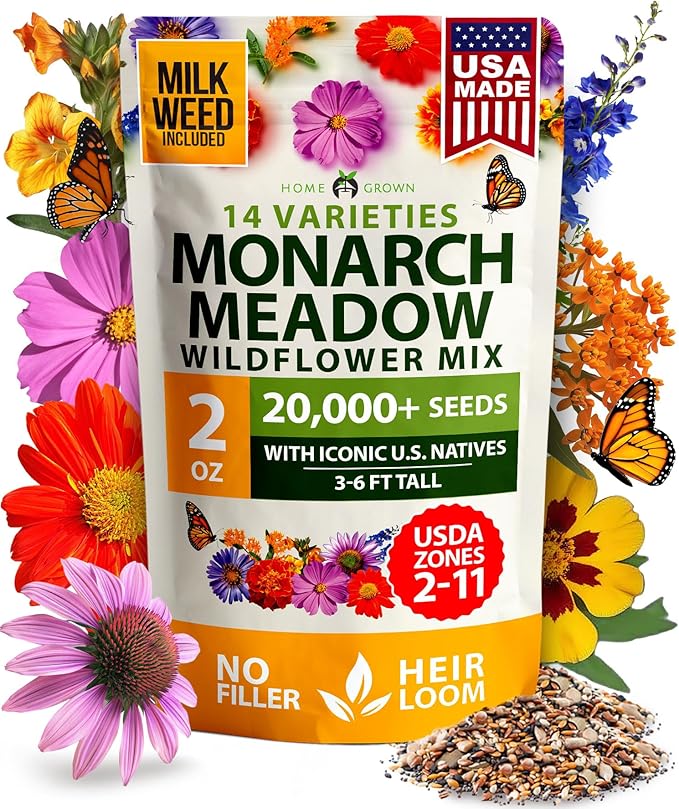
Adding color while supporting pollinators is easy with these wildflower seeds, great for gardeners wanting to attract butterflies and hummingbirds. Their biggest strength lies in blending milkweed and nectar-rich flowers that thrive through the seasons, creating lively gardens that benefit the local ecosystem.
Planting calls for outdoor spaces with full sun and loam soil. The mix suits spring or fall planting and needs only moderate watering once established.
Watching as over 20,000 seeds grow into a vibrant meadow provides a continuous display from spring through fall. The seeds include perennial options to return over the years, reducing the need for replanting.
They perform admirably in creating habitats for monarchs, bees, and hummingbirds, aiding crucial biodiversity. At about 2 feet tall, the plants are manageable for typical garden beds. Most people praise the lasting blooms and variety in colors, though some find waiting for the full growth and bloom slow.
The seed mix’s design suits a range of hardiness zones, making it versatile but dependent on local climate and care.
The seed mix creates vibrant, colorful meadows that truly attract monarch butterflies and hummingbirds, with a strong set of flowers lasting through several seasons. The main drawback is the slow pace until the plants fully grow and start producing consistent blooms, which requires patience and care.
Gardeners eager to support pollinators and willing to tend to their plants over time will find this mix rewarding. Those looking for fast results or without a sunny, loamy outdoor spot may want to consider alternatives better suited to those conditions.
Pros
- Creates a habitat for butterflies and hummingbirds
- Continuous blooms from spring through fall
- Includes perennial seeds that return yearly
- Suitable for various USDA hardiness zones
Cons
- Growth and blooms can be slow to develop fully
- Needs full sun and specific soil type to thrive
| Specification | Details |
|---|---|
| Sunlight Exposure | Full Sun |
| Expected Blooming Period | Spring to Summer |
| Soil Type | Loam Soil |
| Moisture Needs | Moderate Watering |
| Expected Plant Height | 2 feet |
| USDA Hardiness Zone | 3, 4, 5, 6, 7, 8, 9 |
8. Wildflower Seeds Annual & Perennial Mix

Containing over 23 varieties and 100,000 fresh wildflower seeds, this mix attracts a range of pollinators like hummingbirds and butterflies. Suitable for outdoor planting across North America, it works well in gardens requiring partial sun and that want a lively appeal from spring through fall.
Seeds come in individual resealable bags, keeping them fresh and easy to handle throughout planting seasons in spring, summer, autumn, or even winter. It thrives in loam soil or potting mix with moderate, regular watering.
The flexibility to plant across multiple seasons and ports well to outdoor garden spaces that match USDA zone conditions.
Plants reliably grow to about 15 inches tall and bloom consistently from spring to fall, providing continuous color and activity for pollinators. Positive notes highlight the high germination rate and seed freshness. A common drawback involves moderate water needs, which require some attention but keep plants healthy.
Seeds are fresh with a high germination rate, making blooming dependable throughout multiple seasons. Most users noticed the need for consistent watering to keep plants thriving, which may require more gardening effort than some expect.
Gardeners aiming to attract hummingbirds and butterflies in various parts of North America will appreciate the variety and extended bloom period. Those who prefer low-maintenance plants or indoor gardening options might want to consider alternatives.
Pros
- High germination rate for consistent growth
- Resealable package preserves seed freshness
- Suitable for a wide range of USDA zones
- Offers diverse 23-variety wildflower mix
Cons
- Requires regular moderate watering
- Limited to outdoor use only
| Specification | Details |
|---|---|
| Seed count | 100,000 wildflower seeds |
| Sunlight Exposure | Partial Sun |
| Plant Height | 15 inches |
| Expected Blooming Period | Spring to Fall |
| Moisture Needs | Moderate Watering, Regular Watering |
| USDA Hardiness Zone | 1 to 10, 12 |
9. Butterfly Bush Flower Seeds Perennial Plant

Gardeners aiming to bring butterflies and hummingbirds to their outdoor space will find these seeds an excellent choice. The main draw is how well the flowers attract a variety of pollinators, adding lively movement and color to a garden environment.
Starting these seeds indoors about 6-8 weeks before the last frost sets you on the right path for a healthy start. Lightly pressing the seeds on moist seed-starting mix helps with germination.
Keeping the soil just moist enough until the seedlings appear helps ensure good growth. Once planted outside, placing them in full sun spots encourages blooming throughout much of the year.
The tall flower spikes create striking vertical interest, making it useful as a background plant or a standout shrub. The bunching habit fills out garden beds nicely without needing excessive care. Pollinators like butterflies and hummingbirds regularly visit, responding well to its blooms.
Some gardeners mention waiting for seedlings can test patience, but when flowers appear, they bring vibrant life to the yard.
Visitors in the garden regularly include butterflies and hummingbirds, thanks to the flowers’ appeal. Though the seeds require light to germinate and need consistent moisture, the wait is worthwhile for the colorful blooms and lively garden visitors.
Those who enjoy gardening patience and have a sunny outdoor space will appreciate this choice. People wanting quicker floral impact might prefer more mature plants instead of starting from seed.
Pros
- Attracts a variety of pollinators
- Year-round blooming under proper conditions
- Good for background or standalone planting
- Thrives in full sun locations
Cons
- Seeds need light to germinate; careful planting required
- Slow seedling emergence can test patience
| Specification | Details |
|---|---|
| Expected Blooming Period | Year Round |
| Sunlight Exposure | Full Sun |
| Indoor Outdoor Usage | Outdoor |
| Sowing Guidance | Start indoors 6-8 weeks before last frost date |
10. Sereniseed Hummingbird Wildflower Mix Seeds

A wildflower seed mix designed specifically to attract hummingbirds and butterflies, ideal for gardeners aiming to create a vibrant pollinator-friendly space. Its biggest strength lies in the great variety of blooms it offers, supporting pollinators from spring through summer with a wide range of colors and shapes that bloom alongside each other.
Planting calls for spring sowing in full sun and moderate watering. The seeds come in a resealable pouch, making it easy to store extra seeds for the following year.
The mix includes species that adapt well to loam soil and grow to about 30 inches tall, providing a consistent source of nectar and beauty throughout the blooming season. Germination rates are high thanks to temperature-controlled storage.
The mix produces a lively and diverse garden that easily attracts local hummingbirds and butterflies. Seeds are non-GMO and untreated, appealing to those wanting natural growth without chemicals. Strong points include the wide variety of plants and the reliable germination guarantee.
On the flip side, some may find the flower height uniform but limited to about 30 inches, which might not suit all garden layouts.
The seed mix consistently produces an attractive and colorful garden that appeals to hummingbirds and butterflies, supported by fresh seeds stored in ideal conditions for good germination. However, some may find limited plant height and a strict sun requirement against their design preferences or garden environment.
Those aiming for a lively pollinator garden with easy care will appreciate this wildflower mix. Gardeners with shaded spaces or who want more height variation might want to look for other options better suited to their unique conditions.
Pros
- Wide variety of pollinator-friendly flowers
- High germination rate guaranteed
- Seeds are 100% non-GMO and untreated
- Resealable pouch for seed storage
Cons
- Plants grow uniformly to about 30 inches tall
- Needs full sun exposure to thrive
| Specification | Details |
|---|---|
| Sunlight Exposure | Full Sun |
| Expected Plant Height | 30 inches |
| Soil Type | Loam Soil |
| Expected Blooming Period | Spring to Summer |
| Moisture Needs | Moderate Watering |
| USDA Hardiness Zone | 1 to 13 |
11. Perennial Hummingbird Mint Flower Seeds

Perennial Hummingbird Mint Flower Seeds excel at attracting hummingbirds, butterflies, and other pollinators to outdoor gardens. Perfect for gardeners looking to add vibrant, fragrant flowers that support local wildlife, these seeds grow well in sunny spots and bloom year-round with minimal fuss.
Planting involves pressing the seeds lightly into moist, well-draining soil after the last spring frost. They require consistent moisture until sprouting and full sun for best results. Once established, they tolerate drought and need little watering.
Upright flower spikes work great for border backgrounds and fresh-cut arrangements, adding color and charm daily.
The flowers attract hummingbirds and butterflies more effectively than many other garden plants, fulfilling their purpose as pollinator magnets. The drought tolerance after root establishment means less maintenance through dry spells, although they need careful watering early on.
One downside mentioned is the need for consistent moisture during germination, which requires attention to soil conditions.
The most appreciated feature is how well these flowers attract hummingbirds and butterflies, making the garden lively and colorful. A common challenge is the need for consistent moisture during the early growth phase, which requires attention to soil watering.
Gardeners wanting a pollinator-friendly outdoor plant that blooms year-round will enjoy these seeds. Those without reliable full sun spots or consistent watering ability during germination should consider other options.
Pros
- Attracts hummingbirds and butterflies effectively
- Year-round blooming creates constant garden interest
- Once established, plants tolerate drought well
- Vibrant flower spikes suitable for borders or bouquets
Cons
- Seeds need consistent moisture to germinate properly
- Only suitable for outdoor planting in full sun
| Specification | Details |
|---|---|
| Indoor Outdoor Usage | Outdoor |
| Expected Blooming Period | Year Round |
| Sunlight Exposure | Full Sun |
| Growth Conditions | Drought tolerant once established |
| Sowing Guide | Press seeds into moist soil after last frost |
12. Butterfly and Hummingbird Wildflower Seed Mix

Bright colors and a steady stream of nectar attract butterflies and hummingbirds, making a garden lively and inviting. Perfect for outdoor spaces where pollinators thrive, it stands out for covering a large area with ease and supporting a long blooming season. Anyone wanting to boost natural activity will appreciate how well it keeps blooms coming through summer to frost.
Planting in spring sets the stage for a garden that thrives on full sun and average watering. The mix covers up to 100 square feet, so it works well in garden beds, borders, or even wildflower meadows.
The over 30,000 seeds, each non-GMO and open-pollinated, offer a high germination rate. It handles the transition from early summer into fall with a splash of color and nectar, keeping pollinators busy without much extra effort.
Flowers produce a strong nectar supply that genuinely draws butterflies and hummingbirds. The seed blend appears thoughtfully put together with sturdy, healthy plants that last through season changes.
The best praise highlights how consistent and reliable the bloom timing is. Complaints focus mostly on the need for full sun exposure, which limits placement options for some gardens.
Strong nectar production and reliable bloom timing make the garden vibrant and full of pollinator activity for months. The most common limitation is the strict need for full sun, restricting where these plants can be placed effectively.
Those with sunny outdoor spaces aiming to attract a steady flow of butterflies and hummingbirds will be very satisfied. Gardens with limited sunlight or indoor setups will want to consider other options better suited for shade or low light.
Pros
- High nectar for butterflies and hummingbirds
- Long bloom season from summer to frost
- Non-GMO, open-pollinated seeds
- Covers large garden areas easily
Cons
- Requires full sun for best growth
- Not ideal for shaded or indoor spaces
| Specification | Details |
|---|---|
| Sunlight Exposure | Full Sun |
| Expected Blooming Period | Summer to Fall |
| Expected Planting Period | Spring |
| Moisture Needs | Average |
| Seed Count | Over 30,000 Non-GMO Seeds |
| Coverage Area | Up to 100 Square Feet |
13. Honeysuckle Seeds Perennial Climbing Vine

Honeysuckle Seeds Perennial Climbing Vine is perfect for gardeners looking to attract hummingbirds and butterflies. Its main strength lies in the fragrant flowers that bloom year-round, bringing life and color to any outdoor space that gets plenty of sun.
Starting the seeds involves soaking them in warm water for a day to help with germination. The vine prefers well-draining soil and can handle full sun or partial shade.
A sturdy support is essential since the vine climbs actively. Keep the soil consistently moist but avoid overwatering. Watching the flowers bloom regularly makes daily garden care rewarding.
The vine does a great job attracting pollinators thanks to its lush and fragrant blossoms. The flexible branches add an unexpected bonus for crafting once dried.
Most users appreciate the year-round blooming, though getting the seeds started can take patience due to the soaking and planting process. Some find the need for constant moisture a challenge in drier climates.
The vine’s biggest plus is its continuous fragrant bloom that keeps attracting pollinators throughout the year. The most frequent drawback involves the seed preparation and the need to maintain consistent moisture levels during growth. The plant grows well outdoors but demands some attention during setup.
Honeysuckle is a great fit for outdoor gardeners patient enough to prepare and care for the seeds properly and for those planting in sunny spots who want to invite butterflies and hummingbirds. It may not suit gardeners looking for low-maintenance or indoor plants.
Pros
- Attracts hummingbirds and butterflies effectively
- Fragrant flowers bloom year-round
- Flexible branches suitable for crafts
- Thrives in full sun with partial shade tolerance
Cons
- Seeds require soaking before planting
- Needs consistent moisture to avoid stress
| Specification | Details |
|---|---|
| Expected Blooming Period | Year Round |
| Sunlight Exposure | Full Sun |
| Indoor Outdoor Usage | Outdoor |
14. Perennial Bee Balm Flower Seeds

Perennial Bee Balm Flower Seeds are designed for outdoor planting with a focus on attracting pollinators like hummingbirds and butterflies. Ideal for gardeners seeking a lively and colorful background plant, these seeds offer a strong appeal through their distinctive flower clusters and upright growth habit.
Sowing the seeds after the last frost in spring requires well-draining soil and a spot that gets full sun to partial shade. Allow enough space between plants to support air circulation. Daily garden care involves keeping the soil consistently moist to promote healthy growth and vibrant blooms.
The flowers also serve well in cut arrangements, adding value beyond the garden border.
The seeds reliably attract a variety of pollinators throughout the year, performing well in the recommended conditions. The upright habit of the plant gives your garden a structured look.
The most frequent praise highlights how effectively it draws butterflies and hummingbirds. Some mention a need to watch spacing closely to avoid crowding and poor air flow.
The strongest praise focuses on the seeds’ ability to attract pollinators like hummingbirds and butterflies throughout the year. The most common complaint involves the necessity of carefully spacing plants to maintain good air circulation and healthy growth.
Those wanting a garden vibrant with activity from pollinators and colorful blooms will be pleased. Gardeners who prefer low-maintenance plants or have difficulty maintaining moist soil might look for alternatives that demand less care.
Pros
- Attracts hummingbirds and butterflies effectively
- Suitable as a background plant in borders
- Distinctive flower clusters with upright growth
- Performs well in consistently moist soil
Cons
- Requires careful spacing for good air circulation
- Needs consistently moist soil, may require frequent watering
| Specification | Details |
|---|---|
| Expected Blooming Period | Year Round |
| Sunlight Exposure | Full Sun |
| Indoor Outdoor Usage | Outdoor |
| Growth Conditions | Consistently moist soil, well-draining |
| Sowing Instructions | After last frost, full sun to partial shade |
15. Hummingbird Trumpet Vine Seeds Mixed

Bright trumpet-shaped flowers grab attention instantly, making it perfect for warm climate gardeners aiming to attract hummingbirds and butterflies with ease. Its biggest strength lies in providing vibrant, vertical blooms that transform outdoor structures into lively pollinator magnets.
Planting requires loose, well-draining soil and at least 6-8 hours of full sun daily, best started after the last frost. Seeds need to be sown about 1/4 inch deep. Once established, these climbing vines climb trellises, fences, or arbors with little fuss, requiring minimal maintenance while supporting pollinators continuously.
Performance in attracting hummingbirds and butterflies is consistent year-round in Zones 7-10, thriving best in warmer U.S. regions. The seeds grow into strong vines that add height and dimension to any garden space.
The main praise highlights how well they attract pollinators, though some find the climbing habit challenging to control without regular trimming.
Attraction of pollinators throughout the year is the biggest advantage, while controlling its climbing habit is the main challenge mentioned. Gardeners appreciate the continuous blooms but note it needs regular trimming to prevent overrunning other plants.
Anyone living in Zones 7-10 wanting lively, colorful vertical growth with low upkeep will enjoy these seeds. People outside warm climates or those preferring low-growing plants might want to explore alternatives better suited for cooler zones or different garden styles.
Pros
- Attracts hummingbirds and butterflies effectively
- Year-round blooming in suitable zones
- Climbing habit perfect for vertical gardening
- Low maintenance once established
Cons
- Requires full sun and warm zones to thrive
- Can become invasive if not managed regularly
| Specification | Details |
|---|---|
| Zones | 7-10 |
| Planting Depth | 1/4 inch |
| Sunlight Exposure | Full Sun (6-8 hours daily) |
| Blooming Period | Year Round |
| Usage | Outdoor |
Best Plants for Butterfly and Hummingbird Gardens Comparison
| Product | Blooming Period | Sunlight Exposure | Pollinator Attraction | Maintenance |
|---|---|---|---|---|
| Wildflower Butterfly Mix | Spring to Fall | Full Sun | – | Moderate Watering |
| Wildflower Perennial Annual Mix | 35-75 days | Full Sun | – | – |
| Seed Needs Hummingbird Flowers | Summer to Fall | Full Sun | Attracts Butterflies, Pollinators | – |
| Earth Science Butterfly Blend | Spring to Fall | Full Sun | – | Moderate Watering |
| Hummingbird & Butterfly Seeds | Spring to Fall | Full Sun | Attracts Pollinators | Moderate Watering |
| Butterfly Bush Shrub Seeds | Year Round | Full Sun | – | Low Maintenance |
| HOME GROWN Monarch Mix | – | – | Attracts Pollinators | – |
| Wildflower Annual Perennial Mix | Spring to Fall | Partial Sun | – | – |
| Butterfly Bush Perennial Seeds | Year Round | Full Sun | Attracts Pollinators | – |
| Sereniseed Hummingbird Mix | Spring to Summer | Full Sun | Attracts Pollinators | – |
| Perennial Hummingbird Mint | Year Round | Full Sun | Attracts Pollinators | – |
| Butterfly Hummingbird Wildflower | Summer to Fall | Full Sun | Attracts Pollinators | Average Moisture |
| Honeysuckle Climbing Vine Seeds | Year Round | Full Sun | Attracts Pollinators | – |
| Perennial Bee Balm Seeds | Year Round | Full Sun | Attracts Pollinators | – |
| Hummingbird Trumpet Vine | Year Round | Full Sun | Attracts Pollinators | Low Maintenance |
- Blooming PeriodSpring to Fall
- Sunlight ExposureFull Sun
- Pollinator Attraction–
- MaintenanceModerate Watering
- Blooming Period35-75 days
- Sunlight ExposureFull Sun
- Pollinator Attraction–
- Maintenance–
- Blooming PeriodSummer to Fall
- Sunlight ExposureFull Sun
- Pollinator AttractionAttracts Butterflies, Pollinators
- Maintenance–
- Blooming PeriodSpring to Fall
- Sunlight ExposureFull Sun
- Pollinator Attraction–
- MaintenanceModerate Watering
- Blooming PeriodSpring to Fall
- Sunlight ExposureFull Sun
- Pollinator AttractionAttracts Pollinators
- MaintenanceModerate Watering
- Blooming PeriodYear Round
- Sunlight ExposureFull Sun
- Pollinator Attraction–
- MaintenanceLow Maintenance
- Blooming Period–
- Sunlight Exposure–
- Pollinator AttractionAttracts Pollinators
- Maintenance–
- Blooming PeriodSpring to Fall
- Sunlight ExposurePartial Sun
- Pollinator Attraction–
- Maintenance–
- Blooming PeriodYear Round
- Sunlight ExposureFull Sun
- Pollinator AttractionAttracts Pollinators
- Maintenance–
- Blooming PeriodSpring to Summer
- Sunlight ExposureFull Sun
- Pollinator AttractionAttracts Pollinators
- Maintenance–
- Blooming PeriodYear Round
- Sunlight ExposureFull Sun
- Pollinator AttractionAttracts Pollinators
- Maintenance–
- Blooming PeriodSummer to Fall
- Sunlight ExposureFull Sun
- Pollinator AttractionAttracts Pollinators
- MaintenanceAverage Moisture
- Blooming PeriodYear Round
- Sunlight ExposureFull Sun
- Pollinator AttractionAttracts Pollinators
- Maintenance–
- Blooming PeriodYear Round
- Sunlight ExposureFull Sun
- Pollinator AttractionAttracts Pollinators
- Maintenance–
- Blooming PeriodYear Round
- Sunlight ExposureFull Sun
- Pollinator AttractionAttracts Pollinators
- MaintenanceLow Maintenance
How to Choose the Perfect Plants for Your Garden
Choosing plants with the right nectar sources, bloom times, and native suitability ensures butterflies and hummingbirds are attracted and supported throughout the seasons. Paying attention to these factors helps create a thriving garden that requires less maintenance, saving time, money, and frustration.
Climate and Hardiness Zone
Gardening with regional temperatures in mind makes a big difference in plant survival. Plants that struggle with frost or extreme heat can wilt or die, leaving gaps in the garden.
Knowing your hardiness zone helps pick options that thrive rather than just survive. Some tolerate frost down to -10°F, others need warm nights above 40°F. Humidity and rainfall also impact how well those plants grow, especially if they’re used to drier or wetter conditions.
Choosing species suited to your local climate means less worry about winter protection or wilting in summer. Look for plants rated for your zone and note if they prefer humid or dry environments. A plant well matched to its surroundings usually grows steadily through spring, summer, and fall without the gardener needing to babysit it constantly.
Blooming Period and Nectar Availability
Pollinators need nectar when they are active, so plants with a longer blooming season keep your garden lively longer. Some plants flower for just a few weeks while others can last several months, offering nectar to butterflies and hummingbirds over a larger window.
Not all flowers provide the same nectar quality or accessibility; tubular flowers are great for hummingbirds but butterflies prefer open blooms. Including a mix of shapes and colors attracts a variety of species and ensures nectar is available for different feeding styles.
Look for plants labeled with blooming times and note how rich their nectar supply is to keep visitors coming.
Plant Size and Growth Habit
Garden space is limited, so knowing a plant’s mature height and width helps avoid overcrowding. Some plants shoot up quickly and become tall, while others stay low and spread out.
A fast-growing plant might need more frequent pruning to keep the shape tidy.
A good garden mix balances tall, medium, and ground-level plants. Consider how each species fits into your layout and whether their growth rate matches the care you can give. Some plants self-seed or spread aggressively, which can overrun neighbors.
Measuring space and choosing compatible growth habits keeps the area neat and healthy.
Attractiveness to Pollinators
Plants proven to attract hummingbirds and butterflies show differences in flower shape and color. Tubular, red or pink flowers often draw hummingbirds, while butterflies prefer flat, brightly colored blooms like yellow or purple. The scent can also play a role in bringing pollinators closer.
Including host plants where butterfly larvae feed boosts your garden’s appeal by supporting their life cycle. Not only do these plants provide nectar, but they also serve as breeding grounds.
A garden with species known to attract multiple pollinators tends to have more diverse activity and longer visit durations.
Maintenance and Care Needs
Maintenance varies widely between plants. Some need daily watering during hot spells; others tolerate dry soil.
Pruning frequency also differs, some species need trimming every season to stay healthy, while others rarely require it. Fertilizing depends on the soil and plant nutrient needs.
Pest and disease resistance eases the workload. Plants susceptible to infestations demand more time and often chemical treatments. Easy propagation, like rooting cuttings or self-seeding, is helpful if a plant dies or needs replacement.
Choosing hardy, low-maintenance varieties makes keeping the garden vibrant less of a chore.
Optimal Plant Pairings to Attract Both Butterflies and Hummingbirds
Choosing plants with tubular flowers and vibrant colors greatly increases the chances of attracting both butterflies and hummingbirds. These pollinators favor red, orange, pink, and purple blooms, which provide easy access to nectar.
Here are some specific plant pairings effective for drawing in both species:
- Bee balm and butterfly bush: Both provide abundant nectar and bloom for a long period, making them reliable choices for feeding.
- Lantana and salvia: These are heat-tolerant and attract a variety of pollinators with their clustered flowers.
- Zinnias paired with trumpet vine: Zinnias offer flat, landing-friendly blooms for butterflies, while trumpet vine’s tubular flowers appeal to hummingbirds.
Including a mix of these species ensures a continuous bloom cycle throughout the growing season, which keeps these pollinators visiting regularly.
Essential Maintenance Tips for a Thriving Butterfly and Hummingbird Garden
Regular care ensures a garden remains inviting and healthy for butterflies and hummingbirds alike. Start by watering deeply but infrequently to encourage strong root systems in plants.
Avoid using pesticides, as they can harm pollinators. Pruning spent blooms promotes new flower growth and extends the nectar supply.
- Weeding: Keep competing plants at bay to allow flowers to flourish.
- Deadheading: Remove old flowers to stimulate new blooms.
- Providing fresh water sources: A shallow dish with water or a small fountain can help hummingbirds hydrate.
Consistent maintenance throughout the season aids in sustaining a vibrant, welcoming environment for both butterflies and hummingbirds to thrive.
People Also Asked
What Plants Attract Both Butterflies and Hummingbirds to My Garden?
Plants like bee balm, zinnias, and butterfly bush attract both butterflies and hummingbirds. These plants provide nectar that both species feed on. Placing them in sunny spots with some shelter helps maintain their blooms longer, keeping your garden lively.
How Do I Care for Plants That Support Butterflies and Hummingbirds?
Regular watering and deadheading spent flowers keep these plants healthy. Avoid pesticides as they can harm delicate butterfly larvae and hummingbirds. Feeding hummingbirds separately with a sugar water feeder also supports them beyond what flowers provide.
Are These Butterfly and Hummingbird Plants Safe for Pets and Children?
Many butterfly and hummingbird plants, such as lantana and milkweed, can be toxic, so choose varieties labeled as safe for pets and children. Supervise pets in garden areas to prevent accidental ingestion of harmful plants.
How Large Do Butterfly and Hummingbird Garden Plants Usually Grow?
Plants vary from small, like zinnias at about one to two feet, to larger shrubs such as butterfly bush which can reach six feet or more. Plan your garden space considering mature plant sizes to avoid overcrowding.
What Common Problems Affect Plants in Butterfly and Hummingbird Gardens?
Common issues include aphids and powdery mildew, especially in humid or overcrowded conditions. Regular inspection and proper spacing improve air circulation and reduce these problems without heavy chemical use.
Conclusion
Choosing plants that provide nectar and bloom in sequence is important for keeping butterflies and hummingbirds coming back. Focus on native varieties that suit your local climate.
Also, consider plants that offer shelter or breeding spots, as that supports the wildlife beyond just feeding.
Pick plants based on the size of your garden and how much time you want to spend on care. Some need regular maintenance, while others can thrive with little attention.
Check the comparison table and the detailed descriptions above to find the best match for your space and schedule.