Top 15 Best Plants to Attract Hummingbirds Fast and Easy
Many gardeners know the frustration of planting blooms that fail to attract hummingbirds despite their color and scent. Choosing the best plants to attract hummingbirds involves more than picking flowers that look pretty in your garden.
Plants that hummingbirds actually visit tend to offer the right balance of nectar and accessibility, which cheap or poorly chosen varieties often lack. Without the right flowers, you might see no movement beyond the occasional fly in your yard.
Plants that effectively attract hummingbirds have tubular-shaped flowers and produce a good amount of nectar with high sugar content, typically around 20 to 25 percent. Size matters because flowers that are about one to two inches long fit the hummingbirds’ bills better.
Easy-to-grow species that thrive in your local climate will sustain visits over the season, and plants resistant to pests reduce the need for harmful chemicals, which can drive hummingbirds away.
Need a Quick Check?
| Image | Product | Price |
|---|---|---|
Our Top Picks 1  | Wildflower Butterfly Mix | Check Price |
Our Top Picks 2  | Cardinal Flower Seeds | Check Price |
Our Top Picks 3  | Lantana Camara Live Plants | Check Price |
Our Selected Top 15 Plants to Attract Hummingbirds You Can Trust
This list features a carefully chosen selection of plants known to attract hummingbirds, highlighting their characteristics and suitability for different garden types. Each review explains how well the plant performs, its ideal growing conditions, and the main advantages and drawbacks to help you make informed choices.
1. Wildflower Seeds Butterfly and Hummingbird Mix
Attracting hummingbirds to your garden starts with planting the right flowers, and this mix is made exactly for that. It suits anyone looking to turn about 100 square feet of their yard into a colorful spot buzzing with life.
Its biggest strength is the sheer quantity of seeds, enough to cover a pretty large area with flowers.
Opening the packet reveals a surprisingly large amount of seeds that can easily cover your intended patch. Directions inside help with planting and care, making it straightforward to sow the seeds in soil. With the reusable zipper on the packet, leftover seeds stay fresh, encouraging multiple plantings or saving seeds for later.
These seeds germinate well and grow into a variety of wildflowers that attract hummingbirds and butterflies. The packaging keeps seeds in good condition until use, improving chances of success. Most reviews mention how many flowers appear after planting, while some note that it may take patience for flowers to fully bloom and attract birds.
Many praise the abundant flowers that attract hummingbirds, making gardens lively and colorful. On the other hand, some note that patience is required as flowers do not appear immediately and can take time to develop fully. The well-sealed, premium packaging helps maintain seed freshness for best results.
Gardeners who want a large, varied mix of wildflowers to attract hummingbirds will appreciate this product. Those looking for faster blooms or specific single-species plants might consider alternatives that bloom more quickly or offer uniform flowers.
Pros
- Large quantity covers a big area
- Fresh seeds for high germination rates
- Reusable zipper keeps seeds fresh
- Planting instructions included
Cons
- Flowers can take time to bloom fully
- Variety of wildflowers may vary in growth
| Specification | Details |
|---|---|
| Packet size | 1 ounce |
| Seed count | over 7,500 pure live seeds |
| Coverage area | 100 square feet |
| Packaging | Premium with reusable zipper |
| Planting guide | Included |
2. Cardinal Flower Seeds Red Lobelia Cardinalis
Cardinal Flower Seeds Red Lobelia Cardinalis grow in Hardiness Zones 2-9 and produce some of the reddest red flowers in nature. Perfect for gardeners who want to attract hummingbirds and butterflies, these low-maintenance plants stand out for their vivid color and ability to thrive in moist soils.
Planting these seeds requires choosing a sunny to partially shaded spot with consistently moist soil. Once established, the perennial reseeds itself, making ongoing care minimal. It resists deer, so outdoor gardens have less risk of damage.
Some people have even tried growing the flowers in aquatic settings or aquariums, expanding where it can thrive.
The flowers provide a rich source of nectar, effectively drawing hummingbirds. Being perennial, they come back yearly without replanting as long as conditions are right.
While they are generally easy to grow, some gardeners might notice slower starts in less moist soils. The plants are resilient and hold up well but prefer steady moisture for best results.
The flowers deliver an intense red color that hummingbirds love, making them highly effective for attracting wildlife. Gardeners often note their resilience and ease of care but also mention that they need consistently moist soil, or growth may lag.
People who want a natural, bright red perennial that returns year after year will appreciate these seeds. Those with dry soil or low moisture environments might want to consider plants that tolerate drought better.
Pros
- Brightest red flowers natural to attract hummingbirds
- Low maintenance once established
- Self-reseeds in optimal conditions
- Deer resistant, protects garden investment
Cons
- Requires moist soil for best growth
- Slower start in less ideal conditions
| Specification | Details |
|---|---|
| Hardiness Zones | 2-9 |
| Sunlight | Sunny to partially shaded areas |
| Soil | Moist soils |
| Deer Resistance | Yes |
| Uses | Aquariums or aquatic settings |
3. Lantana Camara Mixed Starter Live Plants
Gardeners looking to attract hummingbirds with bright, flowering plants will appreciate this Lantana Camara Mixed Starter. It suits those who want an easy-to-grow, colorful plant that draws these tiny birds.
Its biggest strength lies in producing vibrant blooms that hummingbirds love.
Planting works best in mid to late spring once the threat of frost has passed. Handling requires care with shipping during extreme temperatures, below 32 degrees or above 95 degrees Fahrenheit, to avoid plant damage. Daily growth depends on consistent watering and placing it where hummingbirds are likely to visit, encouraging natural pollination and enjoyment.
The mixed Lantana Camara adapts well to typical garden conditions and attracts hummingbirds effectively with its flowers. It’s a live plant, so its health depends heavily on careful timing and climate control.
While it thrives and blooms beautifully in the right conditions, the main drawback is its vulnerability during shipping in temperature extremes.
Strong plant growth and vibrant flowers make it a favorite for attracting hummingbirds in ideal conditions. Many face issues with plant health loss when shipping happens during extreme temperature periods. This requires close attention to planting time and weather forecasts.
Those who live in temperate climates and can plant in mid to late spring will enjoy its bright blooms and bird visits. Anyone in areas with harsh temperature swings or in need of a more resilient plant might consider different options.
Pros
- Bright, colorful flowers attract hummingbirds
- Suitable for mid to late spring planting
- Mixed variety adds garden visual interest
Cons
- Vulnerable to damage in extreme temperatures
- Needs careful timing for planting
| Specification | Details |
|---|---|
| Plant Type | Live Plants |
| Shipping Caution | Avoid below 32°F or above 95°F |
| Optimal Planting Time | Mid to late spring |
| Main Use | Attracting hummingbirds |
4. Red Shrimp Plant Justicia Brandegeeana Live Plant

Bright red bracts that look like little shrimp set this plant apart for drawing hummingbirds right to your garden or patio. Ideal for anyone wanting more wildlife interaction, it performs well indoors or outdoors, making it a flexible choice for various green spaces.
Its bold color really stands out among other hummingbird plants.
Arriving ready to grow in a 4-inch pot, setting this plant up is straightforward, just transplant to a bigger container or garden bed. Daily care involves typical watering and sunlight needs, with good adaptability to indoor or outdoor spots. The size and established state make it easy to manage without extra fuss.
It reliably attracts hummingbirds and butterflies with its striking deep-red blooms lasting throughout the growing season. The vigorous growth and unique flower shape draw plenty of attention. Most people appreciate how well it thrives with standard care, though some mention the need to watch for occasional pests and give it enough space.
The plant’s bold red bracts and its ability to attract hummingbirds make it a standout. Most people find it grows well with normal care, but attention to pests and providing ample growing space is often needed to keep it healthy.
Those who want a versatile, eye-catching plant for indoor or outdoor areas will enjoy this. Gardeners needing a low-maintenance option without pest concerns might want to look elsewhere.
Pros
- Distinctive shrimp-like red blooms
- Attracts hummingbirds and butterflies reliably
- When transplanting from a 4-inch pot, make sure to prepare your new container properly.
- Thrives indoors or outdoors
Cons
- Can require pest management
- Needs enough space to grow well
| Specification | Details |
|---|---|
| Plant Type | Live Plant |
| Pot Size | 4-inch |
| Key Feature | Attracts hummingbirds and butterflies |
| Bloom Color | Bold, deep-red bracts |
| Placement | Indoor or Outdoor |
5. Wildflower Seeds Mix Perennial and Annual

Burpee Wildflower Seeds Mix Perennial and Annual offers a vibrant collection of 24 plants tailored to attract hummingbirds and other pollinators. Perfect for gardeners wanting to bring life and color to their outdoor space, it stands out with a high germination rate ensuring that most seeds will sprout successfully.
Getting started requires simply planting the seeds during spring or summer, when the mix thrives best. The blend contains annuals, perennials, and biennials, so expect flowers to bloom at different times, keeping your garden lively throughout the season.
The mix contains no filler, so what you plant is pure and fresh, leading to a healthy and diverse garden setup with minimal fuss.
Performance-wise, the variety attracts a wide range of pollinators, including hummingbirds, butterflies, and bees, making your garden buzz and flutter with activity. Built from 99% pure live seed, the mixture is of exceptional quality. Common remarks highlight the excellent sprouting rate, while some find that not every plant type grows equally well in all climates, requiring some patience and care.
The seed mix is praised for its freshness and excellent germination, leading to vibrant pollinator activity. On the downside, users note that some plants may need extra attention depending on local conditions to thrive well.
Those wanting an easy way to attract hummingbirds and butterflies with varied blooms will find this mix rewarding. Gardeners in harsher or less predictable climates might consider a mix tailored more specifically to their region for better success.
Pros
- Includes a diverse mix of flower types
- Fresh seeds with no filler content
- Attracts multiple pollinators effectively
- High germination rate ensures strong sprouting
Cons
- Some flower types may struggle in certain climates
- Requires spacing and care for optimal growth
| Specification | Details |
|---|---|
| Seed Type | 24 annual, perennial and biennial plants |
| Seed Purity | 99% pure live seed |
| Germination Rate | High germination rate |
| Best Growth Season | Spring and summer |
6. Seed Needs Hummingbird and Butterfly Flower Seeds

Growing a vibrant hummingbird and butterfly-friendly garden is a real pleasure using Seed Needs Hummingbird and Butterfly Flower Seeds. Great for gardeners wanting a diverse mix of colors and flower types, it shines at bringing variety. It offers both annual and perennial seeds, so the garden keeps changing through seasons.
Getting started with this mix involves scattering the seed blend outside during planting season. The packet includes everything from snapdragons to butterfly milkweed, adding layers of color and texture through red, orange, yellow, blue, pink, and purple blooms.
It’s rewarding to see such a range of flowers grow at once, attracting hummingbirds and butterflies day after day.
The seed mixture delivers many different flowers that bloom beautifully, providing plenty of natural nectar sources. Strong suits include the wide variety of flowers and the mix of annuals and perennials.
The mixture performs well in different garden settings. Some users note that coverage can be uneven with the mix, so spot planting might be necessary for fuller blooms in certain areas.
The most appreciated feature is the rich diversity of flowers that provide continuous bloom throughout the garden, attracting many hummingbirds and butterflies. The common drawback is that the seed spread sometimes results in uneven flower growth, requiring extra attention to fill bare spots.
Gardeners who enjoy a colorful, mixed wildflower look and want both quick and lasting blooms will find this seed blend suitable. Those preferring a more uniform garden or specific flower control might look for single-species seed packets instead.
Pros
- Wide variety of flower colors and types
- Mix includes both annual and perennial seeds
- Attracts hummingbirds and butterflies effectively
- Bulk packaging offers a lot of seeds
Cons
- Flower coverage can be patchy in some spots
- Some seed varieties may not bloom equally each season
| Specification | Details |
|---|---|
| Type of Seeds | Annual and Perennial Flower Seeds |
| Included Varieties (Annual) | Snapdragon, China Aster, Cosmos, Forget Me Not, Larkspur, Bird’s Eyes, Treemallow, Alyssum, Lemon Mint |
| Included Varieties (Perennial) | Butterfly Milkweed, Giant Star Columbine, Maltese Cross, Scarlet Salvia, Four O’ Clock |
| Flower Colors | Red, Orange, Yellow, Blue, Pink, Purple and more |
| Package Type | Premium Bulk Package |
7. Hummingbird Butterfly Wildflower Seed Mix

Hummingbird Butterfly Wildflower Seed Mix is a great choice for gardeners looking to create a colorful space that attracts hummingbirds and butterflies. Its largest appeal lies in offering a large quantity of seeds that can cover a decent area, making it well suited for those aiming to cultivate a lively, eco-friendly garden border or wildflower patch.
Set up involves spreading the seeds generously over about 100 square feet, which the 1 ounce packet comfortably covers. Growing the mix regularly brings nectar-rich blooms that continuously attract pollinators. This seed mix suits gardeners who want an easy-to-grow option that blooms through the season without requiring constant replanting or special care.
The mix performs well in attracting hummingbirds and butterflies, creating vibrant blooms throughout the growing season. It consists of over 7,500 pure live seeds, ensuring good coverage and plant diversity. The main praise mentions the consistent flower production and vibrant colors, while a common drawback is that the variety of seeds takes time to establish fully before flowers appear in abundance.
The most praised aspect is how the large number of seeds creates a steady display of colorful, nectar-rich flowers that attract hummingbirds and butterflies reliably. The most common complaint notes that the flowers do not appear immediately, as the seeds require time to grow and produce blooms throughout the season.
Those seeking an eco-friendly way to support pollinators in medium to large garden areas will be happy with this mix. Gardeners with very limited space or a need for quicker flowering might prefer a different option more tailored to small plots or faster bloom times.
Pros
- Large seed count for wide coverage
- Nectar-rich blooms attract hummingbirds
- Easy to grow with long blooming period
- Brightens garden with vibrant colors
Cons
- Seed variety takes time to establish fully
- Not ideal for very small garden spaces
| Specification | Details |
|---|---|
| Packet size | 1 ounce |
| Seed count | Over 7,500 pure live seeds |
| Coverage area | 100 square feet |
| Suitable for | Borders and wildflower areas |
| Bloom period | Throughout the season |
8. Monarch Butterfly Wildflower Mix Seeds
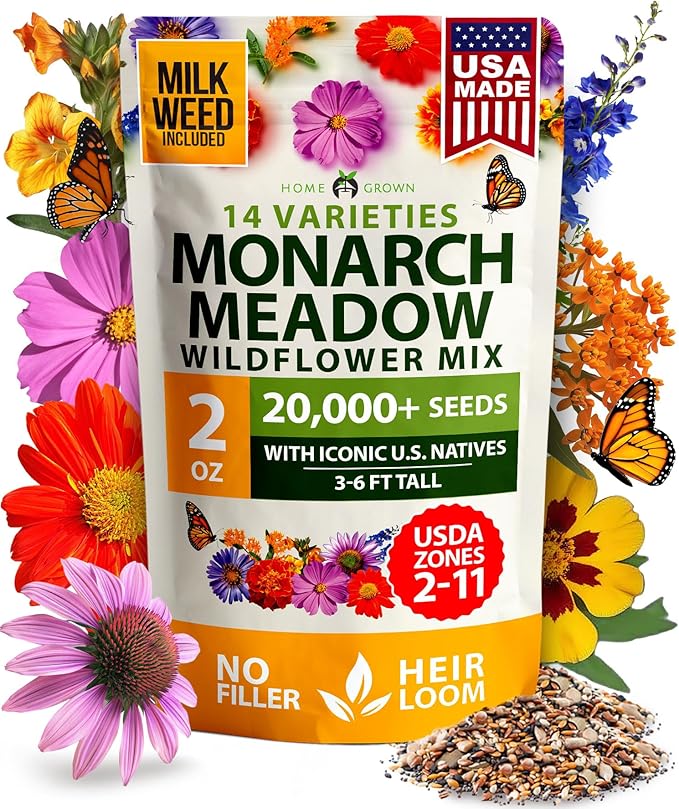
Milkweed and perennial wildflower seeds form the core of this mix, designed to support pollinators like monarchs, bees, and hummingbirds. Ideal for gardeners looking to create colorful, wildlife-friendly meadows that offer continuous blooms throughout the growing season.
Its biggest strength lies in fostering a rich and diverse habitat.
Starting a patch with over 20,000 seeds means plenty to plant and spread out. The mix includes a variety of flowers such as butterfly weed and other nectar-rich options, which return year after year. Daily garden maintenance involves regular watering during establishment and occasional weeding to keep the meadow vibrant and inviting to pollinators throughout spring to fall.
The seed mix performs well in producing a lively display of orange, purple, yellow, and white flowers that attract a range of pollinators. Plants tend to come back each year, providing lasting beauty without re-seeding annually.
The most praised aspect is the steady supply of blooms supporting biodiversity. Some find the initial garden setup requires patience and ongoing care to reach full bloom potential.
Continuous blooms and support for monarchs and hummingbirds stand out as the best features. Many appreciate the long bloom season and variety, though some find that getting the plants established takes effort and time. Patience is needed before you can fully enjoy the pollinator-friendly garden.
This seed mix suits gardeners wanting a lively, natural-looking meadow that contributes to biodiversity and offers color from spring to fall. Those looking for quick results or low-maintenance gardens may want to consider options requiring less initial care.
Pros
- Creates vibrant, colorful meadows
- Supports multiple pollinators including hummingbirds
- Perennials return each year for long-term planting
- Continuous blooms across several seasons
Cons
- Requires patience and care to establish fully
- Initial garden prep and maintenance needed
| Specification | Details |
|---|---|
| Seed Quantity | Over 20,000 wildflower seeds |
| Flower Colors | Orange, purple, yellow, white |
| Included Seeds | Butterfly weed, milkweed, perennial wildflowers |
| Bloom Duration | Spring through fall |
| Biodiversity Support | Monarchs, bees, hummingbirds |
9. Scarlet Sage Heirloom Flower Seeds Salvia Coccinea

Bright red tubular blooms catch the eye first, making Scarlet Sage Heirloom Flower Seeds a great pick for gardeners who want to attract hummingbirds while brightening sunny spots. Its biggest strength lies in the vivid color and easy growth in tough conditions.
Getting these seeds started is straightforward, plant them in a sunny spot with well-drained soil. They grow quickly into 18-inch upright plants that don’t fuss over heat or dry soil. No special care is needed beyond occasional watering.
Leaving flowers after blooming allows seeds to drop, bringing color back next season naturally.
Scarlet Sage thrives under heat and drought, thriving across USDA zones 2–12. Its tough nature means it handles sandy or rocky soil well, making it very adaptable. Most find the blooms reliable and long-lasting into early fall.
Some find the annual nature limiting since cutting back prevents reseeding.
Scarlet Sage is praised for bright, attractive flowers that draw hummingbirds and insects without fuss. It handles tough soil and hot climates with little attention needed. A common issue is that pruning after flowering stops reseeding, which affects how long it blooms year after year.
Those wanting a hardy, colorful plant that takes heat and poor soil will be pleased. Gardeners who prefer long-lasting perennials without reseeding concerns might look for a different type of hummingbird-friendly plant.
Pros
- Bright red blooms attract hummingbirds and pollinators
- Grows well in heat and drought conditions
- Self-seeds for repeat blooms next season
- Tolerates poor soil like sand or rocks
Cons
- Cutting back stops self-seeding and future blooms
- Annual and tender perennial status might limit lifespan
| Specification | Details |
|---|---|
| Plant Height | 18 inches |
| Bloom Color | Vivid Red |
| Growth Type | Fast-growing annual to tender perennial |
| USDA Zones | 2–12 |
| Soil Tolerance | Heat, drought, sandy or rocky soils |
| Bloom Season | Late summer to early fall |
10. Hummingbird Mint Agastache Blue Fortune Live Plant

Perfect for gardeners wanting a long bloom time and durable plant, the Hummingbird Mint Agastache Blue Fortune delivers vibrant lavender-blue flowers from midsummer through fall that easily attract hummingbirds. It suits outdoor spaces in USDA Zones 5–9 and stands out for its combination of color and low-maintenance care.
Setting up the plant involves placing it in full sun with well-drained, average soil, where it quickly settles in. Once established, it handles drought conditions well, meaning watering can be kept to a minimum.
Its fragrant leaves not only smell nice but also naturally discourage deer, which helps protect your garden without extra effort.
Performing strongly as a hummingbird magnet, it produces abundant flower spikes for months, maintaining its presence in the garden. Growing between 24 and 36 inches tall and spreading 18 to 24 inches wide, it fits comfortably in many garden layouts.
The main praise highlights its long-lasting blooms and hardiness, while the most common complaint centers on slower growth during initial planting.
The plant consistently produces a vibrant display of flowers over several months that draws hummingbirds, while its slower early growth phase requires patience. Day-to-day, it thrives with minimal watering and care in sunny spots, making it a reliable garden addition that balances beauty and practicality.
Anyone looking for a relatively easy-care perennial for hummingbirds will appreciate this plant’s benefits, especially in suitable climates. Those outside USDA Zones 5–9 or needing rapid full-size coverage might want to explore other options better matched to faster growth or a wider hardiness range.
Pros
- Long-lasting lavender-blue blooms midsummer to fall
- Drought tolerant once established
- Fragrant foliage deters deer naturally
- Low maintenance care requirements
Cons
- Growth can be slow initially
- Limited to USDA Zones 5–9
| Specification | Details |
|---|---|
| Bloom color | Lavender-blue |
| Height at maturity | 24–36 inches |
| Width at maturity | 18–24 inches |
| USDA Zones | 5–9 |
| Sun exposure | Full sun |
| Soil | Average, well-drained |
11. Perennial Hummingbird Mint Flower Seeds Mix

Trying to bring hummingbirds and pollinators into your garden can feel tricky, but these Perennial Hummingbird Mint Flower Seeds Mix make it easier to create a vibrant, lively space. Perfect for gardeners wanting colorful flowers that attract hummingbirds, butterflies, and helpful insects, it shines by delivering a dependable way to boost pollinator visits.
Starting is straightforward after the last frost, just press the seeds into moist, well-draining soil and keep it consistently damp until sprouts show up. They need plenty of sun, so choose a bright spot.
Once the roots settle in, watering requirements drop, making it low-maintenance for daily care. Upright flower spikes not only look striking along borders but also cut well for fresh indoor bouquets.
The flowers attract hummingbirds really well, consistently drawing in a variety of pollinators. The plants grow upright and produce vibrant spikes, fitting well into sunny garden spaces. Most people appreciate how drought-tolerant they are once established, though the seeds can be somewhat slow to germinate and require patience.
The flowers hold up well without much fuss.
The mix reliably brings hummingbirds and butterflies to sunny garden spots with vibrant flowers that stand tall. Most find watering crucial early on, as the seeds need steady moisture and light to sprout well.
Gardeners wanting a lively pollinator-friendly patch with minimal care after initial watering will appreciate this mix. Those seeking faster germination might prefer an alternative with hardier seed varieties.
Pros
- Attracts multiple pollinators effectively
- Drought tolerant once established
- Vibrant, upright flower spikes
- Can be used as cut flowers
Cons
- Seeds need light to germinate, requiring careful sowing
- Requires consistent moisture until germination
| Specification | Details |
|---|---|
| Plant Type | Perennial |
| Attracts | Hummingbirds, butterflies, beneficial pollinators |
| Sun Exposure | Full sun |
| Soil Requirement | Moist, well-draining |
| Watering | Minimal after root establishment |
| Sowing Instructions | Lightly press into soil surface post-last frost |
12. Hummingbird Flower Seeds Survival Garden

Nectar-rich tubular blooms are the highlight of this seed mix, bringing hummingbirds, butterflies, and bees to any garden. Great for gardeners wanting continuous seasonal color with low-maintenance planting and a variety of flowers that bloom at different times.
Planting the assorted flower mix is straightforward, as it includes annuals and perennials that naturally stagger their blooming periods. The mix covers a beautiful range of colors and shapes, attracting pollinators throughout the growing season without much extra care. Watching the flowers come in succession means fresh blooms and visitors from early summer into fall.
The selection covers many species known to attract hummingbirds well. The mix includes familiar favorites like Scarlet Sage and Rock Mountain Penstemon, delivering vibrant colors and tubular shapes that hummingbirds favor. Most praise the steady visits from pollinators and the lively garden atmosphere.
One common downside is some seed varieties may not thrive equally everywhere, leading to uneven blooms.
Most praise highlights the steady stream of hummingbird visits and ongoing blooms throughout the season, enhancing any garden’s appeal to pollinators. The main complaint involves certain seed varieties not always germinating or thriving uniformly, which can affect the expected continuous color display.
Gardeners looking for diverse, nectar-rich flowers to attract hummingbirds and other pollinators will appreciate this mix. Those needing a guaranteed uniform bloom or a very specific regional mix might prefer to explore other options tailored to their local climate conditions.
Pros
- Varied flower types for long blooming season
- Nectar-rich flowers attract multiple pollinator species
- Mix includes both annual and perennial plants
- Bright, colorful tubular blooms
Cons
- Some flower types may not grow well everywhere
- Uneven bloom distribution reported in some gardens
| Specification | Details |
|---|---|
| Assorted Flower Mix | Annual Phlox, Eastern Columbine, Elegant Lupine, Four O’Clocks, Gayfeather, Giant Columbine |
| Additional Flower Types | Lemon Mint, Perennial Lupine, Rocket Larkspur, Rocky Mountain Penstemon, Scarlet Sage |
| More Varieties | Spurred Snapdragon, Sweet William Pinks, Tussock Bellflower, Wild Petunia |
| Attracts | Hummingbirds, butterflies, bees, and other pollinators |
| Flowering Timing | Offers continuous seasonal color |
13. Earth Science Butterfly and Hummingbird Wildflower Seeds

Gardeners who want to attract hummingbirds along with other pollinators like butterflies and bees will find this wildflower seed mix ideal. Its biggest strength lies in the variety of flowers included that bloom over a long stretch from summer through fall, creating a lively, colorful space for wildlife.
Planting the seeds is straightforward, covering up to 1,500 square feet from just 4 ounces of mix. The blend includes well-known varieties such as Purple Cone Flowers and Black-Eyed Susans, making it suitable for both small gardens and larger meadows.
Regular watering and some open space help the flowers thrive and keep the pollinators coming.
The seed mix does an excellent job at supporting a diverse pollinator habitat, something many have appreciated. The flowers grow abundantly and the variety ensures consistent blooms over several months.
The most common downside is that some mixes might take a bit of patience to fully establish, but once they do, the garden becomes a buzzing hub of activity.
People appreciate the vibrant and extended bloom period that consistently invites hummingbirds and other pollinators. Some find it requires patience for the flowers to grow thickly and fill out large spaces, especially in the first season.
Anyone with a mid to large garden space who enjoys natural wildflowers and wildlife will love this blend. Those with very small or container gardens may want to consider plants designed for limited areas instead.
Pros
- Diverse flower varieties included in one mix
- Long blooming season from summer to fall
- Attracts multiple types of pollinators
- Covers large areas with a small seed quantity
Cons
- Seeds may take time to fully establish
- Not designed for very small or container gardens
| Specification | Details |
|---|---|
| Seed Blend | Purple Cone Flowers, Cosmos, Shasta Daisies, Sweet Williams, Black-Eyed Susans, and more |
| Weight | 4oz |
| Seed Count | Over 40,000 seeds |
| Coverage | Approx. 1,500 square feet |
| Bloom Period | Summer to fall |
| Pollinator Attraction | Bees, butterflies, hummingbirds, and other native pollinators |
14. Agastache Hummingbird Mint Herb Seeds

Perfect for gardeners who want to attract hummingbirds naturally, these Agastache Hummingbird Mint Herb Seeds grow into a vibrant perennial herb known for its vivid flowers and fragrant scent. It stands out because it’s non-GMO and heirloom, making it a great option for eco-conscious plant lovers aiming to create a hummingbird-friendly garden.
Planting these seeds outdoors is straightforward as they thrive in a perennial garden setup. The herb requires regular watering and good sunlight to flourish, rewarding your effort with bright blooms that draw hummingbirds.
Watching these tiny birds visit your garden becomes part of daily enjoyment, making the planting process feel worthwhile and engaging.
The flowers produced by these seeds consistently attract hummingbirds with their nectar-rich blooms. Being a perennial, the plant returns year after year, providing long-lasting beauty and bird activity.
Most praise centers on how attractive the plants are to hummingbirds, while some mention that seed germination can vary, occasionally requiring patience.
The plant’s ability to attract hummingbirds earns strong approval, making gardens lively with bird visits. Germination can take longer than expected, leading to some frustration during initial planting stages.
Those wanting a natural, long-term hummingbird attractor will find these seeds suitable. Gardeners seeking faster, more consistent germination might look for alternatives that provide quicker results.
Pros
- Non-GMO and heirloom seeds
- Attracts hummingbirds effectively
- Perennial growth returns yearly
Cons
- Seed germination can be inconsistent
- Requires full sunlight for best growth
| Specification | Details |
|---|---|
| Type | Outdoor-Perennial Hummingbird Mint Herb Plant |
| Seed Variety | Non-GMO Heirloom |
| Use | Planting Outdoor |
15. Gardeners Basics Hummingbird Garden Flower Seeds

Gardeners Basics Hummingbird Garden Flower Seeds offer a variety of colorful flowers perfect for attracting hummingbirds to any garden. Ideal for gardeners wanting a diverse collection of blooms, its biggest strength lies in the mix of seed packets allowing tailored planting according to each flower’s needs and location.
Setup is straightforward with five separate seed packets labeled by variety and growing instructions. You can arrange the flower spikes, zinnias, snapdragons, foxgloves, and morning glories exactly where they will thrive.
A climbing support helps the Grandpa Ott Morning Glory bloom properly. Daily care involves basic watering and watching the plants grow in their preferred spots.
The seeds grow into a lovely range of flowers that hummingbirds enjoy visiting. The heirloom, non-GMO seeds reliably produce vibrant blooms, adding charm to your garden.
Common praise highlights the variety and clear planting guidance, while occasional complaints mention that the morning glory requires strong support and might take longer to climb.
Many find the variety of flowers enjoyable for attracting hummingbirds, and clear seed packet instructions make planting easier. The morning glory’s need for sturdy support is a noted limitation that some gardeners overlook initially.
Those looking for a diverse and customizable hummingbird garden will appreciate this seed collection. Gardeners wanting quick blooms or easy-care plants might consider alternatives due to the time required for some varieties to flourish fully.
Pros
- Includes five distinct flower varieties
- Separate seed packets with growing instructions
- Heirloom, non-GMO seeds
- Supports different garden layouts
Cons
- Morning glory needs strong climbing support
- Some flowers may take time to fully bloom
| Specification | Details |
|---|---|
| Flower Varieties | Lilliput Mix Zinnia Elegans, Russel Strain Mix Lupine, Digitalis Purpurea Foxglove, Maximum Mix Snapdragons, Grandpa Ott Morning Glory |
| Seed Packets | Five separate labeled packets |
| Seed Type | Heirloom, non-GMO |
| Growing Support Required | Yes, for Grandpa Ott Morning Glory |
| Plant Types | Flower spikes, zinnia blooms, climbing morning glory |
Best Plants to Attract Hummingbirds Comparison Table
| Product | Packet Size | Plant Type | Attracts Hummingbirds | Plant Hardiness Zones |
|---|---|---|---|---|
| Wildflower Butterfly Mix | 1 ounce | Wildflower mix | Yes | – |
| Cardinal Flower Seeds | – | Cardinal Flower seeds | Yes | Zones 2-9 |
| Lantana Camara Live Plants | Live plant | Lantana Camara | Yes | – |
| Red Shrimp Plant Live | Live plant | Red Shrimp Plant | Yes | – |
| Wildflower Mix Seeds | – | Wildflower mix seeds | Yes | – |
| Seed Needs Butterfly Mix | Bulk package | Wildflower seeds | Yes | – |
| Hummingbird Butterfly Mix | 1 ounce | Wildflower mix | Yes | – |
| Monarch Butterfly Seeds | 20000 seeds | Wildflower mix | Yes | – |
| Scarlet Sage Seeds | – | Scarlet Sage seeds | Yes | – |
| Blue Fortune Mint Plant | Live plant | Blue Fortune Mint | – | – |
| Perennial Hummingbird Seeds | – | Perennial hummingbird mix | Yes | – |
| Survival Garden Hummingbird | Mix seeds | Assorted flower mix | Yes | – |
| Earth Science Wildflower | – | Butterfly and hummingbird mix | Yes | – |
| Agastache Mint Seeds | Seeds | Agastache Mint | Yes | – |
| Gardeners Basics Hummingbird | Mix seeds | Five named varieties | Yes | – |
- Packet Size1 ounce
- Plant TypeWildflower mix
- Attracts HummingbirdsYes
- Plant Hardiness Zones–
- Packet Size–
- Plant TypeCardinal Flower seeds
- Attracts HummingbirdsYes
- Plant Hardiness ZonesZones 2-9
- Packet SizeLive plant
- Plant TypeLantana Camara
- Attracts HummingbirdsYes
- Plant Hardiness Zones–
- Packet SizeLive plant
- Plant TypeRed Shrimp Plant
- Attracts HummingbirdsYes
- Plant Hardiness Zones–
- Packet Size–
- Plant TypeWildflower mix seeds
- Attracts HummingbirdsYes
- Plant Hardiness Zones–
- Packet SizeBulk package
- Plant TypeWildflower seeds
- Attracts HummingbirdsYes
- Plant Hardiness Zones–
- Packet Size1 ounce
- Plant TypeWildflower mix
- Attracts HummingbirdsYes
- Plant Hardiness Zones–
- Packet Size20000 seeds
- Plant TypeWildflower mix
- Attracts HummingbirdsYes
- Plant Hardiness Zones–
- Packet Size–
- Plant TypeScarlet Sage seeds
- Attracts HummingbirdsYes
- Plant Hardiness Zones–
- Packet SizeLive plant
- Plant TypeBlue Fortune Mint
- Attracts Hummingbirds–
- Plant Hardiness Zones–
- Packet Size–
- Plant TypePerennial hummingbird mix
- Attracts HummingbirdsYes
- Plant Hardiness Zones–
- Packet SizeMix seeds
- Plant TypeAssorted flower mix
- Attracts HummingbirdsYes
- Plant Hardiness Zones–
- Packet Size–
- Plant TypeButterfly and hummingbird mix
- Attracts HummingbirdsYes
- Plant Hardiness Zones–
- Packet SizeSeeds
- Plant TypeAgastache Mint
- Attracts HummingbirdsYes
- Plant Hardiness Zones–
- Packet SizeMix seeds
- Plant TypeFive named varieties
- Attracts HummingbirdsYes
- Plant Hardiness Zones–
How to Choose the Best Plants for Hummingbirds
Choosing plants that produce vibrant, nectar-rich flowers and bloom during hummingbird feeding seasons is essential. Selecting species suited to your local climate and soil conditions reduces maintenance efforts, saving time and money while providing a reliable food source for hummingbirds.
Flower Type and Bloom Characteristics
Many gardeners notice that hummingbirds keep returning to flowers with narrow, tubular shapes filled with nectar. These flower types are ideal because their shape matches the hummingbird’s beak, making it easy for them to feed.
Bright colors like red, orange, and pink tend to catch their attention quickly. Ignoring flower type and color often means fewer visits, which can be disappointing for anyone hoping to see frequent activity.
Plants that bloom over longer seasons and produce multiple flushes of flowers help maintain a steady food source. A single short bloom period can leave hummingbirds searching elsewhere.
Look for native or established species with blooming periods spanning several months, which keeps the garden lively and attractive.
Plant Size and Growth Habit
Plant height and spread really matter in a small garden or on a balcony. Choosing large plants that quickly grow wide can overcrowd space and make maintenance difficult.
Smaller or medium-sized plants that grow to around 2 to 4 feet tall and wide fit more easily into limited spaces with less trimming.
The growth rate affects maintenance too. Fast growers fill in gaps quickly but need regular pruning, while slow growers require patience but less upkeep.
Matching plants to your local conditions is essential. Some species blend well with local flora, supporting a balanced ecosystem rather than disrupting it.
Climate and Hardiness Zone
Choosing plants suited for your USDA hardiness zone is crucial for survival through seasons. Plants that thrive in zone 5, for example, may not make it in warmer or colder areas without extra care.
Ignoring this often results in plants dying over winter or suffering during summer extremes.
Water needs must match the regional rainfall pattern. In dry climates, species with good drought tolerance reduce watering efforts.
Also, some plants resist local pests and diseases better than others, cutting down the need for sprays or treatments, which is both simpler and safer.
Maintenance and Care Requirements
Some flowering plants demand constant watering and pruning, which soon becomes tiresome if you have a busy schedule. Easier-maintenance varieties require just a quick weekly water and light deadheading to stay healthy and blooming.
This saves time and keeps the garden looking good without much effort.
Soil preferences vary widely, so picking plants that do well in your soil helps avoid extra fertilizer or amendments. Many tough species thrive in average garden soil with moderate feeding. Plants resistant to pests and diseases also mean fewer chemical applications, making care less involved and the environment safer.
Attractiveness Beyond Hummingbirds
Many plants favored by hummingbirds also attract butterflies, bees, and other pollinators, bringing more life and movement to the garden. This biodiversity can boost overall plant health by promoting pollination across species.
It’s worth considering flowers with multi-pollinator appeal for a buzzing, colorful outdoor space.
Visual interest isn’t just about flowers; some plants feature attractive foliage or produce interesting textures throughout different seasons. Adding fragrant varieties adds another dimension, enhancing the garden atmosphere while attracting wildlife.
This makes spending time outside more enjoyable beyond just watching birds.
Tips for Creating a Hummingbird-Friendly Garden Environment
Hummingbirds are drawn to bright, tubular flowers that provide easy access to nectar. Choosing native plants improves the chances of attracting them since these species are well-suited to the local climate and ecology. Planting a variety of species that bloom at different times ensures a steady food supply throughout the season.
Consider these tips for a hummingbird-friendly garden:
- Place flowers in clusters rather than scattered plants; hummingbirds can spot dense flower groups more easily.
- Include red flowers like salvia, bee balm, or cardinal flower, as hummingbirds are particularly attracted to red hues.
- Ensure that nectar-rich plants are planted in sunny spots since hummingbirds prefer feeding in warmer, brightly lit areas.
- Add a shallow water source with a gentle mist or dripper because hummingbirds like to bathe and drink from moving water.
- Avoid using pesticides which can harm the birds or insects hummingbirds feed on.
Common Mistakes to Avoid When Growing Plants for Hummingbirds
Choosing the wrong plants or placing them incorrectly can limit hummingbird visits. Plants that don’t offer enough nectar or have shapes difficult for hummingbirds to access will be ignored.
Be careful to avoid these common mistakes:
- Planting flowers too far apart reduces the concentration of nectar sources, making it less attractive to hummingbirds.
- Using invasive species may crowd out native plants, disrupting the natural food sources hummingbirds depend on.
- Selecting plants with insufficient nectar or that flower only briefly might not provide the consistent rewards hummingbirds seek.
- Overcrowding plants can limit airflow, increasing the risk of disease and reducing flower quality.
- Using chemical fertilizers or pesticides may damage both plants and the birds visiting them.
People Also Asked
What Type of Plants Attract Hummingbirds to My Garden?
Tubular, brightly colored flowers such as red salvia, bee balm, and trumpet vine attract hummingbirds because they are easy to reach with the bird’s long beak. Planting a variety of these will help provide food across the season.
How Often Should I Water Plants That Attract Hummingbirds?
Water hummingbird-attracting plants about once a week, depending on the weather and soil type. It’s important to keep the soil moist but not soaked to keep flowers blooming longer.
Are Hummingbird-Attracting Plants Safe for Pets and Children?
Most hummingbird-friendly plants like bee balm and columbine are safe around pets and children, but it’s best to check specific plant species. Avoid plants treated with pesticides since some chemicals can be harmful.
How Long Do Hummingbird-Attracting Plants Typically Bloom?
Bloom duration varies, but many hummingbird plants like penstemon and fuchsia bloom for several weeks to a few months with regular care. Deadheading spent flowers often encourages more blooms.
Can Hummingbird-Attracting Plants Grow Well in Partial Shade?
Some hummingbird plants, such as fuchsias and impatiens, do well in partial shade, although they may produce fewer flowers than in full sun. Monitor flowering and adjust placement if needed for the best results.
Conclusion
Choosing plants that produce tubular, brightly colored flowers tends to attract the most hummingbirds. Native species usually work well since they suit your local climate and provide natural nectar. Also, consider plants with staggered blooming periods to keep hummingbirds visiting throughout the season.
Pick plants that fit your garden size and how much effort you want to spend on care. Some require more watering and pruning than others. Revisit the comparison table and earlier sections for details on maintenance and growth habits to match your space and budget.