Top 15 Best Seed for Overseeding You Can’t Miss!
Spotted patches, uneven growth, and seeds that wash away after the first rain are all too common when using the wrong product. Finding the best seed for overseeding can stop these problems before they start. The right seed mix should blend well with the existing lawn to fill in bare spots without clashing with the current grass type.
A good seed for overseeding usually includes varieties with smaller seed sizes, which help them settle into the soil better. Look for blends that include perennial ryegrass or fine fescues, as they germinate quickly and provide dense coverage. Seed purity is important too; aim for mixes with at least 85% germination rates and minimal weed seed content to get consistent results.
Proper seed selection helps avoid wasting time and effort on reseeding patches repeatedly.
Need a Quick Check?
| Image | Product | Price |
|---|---|---|
Our Top Picks 1  | Pennington Annual Ryegrass | Check Price |
Our Top Picks 2  | Scotts Perennial Ryegrass Mix | Check Price |
Our Top Picks 3  | Barenbrug Turf Saver Tall Fescue | Check Price |
Our Selected Top 15 Seed for Overseeding for Every Budget
This list features a variety of overseeding seeds tailored to different budgets and lawn types. Each review explains the seed’s performance, suitability for specific conditions, and highlights its advantages and drawbacks to help readers make an informed choice.
1. Pennington Annual Ryegrass Seed
Great for southern lawns needing green winter grass quickly, Pennington Annual Ryegrass Seed offers fast establishment and vibrant color. It suits areas with 6 to 8 hours of full sun and works well for overseeding Bermuda and Zoysia grasses, making it ideal for homeowners wanting a quick green cover during colder months.
Planting requires moderate watering and works best in spring to prepare for winter growth. The seed coating helps with easy spreading, and germination can be seen within 3 to 7 days. It adapts well outside in USDA zones 1 through 12, handling regular foot traffic while resisting common lawn diseases.
Performance in its main role is reliable, with quick growth and consistent color during the winter period. It supports temporary thin spots in permanent northern lawns but stays at a short height of around 3 inches.
Most commonly, users appreciate its fast results and durability, though some wish for longer-lasting effects beyond the annual cycle.
Quick color and fast establishment are the most praised features, allowing lawns to fill in visibly within a week. However, the seed’s annual nature means it won’t provide long-term grass cover, requiring reseeding each year. Users value its reliability but note the temporary timeframe.
Ideal for southern homeowners seeking green lawn cover during winter, especially over Bermuda and Zoysia grass. Those wanting a permanent or longer-lasting solution might want to consider other options better suited for year-round growth.
Pros
- Fast germination in 3 to 7 days
- Good for southern warm-season grasses
- Resistant to common lawn diseases
- Handles light foot traffic well
Cons
- Only lasts for one growing season
- Requires consistent moderate watering
| Specification | Details |
|---|---|
| Sunlight Exposure | Full Sun to Light Shade (6-8 hrs sun) |
| Expected Planting Period | Spring |
| Expected Blooming Period | Winter |
| Expected Plant Height | 3 inches |
| Moisture Needs | Moderate Watering |
| Seed Treatment Method | Coated |
2. Scotts Turf Builder Perennial Ryegrass Mix
Overseeding can be frustrating when the grass fails to take root or looks patchy after a season. Scotts Turf Builder Perennial Ryegrass Mix fits well for lawns in full sun or light shade, especially when aiming for quick establishment and a lawn that builds strength from the roots up.
Applying the seed is straightforward in spring or fall, perfect moments to boost your lawn’s density or start fresh. It thrives with regular watering and suits outdoor conditions, particularly in USDA hardiness zone 5. The medium durability paired with low drought resistance means a bit of attention to watering is necessary to keep it healthy.
Its main strength lies in how fast it establishes, thanks to a blend with Root-Building Nutrition that helps develop deep roots. The grass grows to about 2 inches, offering a thick and green lawn.
Durability gets positive remarks, though some find it requires more frequent watering than expected to reach its full potential.
Roots develop effectively, leading to thick grass quickly after sowing, but keeping the lawn watered is important due to its low drought tolerance. It does well in sunlit areas within USDA zone 5 during spring or fall planting periods.
Gardens with consistent watering and moderate sunlight will benefit from this seed mix. Lawns in drier climates or needing high drought resistance might want to consider other options better suited to stressful conditions.
Pros
- Establishes quickly with deep root development
- Suitable for full sun and light shade areas
- Medium durability for moderate wear tolerance
- Good coverage with 5.6 lb. bag
Cons
- Low drought resistance requires regular watering
- Best performance limited to USDA zone 5
| Specification | Details |
|---|---|
| Sunlight Exposure | Full Sun |
| Expected Plant Height | 2 inches |
| Moisture Needs | Regular Watering |
| USDA Hardiness Zone | 5 |
| Expected Planting Period | Spring |
| Indoor/Outdoor Usage | Outdoor |
3. Barenbrug Turf Saver RTF Tall Fescue Seed
True rhizomes that spread to fill bare spots make a huge difference in overseeding success. Designed for outdoor lawns that face damage or heavy use, this seed blend suits anyone wanting a lawn that repairs itself naturally and stays resilient under drought and heat.
Spreading rhizomes mean you don’t just overseed bare spots, you get grass that works to fill them in over time without extra effort. The seed’s Yellow Jacket coating helps it soak up water fast, so germination kicks off quickly, even when watering isn’t perfect.
It’s fine for both sunny and partially shady spots and doesn’t demand constant moisture, so setting it up involves normal lawn preparation and regular watering until established.
Expect a lawn that can actually mend itself, thanks to the rhizomatous tall fescue. The combination of 40% RTF varieties with 60% traditional tall fescue ensures balance between strength and appearance. A standout is its drought tolerance and resistance to common turf diseases like brown patch.
On the downside, this variety thrives best in loam soil, so sandy or clay-heavy soils might limit growth.
The strongest compliment is how the rhizomes actively repair bare patches, creating a thicker lawn without extra reseeding. Common complaints mention the need for decent soil conditions and care during germination, as dry spots or poor soil can slow growth.
Those wanting low-maintenance repair and endurance in hot climates will appreciate this seed. Lawns with poor or unusual soils may want to consider mixes designed for challenging soil instead for better results.
Pros
- True rhizomes fill in bare spots naturally
- Good drought tolerance and heat resistance
- Yellow Jacket coating supports faster germination
- Effective in full sun and shaded areas
Cons
- Prefers loam soil over sandy or clay types
- Needs regular watering during early establishment
| Specification | Details |
|---|---|
| Indoor Outdoor Usage | Outdoor |
| Heat Resistant | Yes |
| Expected Blooming Period | Spring and Fall |
| Sunlight Exposure | Full Sun, shade |
| Soil Type | Loam Soil |
| Moisture Needs | Low |
4. The Andersons Stadium Mix Kentucky Bluegrass

People looking to overseed their lawn with a durable, rich green turf will appreciate this Kentucky Bluegrass mix. Especially suitable for those who need grass capable of handling heavy foot traffic, it stands out for its excellent wear tolerance and deep color.
Getting started is straightforward since the seed is coated with Watergard NP, which helps it hold twice as much water to boost germination. It works best outdoors with regular watering and suits spots that get full sun or partial shade. Coverage is generous too, letting you renew around 1,800 sq ft when overseeding or establish 600 sq ft on a fresh lawn.
The seed produces a lush, dark green lawn known for toughness, making it great for areas that see a lot of activity. The mix contains no weed seeds, keeping unwanted plants at bay during growth. Most praise focuses on how vibrant and resilient the lawn becomes, although some mention slower initial growth in shadier spots as a drawback.
Many highlight just how resilient and bright green the grass grows, especially under heavy use, thanks to the elite Kentucky Bluegrass. On the downside, some notice the seed takes longer to sprout in places with less sun, which may require patience.
Gardeners who want a tough lawn that withstands regular wear and has a rich color will find this seed mix highly effective. It might not suit those with mostly shady yards or inconsistent watering habits, who should look for seed varieties better adapted to those conditions.
Pros
- Dark green, vibrant turf color
- Extreme tolerance to heavy foot traffic
- Seed coated for double water retention
- Contains 0.00% weed seed
Cons
- Slower germination in less sunny areas
- Requires consistent watering to thrive
| Specification | Details |
|---|---|
| Indoor/Outdoor Usage | Outdoor |
| Sunlight Exposure | Partial Shade |
| Moisture Needs | Regular Watering |
| Coverage Area (Overseeding) | 1,800 sq ft |
| Coverage Area (New Lawn) | 600 sq ft |
5. Pennington Kentucky 31 Tall Fescue Seed

Pennington Kentucky 31 Tall Fescue Seed is designed for lawns that need sturdy grass able to handle hot summers and heavy rains. It’s most suitable for outdoor areas with full sun to medium shade, offering grass that grows thick and stays resilient under foot traffic. Its biggest strength lies in quickly filling in lawns with tough, dense blades.
Getting started means spreading the seed over an area up to 4,000 sq. ft.
, preferably in the spring. The seed thrives in sandy soil with moderate watering and 4 to 8 hours of sunlight daily. Within about 8 to 21 days, noticeable growth should appear.
This seed can handle a mix of sun and shade, so it fits many lawn conditions without special care.
The main job of growing a lawn that holds up well is handled reliably, with grass that grows to about 3 inches tall and stays tough against foot traffic. The seed mix uses Kentucky 31 Tall Fescue, known for its durability in several USDA hardiness zones.
Reviews often mention how quickly the grass takes root, while some note the need for consistent watering to keep it healthy.
The seed grows thick, resilient grass quickly, making it suitable for heavily used lawns. Many find it establishes reliably when given moderate water, though some note it does need regular attention to stay healthy.
This seed fits well for anyone looking to overseed large outdoor lawns in sunny to partly shaded areas, especially in warmer growing zones. Those with lawns needing taller or lower water grass options might want to explore other seed types.
Pros
- Thrives in full sun to medium shade
- Fast germination within 8 to 21 days
- Handles heavy foot traffic well
- Suitable for various USDA hardiness zones
Cons
- Requires consistent moderate watering
- Growth limited to about 3 inches in height
| Specification | Details |
|---|---|
| Coverage Area | Up to 4,000 sq. ft. |
| Sunlight Exposure | 4-8 Hours of Sun |
| Soil Type | Sandy Soil |
| Moisture Needs | Moderate Watering |
| Expected Plant Height | 3 inches |
| Planting Period | Spring |
6. Scotts Turf Builder Sun & Shade Grass Seed
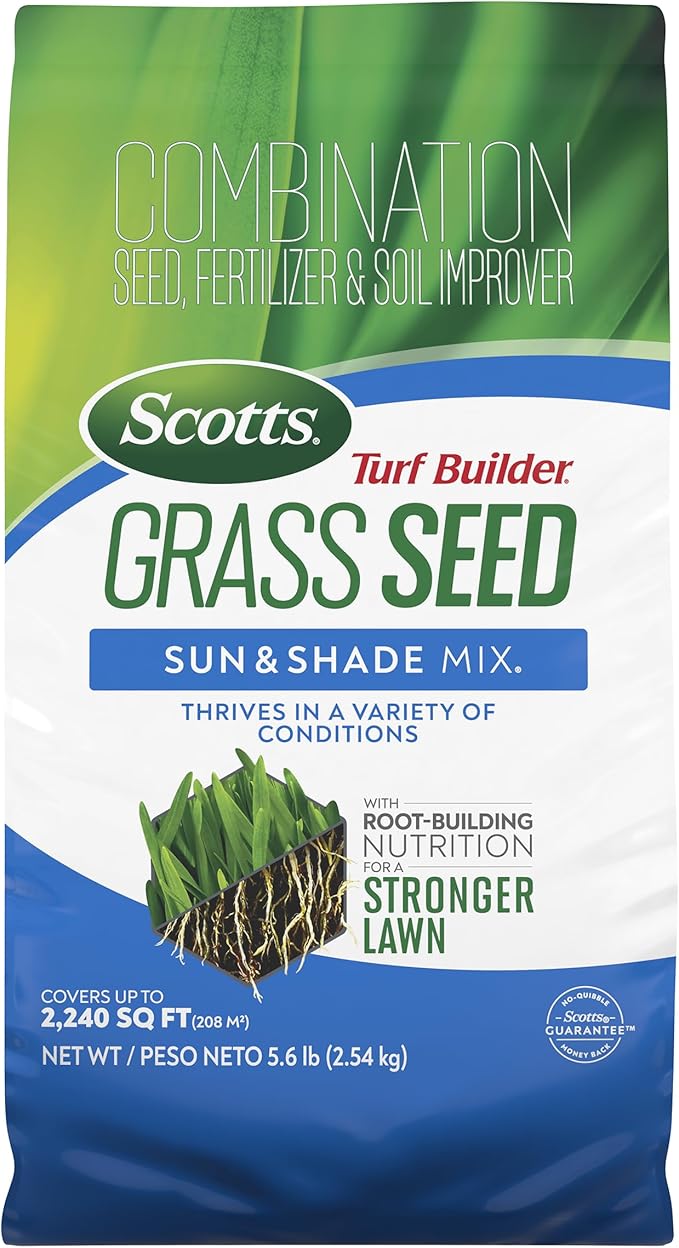
Scotts Turf Builder Sun & Shade Grass Seed works well for overseeding lawns with both sunny and shaded areas, making it a solid pick for versatile yard conditions. Its biggest strength lies in helping grass grow thick and green by encouraging deep root development, which helps build a stronger lawn over time.
Applying the seed is straightforward, especially with the included Scotts Spreader that evenly distributes the mix. Designed to handle medium drought and varying sunlight, this seed performs well with regular watering.
It combines seed, fertilizer, and soil improver to support grass growth, particularly in spring, making it practical for outdoor spring planting in various soil types.
Grass grown from this seed tends to establish nicely, thanks to a blend of Kentucky bluegrass, perennial ryegrass, and several fescues, offering durability and a natural look. The seed’s medium drought tolerance and ability to thrive under sun and moderate shade give it an edge in mixed lawns. One downside is that it requires consistent watering to reach its full potential, which some might find demanding during dry spells.
The seed mix encourages a thick, green lawn that grows well across varied light conditions, backed by built-in fertilizer and nutrients. Regular watering is essential, though, or the grass may struggle during dry periods. This balance makes it suited for homeowners willing to maintain consistent care.
Those with lawns featuring both sunny and shaded spots and who can water regularly will appreciate the results. Lawns in very dry climates or outside the spring planting window might benefit from a different seed type tailored for those conditions.
Pros
- Mix works well for both sun and shade
- Includes fertilizer and soil improver
- Promotes deep root growth
- Medium drought tolerance
Cons
- Needs regular watering to thrive
- Best suited for spring planting only
| Specification | Details |
|---|---|
| Sunlight Exposure | Full Sun |
| Expected Planting Period | Spring |
| Moisture Needs | Regular Watering |
| Medium Drought Tolerant | Yes |
| Indoor Outdoor Usage | Outdoor |
| Soil Type | Outdoor |
7. Jonathan Green Black Beauty Ultra Grass Seed

Getting a lush green lawn going feels much easier with grass seed that actually takes hold fast and fills in gaps smoothly. Ideal for yards needing a quick and dense recovery or a fresh start, its biggest strength lies in how rapidly it grows and strengthens bare spots.
Setup involves sowing during spring or fall and keeping the soil regularly watered. It does best with full sun to partial shade, and it quickly establishes during the summer months.
You’ll notice new shoots in about 7 to 14 days, and it adapts well even to clay soil. Consistent moisture helps the roots grow deeper for durability.
The seed blends tall fescues, Kentucky bluegrass, and perennial ryegrass to create a dense, dark green lawn. Its deep roots and waxy coating keep moisture locked in and help withstand heavy foot traffic. The biggest compliment is how thick and attractive the turf becomes, while some mention that it requires regular watering to maintain its growth.
Growth is fast and produces a dense, healthy lawn that recovers bare spots quickly. The main limitation is its need for consistent watering and suitable sunlight conditions to perform well.
Gardeners looking for a quick lawn fix that handles wear and clay soil will be pleased. Those with very shady yards or who want a low-water solution might consider other options.
Pros
- Quick germination in 7-14 days
- Deep roots up to 4 feet
- Dark green, dense turf
- Works on clay soils
Cons
- Needs regular watering to thrive
- Best suited to full sun or partial shade only
| Specification | Details |
|---|---|
| Expected Blooming Period | Summer |
| Sunlight Exposure | Partial Shade |
| Expected Planting Period | Spring or Fall |
| Expected Plant Height | 4 feet |
| Soil Type | Clay Soil |
| Moisture Needs | Regular Watering |
8. Scotts Turf Builder Thickr Lawn Sun & Shade

Great for those looking to boost lawn thickness in sunny places, Scotts Turf Builder Thick’R Lawn Sun & Shade stands out for its all-in-one approach that combines seed, fertilizer, and soil improver. Its biggest strength lies in making thin lawns noticeably denser, given you follow the recommended care routines.
Application requires timing it right, once in late spring and then in late summer or early fall. The included fertilizer supports growth, while the soil improver helps roots establish stronger.
It’s designed specifically for full sun areas, so it works well when you’re dealing with lots of direct sunlight. Care routines matter to get the results promised.
Performance delivers visibly thicker grass, reportedly up to 50% denser lawns under proper conditions. The built-in fertilizer and soil improver make it more than just a seed product. Many note the improved greenness and sturdier turf after repeated use.
Some say it takes patience and consistent care, with results varying depending on the existing lawn health.
Careful adherence to the two annual application windows results in greener, thicker turf with stronger roots. Common feedback notes its effectiveness but highlights that inconsistent care or poor initial lawn health can limit improvements.
Ideal for anyone with a thin, sun-exposed lawn willing to maintain a regular care routine. Not suited for shaded yards or those seeking quick fixes without ongoing maintenance.
Pros
- Combines seed, fertilizer, and soil improver
- Targets thin lawns in full sun areas effectively
- Supports root development for sturdier grass
- Easy application schedule twice per year
Cons
- Requires careful timing for best results
- Results vary depending on lawn condition
| Specification | Details |
|---|---|
| Sunlight Exposure | Full Sun |
| Coverage | One 10 lb |
| Application | Late spring and late summer or early fall |
| Function | Grass seed, fertilizer, soil improver |
| Outcome | Up to 50% thicker lawn |
9. Pennington Smart Seed Perennial Ryegrass

Made from a coated perennial ryegrass seed blend, Pennington Smart Seed works well in outdoor areas receiving 4 to 6 hours of sun. It suits those looking to overseed cool-season lawns or temporary warm-season lawns, with its biggest strength being quick germination and a fine, lush finish.
Setting it up involves spreading the seed evenly over up to 750 square feet, ideally during spring. The coated seed simplifies planting, requiring moderate watering to stay healthy. Day-to-day care benefits from its water efficiency, using up to 30% less water, and it holds up well in areas with foot traffic, making lawn maintenance straightforward without constant fuss.
Growth can be seen within 8 to 14 days, and the lawn stays green well into winter. It’s disease-resistant and comes back year after year, making it durable over time. Common praise focuses on its consistent color and resilience, while some users find the 750 sq.
ft. coverage limits larger projects.
The seed shows strong results quickly with lush, fine blades and good color retention, making it reliable for frequent use in moderate sunlight. Its limited coverage size means larger areas need multiple bags, which can be a drawback. Consistent watering is necessary for maintaining the lawn’s health and appearance.
Gardeners aiming to rejuvenate smaller cool-season or temporary warm-season lawns will appreciate this seed for its quick growth and durability. Those with extensive lawn areas or limited watering options might want to explore alternatives with broader coverage or lower moisture demands.
Pros
- Quick germination in 8 to 14 days
- Uses up to 30% less water
- Maintains color into winter
- Disease-resistant and durable
Cons
- Covers only up to 750 sq. ft.
- Requires moderate watering consistently
| Specification | Details |
|---|---|
| Sunlight Exposure | 4-6 Hours |
| Coverage Area | Up to 750 sq. ft. |
| Expected Blooming Period | Spring, Winter |
| Expected Plant Height | 3 inches |
| Moisture Needs | Moderate Watering |
10. Pennington Contractors Central Grass Seed Mix

Quick germination time stands out for anyone looking to repair or overseed lawns. Ideal for outdoor use in cooler zones, it covers plenty of ground, up to 4,000 square feet, making it a practical choice for moderate sun exposure and seasonal planting periods.
Preparation involves spreading the coated seeds evenly in spring or fall, depending on your zone, and keeping moisture levels moderate. The seed mix thrives with about 4-6 hours of sunlight daily, so choose a lawn area with enough sun.
The grass grows to about 3 inches, fitting well with existing lawns for patch repair or overseeding projects.
Growth occurs between 7 to 21 days, showing visible improvement within a few weeks. It’s designed specifically for zones 1 through 5, focusing on resilience to local conditions. The strongest feedback highlights the fast growth, while the most common drawback noted is the seed’s preference for moderate watering, which requires consistent care.
The grass seed mix shows quick results within a few weeks due to its fast-growing formula. Many reports mention the challenge of maintaining consistent watering since the seeds need moderate moisture to thrive properly. It’s a solid solution for local climates requiring resilience during fall blooming.
Gardeners in USDA zones 1 through 5 will appreciate this mix for overseeding or repairs, especially in lawns with moderate sunlight. Those with heavily shaded areas or irregular watering schedules might look for something more drought-tolerant or shade-friendly.
Pros
- Fast visible growth within 7 to 21 days
- Covers up to 4,000 sq. ft. per bag
- Coated seeds support easier planting
- Suitable for various cold hardiness zones
Cons
- Needs consistent moderate watering
- Performs best with only 4-6 hours of sun
| Specification | Details |
|---|---|
| Expected Blooming Period | Fall |
| Sunlight Exposure | 4-6 Hours of Sun |
| Expected Planting Period | Spring |
| USDA Hardiness Zone | 1, 2, 3, 4, 5 |
| Expected Plant Height | 3 inches |
| Moisture Needs | Moderate Watering |
11. Scotts EZ Seed Patch & Repair

Great for filling in bare spots, Scotts EZ Seed Patch & Repair suits those who want an easy and reliable lawn fix. Its biggest strength lies in combining grass seed, mulch, and fertilizer, making overseeding simple without the need for multiple products.
Setup involves just prepping the patch, spreading the seed mix evenly, and watering it well until absorption stops. With a coverage of up to 85 square feet per 3.75 lb.
jug, it’s straightforward to apply. The mix thrives best when temperatures range between 60°F and 80°F and there’s no frost risk, so timing is important.
The seed blend of Kentucky bluegrass, perennial ryegrass, and fine fescue grows steadily and fills in lawn damage effectively. The product comes as a 64-ounce unit, all in one container, making handling uncomplicated. Some mention quick germination, but others note lawn revival takes patience.
It is widely praised for simplicity yet can be less effective outside ideal conditions.
The product receives praise for making patch repair straightforward and letting seeds germinate smoothly in bare spots. Many users appreciate that it handles seeding, fertilizing, and mulching in one step. Delays in grass growth can occur if conditions fall outside the recommended temperatures or if watering isn’t consistent.
Anyone with small patches to seed and the ability to apply during mild weather will find it effective. Those looking for fast results or working outside the 60°F to 80°F daytime temperature range might want to consider alternatives better suited for their climate or timing needs.
Pros
- Combines seed, mulch, and fertilizer
- Easy 3-step application process
- Covers a sizable 85 sq. ft. area
- Suitable for sun and shade
Cons
- Best results require specific temperature range
- Recovery speed varies depending on conditions
| Specification | Details |
|---|---|
| Brand | Scotts |
| Model Number | Scotts – 17508 |
| Coverage | Up to 85 sq. ft. per 3.75 lb. jug |
| Seed Type | Kentucky bluegrass, perennial ryegrass, fine fescue |
| Unit Count | 64 Ounce |
| Included Components | Scotts – 17508 |
12. Pennington the Rebels Sun and Shade Mix

Keeping a lawn green and thick in both sun and shade is a challenge, especially when you want a turf that handles tough conditions. Pennington The Rebels Sun and Shade Mix suits homeowners looking for a durable tall fescue grass that grows well in a variety of soils and lighting conditions. Its biggest strength is thriving through heat, drought, and heavy foot traffic while delivering rich color.
Applying the seed in spring ensures the best start, and it requires about 4 to 6 hours of sunlight daily. Regular watering is important early on to support germination, which happens between 8 and 21 days.
The variety’s deep and dense roots help it establish quickly and maintain a darker, greener lawn that resists insects. It grows to about 3 inches high, keeping the lawn looking neat with normal maintenance.
The grass performs well outdoors across many soil types and light levels, from partial shade to full sun. It stands up to heavy traffic and tough weather without much extra care, so maintenance stays low.
The most common praise is for its toughness and rich color, though some wish it grew faster in shady spots. Its build as original premium tall fescue delivers a thick, dense turf that feels sturdy underfoot.
Strong root growth and tough resilience make it perfect for high-traffic areas and challenging climates. It generally produces a healthy, green lawn quickly but can take a bit longer in shade compared to sunnier spots. Regular watering early on is needed for best results.
Gardeners wanting a durable, low-maintenance lawn that tolerates sun and shade will find it fits well. Those with entirely shady yards or who prefer faster germination might consider other seed mixes tailored for those conditions.
Pros
- Thrives in both sun and partial shade
- Dense roots support tough conditions
- Resistant to heat, drought, and insects
- Darker, greener lawn than typical tall fescue
Cons
- Slower to establish in full shade
- Needs regular watering at start
| Specification | Details |
|---|---|
| Sunlight Exposure | 4-6 Hours of Sun Per Day |
| Moisture Needs | Regular Watering |
| Expected Blooming Period | Spring to Summer |
| Expected Plant Height | 3 inches |
| Indoor Outdoor Usage | Outdoor |
13. Jonathan Green Blue Panther Kentucky Bluegrass

Perfect for maintaining or establishing a full Kentucky Bluegrass lawn, this seed offers a dark green, dense turf that fits well with cooler climates. It suits anyone wanting a uniform look in their lawn with low maintenance needs.
Planting involves regularly watering the seed to encourage growth in sandy soil, ideal for partial sun environments. It works well for new yards as well as older, thinning lawns that need a fresh boost of Kentucky Bluegrass. Tending to it daily is straightforward due to its compatibility with typical outdoor care routines.
The seed grows with a consistent leaf texture and can handle high traffic, making it durable for active outdoor spaces. It creates visually appealing lawns, noted for their dark green color and density. The main downside is the necessity for regular watering and its preference for partial sun, which may limit some planting locations.
Many appreciate the healthy, dense growth and uniform texture provided by the seed, ideal for those wanting a consistent Kentucky Bluegrass lawn. Some find the need for continuous watering to be a bit demanding, especially in drier seasons or climates.
Gardeners seeking a traditional Kentucky Bluegrass look with manageable upkeep will find this seed fitting. Those with lawns exposed to full sun all day or who prefer less watering might want to consider alternatives better suited to those conditions.
Pros
- Produces dark green, uniform turf
- Grows well in sandy soil
- Low maintenance once established
- Handles high foot traffic
Cons
- Requires regular watering for best growth
- Prefers partial sun, limiting full sun areas
| Specification | Details |
|---|---|
| Indoor Outdoor Usage | Outdoor |
| Expected Blooming Period | Spring to Fall |
| Sunlight Exposure | Partial Sun |
| Soil Type | Sandy Soil |
| Moisture Needs | Regular Watering |
14. Jacklin Seed Heisman Kentucky Bluegrass Mix

Gardeners looking to overseed their lawn with a mix that combines quick growth and durability find Jacklin Seed Heisman Kentucky Bluegrass Mix a solid choice. It suits those wanting a thick, healthy lawn that starts showing signs of life quickly while developing long-lasting Kentucky Bluegrass coverage.
Setup involves spreading the seed in spring or fall over sandy soil with regular watering. The 15% Perennial Ryegrass kicks off fast germination, helping new grass sprout quickly. Daily care is straightforward, needing just enough sunlight, full or partial, and consistent moisture to keep the seeds going until the Kentucky Bluegrass takes over and thickens up the lawn over time.
The mix delivers a dense, wear-tolerant lawn thanks to 85% Kentucky Bluegrass known for strong dehydration and disease resistance. It holds up well under regular outdoor use and keeps green from spring to fall.
Reviews highlight how durable and rapid its growth is, though some mention the need for steady watering and the initial patchiness until the ryegrass is crowded out.
Users find the rapid growth of the Perennial Ryegrass great for starting a lawn fast, but many point out the lawn can look patchy at first until the Kentucky Bluegrass thickens over time. Regular watering is essential during this phase to support healthy growth.
This seed mix suits those willing to maintain steady care and wanting a high-quality, long-lasting lawn. People seeking immediate full coverage or low-maintenance options might want to explore alternatives.
Pros
- Quick germination from Perennial Ryegrass
- Durable Kentucky Bluegrass coverage
- Good wear tolerance and recuperative ability
- Effective disease resistance
Cons
- Requires consistent watering during establishment
- Initial lawn coverage may be uneven
| Specification | Details |
|---|---|
| Indoor/Outdoor Usage | Outdoor |
| Sunlight Exposure | Full or Partial Sun |
| Soil Type | Sandy Soil |
| Expected Blooming Period | Spring to Fall |
| Moisture Needs | Regular Watering |
15. Brownie Brand Kentucky Bluegrass Seed

Brownie Brand Kentucky Bluegrass Seed is tailored for those looking to overseed or repair their lawns with a hardy, drought-tolerant grass. Its standout feature lies in producing a lush, dense green lawn that holds up well in high-traffic areas, making it ideal for cool-season climates and regular outdoor use.
Preparing the soil, especially loam soil, before planting in spring sets the stage for strong growth. It needs regular watering during germination and establishment phases.
Partial sun exposure suits this seed best. The high germination rate eases worries about coverage, while the perennial nature means the lawn comes back yearly without replanting.
Performance-wise, the seed offers a deep green color and superior turf quality compared to many other Kentucky Bluegrass varieties. It handles drought better than many peers, making it reliable for both lawns and sports fields.
Most praise centers on its resilience and dense growth. Possible downsides include a preference for cooler zones and the need for regular watering during early growth.
The seed is consistently praised for its ability to create a dense and vibrant green lawn that endures traffic and drought conditions. A common drawback is the necessity of regular watering during the early growth stage, which demands attention for successful establishment.
Those living in cooler climates and seeking a reliable turf for lawns or sports fields will appreciate this seed’s qualities. Anyone in warmer or drier regions without easy watering options might want to consider alternatives better suited to those conditions.
Pros
- Drought tolerant once established
- High germination rate for reliable coverage
- Produces dense, fine-textured turf
- Perennial seed for lasting lawn quality
Cons
- Requires regular watering to establish
- Performs best in cooler hardiness zones
| Specification | Details |
|---|---|
| Sunlight Exposure | Partial Sun |
| Expected Planting Period | Spring |
| Soil Type | Loam Soil |
| Moisture Needs | Regular Watering |
| USDA Hardiness Zone | 3a to 7b |
| Expected Plant Height | 18 inches |
Best Seeds for Overseeding Comparison Table
| Product | Sunlight Exposure | Planting Period | USDA Hardiness Zone | Moisture Needs |
|---|---|---|---|---|
| Pennington Annual Ryegrass | Full Sun to Light Shade | Spring | 1-12 | Moderate Watering |
| Scotts Perennial Ryegrass Mix | Full Sun | Spring | 5 | Regular Watering |
| Barenbrug Turf Saver Tall Fescue | Full Sun, Shade | – | – | Low |
| Andersons Stadium Kentucky Bluegrass | Partial Shade | – | – | Regular Watering |
| Pennington Kentucky 31 Tall Fescue | 4-8 Hours Sun | Spring | 1-8 | – |
| Scotts Sun & Shade Grass | Full Sun | Spring | – | – |
| Jonathan Green Black Beauty Ultra | Partial Shade | Spring or Fall | – | Regular Watering |
| Scotts Thickr Lawn Sun & | Full Sun | – | – | – |
| Pennington Smart Seed Perennial | 4-6 Hours | Spring | 1-12 | Moderate Watering |
| Pennington Contractors Central Mix | 4-6 Hours Sun | Spring | 1-5 | Moderate Watering |
| Scotts EZ Seed Patch Repair | – | – | – | – |
| Pennington The Rebels Sun & | 4-6 Hours Sun | Spring | – | Regular Watering |
| Jonathan Green Blue Panther | Partial Sun | – | – | Regular Watering |
| Jacklin Heisman Kentucky Bluegrass | Full or Partial Sun | Spring to Fall | – | Regular Watering |
| Brownie Brand Kentucky Bluegrass | Partial Sun | Spring | – | – |
- Sunlight ExposureFull Sun to Light Shade
- Planting PeriodSpring
- USDA Hardiness Zone1-12
- Moisture NeedsModerate Watering
- Sunlight ExposureFull Sun
- Planting PeriodSpring
- USDA Hardiness Zone5
- Moisture NeedsRegular Watering
- Sunlight ExposureFull Sun, Shade
- Planting Period–
- USDA Hardiness Zone–
- Moisture NeedsLow
- Sunlight ExposurePartial Shade
- Planting Period–
- USDA Hardiness Zone–
- Moisture NeedsRegular Watering
- Sunlight Exposure4-8 Hours Sun
- Planting PeriodSpring
- USDA Hardiness Zone1-8
- Moisture Needs–
- Sunlight ExposureFull Sun
- Planting PeriodSpring
- USDA Hardiness Zone–
- Moisture Needs–
- Sunlight ExposurePartial Shade
- Planting PeriodSpring or Fall
- USDA Hardiness Zone–
- Moisture NeedsRegular Watering
- Sunlight ExposureFull Sun
- Planting Period–
- USDA Hardiness Zone–
- Moisture Needs–
- Sunlight Exposure4-6 Hours
- Planting PeriodSpring
- USDA Hardiness Zone1-12
- Moisture NeedsModerate Watering
- Sunlight Exposure4-6 Hours Sun
- Planting PeriodSpring
- USDA Hardiness Zone1-5
- Moisture NeedsModerate Watering
- Sunlight Exposure–
- Planting Period–
- USDA Hardiness Zone–
- Moisture Needs–
- Sunlight Exposure4-6 Hours Sun
- Planting PeriodSpring
- USDA Hardiness Zone–
- Moisture NeedsRegular Watering
- Sunlight ExposurePartial Sun
- Planting Period–
- USDA Hardiness Zone–
- Moisture NeedsRegular Watering
- Sunlight ExposureFull or Partial Sun
- Planting PeriodSpring to Fall
- USDA Hardiness Zone–
- Moisture NeedsRegular Watering
- Sunlight ExposurePartial Sun
- Planting PeriodSpring
- USDA Hardiness Zone–
- Moisture Needs–
How to Choose the Best Seed for Overseeding
Choosing the right seed for overseeding depends on factors like grass type, climate, soil condition, and sun exposure, ensuring strong growth and durability. Picking the appropriate seed prevents wasted effort and expenses from poor germination or patchy lawns, saving money and reducing maintenance issues.
Grass Seed Type
Grass seeds react very differently depending on local climate and soil conditions. Planting a seed type that thrives in full sun on a shaded lawn can stunt growth and leave patchy areas.
On the other hand, using a seed better suited for shade in a sunny spot usually results in weak, thin blades.
Choosing seed varieties that match your existing lawn reduces the risk of uneven texture and color differences. For instance, cool-season grasses like fescue or ryegrass perform well in northern climates, while Bermuda or zoysia are better for warm southern regions.
Shade tolerance ratings typically indicate if a seed will survive areas with less than 4 hours of direct sunlight. Considering all of this helps maintain a uniform and healthy lawn.
Seed Purity and Germination Rate
High seed purity means fewer weed seeds or fillers, which can delay lawn establishment or invite unwanted plants. A purity level over 90% is generally reliable. Germination rates around 85% or higher indicate most seeds will sprout, giving you predictable results.
Seed labels can be confusing. Look for terms like “pure live seed” which accounts for both purity and germination combined. This helps compare seeds more easily than checking each number separately.
Avoid products with heavy dust or crop seed percentages since they lower effective seed quantity and lawn quality.
Seed Coverage and Density
Overseeding requires knowing how much seed to spread per square foot to avoid thin spots or waste. Typically, for fine fescues, 3 to 5 pounds per 1,000 square feet works well, while ryegrass or bluegrass may need slightly more. Thinning patches need extra attention; applying seed mostly there prevents over-seeding established areas.
The goal is a dense lawn where blades often touch, creating a tight green carpet. Low-density seedings result in sparse growth and make lawns vulnerable to weeds and erosion. Some packages list coverage based on seed weight, so use that as a rough guide for your yard size and condition.
Growth Time and Dormancy
Seeds that sprout quickly reduce the window for weeds to take hold. For example, perennial ryegrass can germinate in 5 to 10 days, whereas Kentucky bluegrass may take up to 14 or more.
The timing affects when your lawn starts to look full again, especially in busy seasons.
Planting during the right season supports natural growth cycles; most cool-season varieties do best in early fall or spring. Some seeds have dormancy periods where no visible growth occurs even though roots start developing underground; patience is key to avoid reseeding unnecessarily.
Resistance and Adaptability
Resistant seeds cut down on chemical use and reduce lawn stress. Varieties bred to withstand fungal diseases like dollar spot or rust save time and money on treatments. Similarly, drought-tolerant seeds survive longer without frequent watering, which matters in dry climates or areas with water restrictions.
Consider wear tolerance if your lawn sees heavy foot traffic; some grasses handle the pressure better without thinning out. Local adaptability means seeds can cope with temperature swings, soil pH, and typical lawn maintenance like mowing frequency. Checking seed labels or product information for these traits helps ensure the lawn stays resilient year-round.
Best Practices for Preparing Your Lawn Before Overseeding
Starting with a clean, well-prepared lawn improves the chances of overseeding success. Remove any debris, such as leaves and sticks, to ensure good seed-to-soil contact. Mowing the grass closely right before overseeding exposes the soil and reduces competition for the new seeds.
Core aeration is one of the most effective preparation steps. It creates small holes in the ground, allowing water, nutrients, and seed to reach deeper into the soil.
Use a spike or plug aerator about a week prior to overseeding. This also helps relieve soil compaction, which can prevent seeds from germinating properly.
- Rake the lawn after aeration to loosen the soil and create an ideal seedbed.
- Test the soil pH; lawns usually do best in a range of 6.0 to 7.0.
- Apply a balanced fertilizer tailored to your grass type for healthier growth.
This preparation routine lays down strong groundwork to help new grass seeds establish and fill in the lawn evenly.
Common Mistakes to Avoid When Choosing and Applying Overseeding Seeds
Choosing the right seed is crucial, but many make the mistake of selecting a variety that does not match their existing grass type or local climate. Using an incompatible seed can lead to patchy growth and weak turf.
Applying seed at the wrong time is another common error. Seeds planted too early or too late in the season may fail to germinate or suffer from temperature extremes.
Most cool-season grass seeds perform best in early fall, while warm-season grasses take off in late spring or early summer.
- Avoid spreading seed too thickly, which can cause overcrowding and poor root development.
- Sometimes overseeding fails because seeds were not pressed into the soil; simply dropping seeds on top reduces germination rates.
- Not watering consistently during the first few weeks after overseeding can dry out new seedlings.
Paying attention to seed selection, timing, and application methods significantly increases the chances of a successful overseeding project.
People Also Asked
How Do I Properly Prepare Soil Before Overseeding My Lawn?
Clear the lawn of debris and mow it closely before overseeding for the best seed-to-soil contact. Aerating the soil beforehand also helps the seed reach the dirt and improves water penetration.
What Is the Ideal Seed Size for Effective Overseeding Coverage?
A medium-sized grass seed is best for overseeding as it provides a good balance between quick germination and resilience. Very fine seeds can blow away easily, while larger seeds may require a bit more moisture to sprout.
Can I Safely Overseed over Existing Grass Without Harming It?
Overseeding over existing grass is fine if the lawn is thin or struggling, but avoid it on dense, healthy turf since seedlings may not get enough light or space to grow. Raking lightly after spreading seed improves contact without damaging the existing grass.
How Long Does Overseeded Grass Typically Take to Fully Establish?
Grass from overseeding usually starts to germinate within 7 to 21 days, but full establishment often takes about 6 to 8 weeks, depending on the grass type and weather. Keep the soil consistently moist during this period for best results.
What Are Common Problems After Overseeding and How to Fix Them?
Common problems include poor germination due to dry soil and weed competition. Fix these by watering gently but regularly and applying a light layer of compost or starter fertilizer. Regular mowing once grass reaches mowing height helps keep lawn healthy and thick.
Conclusion
Choosing the best seed for overseeding depends mainly on your climate, the existing grass type, and how much sun or shade your lawn gets. Durability and how quickly the seed germinates also matter since those affect your lawn’s appearance and maintenance. Picking a seed blend suited for your environment will make the process smoother and more effective.
Think about your lawn size and budget before buying; larger areas or frequent overseeding might call for a cost-effective option. Check the comparison table and read through the different picks above to find the seed that matches your needs best.
That will help you avoid wasting time and money on seeds that don’t fit your garden’s conditions.