Why Do Birds Attack Squirrels: Understanding Aggressive Backyard Behavior
Observing backyard wildlife often reveals surprising interactions, especially between birds and squirrels. These two creatures frequently share the same space, competing for food, nesting spots, and territory. While squirrels are agile and persistent, birds can be surprisingly aggressive when protecting their resources.
Many bird species have strong territorial instincts. During breeding season, adults become even more vigilant, defending nests and young from potential threats. You may notice loud calls, dive-bombing, or chasing behaviors as birds respond to intruders nearby. These actions often target squirrels, who are seen as opportunistic feeders that may steal seeds, nuts, or eggs.
Understanding why do birds attack squirrels involves looking at instinct, survival, and competition. Birds act not out of malice but to protect resources that ensure the survival of their offspring.
These interactions provide insight into animal behavior and the balance of ecosystems. Observing these encounters helps explain the natural instincts that drive birds to defend their territory against seemingly harmless squirrels.
Territorial Behavior And Nest Protection
Birds are naturally territorial, and defending their space is essential for survival and reproductive success. Territories provide access to food, shelter, and safe nesting sites. Understanding how birds establish and protect these areas helps explain aggressive interactions, particularly with other animals like squirrels, which can pose a threat to eggs, chicks, or stored food.
How Birds Establish Territory
Birds establish territories through vocalizations, physical displays, and habitual presence in a specific area. You may notice loud calls or songs that mark boundaries and warn intruders to stay away. Visual displays, such as puffing up feathers or aggressive posturing, reinforce territorial claims and signal strength to competitors.
Territorial behavior is often seasonal, peaking during breeding periods. Birds invest energy in defending their space to secure food sources and nesting locations, ensuring their young have the best chance of survival. Intruders like squirrels are often targeted because they are perceived as competitors for resources.
Establishing a clear territory reduces conflict between birds and other wildlife. By marking boundaries through consistent presence and aggressive displays, birds can maintain control over critical areas without engaging in constant physical confrontations.
Aggressive Displays Toward Intruders
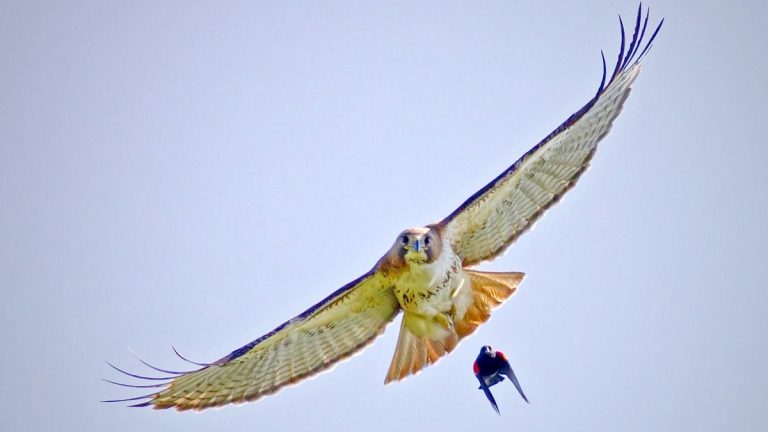
Birds use a variety of aggressive behaviors to defend nests and resources. You may notice swooping, dive-bombing, or loud alarm calls directed at squirrels that approach too closely. These actions are usually not meant to injure but to intimidate and drive the intruder away.
Physical displays, such as spreading wings, raising tail feathers, or hopping aggressively, further reinforce territorial claims. Smaller birds may attack in groups to create a defensive perimeter, while larger birds can physically chase intruders over longer distances. This strategy reduces the risk of losing eggs or food to competitors.
Aggressive displays serve multiple purposes: they protect offspring, assert dominance, and maintain control over valuable food sources. Birds carefully calibrate their intensity, responding more aggressively to immediate threats and less so to distant or non-threatening animals.
Nest Protection Strategies
Nest protection is a central aspect of territorial behavior. Birds often choose concealed or elevated nesting sites to reduce the risk of predation. You may notice certain species selecting dense foliage, tree cavities, or man-made structures for added security. These choices help minimize encounters with squirrels or other potential threats.
During incubation and chick-rearing, parent birds remain highly vigilant. They use alarm calls to warn their mate or offspring and may employ distraction techniques, such as feigned injury displays, to lure predators away from the nest. Frequent monitoring and quick response to intruders are essential for ensuring chick survival.
Nest protection is closely linked to reproductive success. By investing time and energy into guarding nests and maintaining a secure territory, birds increase the likelihood that their eggs hatch safely and that fledglings reach independence.
Seasonal Influence on Territoriality
Territorial aggression intensifies during breeding season, when nests contain eggs or young chicks. You may notice birds that are normally passive becoming highly defensive, reacting strongly to squirrels and other animals that enter their territory. Outside the breeding season, territorial disputes are less frequent, as the pressure to protect offspring diminishes.
Seasonal changes also affect food availability, which can influence aggression levels. During times of scarcity, birds may respond more aggressively to intruders to protect limited resources. Conversely, abundant food can reduce competition and the intensity of territorial disputes, creating a more harmonious environment between species sharing the same habitat.
By observing these seasonal patterns, you gain insight into why birds display heightened defensive behaviors at certain times, providing a clearer understanding of their interactions with squirrels and other potential threats.
Food Competition Between Birds And Squirrels
Birds and squirrels often share similar habitats and food sources, creating natural competition. Both species rely on seeds, nuts, fruits, and occasionally insects for sustenance. Understanding how this competition unfolds explains why birds sometimes exhibit aggressive behavior toward squirrels, especially during critical feeding periods or when resources are limited.
Overlapping Diets And Shared Resources
Birds and squirrels have overlapping diets, which increases the likelihood of encounters and competition. You may notice both species visiting feeders, trees, or the forest floor in search of seeds, nuts, and fruits. Squirrels, being larger and more agile, can often reach food sources more easily, which may frustrate nearby birds.
During breeding season or harsh weather, birds require extra energy to maintain body heat and feed their young. Squirrels similarly increase their intake to store fat for winter. This overlap intensifies competition, prompting birds to defend feeders or natural food sources aggressively.
In areas with limited food, both birds and squirrels may adapt by altering foraging patterns. Birds may feed at different times or seek alternative sources, while squirrels often cache food for later consumption. These strategies highlight the dynamic interactions between the two species.
Aggressive Encounters Over Food
Birds often display aggressive behavior toward squirrels to protect their food supply. You may notice swooping, chasing, or dive-bombing when a squirrel approaches a feeder or foraging area. These behaviors are primarily defensive, aiming to intimidate rather than cause serious injury.
Smaller bird species may band together to harass a squirrel, creating a coordinated defense that discourages the intruder from returning. Larger birds, such as crows or jays, may physically chase squirrels over longer distances. These interactions allow birds to maintain access to critical resources for themselves and their offspring.
Aggression is more pronounced during periods of scarcity or high energy demand, such as breeding season. By actively defending food sources, birds increase the survival chances of their chicks while reducing competition from opportunistic squirrels.
Seasonal Fluctuations In Competition
Competition between birds and squirrels varies with seasonal changes in food availability. You may notice more aggressive interactions in late fall and winter, when seeds, nuts, and fruits become scarce. During spring and summer, food is more abundant, reducing direct conflicts and allowing both species to coexist with less tension.
Breeding season also heightens competition. Birds need concentrated energy to produce eggs and feed chicks, while squirrels may be busy storing food or raising young. The combination of energy demands and limited resources drives frequent territorial disputes and defensive behaviors around feeders or natural food sources.
Seasonal strategies, such as caching by squirrels and flocking by birds, help both species survive despite competition. Observing these behaviors provides insight into the natural balance and challenges of shared habitats.
Adaptive Strategies To Reduce Conflict
Both birds and squirrels have developed strategies to reduce direct conflict over food. You may notice birds feeding at different heights or times, while squirrels may retrieve cached food or focus on less-contested areas. These adaptations minimize aggressive encounters and ensure both species can access necessary resources.
Providing multiple feeders or scatter-feeding seeds on the ground can also reduce competition in backyard settings. Birds can forage safely while squirrels access alternative areas, lowering stress and aggression. Such strategies highlight how resource management and habitat structuring can help maintain peaceful coexistence between birds and squirrels.
Species Most Likely To Attack Squirrels
Some bird species are more prone to attacking squirrels due to territorial instincts, food competition, or nest protection behaviors. Identifying these species helps explain common backyard or forest encounters and highlights how certain birds prioritize defending resources. Aggressive interactions are not random but reflect survival strategies shaped by diet, breeding cycles, and habitat preferences.
Crows And Jays
Crows and jays are among the most likely birds to attack squirrels, particularly around food sources or nesting areas. You may notice these birds dive-bombing or vocalizing aggressively when a squirrel approaches their feeder or tree. Both species are highly intelligent and capable of coordinating attacks, using intimidation rather than physical harm as a primary tactic.
These birds are opportunistic feeders, often competing with squirrels for seeds, nuts, and fruits. During breeding season, the intensity of aggression increases, as adults defend both territory and young. Crows and jays may work in groups to chase a single squirrel away, maximizing the effectiveness of their defense.
In addition to protecting resources, these birds are highly observant. They learn the behavior of local squirrels, timing attacks when intruders are most vulnerable or when food sources are concentrated. This strategic approach demonstrates their adaptability and intelligence in territorial defense.
Hawks And Other Birds Of Prey
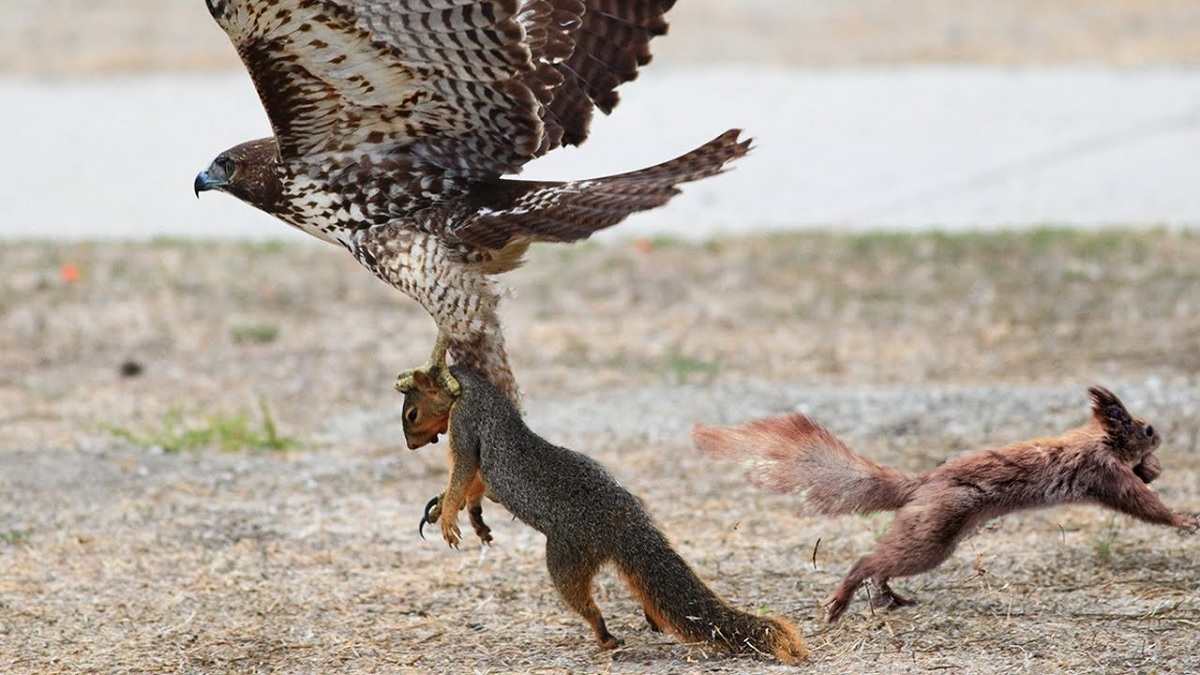
Hawks, owls, and other raptors are natural predators of squirrels and may attack them for food rather than purely territorial reasons. You may observe these birds swooping from perches or hovering before striking a squirrel on the ground. Their attacks are precise and aimed at securing a meal rather than intimidation.
While raptors do not defend feeders or nests in the same way as songbirds, their presence influences squirrel behavior. Squirrels often remain vigilant or avoid open areas where these predators hunt. Hawks and owls play an important ecological role in controlling squirrel populations, maintaining balance in local ecosystems.
During breeding season, some raptors increase hunting activity to provide food for their chicks. Squirrels, being agile but vulnerable on open ground, may encounter heightened predation risk during these periods. Birds of prey are thus both opportunistic hunters and key players in predator-prey dynamics.
Smaller Territorial Birds
Certain smaller territorial birds, like woodpeckers, robins, and chickadees, may also attack squirrels, particularly when defending nests. You may notice these birds dive-bombing or making repeated passes near a squirrel that approaches their nesting site. Their goal is to protect eggs or chicks rather than to harm the squirrel permanently.
These attacks often occur in bursts and involve vocal alarms, wing spreading, and physical swoops. Smaller birds are at a disadvantage in physical confrontations with squirrels, so they rely on coordinated or persistent harassment. Grouping behavior is common, with neighboring birds assisting in driving the intruder away.
Territorial aggression is most intense during the breeding season when nests are active. By targeting squirrels that may steal eggs or young, these birds reduce threats to reproductive success. Outside of breeding season, these same birds are typically less aggressive, focusing on foraging and other survival tasks.
Environmental Factors Influencing Aggression
Habitat and resource availability affect which bird species are most likely to attack squirrels. You may notice higher aggression in areas with limited food or nesting sites. Birds in urban or suburban areas may become more assertive at feeders, while forest birds rely on natural territories.
Population density also plays a role. In areas where many birds and squirrels coexist, competition for resources can escalate attacks. Understanding these environmental influences helps explain why some species consistently target squirrels while others coexist peacefully.
Aggression toward squirrels reflects a combination of survival instincts, territorial defense, and ecological interactions. By identifying species prone to attack and considering environmental factors, you gain insight into these fascinating interspecies dynamics.
Signs Birds Are Targeting Squirrels
Birds often show clear signs when they are targeting squirrels, whether to defend food, territory, or nests. Recognizing these behaviors helps explain aggressive interactions and can guide how you manage backyard feeders or natural habitats. Observing these signals allows you to better understand bird instincts and the dynamics between species.
Aggressive Flying And Dive-Bombing
One of the most obvious signs that birds are targeting squirrels is aggressive flying or dive-bombing. You may notice birds swooping repeatedly at a squirrel, often from above or in quick passes. This behavior is intended to intimidate rather than injure but signals strong territorial or protective instincts.
Smaller birds may attack in groups, coordinating their movements to chase squirrels away. Larger birds, such as crows or jays, can execute longer, more persistent attacks. These actions typically occur near feeders, nests, or other food sources where the squirrel is seen as a competitor.
Dive-bombing is particularly common during breeding season when adults defend nests or young. Repeated passes, loud calls, and sudden swoops indicate that the bird perceives the squirrel as a direct threat to its resources.
Loud Alarm Calls And Vocalizations
Another clear sign that birds are targeting squirrels is the use of loud alarm calls. You may notice birds making harsh, repetitive sounds whenever a squirrel enters their territory. These vocalizations serve both as warnings to the squirrel and as signals to other birds in the area.
Alarm calls often accompany physical attacks, reinforcing the threat. Birds may escalate from calling to swooping or dive-bombing if the squirrel continues to approach food sources or nests. Neighboring birds can respond, creating a coordinated defense strategy.
The intensity and frequency of alarm calls typically increase during periods of high risk, such as nesting or scarce food availability. Observing these vocal behaviors provides insight into the level of threat the birds perceive.
Chasing And Physical Harassment
Birds may also chase or harass squirrels on the ground or in trees. You may see repeated attempts to force the squirrel away from feeders, nesting trees, or stored food. Physical harassment is often strategic, aiming to protect valuable resources rather than inflict serious injury.
Smaller birds rely on agility and numbers, swooping close to distract and confuse the squirrel. Larger birds may use a combination of vocalizations and short pursuits to maintain control of their territory. These interactions often involve quick retreats and repeated approaches, signaling the bird’s determination.
Chasing behaviors are heightened during breeding season, when nest protection is critical. Birds continuously monitor the area, targeting squirrels that approach too closely or appear to threaten eggs, chicks, or food stores.
Wing Spreading And Threat Postures
You may also notice birds spreading their wings, puffing up feathers, or raising tail feathers when confronting squirrels. These threat postures are visual signals intended to make the bird appear larger and more intimidating.
Such postures are usually accompanied by vocal alarms or short dives toward the intruder. They are effective in deterring squirrels, especially when combined with other defensive behaviors. Birds often use these displays repeatedly, escalating only if the squirrel does not retreat.
By observing these signs, you can better understand when birds feel threatened and why they target squirrels. These behaviors reflect a combination of instinctive protection, resource defense, and survival strategies that are essential in shared habitats.
How Squirrels React To Bird Attacks
Squirrels often encounter aggressive birds while foraging or accessing shared resources. Their reactions to attacks reveal a combination of agility, caution, and learned behavior. Understanding how squirrels respond provides insight into their survival strategies and helps explain the dynamic interactions between these two species in both urban and natural environments.
Quick Escape And Evasive Maneuvers
One of the most common reactions squirrels exhibit when targeted by birds is rapid escape. You may notice them darting to nearby trees, fences, or sheltered areas as birds swoop overhead. Their agility allows them to avoid physical contact, minimizing injury while maintaining access to resources.
Squirrels also use unpredictable movements, changing direction quickly or pausing momentarily to confuse attacking birds. This evasive behavior makes it difficult for birds to land a direct strike. By relying on speed, reflexes, and awareness of surroundings, squirrels reduce the likelihood of serious harm.
These maneuvers are especially evident in open areas, such as backyards or parks, where escape routes are visible. Squirrels constantly evaluate their environment, selecting routes that maximize cover and minimize exposure to predatory or aggressive birds.
Freezing And Threat Assessment
In some cases, squirrels respond to bird aggression by freezing and assessing the situation. You may notice them pausing mid-movement, staying motionless while evaluating whether the bird poses a continued threat. This behavior allows squirrels to conserve energy and avoid drawing additional attention.
Freezing also provides an opportunity for quick decision-making. Once the bird’s behavior is understood, the squirrel may choose the safest escape route or wait for the intruder to leave the area. This cautious approach reduces the risk of injury while maintaining access to nearby food sources or nesting areas.
Squirrels often combine freezing with alert postures, such as tail flicking or ear movement, signaling awareness and readiness to flee. These behaviors demonstrate their adaptability in responding to environmental threats.
Using Shelter And Vertical Space
Squirrels frequently retreat to trees, dense shrubs, or elevated perches to avoid bird attacks. You may observe them climbing trunks or jumping between branches to create distance from aggressive birds. Vertical space offers protection and allows them to reassess the situation safely.
Dense foliage or tree cavities provides temporary refuge, limiting the bird’s ability to follow or reach the squirrel. In addition, squirrels may use previously stored nests or tree hollows as emergency shelters. These strategies highlight their ability to exploit natural structures for safety while minimizing energy expenditure.
By combining rapid escape, freezing, and shelter use, squirrels demonstrate a flexible approach to surviving bird aggression. These behaviors ensure they can access resources and navigate shared habitats while minimizing risk from territorial or predatory birds.
People Also Asked
Why Do Birds Attack Squirrels?
Birds often attack squirrels to protect resources such as food, nests, or territory. You may notice aggressive behaviors like swooping, dive-bombing, or loud alarm calls when a squirrel approaches these areas. Birds view squirrels as competitors for seeds, nuts, or even eggs, prompting defensive actions to ensure their survival and that of their young.
These attacks are instinctive rather than malicious. By defending their territory, birds maintain access to food and safe nesting areas, which are essential for reproduction and survival in shared habitats.
Are Birds Protecting Their Nests When Attacking Squirrels?
Yes, birds frequently attack squirrels to protect nests containing eggs or chicks. You may notice heightened aggression during breeding season, with birds dive-bombing or chasing intruders near nesting trees. Protecting young is crucial for reproductive success, as squirrels may raid nests for eggs or disturb chicks.
Even small birds coordinate aggressive displays or vocal alarms to ward off potential threats. This behavior ensures that the next generation survives and strengthens the bird’s control over its territory and resources.
Does Food Competition Cause Birds To Attack Squirrels?
Food competition is a major reason birds attack squirrels. You may see birds defending feeders, trees, or natural food sources aggressively. Squirrels, being fast and opportunistic, can easily access seeds, nuts, or fruits that birds rely on for energy.
During periods of scarcity, such as winter or early spring, this competition intensifies. Birds may swoop, chase, or use alarm calls to deter squirrels, ensuring they can consume enough food to maintain body heat, energy, and care for their offspring.
Which Bird Species Are Most Likely To Attack Squirrels?
Crows, jays, and smaller territorial birds like robins or chickadees are most likely to attack squirrels. You may notice crows and jays coordinating in groups, swooping or dive-bombing intruders near food sources. Smaller birds typically display aggressive harassment to protect nests rather than to harm physically.
Hawks and other birds of prey also target squirrels, though primarily for hunting rather than territorial defense. Understanding species-specific behavior helps explain why some birds are more aggressive toward squirrels than others.
Do Birds Attack Squirrels Year-Round?
Bird aggression toward squirrels is not constant year-round. You may notice attacks peak during breeding season or when food is scarce. Outside these periods, birds are usually less aggressive, focusing on foraging and maintaining territory without constant harassment.
Seasonal changes in resource availability and nesting activity largely dictate the intensity of attacks. Observing local patterns helps predict when squirrels are at higher risk of being targeted by protective or territorial birds.
How Do Birds Signal They Are About To Attack Squirrels?
Birds signal impending attacks through vocalizations, dive-bombing, and threat postures. You may notice loud alarm calls, wing spreading, or swooping movements when a squirrel approaches. These behaviors are intended to intimidate the intruder before physical contact occurs.
Smaller birds often use rapid passes or coordinated group harassment to drive squirrels away. Visual and auditory signals allow birds to protect territory and resources efficiently while reducing the risk of injury to themselves.
Can Human Intervention Reduce Bird Attacks On Squirrels?
Yes, human intervention can help reduce conflicts. You may place feeders or food in multiple locations or use barriers to separate birds from squirrels. Providing abundant food sources reduces competition, while elevated feeders favor birds and make it harder for squirrels to access the same resources.
Observing behavior and adjusting feeding strategies helps maintain peaceful coexistence. By minimizing overlap in feeding areas and ensuring adequate nutrition for both species, humans can reduce aggressive encounters and protect the safety of birds and squirrels alike.
Final Thoughts
Birds and squirrels often share the same backyard spaces, leading to natural conflicts over food and territory. Birds are highly protective of their nests and resources, especially during the breeding season, which explains much of their aggressive behavior toward squirrels. Understanding this interaction helps explain why these seemingly random attacks occur and highlights the importance of space and resource management in shared environments.
Learning why do birds attack squirrels shows that aggression is rarely out of malice. It is mostly driven by instincts to protect offspring, defend territory, and reduce competition for food. Certain bird species are more prone to aggressive behavior, particularly those that rely on ground-level feeders or nest near common squirrel pathways. Observing these patterns helps homeowners and wildlife enthusiasts predict and mitigate conflicts.
By exploring why do birds attack squirrels, it becomes easier to implement strategies that protect both species. Measures like squirrel-proof feeders, separate feeding zones, and awareness of nesting areas can reduce aggressive encounters, promoting a safer environment for all backyard wildlife.