Long Eared Owl vs Great Horned Owl: Key Differences You Need to Know
Owls are some of the most fascinating nocturnal birds, each species showcasing unique traits and behaviors. Among the wide variety of owls, the long-eared owl and the great horned owl are particularly intriguing due to their distinct appearances, hunting strategies, and habitats. Understanding these differences can deepen appreciation for their role in the ecosystem.
The long-eared owl is known for its slender body, long ear tufts, and preference for dense forests or woodlands. In contrast, the great horned owl is larger, more robust, and easily recognizable by its prominent horn-like tufts and powerful build. These physical differences are accompanied by varied hunting styles, with the long-eared owl focusing on smaller prey like rodents, while the great horned owl can take on larger animals.
Exploring the behaviors, vocalizations, and habitats of these owls offers insights into how they adapt to their environments. The comparison of these two species highlights their unique survival strategies. This article will provide a detailed look at long-eared owl vs great horned owl, examining their features, hunting methods, and roles in nature, helping readers distinguish between these captivating nocturnal predators.
Physical Appearance Differences
The physical characteristics of the long-eared owl and the great horned owl are the most noticeable ways to distinguish these two species. Both feature prominent ear tufts and nocturnal adaptations, but their overall size, body shape, coloration, and feather patterns are very different. These differences are not only visually striking but also reflect adaptations to their specific habitats and hunting styles. Bird watchers and wildlife enthusiasts can use these traits to identify each species, even in low light conditions, when these owls are most active.
Size and Body Structure
The long-eared owl is medium-sized and slender, typically measuring 13–16 inches in length with a wingspan of 35–40 inches. Its elongated, narrow frame gives it a delicate and agile appearance, perfectly suited for navigating dense forests while hunting small rodents. This slender build allows the owl to move quickly and quietly through tight spaces, increasing its hunting efficiency. The great horned owl, on the other hand, is considerably larger, measuring 18–25 inches in length with a wingspan of 40–57 inches. Its robust, muscular body supports greater strength and endurance, enabling it to capture larger prey, including rabbits, skunks, and other birds.
These size differences are not only visual but functional. The long-eared owl’s lean frame emphasizes stealth and precision, while the great horned owl’s stocky body emphasizes power and dominance. Observing their proportions in the wild provides immediate clues about which species is present. Furthermore, these structural differences reflect their hunting strategies, where one relies on agility and the other on raw strength. Their body shape is therefore a direct reflection of their ecological role in the environment.
Additionally, the wings and leg proportions also vary with size. The long-eared owl has relatively longer legs for its body size, helping it reach into foliage or small burrows for prey. The great horned owl has shorter, sturdier legs with powerful talons designed for grappling larger animals. Overall, size and body structure are fundamental identifiers that combine function and form, making it easier to distinguish these owls.
Ear Tufts and Facial Features
Ear tufts are among the most distinguishing features of these owls, though their size, shape, and orientation differ greatly. The long-eared owl’s tufts are thin, long, and stand straight up, creating a sharp, alert silhouette. Its facial disk is narrow and oval-shaped, often highlighted by bright orange eyes contrasting with brown and gray feathers. This combination allows it to remain concealed within coniferous forests and helps focus sound for hunting small prey.
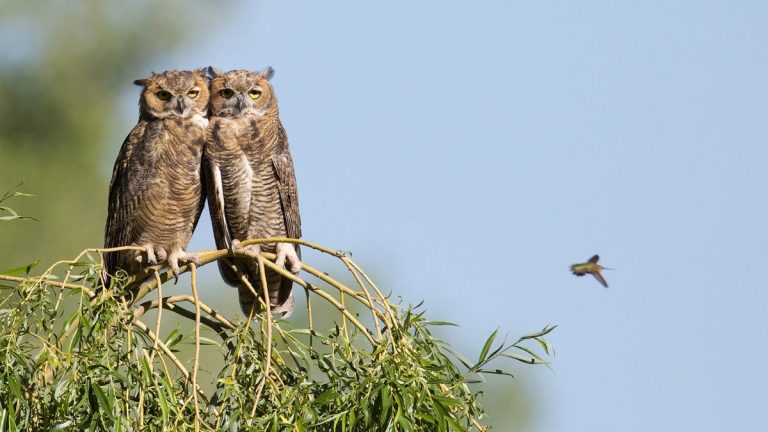
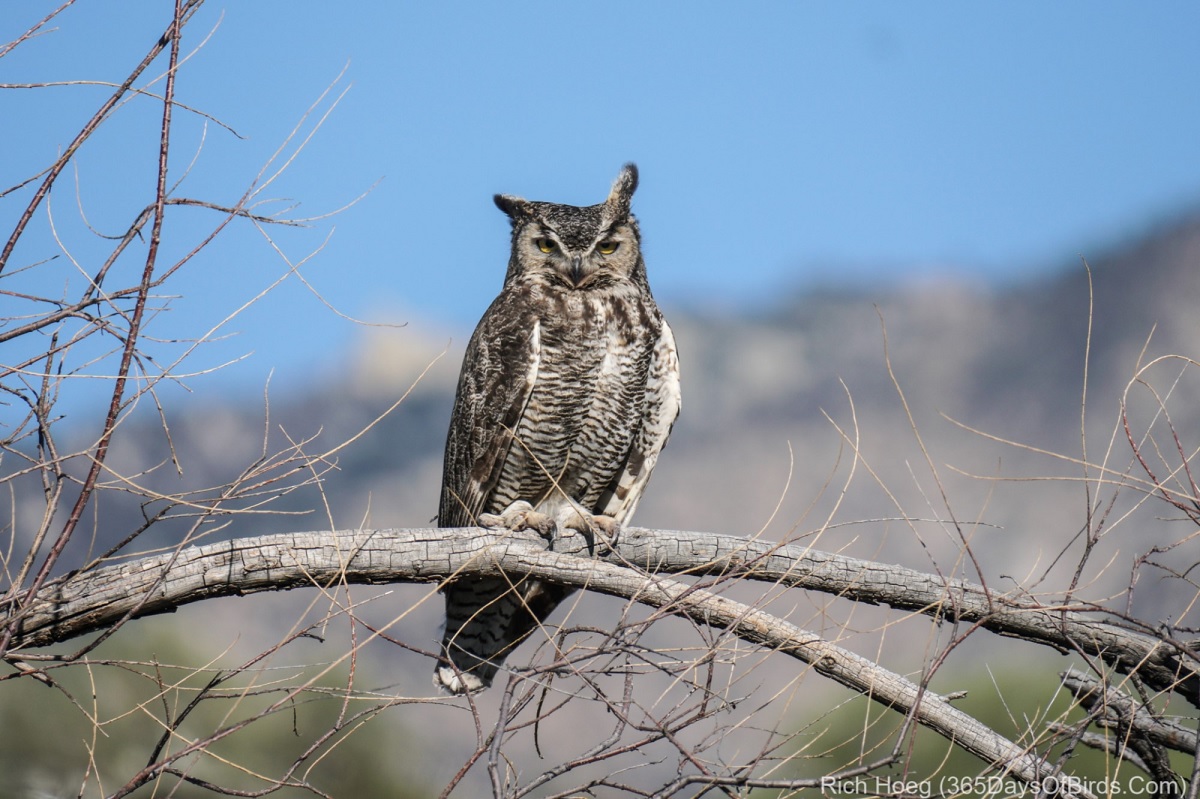
In contrast, the great horned owl’s ear tufts are shorter, wider, and more prominent, creating a horned appearance. Its facial disk is large and rounded, often pale in color, accentuating its piercing yellow eyes. These differences in facial structure not only aid identification but also reflect their sensory adaptations. The long-eared owl’s narrow, elongated face supports stealth hunting, while the great horned owl’s broad facial disk enhances auditory and visual precision needed for capturing larger prey.
The positioning and size of ear tufts also influence perception. Long-eared owls appear more alert and delicate, whereas great horned owls appear powerful and imposing. These visual cues are often the first thing observers notice when comparing the two species. Combined with body size and posture, ear tufts and facial features provide a reliable way to tell these owls apart in natural habitats.
Additionally, feather patterns around the face and tufts further distinguish the species. Long-eared owls have subtle streaking, aiding camouflage, while great horned owls display bolder contrasts, adding to their dominant appearance. These nuanced differences reinforce identification and highlight evolutionary adaptations to their hunting environments.
Plumage Patterns and Coloration
Plumage patterns are crucial for distinguishing long-eared and great horned owls. The long-eared owl’s feathers are streaked in shades of brown, gray, and tan, providing excellent camouflage in dense forests and shrublands. This muted pattern allows it to blend seamlessly with tree bark and foliage while roosting during the day. The subtle streaking emphasizes the owl’s slender form, enhancing its overall stealthy appearance.
The great horned owl, in contrast, has bold and varied plumage. Its feathers feature mottled browns, grays, and whites, often with distinct horizontal barring on the chest and bold markings on the back and wings. This versatile coloration allows it to adapt to multiple habitats, from forests to open fields and even urban areas. The contrast between light and dark feathers accentuates its large, powerful body, making it appear more dominant than the long-eared owl.
Feather pattern differences also serve ecological purposes. Long-eared owls rely heavily on camouflage for survival, using muted streaks to avoid predators and remain unseen by prey. Great horned owls, meanwhile, use their bold patterns for both camouflage and intimidation. Observing feather color and markings in combination with body size and ear tufts provides a clear method for distinguishing these species in the field.
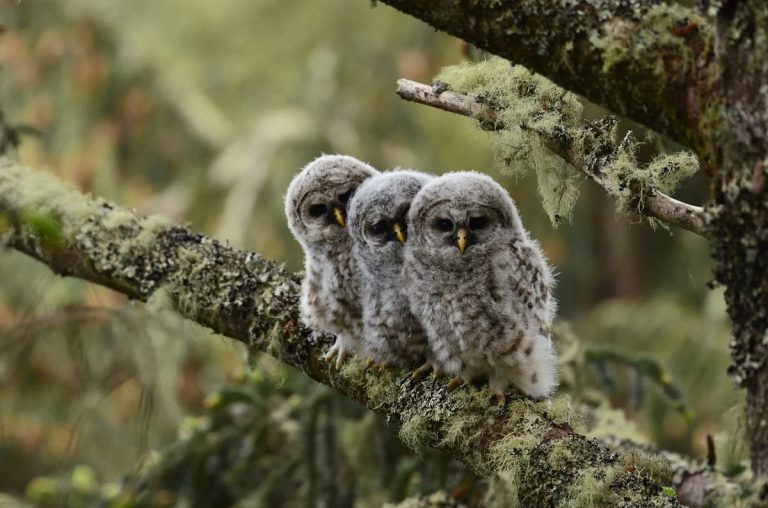
Additionally, these plumage adaptations reflect seasonal changes and maturity. Juvenile long-eared owls are even more muted, blending with forest shadows, while juvenile great horned owls already display strong patterns, signaling readiness for survival in varied environments.
Wing and Tail Differences
Wings and tails differ in both shape and function. Long-eared owls have narrow, pointed wings and moderately long tails, designed for quick, agile flight through dense trees. This configuration allows them to maneuver silently and efficiently while hunting small rodents. Their tail helps maintain stability during sudden changes in direction, critical for catching prey in cluttered environments.
Great horned owls possess broad, rounded wings and shorter, robust tails. These wings provide silent gliding capabilities and powerful lift for larger prey. The tail adds balance during swooping attacks and high-speed dives. These adaptations support the owl’s predatory strategy, relying on strength and surprise rather than quick maneuvers.
Wing and tail differences also affect perching habits. Long-eared owls prefer hidden, narrow perches in dense forests, while great horned owls are comfortable on exposed branches, fence posts, or open areas. Observing how each owl moves and positions itself provides additional clues for identification.
The combination of wing shape, tail length, and flight style not only distinguishes these owls visually but also highlights the evolutionary strategies behind their hunting and survival. Long-eared owls prioritize stealth, while great horned owls prioritize power, demonstrating how anatomy shapes behavior.
Habitat and Range
Understanding the habitats and geographic range of the long-eared owl and the great horned owl helps explain many of their behaviors, hunting strategies, and physical adaptations. Both species are found across North America, but they occupy different types of environments and exhibit distinct preferences for roosting and nesting sites. Observing these habitats provides insight into their survival strategies, seasonal movements, and interactions with other wildlife.
Long-Eared Owl Habitat and Range
The long-eared owl primarily inhabits dense woodlands, coniferous forests, and shrubby areas that provide ample cover for roosting during the day. These owls are highly secretive, often choosing secluded areas with thick vegetation to remain hidden from predators and avoid disturbances. They prefer habitats with nearby open spaces such as fields or meadows, which serve as prime hunting grounds for rodents and small mammals.
Geographically, long-eared owls are widespread across North America, Europe, and parts of Asia. In North America, they are most commonly found in the northern United States and southern Canada, although they migrate seasonally depending on prey availability and weather conditions. During winter, they may move southward to regions with milder climates. Roosting sites often include dense clusters of trees or even abandoned nests of other birds, which provide protection and concealment.
These owls are highly adaptable in terms of elevation, ranging from lowlands to mountainous forests. However, they consistently require areas with adequate cover and hunting opportunities. Their preference for dense roosts and open hunting grounds is closely tied to their slender body structure and hunting style, which relies on stealth and quick, agile movements.
Long-eared owls also demonstrate communal roosting behavior, sometimes gathering in small groups during winter. These roosts provide additional safety against predators while still maintaining proximity to hunting areas. Despite their wide range, they remain sensitive to habitat destruction, particularly deforestation and urban development, which can limit their access to safe roosting sites.
Great Horned Owl Habitat and Range
The great horned owl is far more versatile in terms of habitat, occupying a broad range of environments including forests, grasslands, deserts, swamps, and even urban areas. Unlike the long-eared owl, it is less dependent on dense cover, often perching in open areas or near human activity. This adaptability makes it one of the most widespread and successful owl species across North and South America.
Great horned owls have a vast geographic range, extending from Alaska and Canada down to the southern tip of South America. They are permanent residents in most regions, although northern populations may show minor seasonal movements in search of prey. These owls are territorial and require sufficient space to hunt large prey, including mammals, birds, and reptiles. Their nests are often placed in tree cavities, cliff ledges, or even abandoned nests of other large birds, showing remarkable flexibility.
Elevation is generally less of a limitation for great horned owls compared to long-eared owls. They can thrive from lowland forests to mountainous regions, adapting their hunting and nesting strategies to the specific environment. Their tolerance for different habitats contributes to their dominance as apex predators in many ecosystems.
In addition to natural habitats, great horned owls have adapted to urban and suburban areas. They often perch on telephone poles, buildings, or parks, taking advantage of abundant prey such as pigeons, rats, and rabbits. This ability to thrive in both wild and human-altered landscapes highlights the owl’s resilience and ecological versatility.
Habitat Comparison and Observational Insights
Comparing the habitats of long-eared and great horned owls reveals important contrasts. Long-eared owls prefer secluded, dense forests with adjacent hunting grounds, relying on concealment and stealth for survival. Great horned owls, by contrast, can occupy nearly any environment with sufficient prey, demonstrating adaptability and dominance.
These differences influence their daily routines and behaviors. Long-eared owls are more secretive and less frequently observed, often staying hidden during the day and hunting at night. Great horned owls are bolder, frequently visible during dusk or dawn, and capable of hunting in open areas or near human settlements. Observing habitat choice can therefore provide immediate clues about which species is present.
Habitat selection also impacts population density and distribution. Long-eared owls may appear in clusters during winter roosts but are generally sparse and localized. Great horned owls maintain more uniform distribution due to their tolerance for diverse environments, often controlling territories that encompass several square miles.
The contrast between specialized and generalist habitat strategies highlights how environmental preferences shape survival, hunting strategies, and interactions with other wildlife. Recognizing these patterns is essential for birdwatchers, researchers, and conservationists alike.
Hunting and Diet
The hunting techniques and dietary habits of the long-eared owl and the great horned owl reveal much about their ecological roles and adaptations. Both are nocturnal predators, yet their prey selection, hunting strategies, and feeding behaviors differ significantly due to variations in size, strength, and habitat. Understanding these differences helps explain why these owls occupy distinct niches within their ecosystems and how they survive in the wild.
Long-Eared Owl Hunting and Diet
The long-eared owl primarily hunts small mammals, with rodents such as mice, voles, and shrews forming the bulk of its diet. These owls rely on stealth, patience, and precision when capturing prey, often gliding silently through forests and dense shrubs to surprise unsuspecting animals. Their narrow wings and agile flight allow them to maneuver quickly between trees, making them effective hunters in tight, wooded spaces.
Long-eared owls typically hunt at night, using their exceptional hearing and keen vision to detect prey in low-light conditions. They may perch silently on a branch or glide slowly above open fields to locate movement, then swoop down with speed and accuracy. This hunting style requires minimal energy compared to chasing prey over long distances, which suits their slender body structure.
Seasonal availability of prey can influence the long-eared owl’s diet. In areas where rodents are scarce during winter, they may supplement their diet with small birds or insects. Their reliance on specific habitats for hunting also emphasizes the importance of forested areas with adjacent open spaces for successful foraging.
Juvenile long-eared owls learn hunting skills gradually, starting with small prey items before mastering more complex strategies. This learning process, combined with their silent flight and sharp talons, makes them highly specialized nocturnal hunters, adapted for efficiency rather than raw power.
Great Horned Owl Hunting and Diet
Great horned owls are versatile predators with a broader diet, capable of hunting mammals, birds, reptiles, and even fish. Their powerful build allows them to tackle larger prey, including rabbits, raccoons, skunks, and other medium-sized animals. Unlike long-eared owls, great horned owls often hunt in open areas and are not limited by dense forest environments.
These owls use a combination of stealth and brute force. They may perch silently for long periods, scanning for movement, or fly low over fields to ambush prey. Their broad wings allow for powerful, silent glides, and their strong talons enable them to capture and carry animals heavier than themselves. This versatility in hunting technique reflects their generalist approach to diet and habitat.
Great horned owls also hunt at night but may occasionally be active during dusk or dawn. They are opportunistic feeders, adjusting their diet based on availability and season. Birds such as ducks, pigeons, and even smaller owls can be part of their meals, demonstrating their role as apex predators.
Juveniles learn hunting through observation and practice, gradually building strength and coordination to capture larger prey. Their adaptability in diet and hunting style contributes to their widespread presence across diverse habitats, from forests and grasslands to urban areas.
Comparative Observations
Comparing the hunting strategies of these owls highlights their ecological differences. Long-eared owls are specialized, relying on stealth, agility, and precision in dense habitats to catch small prey. Great horned owls are generalists, relying on power, versatility, and adaptability to hunt a wide range of prey in almost any environment.
These differences also affect energy expenditure and territorial behavior. Long-eared owls often maintain smaller, resource-focused territories, while great horned owls may dominate larger areas due to their strength and ability to take varied prey. Recognizing these hunting and dietary distinctions helps birdwatchers and researchers understand the roles each species plays in maintaining ecological balance.
Behavior and Activity Patterns
The behavior and activity patterns of the long-eared owl and the great horned owl reveal how each species adapts to its environment and survival needs. Both are primarily nocturnal, yet their daily routines, social interactions, and territorial habits differ significantly. Observing these patterns provides insight into their hunting strategies, breeding habits, and how they coexist with other wildlife in shared habitats.
Long-Eared Owl Behavior and Activity
Long-eared owls are highly secretive and primarily nocturnal, spending most of the day roosting in dense vegetation to avoid predators and conserve energy. They prefer secluded areas such as coniferous trees, dense shrubbery, or abandoned nests of other birds for daytime rest. Their behavior is characterized by patience and stealth, both during hunting and while remaining concealed from threats.
These owls are more active during twilight and nighttime hours when they hunt for rodents and other small prey. Their movements are deliberate and quiet, aided by specialized feather adaptations that enable near-silent flight. Long-eared owls often hunt alone but may occasionally share winter roosting sites with others of their species. Communal roosting provides warmth and protection, especially in harsh winter conditions.
During the breeding season, males may perform aerial displays and vocalizations to attract females, while females focus on incubating eggs and feeding chicks. Juveniles spend considerable time learning to hunt and practicing flight within sheltered areas. This slow and cautious lifestyle emphasizes energy conservation and stealth, aligning with their slender body structure and reliance on small prey.
The long-eared owl’s shy and elusive behavior makes it less frequently observed than other owl species. Their activity patterns reflect adaptations for survival in dense habitats, where avoiding detection is key to both hunting and protection from predators.
Great Horned Owl Behavior and Activity
Great horned owls display bolder and more dominant behaviors compared to long-eared owls. While also primarily nocturnal, they are more flexible and may hunt or be active during dusk and dawn. Their behavior is characterized by territoriality and assertiveness, with adults defending large areas from intruders using vocalizations, body displays, and physical presence.
These owls are solitary hunters, relying on strength and stealth to capture a wide variety of prey. Unlike long-eared owls, they do not require dense cover for concealment and often perch in open areas, including tree limbs, fence posts, or even urban settings. Their adaptability allows them to thrive in diverse environments and maintain control over their territory.
During the breeding season, great horned owls engage in nest defense, vocal duets, and occasional aerial displays. Juveniles rapidly develop hunting skills, learning to take larger prey and navigate a range of habitats. These behavioral patterns demonstrate the species’ dominance and ecological versatility, reinforcing their status as apex predators.
The boldness and activity flexibility of great horned owls contrast sharply with the long-eared owl’s cautious, secretive nature. Their behavior reflects strength, territoriality, and adaptability, allowing them to thrive across a wide geographic range and various environmental conditions.
Reproduction and Nesting
The reproduction and nesting behaviors of long-eared owls and great horned owls reflect their unique adaptations to survival and environmental challenges. While both species are nocturnal and highly territorial, their approaches to courtship, nest selection, incubation, and chick-rearing differ significantly. Understanding these patterns provides insight into their life cycles, population dynamics, and ecological roles.
Long-Eared Owl Reproduction and Nesting
Long-eared owls typically begin their breeding season in late winter or early spring, depending on geographic location. Courtship involves males performing vocal displays and aerial flights to attract females. These vocalizations, often low-pitched hoots, serve to establish territory and demonstrate fitness. Pair bonding is generally seasonal, with males assisting in providing food during incubation.
Long-eared owls rarely build their own nests, instead relying on abandoned nests of other birds, such as crows, hawks, or squirrels. Nest placement is usually high in dense trees or shrubs, offering concealment from predators. The female primarily handles incubation, which lasts about 23–25 days, while the male provides a steady supply of food to maintain her energy.
After hatching, the chicks are altricial, meaning they are born helpless and depend entirely on parental care. Both parents participate in feeding, although the female typically remains on the nest for protection. The young fledge after approximately 4–5 weeks, gradually learning to hunt under parental supervision. Communal roosting near the nest may occur in winter or early spring, providing added protection and warmth.
Long-eared owl nesting success depends heavily on prey availability and habitat quality. Dense forests for concealment and nearby hunting grounds are crucial for raising healthy offspring. Disturbances to nesting sites or significant prey scarcity can reduce reproductive success, emphasizing the owl’s reliance on specialized habitats for survival.
Great Horned Owl Reproduction and Nesting
Great horned owls begin breeding earlier in the year compared to many other owls, often in late winter. Courtship involves males performing dramatic aerial displays and deep, resonant hoots to attract females. These vocalizations also serve to establish and defend territories. Pair bonds are generally monogamous for at least one breeding season, sometimes lasting multiple years.
Unlike long-eared owls, great horned owls do not build nests. They often appropriate abandoned nests of large birds such as hawks, herons, or crows, or nest on cliffs, ledges, or sturdy branches. Nest sites are carefully chosen for safety, visibility, and proximity to abundant prey. The female handles incubation for about 30–36 days while the male provides food and guards the territory.
The chicks are altricial, requiring extensive care during the first weeks of life. Parents feed them small prey initially, gradually increasing size as the young grow. Fledging occurs after 6–7 weeks, but juvenile owls may remain dependent for several months, practicing hunting and establishing territory. Both parents may defend the nest aggressively against potential threats, including other predators and rival owls.
Great horned owls’ reproductive success is supported by their adaptability. Their ability to nest in diverse environments, including urban areas, and their broad diet allow them to raise multiple chicks even in variable conditions. These behaviors illustrate the species’ ecological versatility and dominance as apex predators.
Comparative Observations
Comparing the nesting and reproductive strategies highlights clear contrasts. Long-eared owls rely on concealment, specialized habitats, and stealth for successful breeding, whereas great horned owls depend on adaptability, power, and territorial defense. Differences in incubation periods, fledging times, and parental care reflect their unique life history strategies.
These variations also affect population density and distribution. Long-eared owl populations are often clustered in areas with optimal nesting and hunting conditions, while great horned owls maintain wider territories due to their flexibility. Understanding these reproductive behaviors is essential for conservation efforts and provides insight into the ecological roles these owls play within their environments.
Survival and Threats
The survival of long-eared owls and great horned owls depends on their ability to adapt to environmental changes, find sufficient food, and avoid predators or human-related hazards. While both species have evolved unique adaptations for hunting and protection, they still face threats from habitat loss, climate change, and human activity. Understanding these survival challenges is essential for conservation and long-term population stability.
Long-Eared Owl Survival and Threats
Long-eared owls are highly specialized and rely on dense forests and shrubby areas for roosting and nesting. Their slender body and camouflage provide protection from predators, while their nocturnal and secretive behavior helps them avoid human disturbances. Despite these adaptations, they face several survival threats. Habitat destruction due to logging, urban expansion, and agricultural development reduces the availability of suitable nesting and hunting areas.
Rodent population fluctuations also directly impact long-eared owl survival. Since their diet relies heavily on small mammals, a scarcity of prey during winter or drought periods can lead to starvation or reduced reproductive success. Predation by larger raptors, such as great horned owls and hawks, further influences their survival. Juveniles are particularly vulnerable during fledging when they are learning to hunt and navigate dense forests.
Human activity poses additional risks, including collisions with vehicles, pesticide exposure, and disturbance at nesting sites. Long-eared owls’ tendency to roost communally can sometimes increase vulnerability if multiple individuals are affected simultaneously. Conservation efforts focus on protecting forested habitats, maintaining prey populations, and minimizing human disturbance in key roosting areas.
These challenges highlight the long-eared owl’s dependence on specialized habitats and its sensitivity to environmental changes. Maintaining forest cover, monitoring prey populations, and protecting winter roosts are critical to ensuring their long-term survival in the wild.
Great Horned Owl Survival and Threats
Great horned owls are more adaptable than long-eared owls, which contributes to their widespread distribution and resilience. Their strength, versatility, and ability to occupy diverse habitats, including forests, grasslands, deserts, and urban areas, provide a survival advantage. They are apex predators, capable of hunting a wide range of prey, which reduces their dependency on any single food source.
Despite this adaptability, great horned owls face threats from human activity, including habitat destruction, vehicle collisions, and secondary poisoning from rodenticides. Nest disturbance and illegal shooting also pose risks in certain regions. Juveniles, while more robust than long-eared owl chicks, remain vulnerable to predation by larger birds of prey or territorial conflicts with other great horned owls.
Environmental changes such as extreme weather events and climate shifts can indirectly affect survival by altering prey availability or nesting conditions. Urban areas, while offering abundant prey, can also increase exposure to hazards such as power lines and pollution. Nevertheless, the species’ adaptability and aggressive territorial behavior allow it to persist in varied and challenging environments.
Great horned owls’ resilience demonstrates the advantage of ecological versatility. By occupying multiple habitats, adjusting diet, and defending territories aggressively, they reduce risks associated with environmental change. Conservation strategies often focus on mitigating human-related hazards, protecting nest sites, and ensuring sustainable prey populations to maintain healthy owl populations.
Comparative Observations
Comparing these two species highlights the balance between specialization and adaptability. Long-eared owls, while highly skilled hunters in dense habitats, are more sensitive to environmental changes and human disturbances. Great horned owls thrive in a wider range of habitats and are less dependent on specific prey or nesting conditions. These differences influence population stability, distribution, and conservation priorities.
Understanding the survival strategies and threats of each owl species is essential for effective conservation. Protecting habitats, monitoring prey populations, and reducing human-related hazards can help ensure that both long-eared and great horned owls continue to play vital roles in their ecosystems.
People Also Asked
What Are The Key Physical Differences Between A Long-Eared Owl And A Great Horned Owl?
You can tell these owls apart by observing their size and features. The long-eared owl is medium-sized, slender, and has long, thin ear tufts that point straight up. Its facial disk is narrow, and its plumage blends well with dense forests. The great horned owl is larger, more robust, and has shorter, wider “horn-like” tufts. Its facial disk is broader with piercing yellow eyes, and its body appears powerful. These physical differences make it easier to distinguish them even from a distance, especially during dusk or nighttime observations.
How Do Their Hunting Strategies Differ?
He will notice that long-eared owls hunt mostly small rodents like mice and voles using stealth and agility. They glide silently through dense forests, relying on their keen hearing and vision. She will observe the great horned owl taking a more aggressive approach, hunting larger prey such as rabbits, birds, and even other owls. Great horned owls use their strength and broad wings to swoop down silently and capture prey efficiently. Their hunting strategy reflects their size and adaptability, with long-eared owls specialized for precision and great horned owls for power.
Which Habitats Do They Prefer?
You will see that long-eared owls prefer dense woodlands, coniferous forests, and shrub-covered areas, often near open fields for hunting. They remain well-hidden during the day and use thick cover to stay safe from predators. Great horned owls are highly adaptable, living in forests, deserts, grasslands, swamps, and even urban areas. They do not require dense cover, often perching in open areas or near human settlements. Observing the habitat can help you quickly identify which species you are seeing based on how concealed or exposed they appear.
Are Their Vocalizations Different?
He should pay attention to their calls. Long-eared owls produce low-pitched hoots, usually in sequences of two to three notes, often used to establish territory and communicate with mates. Great horned owls have deep, resonant hoots, often described as “hoo-h’HOO-hoo,” which can carry over long distances. These vocal differences are more noticeable during the breeding season, helping you identify them without seeing the owl directly. Listening carefully at night can give you clues about which species is present in your area.
How Do Their Nesting Habits Compare?
You will notice that long-eared owls rarely build their own nests, preferring abandoned nests of other birds in dense trees or shrubs. Females handle incubation while males provide food. Great horned owls also use abandoned nests but are more versatile, nesting in cliffs, ledges, or large trees across different habitats. Both species’ chicks are altricial and require extensive care, but great horned owl chicks tend to fledge slightly later and are taught to hunt larger prey. Nest location and structure are strong indicators of species.
Are Long-Eared Owls Or Great Horned Owls More Nocturnal?
He will see that both species are mainly nocturnal, but long-eared owls are extremely secretive, rarely active during twilight, and prefer deep cover. Great horned owls, while also nocturnal, are more flexible and sometimes hunt during dusk or early dawn. Their activity patterns reflect their hunting needs and environmental adaptability. By observing the owl’s activity and how boldly it moves in open spaces, you can determine which species is more likely present.
Which Species Faces More Threats From Human Activity?
You should know that long-eared owls are more vulnerable due to their reliance on dense forests and specific prey. Habitat destruction, logging, and pesticide use significantly impact their survival. Great horned owls are more adaptable and can thrive near human settlements, though they still face risks from collisions, poisoning, and urban hazards. Their flexibility in diet and habitat reduces human-related threats. Understanding these differences helps in recognizing the conservation needs of each species and supporting efforts to protect their environments.
Final Thoughts
Understanding the distinctions between these two majestic birds can greatly enhance your birdwatching experience. The long eared owl and the great horned owl differ in size, hunting habits, vocalizations, and preferred habitats, making each species uniquely adapted to its environment. Observing these differences allows enthusiasts to appreciate the diversity and specialization within the owl family.
When comparing the two, it becomes clear that while long eared owls tend to be more slender and social in roosting, great horned owls are larger, more powerful predators with a broader diet. Their contrasting behaviors and physical traits highlight how owls have evolved to occupy different ecological niches.
For anyone trying to identify or study these owls in the wild, knowledge gained from examining long eared owl vs great horned owl characteristics is invaluable. Recognizing their unique features ensures a deeper understanding of their role in the ecosystem and the importance of preserving their habitats.