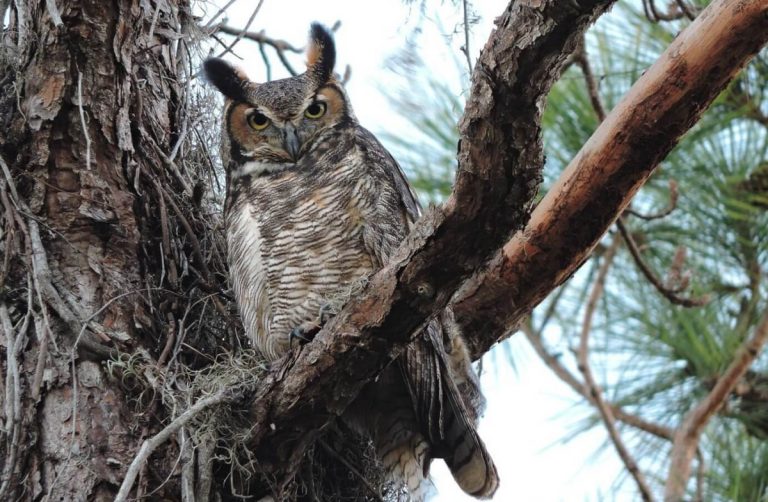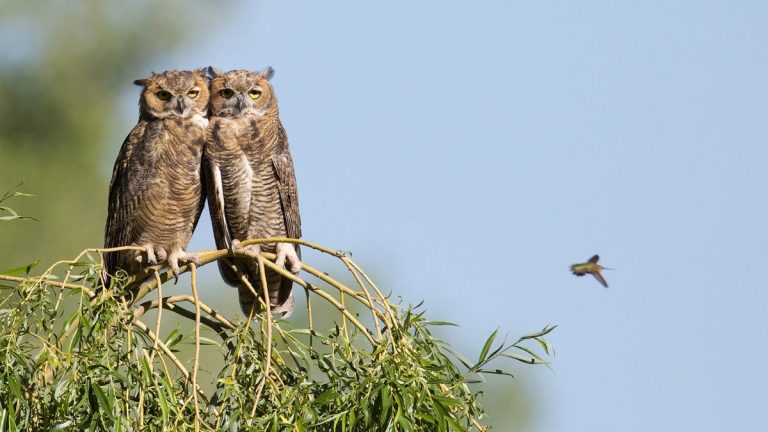
Great Horned Owl Wings: Structure, Function, and Flight Secrets
The wings of the great horned owl are among its most remarkable features, contributing significantly to its success as a nocturnal predator. Known for their silent flight and impressive span, these wings allow the owl to hunt efficiently while remaining undetected by both prey and predators. Observing their structure and function provides insight into the owl’s unique adaptations.
Great horned owl wings are broad and rounded, supporting agile maneuverability in forests, open fields, and urban environments. Their feathers are specially designed to reduce noise, enabling the owl to approach prey stealthily. Understanding the mechanics of these wings helps explain the bird’s hunting efficiency and dominance in its habitat.
Examining the wings also reveals important details about the owl’s overall anatomy, including flight muscles, feather arrangement, and aerodynamic adaptations. These features highlight evolutionary design optimized for nocturnal hunting.
By studying great horned owl wings, one can appreciate both the physical power and intricate engineering that allow this species to thrive in diverse environments while maintaining its role as a top predator.
Anatomy of Great Horned Owl Wings
Great horned owl wings are a marvel of natural engineering, combining strength, flexibility, and silent flight capabilities. Understanding their anatomy reveals how these birds achieve efficient hunting, impressive maneuverability, and stealthy nocturnal movement. Each wing component, from bones to feathers, plays a crucial role in supporting flight and survival in diverse environments.
Bone Structure and Flight Muscles
The skeletal structure of great horned owl wings is both lightweight and strong, providing support while allowing extensive flexibility. The wing consists of three main sections: the humerus, radius, and ulna, connected to the body by robust shoulder joints. These bones support the attachment of powerful flight muscles that enable lift and thrust during flight.
Flight muscles, particularly the pectoralis major and supracoracoideus, account for a significant portion of the bird’s weight. The pectoralis major drives the downstroke, providing the primary lift, while the supracoracoideus powers the upstroke, allowing smooth wing recovery. This coordinated muscular action ensures efficient, energy-conserving flight, which is essential for nocturnal hunting when silent, sustained movement is required.
The wing bones also have a slightly hollow structure, reducing weight without sacrificing strength. This adaptation allows the owl to carry prey in flight and maintain extended periods of soaring or hovering without fatigue. The combination of skeletal strength and muscular power makes great horned owl wings highly efficient for both hunting and long-distance flight.
Feather Arrangement and Function
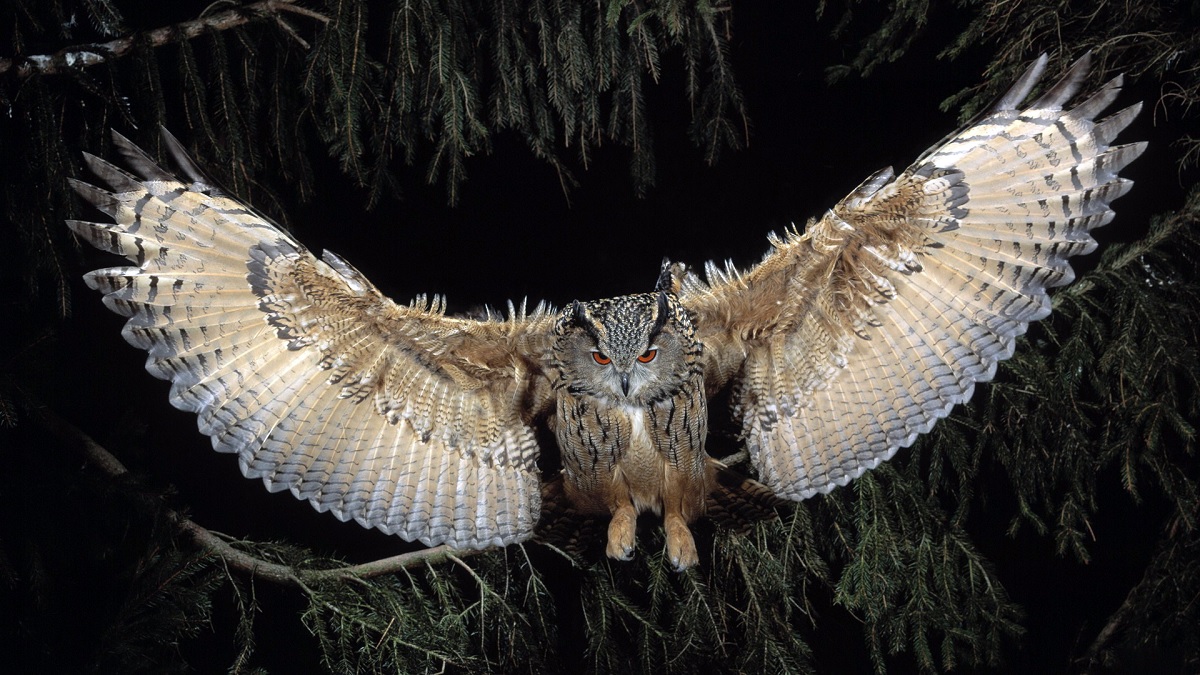
Feathers are the defining feature of owl wings, providing both lift and near-silent flight. The great horned owl has several types of feathers on its wings, including primary, secondary, and covert feathers. Primaries extend from the outer wing and generate thrust, while secondaries provide lift and stability. Covert feathers cover the bases of primaries and secondaries, streamlining airflow over the wing.
One of the most unique adaptations is the serrated leading edge of primary feathers, which breaks up air turbulence and reduces flight noise. This adaptation allows the owl to approach prey quietly, a critical advantage during nocturnal hunting. Soft, velvety textures on the feathers further dampen sound while maintaining structural integrity.
Feather flexibility also plays a key role. Each feather can adjust slightly during flight to optimize lift, maneuverability, and control. This dynamic arrangement allows great horned owls to glide through dense forests, swoop over open fields, or hover briefly while pinpointing prey. Understanding feather anatomy emphasizes how the owl achieves its signature silent, precise flight.
Wing Shape and Aerodynamics
Great horned owl wings are broad and rounded, a shape that enhances maneuverability and lift at low speeds. Unlike long, narrow wings of falcons designed for speed, these wings are optimized for controlled flight in complex habitats such as forests and wooded areas. The broad surface area allows the owl to generate sufficient lift while gliding silently toward prey.
The rounded wing tips reduce wingtip vortices and turbulence, contributing to quieter flight. This aerodynamic design also enables rapid changes in direction and precise hovering, essential when hunting agile prey such as rabbits or small birds. The combination of wing shape and feather design allows energy-efficient gliding while minimizing noise.
Wing span and surface area vary between males and females, with larger females often having slightly broader wings for additional lift and prey carrying capacity. These adaptations highlight how morphology and function are intricately linked to survival and hunting strategies in great horned owls.
Specialized Adaptations for Silent Flight
Silent flight is a hallmark of great horned owls, made possible by a combination of bone structure, feather morphology, and wing shape. The soft fringes on primary feathers reduce turbulence, while the velvety surface absorbs remaining noise. This allows the owl to approach prey without warning, increasing hunting success.
Additionally, the broad, rounded wings allow slow, controlled flight that conserves energy and maintains stealth. Owls can glide over long distances or hover momentarily while assessing prey. These adaptations demonstrate how anatomy directly supports behavioral and ecological roles, making great horned owl wings highly specialized and uniquely effective for nocturnal predation.
Understanding the anatomy of great horned owl wings provides insight into the bird’s impressive hunting capabilities, silent flight, and overall survival strategies. From skeletal structure to feather arrangement and aerodynamic design, each component works in harmony to create one of nature’s most efficient nocturnal predators.
Flight Mechanics and Wing Function
The wings of the great horned owl are critical not only for flight but also for hunting, maneuverability, and energy efficiency. Understanding flight mechanics and wing function reveals how these birds combine strength, precision, and stealth to dominate their nocturnal environments. Every aspect of their wing design contributes to silent and agile flight, supporting both survival and hunting success.
Lift and Thrust Generation
Lift and thrust are the primary forces enabling flight in great horned owls. Broad, rounded wings allow for maximum lift at low speeds, which is crucial for gliding silently through dense forests or hovering while hunting. Primary and secondary feathers work together to generate lift while maintaining stability.
The downstroke of the wings, powered by strong pectoral muscles, produces thrust to propel the owl forward. During the upstroke, specialized wing muscles coordinate to reduce energy expenditure while maintaining lift. This combination of lift and thrust allows the owl to take off quickly, maneuver through tight spaces, and sustain long glides without excessive energy use.
Feather orientation and wing shape play a critical role in these mechanics. Adjustable feathers can fine-tune airflow, reducing drag and increasing efficiency. This sophisticated coordination ensures the owl can move with precision, energy conservation, and minimal noise—key advantages for a nocturnal predator.
Silent Flight Adaptations
Silent flight is one of the most distinctive aspects of great horned owl wing function. Serrated leading edges of primary feathers break up air turbulence, while soft, velvety surfaces absorb residual noise. This allows owls to approach prey undetected, a crucial factor in hunting success.
Broad wings also facilitate slow, controlled flight, minimizing flapping noise. During gliding, the owl can maintain height and control while conserving energy. The combination of feather structure, wing shape, and flight mechanics ensures stealth, allowing the owl to exploit its nocturnal niche effectively.
Monitoring wing function during flight demonstrates how anatomy and behavior are tightly linked. Silent flight results from evolutionary adaptations that optimize feather arrangement, muscle coordination, and wing dynamics. These adaptations enhance both hunting efficiency and predator avoidance, illustrating the functional sophistication of great horned owl wings.
Maneuverability and Precision
Maneuverability is another critical function of great horned owl wings. Rounded wing tips and a wide surface area allow rapid changes in direction, hovering, and controlled descents. This enables the owl to navigate through trees, capture agile prey, and land with precision.
Wing articulation and feather flexibility support fine adjustments mid-flight. The owl can tilt, rotate, or spread its wings to modulate lift and balance, making it highly adaptable in complex environments. Such maneuverability is essential for ambushing prey from unexpected angles and maintaining control in turbulent air currents.
By combining lift, thrust, silent flight, and maneuverability, great horned owl wings function as an integrated system. Each wing movement contributes to survival, predation, and energy efficiency, demonstrating how anatomical adaptations directly translate into functional advantages in the wild.
Comparison With Other Owl Species
Great horned owls are among the most powerful and adaptable owls in North America, but comparing their wings and flight adaptations with other owl species highlights both unique traits and shared characteristics. Understanding these differences and similarities provides insight into ecological specialization, hunting strategies, and flight efficiency across various owl species.
Wing Size and Shape Differences
Great horned owls possess broad, rounded wings that allow for slow, silent flight and exceptional maneuverability in forests and open landscapes. In contrast, barn owls have longer, narrower wings that prioritize gliding and stealth, while snowy owls feature wider wings adapted for soaring over open tundra.
The broad wings of great horned owls provide high lift at low speeds, ideal for ambushing prey and navigating through dense foliage. Narrower wings, like those of barn owls, reduce drag and enhance flight efficiency over longer distances, allowing for a slightly different hunting strategy focused on precise, silent swoops. Snowy owls’ wings are more specialized for open-area flight, emphasizing endurance and stability rather than agility in cluttered environments.
These differences illustrate how wing morphology directly influences hunting and habitat preference. Each owl species has evolved wing characteristics suited to its ecological niche, balancing stealth, maneuverability, and energy efficiency.
Feather Adaptations and Silent Flight
Feather structure is another key point of comparison. Great horned owls, like many nocturnal species, have serrated leading edges on primary feathers and soft surfaces that dampen sound. Barn owls also feature specialized feathers for silent flight, but their more elongated wing shape allows for longer glides with minimal noise, making them highly effective in open spaces or low-light hunting.
Snowy owls, although capable of quiet flight, do not rely as heavily on silent movement because they hunt primarily in daylight and often target less agile prey. Their feathers are thicker and denser, offering insulation against cold climates but slightly reducing stealth compared to great horned or barn owls.
Feather adaptations demonstrate how different species optimize wing function for their hunting needs. While silent flight is a shared trait among nocturnal owls, variations in wing and feather design reflect each species’ ecological requirements.
Flight Mechanics and Hunting Strategies
Flight mechanics among owls differ according to prey type and habitat. Great horned owls combine powerful downstrokes and broad wings for short, controlled flights with rapid maneuvering, suitable for ambushing medium to large prey. Barn owls rely on quiet glides and precise low-speed flight to capture small mammals in open fields, emphasizing accuracy over power.
Snowy owls utilize broad, stable wings for soaring and long-distance flight, hunting predominantly in open tundra habitats. Their flight emphasizes endurance and energy efficiency over the agility needed in dense forests. These differences in flight mechanics demonstrate how wing structure and muscle coordination evolve to support species-specific hunting strategies.
Ecological and Behavioral Implications
Comparing great horned owls to other species underscores how morphology influences ecological roles. Great horned owls thrive in diverse environments, from forests to urban areas, due to their versatile wings. Barn owls are more specialized, favoring open landscapes, while snowy owls are adapted to extreme cold and open terrain.
These comparisons reveal how evolutionary pressures shape wing anatomy, feather structure, and flight mechanics to optimize predation and survival. By studying these differences, one can better understand the remarkable adaptability and specialization present across owl species, highlighting both shared traits and unique adaptations that define each species’ ecological niche.
Hunting and Stealth
The hunting and stealth capabilities of the great horned owl are a defining aspect of its survival strategy. These nocturnal predators rely heavily on wing adaptations, feather structure, and sensory acuity to capture prey silently and efficiently. Understanding how stealth integrates with hunting behavior reveals the sophisticated interplay between anatomy, biomechanics, and ecological necessity in these remarkable birds.
Silent Flight for Effective Predation
One of the most critical aspects of great horned owl hunting is silent flight. Specialized feathers with serrated leading edges break up airflow, minimizing turbulence and reducing sound during flight. The velvety texture of wing feathers further absorbs noise, allowing the owl to approach prey without detection.
This stealthy flight is essential for capturing mammals, birds, and other nocturnal animals. Many prey species rely on auditory cues to detect predators, making the owl’s silent approach a significant advantage. Great horned owls often glide low to the ground, using minimal wing flapping to remain undetected while scanning for movement.
Silent flight is also energy-efficient, allowing the owl to maintain long periods of hunting without excessive fatigue. By combining stealth with broad, rounded wings that provide lift at low speeds, the great horned owl can execute precise, controlled attacks on unsuspecting prey.
Perch Hunting and Ambush Strategies
Great horned owls often employ a sit-and-wait hunting approach, using elevated perches to scan their environment. From these vantage points, they can observe movement on the ground and calculate the optimal angle and timing for attack. The broad wings enable sudden bursts of flight when prey is detected, while silent feather adaptations ensure the approach remains undetectable.
This ambush strategy relies on patience and precision. The owl can remain motionless for long periods, minimizing energy expenditure and avoiding alerting prey. When prey is identified, a quick, silent swoop allows the owl to strike with talons extended, capturing the target before it can react.
Perch hunting is complemented by active flight hunting when necessary. The combination of stealth, patience, and wing adaptations maximizes success rates, demonstrating the importance of wing anatomy and flight mechanics in hunting behavior.
Talons, Beak, and Prey Capture
Wing stealth is only part of the hunting equation. Great horned owls also possess powerful talons and a sharp beak to secure and kill prey efficiently. Their wings facilitate positioning above prey, allowing gravity and momentum to assist in capture.
Once in range, talons extend to grasp and immobilize prey instantly. The wings’ broad surface area provides stability during the strike, while the owl’s flexible flight allows rapid adjustments mid-air. The beak then delivers a fatal bite if necessary. This combination of stealthy approach and physical power makes the great horned owl an apex nocturnal predator.
Nighttime Vision and Hearing Integration
Stealthy hunting is reinforced by exceptional sensory capabilities. Great horned owls possess large, forward-facing eyes for depth perception and low-light vision. Their asymmetrically placed ears enable precise localization of prey sounds, allowing them to hunt in complete darkness.
Wings play a complementary role, providing silent, controlled movement that matches the owl’s sensory input. Precise adjustments in flight allow it to navigate toward prey without producing warning noise. This integration of vision, hearing, and wing mechanics exemplifies a highly evolved hunting system designed for efficiency and success in nocturnal environments.
Adaptability in Diverse Habitats
Great horned owls hunt across forests, open fields, and urban areas, demonstrating remarkable adaptability. Broad, rounded wings provide the lift and maneuverability needed for navigating complex environments, while stealth ensures they remain effective hunters in varying conditions.
This combination of wing function, sensory integration, and behavioral strategy enables the owl to exploit diverse prey species and habitats. Their hunting success relies on the seamless coordination of stealth and power, emphasizing how anatomical and behavioral adaptations work together to make the great horned owl one of the most formidable predators in North America.
FAQs
What Are the Key Features of Great Horned Owl Wings?
You might wonder about the impressive structure of great horned owl wings, which are designed for silent flight and powerful maneuvers. These wings span up to 4.5 feet in adults, featuring soft, fringed feathers on the leading edges that reduce turbulence and noise, allowing stealthy hunting at night. The primary flight feathers are long and broad, providing lift for gliding, while the wing’s asymmetrical shape enhances agility during pursuits.
This adaptation helps you understand why great horned owls dominate nocturnal skies. Their wings also include a comb-like edge that further muffles sound, making them nearly invisible to prey. With strong muscles supporting these features, they can carry heavy loads like rabbits over long distances effortlessly.
How Do Great Horned Owl Wings Enable Silent Flight?
Silent flight captivates you when observing great horned owls in action. Their wings have specialized serrations on the front edge, breaking up air into smaller streams to minimize noise—much like Velcro muting a zipper. Porous trailing feathers absorb remaining sound waves, ensuring prey hears nothing until it’s too late.
You appreciate this evolutionary marvel, honed over millennia for survival. During flight, these wings allow near-silent approaches, with downy upper surfaces further dampening whooshes. This stealth gives the owl a predatory edge, letting it swoop undetected from perches.
What Is the Wingspan of a Great Horned Owl?
Curious about size, you learn that great horned owl wingspans typically measure 3.3 to 4.8 feet (1 to 1.5 meters), varying by region and sex—females often larger. This impressive reach supports their status as one of North America’s biggest owls, aiding in territorial displays and efficient soaring.
You can picture them unfolding those wings during courtship flights or while scanning for rodents below. The broad span maximizes lift on minimal effort, conserving energy for hunts. In flight, it creates a silhouette unmistakable to birders, emphasizing their power in diverse habitats from forests to deserts.
How Strong Are Great Horned Owl Wings for Hunting?
You marvel at the strength in great horned owl wings, capable of lifting prey twice their body weight—up to 10 pounds despite weighing only 3-4 pounds themselves. Robust pectoral muscles power rapid takeoffs and sustained flapping, essential for snatching skunks or hares from the ground.
These wings excel in short bursts, reaching speeds of 40 mph. You see how the reinforced bone structure withstands strikes, with flexible joints for precise control. This power lets them hunt year-round, adapting to whatever challenges nature throws their way in the wild.
Why Are Great Horned Owl Wings Adapted for Night Hunting?
Night hunting demands unique wings, and yours truly shine for great horned owls. The soft, mottled plumage blends with twilight, while comb-like fringes ensure whisper-quiet glides over moonlit fields. You grasp how this counters their prey’s acute hearing, turning darkness into an ally.
Evolved over eons, these wings prioritize stealth over speed, with high-aspect ratios for stable hovers before pouncing. You note their ability to fly through dense branches silently, navigating by keen eyesight and hearing. This makes them apex predators, thriving where diurnal birds falter.
How Do Great Horned Owl Wings Compare to Other Owls?
Comparing wings, you find great horned owl ones bulkier and more powerful than a barn owl’s slender, high-speed versions. While barn owls emphasize agility for rodent zips, great horned prioritize strength for diverse prey like birds or mammals, with broader spans for better load-bearing.
You appreciate the trade-offs: their noisier flaps suit open hunts, but serrations keep them stealthy enough. Versus snowy owls, theirs lack pure white camouflage but boast superior muscle for varied climates. This versatility cements their role as adaptable hunters across continents.
Conclusion
The great horned owl wings exemplify nature’s engineering marvel, blending silent flight with unmatched power. These broad, fringed feathers enable stealthy hunting under moonlight, muffling air rush to near silence—a critical edge for apex predators.
In the great horned owl wings note key traits like asymmetric feather vanes and comb-like serrations, which disrupt turbulence and absorb sound, allowing owls to swoop undetected on prey from afar.
Ultimately, studying these wings inspires biomimicry in drones and aircraft, proving evolution’s timeless ingenuity. They remind us of the wild’s delicate balance, where power whispers softly.