Why Do Cats Catch Birds And How To Protect Wildlife Safely
Cats are natural hunters, equipped with sharp claws, keen eyesight, and extraordinary agility, which makes them highly effective predators. Their instinct to pursue and capture smaller animals is deeply ingrained, even in domestic environments where food is regularly provided. Understanding why do cats catch birds involves exploring both instinctual behavior and learned skills. Birds, with their quick movements and vulnerability, often trigger a cat’s hunting drive, turning even playful swipes into serious predatory actions.
Observing these interactions provides insight into the complex relationship between predator and prey, highlighting both the cat’s remarkable adaptations and the challenges faced by wild and backyard bird populations. Recognizing this behavior can help pet owners take steps to minimize bird predation while appreciating the natural instincts that drive cats to hunt, reflecting the delicate balance between domestication and wild behavior.
Instinctive Hunting Behavior
Cats are natural predators, and their hunting behavior is deeply rooted in instinct rather than necessity. Even well-fed domestic cats demonstrate remarkable skill when stalking, chasing, and capturing prey. Understanding instinctive hunting behavior provides insight into why cats pursue birds, how their physical and sensory adaptations support this behavior, and the role of play and practice in honing their predatory skills. Observing these traits highlights the connection between evolutionary instincts and modern domesticated lifestyles.
Stalking And Pouncing Techniques
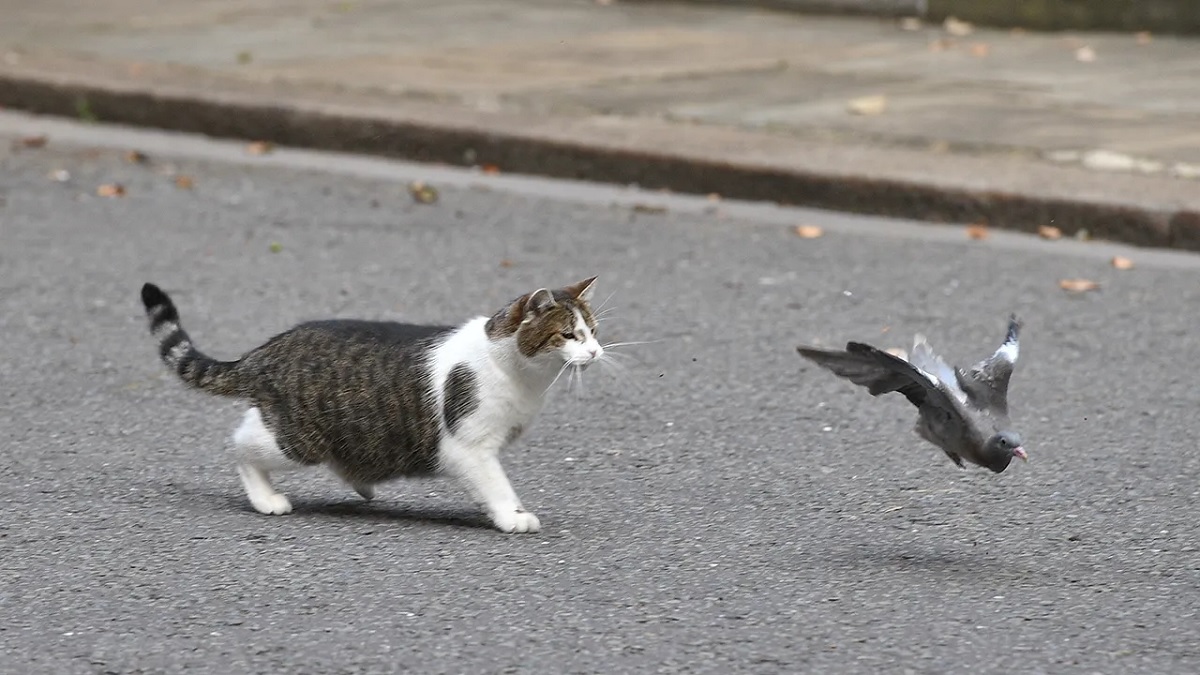
Cats employ a highly refined stalking technique when targeting birds. Their bodies are low to the ground, muscles tense, and eyes fixed on the prey. Tail movements, ear positions, and slow, deliberate steps allow them to approach without detection. The crouched posture reduces visibility while preparing for a sudden pounce.
Once within striking distance, cats unleash a rapid burst of energy, extending their limbs and using sharp claws to secure the prey. This combination of patience, stealth, and explosive power exemplifies the efficiency of their hunting instincts. Even when prey is toy-like or absent, cats often mimic these behaviors during play, demonstrating that hunting is deeply ingrained rather than purely for sustenance.
Role Of Sensory Adaptations
A cat’s hunting behavior relies heavily on acute sensory perception. Their vision is optimized for detecting movement, particularly in low-light conditions, allowing them to notice subtle flutters or shifts in bird activity. Whiskers help gauge distance and spatial orientation during stalking, while sensitive ears detect faint rustles, wing beats, or calls, providing early warning of potential prey or danger.
These adaptations make cats highly effective hunters. Even when domesticated, they instinctively respond to birds, insects, or small rodents as targets. Observing these sensory-driven behaviors clarifies why cats are such formidable predators and explains the frequent interactions between domestic cats and backyard bird populations.
Learning And Practice In Hunting
Instinctive hunting behavior is often enhanced through practice and observation. Kittens learn from their mothers by watching hunting sequences, including stalking, pouncing, and subduing prey. Even in domestic settings, young cats engage in play that mimics these techniques, sharpening coordination, timing, and reflexes.
This learning process ensures that hunting skills are maintained across generations. It also explains why cats continue to hunt birds despite being well-fed, as the activity satisfies instinctual drives and reinforces physical and cognitive abilities. Understanding this combination of instinct and learned behavior provides insight into why cats consistently target birds and small animals.
Types Of Cats That Hunt Birds
Cats, regardless of breed or domestication status, possess natural hunting instincts that drive them to pursue birds. Understanding the types of cats that hunt birds sheds light on how instincts, physical attributes, and environmental factors influence predation. From domestic housecats to feral and wild species, different types of cats display variations in hunting efficiency, technique, and target selection. Observing these distinctions helps explain why some cats are more successful or persistent hunters than others and how their behavior impacts local bird populations.
Domestic Cats And Hunting
Domestic cats are among the most common bird predators, despite being well-fed at home. Their hunting behavior is driven largely by instinct rather than hunger. Even indoor cats that venture outdoors for limited periods may stalk and catch birds. Breeds with heightened agility, keen eyesight, and muscular builds, such as the Abyssinian or Bengal, often demonstrate exceptional hunting skills.
Hunting is frequently a form of play for domestic cats, which helps them practice essential predatory behaviors. Even if they do not consume their catch, the stalking, pouncing, and capture provide mental stimulation and satisfy instinctual drives. Observing domestic cats hunting highlights the persistence of these instincts in modern environments, showing that predation is a natural part of their behavioral repertoire.
Feral Cats And Outdoor Hunters
Feral cats are highly effective bird hunters, relying entirely on their predatory skills for survival. These cats have honed hunting techniques through necessity, developing stealth, precision, and adaptability. They often hunt in areas rich with bird populations, such as gardens, parks, wetlands, and rural landscapes. Feral cats may target a broader range of prey, from small songbirds to ground-nesting species, reflecting their opportunistic feeding patterns.
The constant practice of hunting strengthens their physical and cognitive abilities, making them more efficient than domestic cats. Their impact on local bird populations can be significant, highlighting the ecological consequences of unmanaged feral cat populations. Studying feral hunters emphasizes the role of experience, environment, and survival needs in shaping hunting efficiency and behavior.
Wild Cats And Specialized Hunters
Wild cat species, such as bobcats and jungle cats, also hunt birds as part of their diet. These cats combine stealth, speed, and ambush strategies to capture avian prey in forests, wetlands, and grasslands. Unlike domestic or feral cats, wild species rely entirely on hunting for sustenance, which refines their skills over time.
Their predation patterns can influence bird populations and ecosystem dynamics, particularly in areas where these cats are apex or mid-level predators. Observing wild cats hunting birds reveals the evolutionary adaptations and physical prowess required for successful predation. Comparing wild, feral, and domestic cats illustrates how instinct, environment, and necessity shape hunting behavior across different types of felines.
Impact On Bird Populations
Cats hunting birds can have significant effects on local bird populations, particularly in urban, suburban, and ecologically sensitive areas. Predation by domestic, feral, and wild cats can influence species diversity, nesting success, and population dynamics.
Understanding the impact on bird populations highlights the balance between predator behavior and conservation concerns. Observing these interactions helps birdwatchers, ecologists, and pet owners recognize the ecological consequences of feline predation and implement strategies to mitigate risks for vulnerable bird species.
Direct Predation And Nesting Success
Cats directly affect bird populations by preying on adults, juveniles, and eggs. Ground-nesting and low-lying nest species are particularly vulnerable to attacks. Frequent predation can reduce reproductive success, leading to fewer fledglings and slower population growth. In areas with high cat density, these effects are magnified, resulting in noticeable declines in local bird numbers.
The threat extends beyond immediate prey loss. Birds may abandon nests in response to repeated disturbances, further reducing reproductive output. Even sporadic hunting can disrupt feeding, mating, and territorial behavior, causing long-term consequences for species that rely on specific habitats. Understanding direct predation emphasizes the importance of managing cat populations to protect vulnerable avian communities.
Indirect Ecological Effects
The presence of cats influences bird behavior and habitat use beyond direct predation. Birds may alter foraging patterns, nesting locations, and daily activity schedules to avoid areas with high cat activity. Such behavioral changes can reduce feeding efficiency, stress levels, and overall fitness, impacting survival and reproductive success.
Indirect effects also ripple through the ecosystem. Reduced bird populations can affect seed dispersal, insect control, and pollination, highlighting the broader ecological consequences of cat predation. Recognizing these indirect impacts underscores the importance of integrating wildlife management and domestic animal care to maintain ecological balance and protect sensitive bird populations.
Vulnerable Species And Conservation Concerns
Certain bird species are especially susceptible to cat predation, including songbirds, ground nesters, and species with small population sizes. In urban and suburban areas, free-roaming cats can pose a significant threat to biodiversity, potentially contributing to local declines or endangerment of vulnerable species.
Conservation measures, such as keeping cats indoors, providing supervised outdoor access, or implementing feral cat control programs, are critical to reducing predation pressure. Understanding which species are most at risk allows targeted actions to protect bird populations and ensure long-term ecosystem health, balancing the natural instincts of cats with wildlife conservation priorities.
Behavioral Observations And Training
Understanding a cat’s hunting behavior through careful observation is crucial in managing predation on birds. By studying how cats stalk, pounce, and interact with their environment, owners can identify triggers and tendencies that lead to bird hunting. Training and environmental management strategies can then be applied to reduce risks. Observing cats’ natural behaviors provides insight into their instincts, motivations, and patterns, while training techniques help redirect their predatory energy, creating a safer environment for both pets and local wildlife.
Observing Hunting Patterns
The first step in mitigating bird predation is observing your cat’s behavior. Take note of when and where the cat shows hunting tendencies, such as chasing insects, birds, or moving objects outside. These patterns often reveal peak activity periods, favored locations, and specific triggers that prompt predatory behavior.
Some cats are more prone to hunting due to age, breed, or energy levels. Younger, more energetic cats may display persistent stalking behavior, while older cats might be less active but still opportunistic. By documenting these behaviors, owners gain an understanding of their cat’s instinctual drives, enabling them to implement preventive measures, such as restricting outdoor access during high-risk periods or providing safe, stimulating alternatives indoors.
Training Techniques And Redirection
Training cats to reduce hunting behavior involves redirecting predatory instincts through play, enrichment, and rewards. Interactive toys that mimic prey movements, such as feather wands or laser pointers, can satisfy a cat’s need to stalk and pounce in a controlled environment. Regular, structured play sessions help expend energy that might otherwise be used to hunt birds outdoors.
Positive reinforcement encourages desired behavior, such as returning inside on command or engaging with toys instead of wildlife. Consistency is key; cats respond best to repeated cues, clear boundaries, and immediate feedback. Over time, training can significantly reduce outdoor predation while maintaining mental and physical stimulation. Observing the cat’s response to these techniques allows owners to adapt strategies for maximum effectiveness.
Environmental Adjustments And Safety Measures
Behavioral observation and training are complemented by environmental adjustments. Installing outdoor enclosures, “catios,” or supervised access areas prevents unsupervised hunting. Minimizing bird feeders or nesting sites near areas where cats roam also reduces opportunities for predation.
Understanding a cat’s tendencies enables strategic placement of obstacles or deterrents to prevent stalking behavior. Providing elevated perches, hiding spots, and enrichment indoors further satisfies natural instincts without harming wildlife. By combining observation, training, and environmental management, owners can effectively reduce predatory behavior while promoting a safer coexistence between cats and local bird populations.
Frequently Asked Questions
Why Do Cats Catch Birds Even When They Are Fed?
Cats catch birds primarily due to instinct rather than hunger. Their predatory drive is deeply ingrained, and the act of stalking, pouncing, and capturing prey satisfies natural hunting instincts. Even well-fed domestic cats exhibit this behavior as a form of mental and physical stimulation. Play and practice mimic hunting activities, allowing cats to refine skills such as timing, precision, and coordination. Understanding this instinctual behavior helps owners realize that bird predation is not always linked to hunger but to the cat’s innate need to hunt.
How Does Hunting Behavior Develop In Cats?
Hunting behavior in cats develops through a combination of instinct and learning. Kittens observe their mothers stalking, capturing, and playing with prey, gradually internalizing these techniques. Play sessions with toys or small objects mimic real hunting scenarios, reinforcing reflexes and coordination. Over time, cats learn how to approach, stalk, and pounce on prey with precision. Even without exposure to wild prey, these instinctive behaviors persist. Observing these developmental stages explains why domestic cats, even with no need to hunt for survival, continue to catch birds and small animals.
Are Certain Cat Breeds More Likely To Hunt Birds?
Yes, some cat breeds display heightened hunting instincts due to their physical traits and energy levels. Breeds like Abyssinians, Bengals, and Siamese are highly agile, alert, and active, making them more inclined to stalk and chase birds. However, all cats retain predatory instincts, regardless of breed. Environmental factors and individual temperament also play a role. Cats with access to outdoor spaces are more likely to encounter and pursue birds. Understanding breed tendencies helps owners anticipate predatory behavior and implement appropriate management strategies to protect local wildlife.
Do Outdoor Cats Pose A Greater Risk To Birds?
Outdoor cats are at a higher risk of catching birds due to unrestricted access to prey-rich environments. Gardens, parks, wetlands, and backyards provide abundant opportunities for stalking and hunting. Unlike indoor cats, outdoor cats encounter natural triggers such as bird calls, movement, and nesting areas that stimulate predatory behavior. The combination of instinct and opportunity makes outdoor cats significant contributors to local bird predation. Managing outdoor access, using supervised time outdoors, or providing enclosures can reduce these risks while still allowing cats to explore safely.
How Does Hunting Affect Bird Populations?
Cats’ hunting behavior can impact local bird populations, especially in areas with high cat density. Ground-nesting birds, fledglings, and smaller species are particularly vulnerable to predation. Frequent hunting can reduce reproductive success, disturb nesting areas, and alter foraging behavior. In ecologically sensitive or urban areas, unmanaged cat predation may contribute to population declines. Understanding this effect highlights the importance of balancing cats’ natural instincts with wildlife conservation measures to protect bird communities.
Can Indoor Cats Still Hunt Birds?
Indoor cats may still exhibit hunting behavior even without direct access to birds. They often mimic hunting through play, chasing toys or shadows that simulate prey. Visual stimuli, such as watching birds through windows, can trigger stalking and pouncing instincts. While they cannot physically catch outdoor birds, their behavior reflects deeply ingrained predatory drives. Recognizing these patterns helps owners provide adequate mental and physical stimulation indoors, satisfying instincts without harming wildlife.
How Can Owners Reduce Bird Predation By Cats?
Owners can reduce bird predation by modifying the environment and redirecting hunting instincts. Measures include keeping cats indoors, using supervised outdoor enclosures, providing enrichment toys, and scheduling interactive play to expend energy. Deterring cats from bird-rich areas or removing accessible bird feeders can also minimize opportunities. Training techniques and consistent reinforcement further help manage predatory behavior. Combining these strategies balances the cat’s natural instincts with wildlife protection, reducing bird predation while maintaining the cat’s physical and mental health.
Final Words
Cats are natural hunters, and their instinct to chase and catch birds is rooted in both evolutionary behavior and play-driven curiosity. Even well-fed domestic cats may exhibit this behavior because hunting is a deeply ingrained activity that satisfies their physical and mental stimulation needs. Understanding the reasons behind this instinct helps you manage your cat’s interactions with wildlife responsibly.
Measures such as supervised outdoor time, cat collars with bells, or secure enclosures can reduce bird predation while keeping your cat engaged and healthy. When considering [why do cats catch birds], it becomes clear that this behavior is natural but manageable with awareness and preventive strategies. By balancing your cat’s hunting instincts with wildlife protection, you can ensure a safer environment for local bird populations while still allowing your cat to express its natural behaviors in a controlled, responsible way.