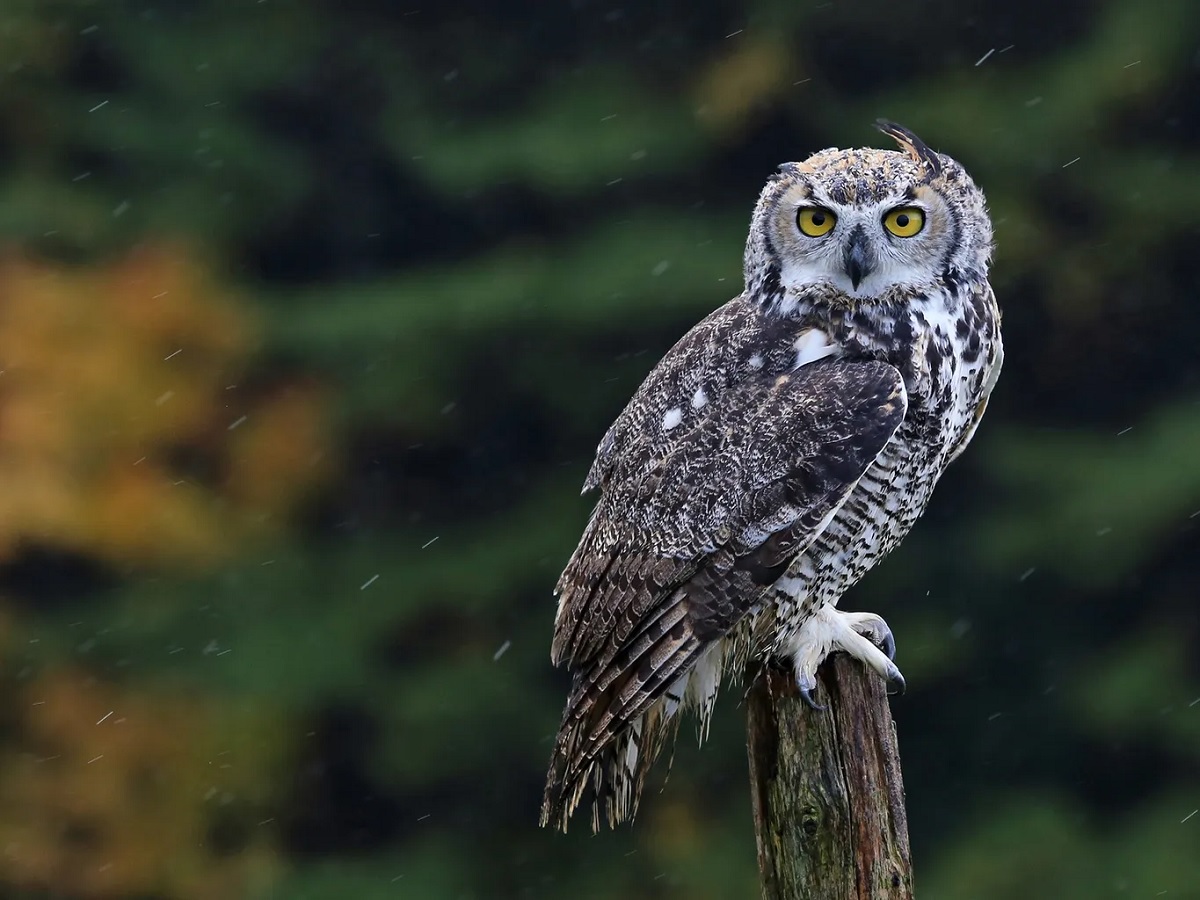
White Great Horned Owl: Discover The Majestic Night Hunter
The great horned owl is already an impressive bird of prey, but the white great horned owl adds a striking twist to its natural majesty. Known for its distinctive plumage, this variation captures the attention of bird watchers and wildlife enthusiasts alike. Its pale feathers set it apart from the typical brown and gray coloration, giving it a ghostly yet captivating presence in forests and open habitats.
White great horned owls are not albino in most cases but exhibit a rare leucistic trait, which reduces pigmentation in their feathers while maintaining normal eye and beak coloration. This unique appearance can make them more noticeable in their environments, highlighting the incredible diversity within a single species.
Beyond their striking looks, white great horned owls share the same impressive hunting skills and adaptability as their more common counterparts. They are top predators, capable of hunting a wide range of prey, from small mammals to other birds.
Observing these owls in the wild provides insight into both their behavior and the genetic diversity that produces such rare variations. Their presence is a reminder of nature’s endless variety and adaptability.
Physical Characteristics of White Great Horned Owls
White great horned owls are a fascinating and visually striking variation of the common great horned owl. Their unique coloration, size, and body structure make them stand out among other owls. Studying their physical characteristics provides insight into how genetic variations influence appearance while preserving the impressive traits that make this species a top predator.
Plumage and Coloration
The most notable feature of the white great horned owl is its pale plumage. Unlike the standard brown and gray patterns seen in most great horned owls, these birds display predominantly white or very light feathers. This coloration is usually a result of leucism, a genetic condition that reduces pigment in the feathers, while the eyes, beak, and talons retain their normal dark hues.
This pale plumage gives the owl a ghostly, almost ethereal appearance, making it more noticeable in its natural habitats. The absence of the typical mottled pattern does not affect their ability to camouflage entirely, as these owls often perch in snowy environments or among pale tree bark. Feather structure remains dense and soft, providing insulation and silent flight capabilities, critical for nighttime hunting.
The coloration can vary slightly among individuals, ranging from almost pure white to cream or off-white tones, sometimes retaining faint markings. These subtle variations help researchers identify individual owls and study genetic diversity within populations.
Size and Build
White great horned owls share the same robust build as their standard-colored counterparts. Adults typically range from 18 to 25 inches in length, with a wingspan of approximately 3.3 to 4.8 feet. Males are slightly smaller than females, but both sexes exhibit powerful bodies designed for hunting and survival in diverse habitats.
Their muscular frame supports strong talons, capable of gripping and carrying prey several times their weight. The chest and legs are broad, providing strength during flight and while subduing prey. Despite their bulk, their skeletal and muscular systems allow for quiet, precise movements necessary for hunting at night.
The wings are long and broad, facilitating silent gliding and quick maneuverability through dense forests or open terrain. The size and shape of the owl make it an efficient predator capable of hunting small mammals, birds, and even reptiles, demonstrating that physical prowess is preserved regardless of plumage variation.
Facial Features and Eyes
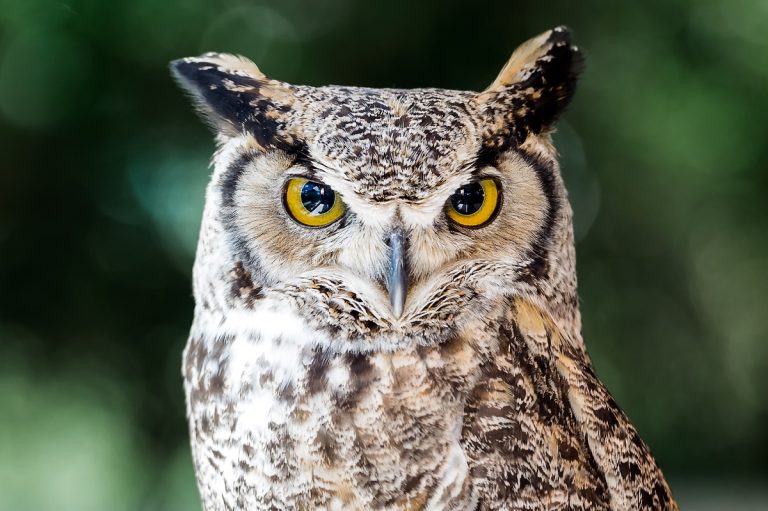
The facial disk of the white great horned owl is one of its most striking physical features. This circular arrangement of feathers around the eyes enhances sound localization, allowing the owl to detect prey even in complete darkness. The pale feathers surrounding the eyes often accentuate the dark orange or yellow eyes, creating a dramatic contrast that is both captivating and functional.
The prominent “horns” or ear tufts remain dark and upright, adding to the owl’s distinctive silhouette. These tufts are not ears but serve as visual signals for communication and camouflage. The beak is sharp and hooked, designed for tearing flesh efficiently, while the strong jaw muscles support precise feeding behavior.
Their facial structure, combined with keen eyesight and acute hearing, makes them formidable nocturnal hunters. The contrast between the pale plumage and dark eyes often draws attention in wildlife observation, highlighting the unique physical adaptations that support survival and hunting efficiency.
Talons and Feet
White great horned owls possess powerful talons, essential tools for capturing and securing prey. The toes are covered in scales, while the underside of each talon features sharp, curved claws that can pierce and hold struggling animals. The strength of their grip is extraordinary, allowing them to carry prey that can sometimes outweigh the owl itself.
The legs are feathered to provide insulation and camouflage, helping the owl remain undetected while perching or hunting. These strong feet also play a role in nest building, defense against intruders, and interaction with mates during courtship. The talons’ size, shape, and strength are critical for survival, showcasing an evolutionary design perfected over millennia.
Observing these features up close demonstrates the balance between form and function. Even with the unique white plumage, the white great horned owl retains the same physical adaptations that make the species an apex nocturnal predator.
Flight and Wing Structure
The wings of the white great horned owl are adapted for silent and agile flight. Broad and rounded, they allow for slow, controlled movements through dense forests or swift glides across open terrain. The feather structure minimizes noise, a crucial adaptation for hunting small mammals and birds undetected.
Wing and tail feather arrangement provides stability, maneuverability, and lift, supporting their ability to hover briefly or make sharp turns when pursuing prey. Despite their large size, these owls can fly with remarkable stealth, aided by specialized wing fringes that reduce turbulence.
The combination of silent flight, strong wings, and powerful talons makes the white great horned owl an efficient hunter. Their physical traits work in harmony, enabling them to thrive in diverse habitats, from snowy landscapes to temperate forests, while maintaining the effectiveness of their predatory lifestyle.
Habitat and Distribution
White great horned owls, though rare in appearance, share much of the habitat and range of their more common counterparts. Understanding where these owls live and how they adapt to their environments provides insight into their survival strategies and ecological roles. Their distribution is influenced by availability of prey, nesting sites, and environmental conditions suitable for hunting and roosting.
Geographic Range
White great horned owls are primarily found across North and Central America, reflecting the general distribution of the species. They inhabit regions ranging from southern Canada through the United States and into parts of Mexico. The rare white variation occurs sporadically within this range, as leucism or other genetic variations are uncommon.
These owls are adaptable and occupy diverse landscapes, including forests, grasslands, deserts, and urban environments. Their wide range allows them to exploit a variety of prey species and nesting opportunities. While the white plumage may make individuals more visible in certain habitats, it does not significantly restrict their distribution.
Understanding their geographic range helps researchers identify areas where white great horned owls might be observed, contributing to studies on population genetics, habitat preferences, and conservation needs.
Preferred Habitats
White great horned owls thrive in habitats that provide abundant prey and suitable nesting locations. They favor wooded areas, forest edges, and riparian zones, where trees or cliffs offer safe nesting sites and vantage points for hunting. Open fields or agricultural lands nearby often serve as hunting grounds for small mammals, birds, and reptiles.
Urban and suburban areas also support these owls, as parks, large gardens, and utility structures provide perching and nesting opportunities. While white plumage may reduce camouflage in some environments, their nocturnal habits and silent flight mitigate predation risks and hunting challenges. Adaptability in habitat selection is a key factor in their widespread presence.
Recognizing preferred habitats allows enthusiasts and conservationists to identify locations for observation and protection efforts. These habitats support not only the white variation but the broader great horned owl population, ensuring ecological balance.
Nesting and Roosting Sites
Nesting and roosting are essential aspects of the white great horned owl’s habitat. They typically nest in tall trees, cliff ledges, or abandoned nests of other large birds, such as hawks or eagles. These elevated locations provide safety from ground predators and a clear view for hunting.
Roosting sites are often secluded and dense, allowing owls to rest during the day. The white plumage, though more visible, does not significantly impact roosting success because these owls select locations with sufficient cover. Seasonal changes and availability of prey influence nesting site selection, with some owls moving to more sheltered areas during harsh winters or periods of low food supply.
The choice of nesting and roosting sites ensures the survival of both adults and offspring. Protecting these sites is crucial for maintaining healthy populations, particularly for rare color morphs like the white great horned owl.
Adaptations to Diverse Environments
White great horned owls demonstrate remarkable adaptability to different environments. Their diet is highly varied, including small mammals, birds, and occasionally reptiles or amphibians, allowing them to thrive in forests, deserts, and urban landscapes. Their ability to hunt at night further supports survival across diverse habitats.
Environmental adaptability also extends to their tolerance of temperature extremes and seasonal changes. In snowy regions, their pale feathers may even provide some camouflage against winter landscapes. Urban adaptation includes nesting in parks or on man-made structures, showing resilience in human-altered environments.
Studying these adaptations helps explain how white great horned owls persist despite the rarity of their coloration. Their ecological versatility ensures they remain effective predators and important components of the food web in varied habitats.
Conservation Considerations
Understanding habitat and distribution is essential for conservation efforts. White great horned owls, like other color morphs, benefit from protected forests, nesting sites, and areas rich in prey. Urban development, deforestation, and environmental pollution pose challenges to habitat quality and availability.
Conservation strategies focus on preserving nesting trees, maintaining open hunting areas, and minimizing human disturbance during breeding seasons. Monitoring populations, including rare white individuals, contributes to understanding genetic diversity, habitat needs, and potential threats.
Protecting habitats ensures the survival of both white and standard great horned owls, maintaining ecological balance while allowing researchers and enthusiasts to observe these majestic birds in their natural environments.
Behavior and Hunting Patterns
White great horned owls exhibit fascinating behaviors and hunting strategies that reflect their role as apex nocturnal predators. Observing these owls provides insight into their intelligence, adaptability, and survival tactics. Their behavior is shaped by environmental conditions, prey availability, and their physical capabilities, making them highly efficient hunters and complex social animals.
Nocturnal and Crepuscular Activity
White great horned owls are primarily nocturnal, meaning they are most active during the night, although they can also be seen hunting during twilight hours. This behavior allows them to exploit prey that is active after dark, such as rodents, birds, and insects. Their exceptional night vision and acute hearing give them a significant advantage in low-light conditions.
During daylight hours, these owls typically roost in trees, dense foliage, or secluded cliff ledges. They remain still and silent to avoid detection by predators and humans, conserving energy for nighttime hunting. Their crepuscular activity peaks around dusk and dawn, providing the best balance between visibility and prey activity. Observing these patterns can help bird watchers anticipate hunting behavior and understand their daily routines.
Nighttime activity also reduces competition with diurnal raptors and other predators. The ability to remain undetected during the day while actively hunting at night demonstrates the owl’s adaptability and evolutionary success as a top predator in varied environments.
Hunting Techniques and Strategies
White great horned owls are highly skilled hunters, relying on a combination of stealth, power, and precision. They use perches to survey open areas or forest edges, spotting movement below before silently gliding toward their prey. Their broad wings and soft feather structure allow for near-silent flight, minimizing the chance of detection.
Once a target is identified, the owl swoops down with remarkable speed and accuracy. Their talons are strong and curved, capable of gripping and immobilizing prey instantly. They can capture animals up to three times their body weight, including rabbits, squirrels, and even other birds. Hunting success depends on patience, keen senses, and perfect timing, all of which white great horned owls excel at.
These owls also adapt hunting methods to environmental conditions. In snowy landscapes, they may hunt along edges where prey is exposed, while in urban settings, they use artificial lighting to spot nocturnal rodents. Their hunting versatility underscores their role as adaptable apex predators.
Territorial Behavior and Social Interactions
White great horned owls are territorial, especially during breeding season. Males often vocalize to establish boundaries and ward off intruders, while both males and females defend nesting sites aggressively. Their hoots serve as audible markers of territory and signals to potential rivals about strength and fitness.
While largely solitary, these owls may communicate with their mate through calls, displays, and shared hunting or nesting responsibilities. Pairs demonstrate coordinated behavior during breeding, including alternating incubation and feeding chicks. Observing interactions between mates highlights the importance of social behavior in reproductive success.
Territoriality and social interactions also influence hunting efficiency. By maintaining control over prime hunting grounds, these owls ensure consistent access to prey, reducing competition and supporting survival. Their communication and cooperation reflect a complex behavioral repertoire beyond basic predation.
Adaptations for Hunting Success
Several physical and sensory adaptations contribute to the hunting success of white great horned owls. Large eyes provide excellent low-light vision, while asymmetrically placed ears enhance directional hearing. This combination allows them to detect and locate prey with extraordinary accuracy, even under dense vegetation or darkness.
Their sharp beak and powerful talons allow them to quickly dispatch prey, while silent flight ensures minimal disturbance. Hunting strategies are flexible, ranging from perch-and-pounce techniques to active pursuit when necessary. Environmental conditions, prey availability, and seasonal changes influence their methods, demonstrating remarkable behavioral adaptability.
These adaptations make white great horned owls efficient, versatile, and resilient predators. Their behavior and hunting patterns reflect an evolutionary balance between stealth, power, and intelligence, ensuring they remain one of the most successful raptors in North and Central America.
Frequently Asked Questions
What Is A White Great Horned Owl?
The white great horned owl is a color morph of the common great horned owl, known for its striking pale plumage. While most great horned owls have brown or gray feathers, this morph appears almost entirely white, giving it a ghostly and majestic appearance.
Despite its unusual coloration, it shares the same physical traits as other great horned owls, including powerful talons, a strong beak, and prominent ear tufts. Observing this owl allows you to appreciate both its unique beauty and its impressive adaptations for survival in the wild.
Where Can You Find White Great Horned Owls?
White great horned owls are mostly found in North America, though their exact distribution depends on habitat and food availability. They tend to inhabit forests, open woodlands, wetlands, and sometimes urban areas where prey is abundant.
You might notice them perched quietly during the day or active at night. While not extremely common, spotting a white morph is a rare treat for bird watchers. Understanding their habitats can help you identify locations where you are most likely to see these impressive owls.
What Do White Great Horned Owls Eat?
White great horned owls are carnivorous and feed on a wide variety of prey. Their diet includes small mammals such as rabbits, mice, and squirrels, as well as birds, reptiles, and even insects when necessary.
They are skilled hunters, using stealth and silent flight to surprise prey. Observing their hunting behavior can give you insight into their role as apex predators in the ecosystem and how their strong talons and keen eyesight make them effective hunters at night.
How Do White Great Horned Owls Hunt At Night?
These owls are nocturnal, relying on exceptional hearing and vision to hunt in low light. They can locate prey under thick foliage or snow, swooping silently to capture it with their powerful talons.
Their night hunting skills are enhanced by wing adaptations that reduce sound while flying. By studying their behavior, you can understand how they dominate nighttime food chains and maintain balance in their ecosystems, even in areas shared with humans.
Are White Great Horned Owls Endangered?
White great horned owls are not considered endangered, as they are a color variation of the common great horned owl, which has a stable population. However, habitat destruction and human activity can pose local threats.
Preserving forests and maintaining natural prey populations help ensure their survival. While you may not encounter conservation issues on a large scale, protecting their environment contributes to the continued presence of this unique and beautiful owl morph.
What Makes White Great Horned Owls Unique?
The white morph is unique due to its pale plumage, which sets it apart from the more common brown or gray owls. This coloration can make it more visible to predators or humans, yet it also adds to its striking appearance.
Beyond appearance, white great horned owls share the same intelligence, hunting skills, and adaptability as other morphs. By observing them, you can appreciate both their aesthetic beauty and their incredible survival adaptations, making them a fascinating subject for bird enthusiasts and wildlife watchers.
Final Thoughts
The white great horned owl is a remarkable variation of one of North America’s most iconic raptors, combining striking appearance with formidable hunting abilities. Its pale plumage, while rare, does not diminish its adaptability, strength, or predatory skills. Observing this owl offers unique insight into the diversity and resilience of bird species in varied habitats.
These owls thrive in forests, open fields, and even urban environments, demonstrating impressive versatility in nesting, hunting, and territorial behavior. Their nocturnal activity, silent flight, and powerful talons make them apex predators, capable of surviving in diverse ecological conditions. The white great horned owl’s behavior highlights the intricate balance between genetics, environmental adaptation, and survival strategies.
Appreciating the white great horned owl fosters a deeper understanding of avian biology and conservation needs. Protecting habitats and minimizing disturbances ensure that both rare color morphs and common populations continue to thrive, maintaining the ecological roles these magnificent owls play.